



































In this article
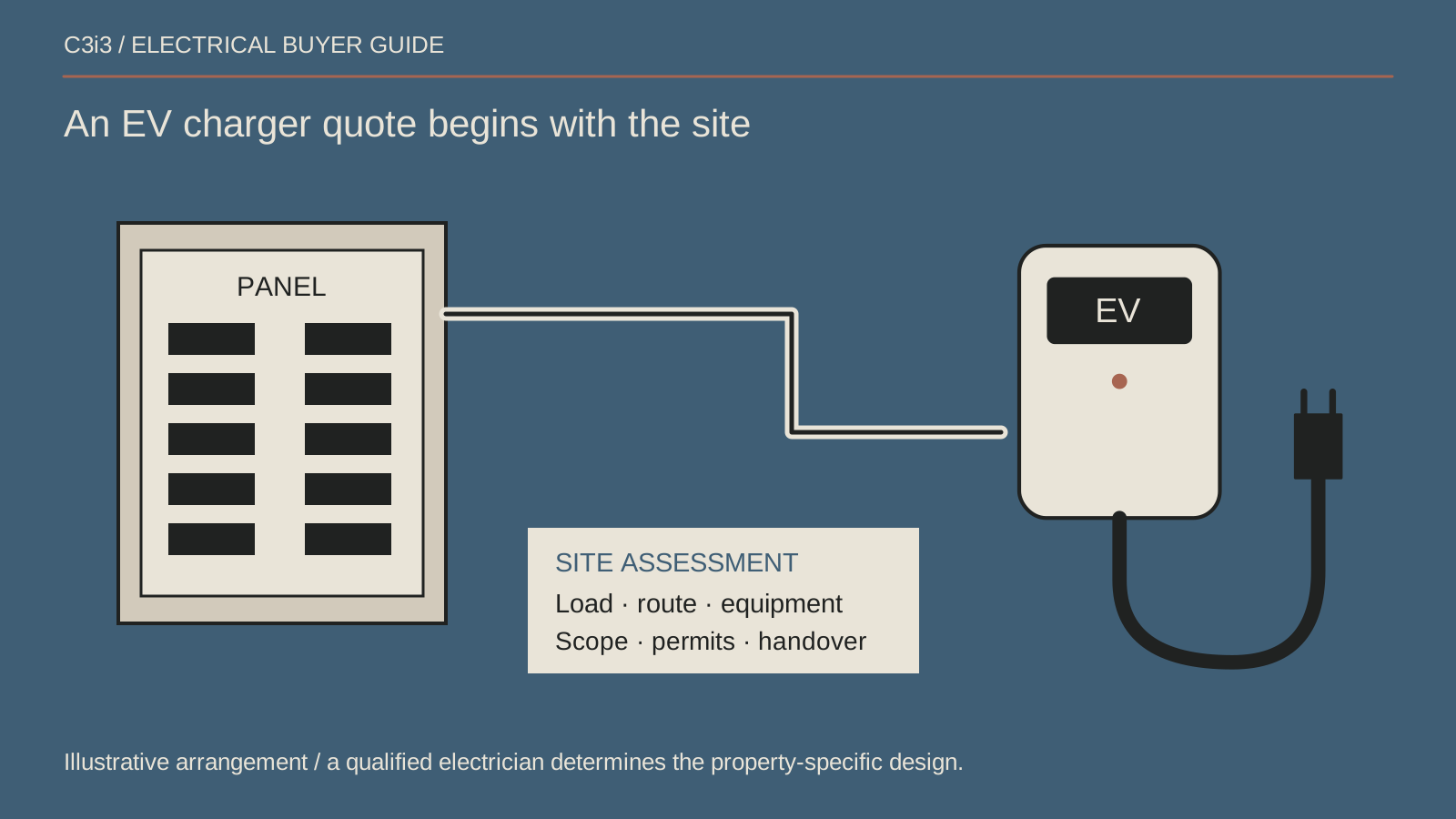
An EV charger installation quote can look simple: equipment, installation and a brief summary. The differences often sit in the unanswered details. Who evaluated the electrical capacity? What route does the work follow? Are permits included? What happens if utility coordination is necessary?
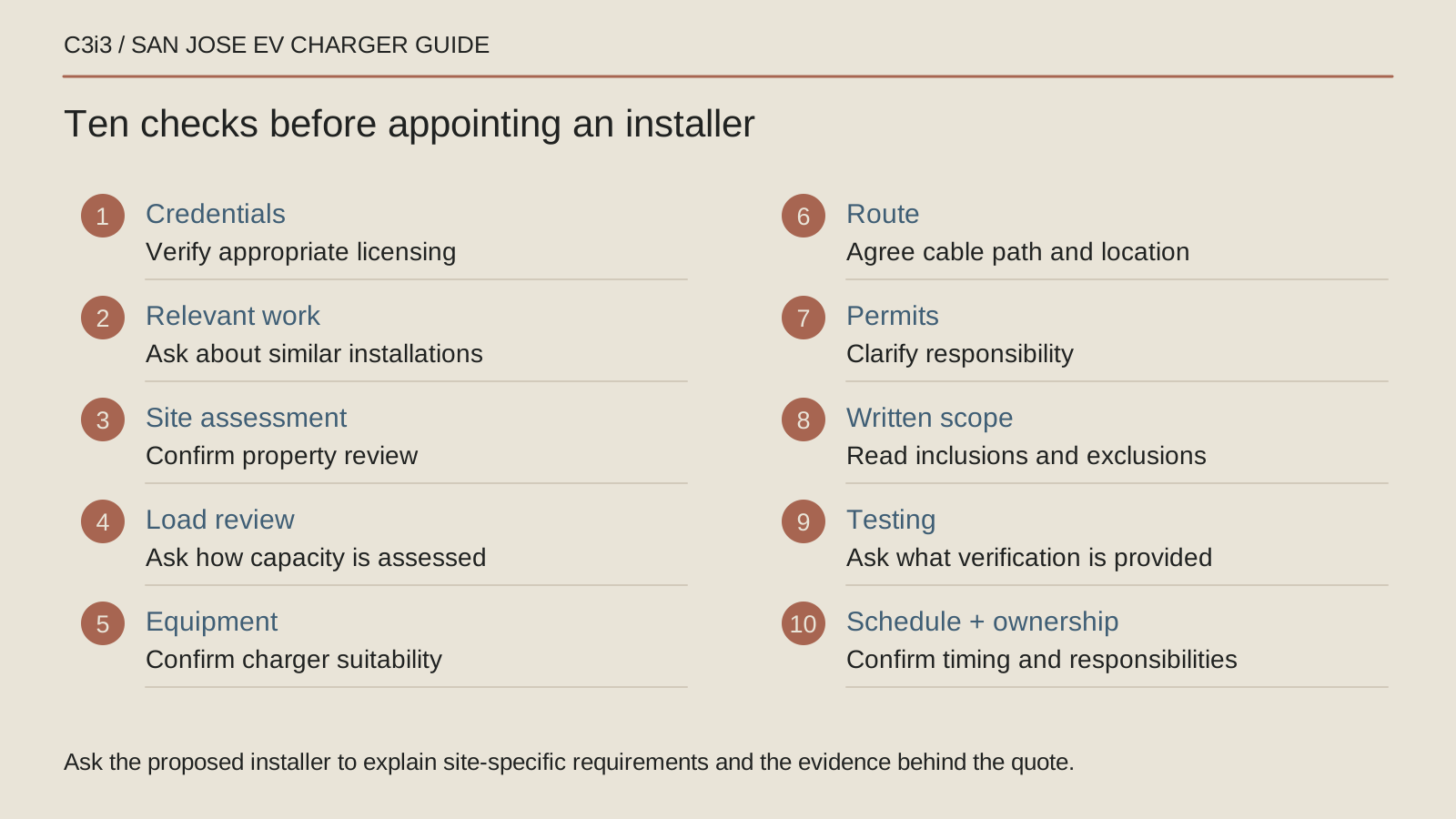
Use these ten checks when discussing EV charger installation with San Jose electricians. This guide names no companies and does not rank providers. It helps you compare responsibilities and prepare questions for qualified professionals, with links to official information for the local approval process and general charging planning.
1. Verify the business and relevant license
Use the CSLB lookup to check the legal business name, license status and relevant information. Match the result to the entity named on the proposal. Ask who is responsible for performing and coordinating the agreed electrical work.
Do not treat an attractive website, a displayed license number or a familiar referral as the completed verification. Keep the checked details with the estimate. The CSLB also publishes the C-10 electrical classification scope; ask how the proposed work is covered by the responsible contractor’s qualifications.
2. Explain your actual charging needs
Tell the qualified provider about the vehicle, normal use, parking arrangement and the questions you need resolved. Ask which charging approach fits those needs and the property assessment. Do not choose solely by the largest advertised power figure.
The DOE home charging overview provides general context. Your practical needs and the assessed electrical arrangement should inform the recommendation, with equipment compatibility confirmed.
3. Ask what electrical assessment was completed
Request an explanation of the assessment supporting the proposed installation and any unresolved conditions. Ask how the provider determines whether the existing arrangement can support the agreed scope. Leave the technical evaluation to appropriately qualified people.
A panel upgrade should not be treated as automatically required, or automatically unnecessary, for every home. Ask for the reasoning behind the recommendation and how any alternative approach would be evaluated.
4. Compare the complete equipment scope
Identify whether the quote includes charging equipment or installation of equipment you supply. Confirm the proposed device, connection arrangement and compatibility responsibilities. Ask who handles a product issue and whether any required accessories are included.
Avoid assuming every charger has the same features or installation requirements. Record the actual equipment and applicable documentation so you can compare proposals on the same basis instead of relying on a generic EV charger label.
5. Clarify routing, access and restoration
Ask the electrician to explain the proposed route and work areas in terms you can understand. Identify protection, access and any surface work or restoration included in the quote. If another trade is responsible for part of the work, record that clearly.
Do not inspect energized equipment or attempt to prepare circuits yourself. Use the assessment conversation to understand scope and responsibilities, with sensitive property details handled privately.
6. Confirm San Jose permits and inspections
Ask who obtains permits and arranges inspections. San Jose’s EV charging guidance states that Level 2 installations require an electrical permit; a new outlet for Level 1 charging also requires a permit. Confirm how the current process applies to your property and scope.
Ask which inspection completion records you receive and who resolves any outstanding items. Record the responsibilities before work begins.
7. Separate utility work from contractor work
Ask whether the assessed project needs utility coordination and who starts that process. Identify what the electrician's quote covers and what remains a separate utility responsibility or decision. A contractor's proposed date may depend on other parties.
Use the relevant utility's current process for your address. San Jose properties can have different service arrangements, so avoid assuming a single utility process or timeline applies to every installation.
8. Review insurance and written contractual terms
Ask the provider to explain relevant insurance and contracting information for the engagement, and use official resources to check requirements. License, bond and insurance information are separate questions; one should not be treated as proof of the others.
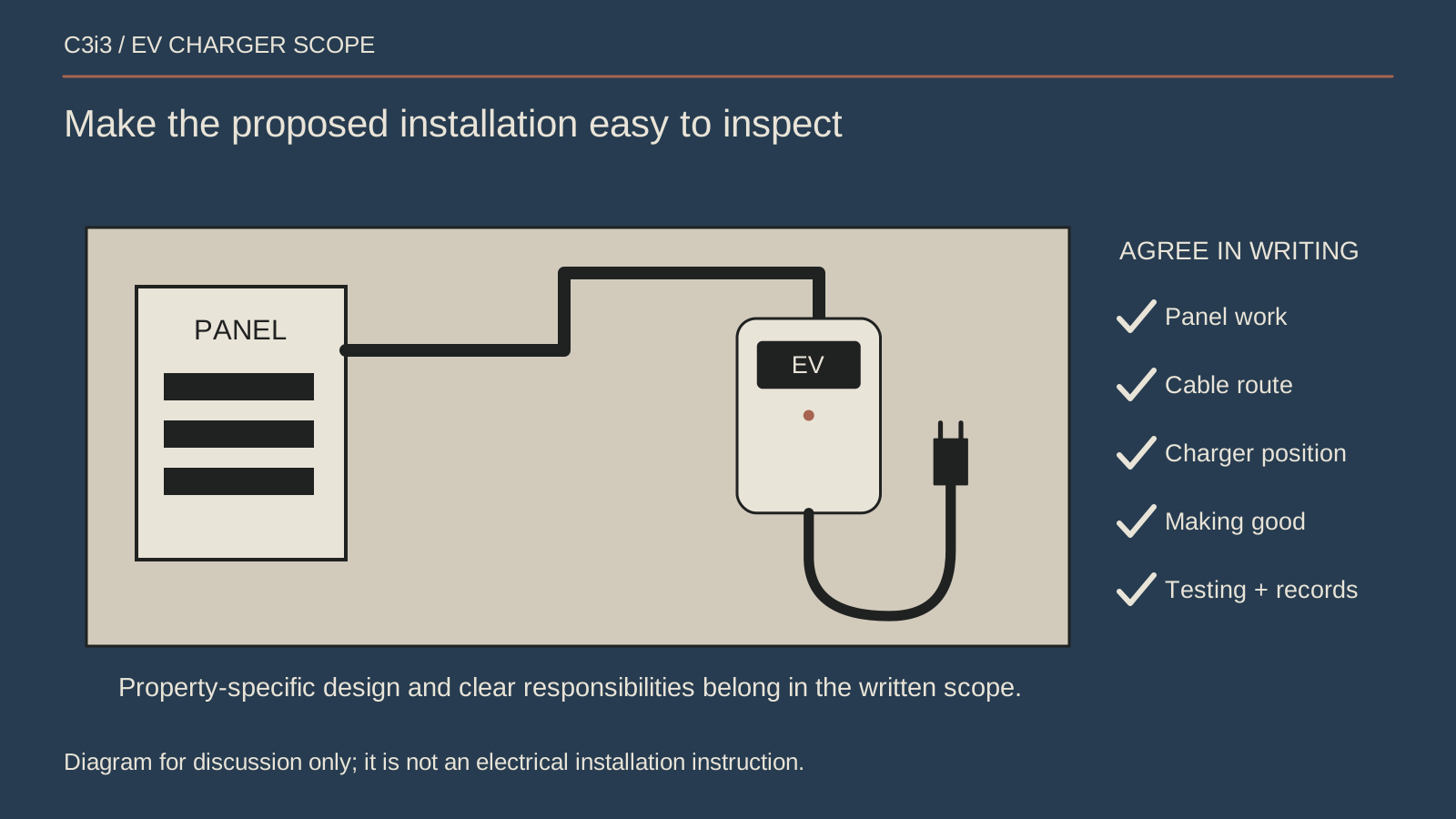
Read the written scope, written responsibilities and change process. The CSLB contract guidance is a useful reference when preparing questions about the agreement.
9. Ask what testing and handover include
Confirm how the completed installation will be checked and what documentation you receive. Ask about equipment setup, normal use, applicable maintenance information and the contact for a future issue. Have the qualified provider explain the boundaries of the handover.
Keep any inspection completion information and product documents with the installation records. A charger that powers on does not, by itself, explain whether every agreed responsibility has been completed.
10. Confirm the project schedule and responsible contact
Ask how assessment, permit review, installation and inspection are coordinated. Identify the person who will communicate changes and the decisions you need to make before the next stage. A schedule should show dependencies and responsibilities rather than assume every step is under one contractor’s control.
Keep the agreed contact information and completion checklist with your documents. Clarify who addresses an unfinished item and how you will know the agreed scope is complete.
Keep this checklist beside you
Questions before the next step
Does every EV charger installation need a new panel?
No universal answer applies. Ask a qualified electrician to explain the property-specific assessment and the basis of the proposed scope. Do not make electrical changes based on a generic online guide.
Is a company featured in this article automatically recommended?
This guide currently provides nameless comparison criteria. Any future advertising will be identified as paid placement. You should still verify credentials, scope and suitability independently before hiring.

How C3i3 Can Help
C3i3 helps electrical businesses communicate services through clear video explanations, website content and original vector guides. We can help make assessment, scope and the enquiry process easier for customers to understand.
Bring your current service page and common customer questions. Your qualified team can review technical claims while we shape the communication. Electrical businesses may also contact us about advertising opportunities in this guide; any paid placement will be clearly identified and kept separate from the comparison criteria.