









































In this article
An influencer post, an edited video file and permission to run that video as an advertisement are different campaign assets. A Bay Area brand can avoid confusion by making content use a production-planning topic before the shoot. The aim is a clear inventory of intended uses, approvals and expiry dates that the responsible parties can agree.
Planning a project? Explore Bay Area web design and marketing support and influencer marketing services.
What are influencer content usage rights?
They describe the permitted use of campaign content under the relevant agreement. A brand may need an organic repost, a website placement, paid advertising or edited versions. Do not assume those uses are identical simply because the creator has supplied a finished file.
Start with the business’s intended distribution. List where the asset will appear and what changes may be needed. This is an operational planning exercise; the actual rights depend on the agreement and applicable requirements, so material terms should receive appropriate review.
What should I ask a nearby influencer marketing agency about content use?
Ask the agency to distinguish the creator’s posting commitment, the deliverable files and the permissions associated with each. It should identify who confirms the scope, who keeps the records and how the production budget reflects the intended uses.
For a Bay Area campaign involving local filming, also clarify the practical permissions for locations, contributors and supplied materials. The agency should raise unresolved requirements before production rather than treating them as a detail the brand can sort out after publication.
Which usage details should a brand record before filming?
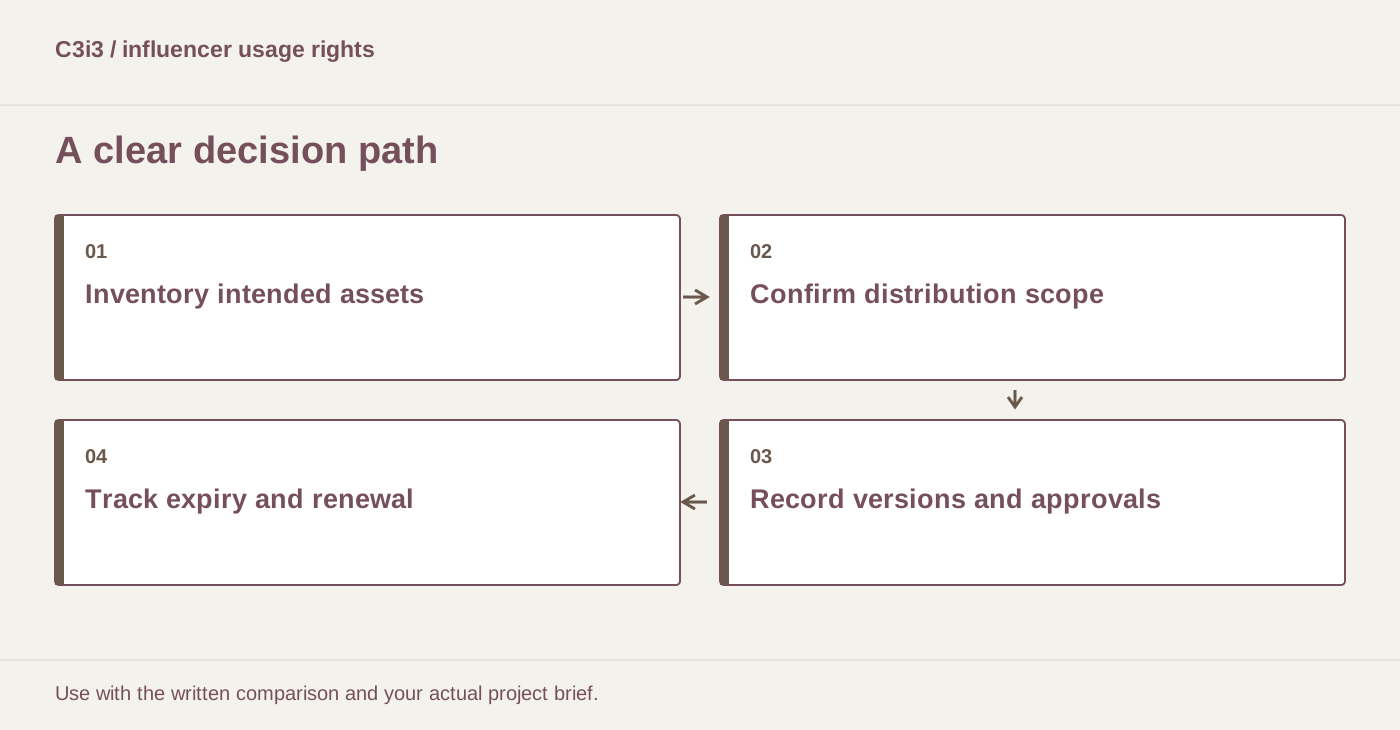
Record the asset, permitted channels, duration, geography and whether paid promotion is included. Add any agreed editing, excerpting or adaptation permissions. If advertising involves a creator’s account or identity, define the authorized process and the people responsible for access.
Use plain descriptions that the production and marketing teams can follow. A rights inventory should help someone decide whether a proposed placement falls within the agreed scope. Avoid vague labels such as full usage unless the agreement explains exactly what that means.
For the connected decision, read San Francisco Commercial Video Production: Who Owns the Footage, Music and Final Files?.
How should I plan edits and shorter versions?
Identify the versions you expect to need: aspect ratios, durations, captions, excerpts or product-specific cuts. Clarify whether those are creator deliverables, agency edits or later work by the brand. Ask how approvals apply to an edited version that changes the context.
Also identify third-party material such as music, imagery or footage. Permission for one use may not establish permission for another. The responsible team should verify the applicable scope before distributing a new version rather than assuming that an edit inherits every required permission.
How do I manage expiry and renewal after the campaign?
Assign an owner and maintain a calendar of active uses, expiry dates and renewal decisions. Link each placement to the relevant asset record. This lets the team stop, replace or renew a use deliberately when the agreed period ends.
Include the people who manage websites and paid campaigns. A video can remain embedded on a product page long after the original social post. A shared inventory reduces the chance that content continues circulating because each team assumes someone else is tracking it.
How can C3i3 help plan usable campaign assets?
C3i3 can help define the creative versions, website placements and production handoffs your campaign needs. Bring the distribution plan before commissioning the shoot. The scope can then distinguish content production, editing and the permissions that need confirmation.
The FTC’s endorsement guidance addresses clear disclosure of material brand connections. That disclosure work is separate from the rights inventory, but both belong in campaign planning. Coordinate the responsible review without treating the delivery of a file as acceptance of every distribution requirement.
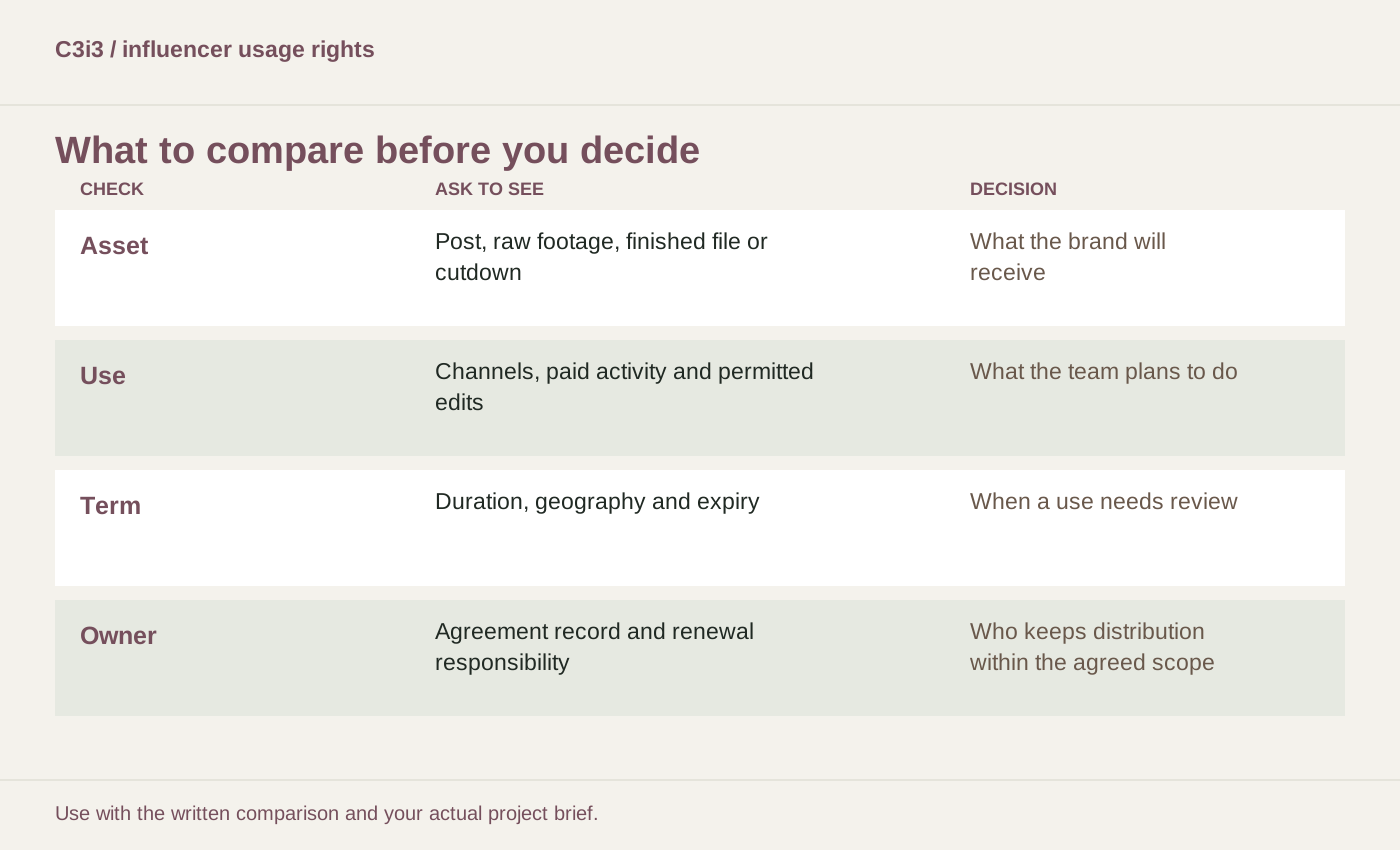
How do the key evaluation criteria compare?
| What to compare | Evidence to request | Decision it supports |
|---|---|---|
| Asset | Post, raw footage, finished file or cutdown | What the brand will receive |
| Use | Channels, paid activity and permitted edits | What the team plans to do |
| Term | Duration, geography and expiry | When a use needs review |
| Owner | Agreement record and renewal responsibility | Who keeps distribution within the agreed scope |
How could a Bay Area brand avoid an unused campaign asset?
Imagine a brand commissioning a creator video for an organic post, then deciding it wants several paid versions and a long-term product-page placement. Before production, the team records those intended uses and asks the responsible parties to confirm the scope and cost.
That discussion may change the production plan or the versions commissioned. The benefit is clarity before the asset is made. This hypothetical scenario is a planning example rather than legal advice about a particular agreement or a statement that any creator has granted specific rights.
What should you remember before the next step?
- Inventory intended assets.
- Confirm distribution scope.
- Record versions and approvals.
- Track expiry and renewal.
What else do local business buyers ask?
Does receiving the video file mean we own every right?
Do not assume that. Confirm the permitted uses and relevant terms under the agreement before distributing the asset.
Are paid advertising and organic reposting the same permission?
Treat them as distinct intended uses and confirm how the agreement covers each.
Should we track rights after the campaign ends?
Yes. Assign responsibility for active placements, expiry and renewal so later teams can understand the permitted use.
Which sources can help you verify these decisions?
The frameworks and hypothetical examples are C3i3 editorial analysis. The linked primary sources provide platform, usability or disclosure context for the relevant decisions.
How can C3i3 help you plan the right next step?

Share your current website, the customers you want to reach and the work you want to improve. C3i3 brings design, content, technology and marketing into a coordinated project scope.
Review C3i3’s background, explore influencer marketing or tell us about your project.