






































In this article
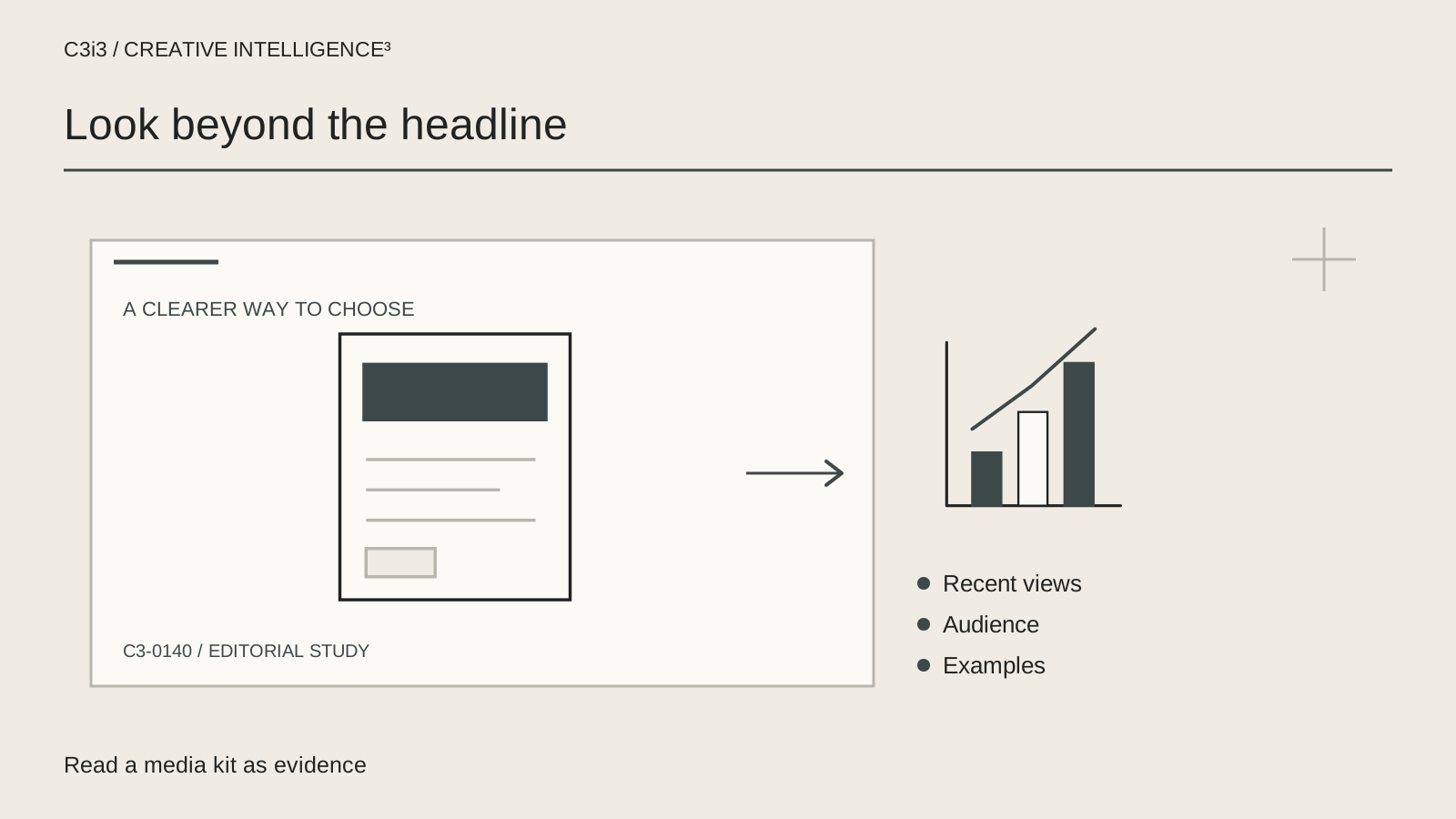
A media kit can look impressive while leaving the most important campaign questions unanswered. A large audience total, a polished headshot and a row of brand logos do not tell you whether the creator reaches your market, explains products well or can deliver the format you need.
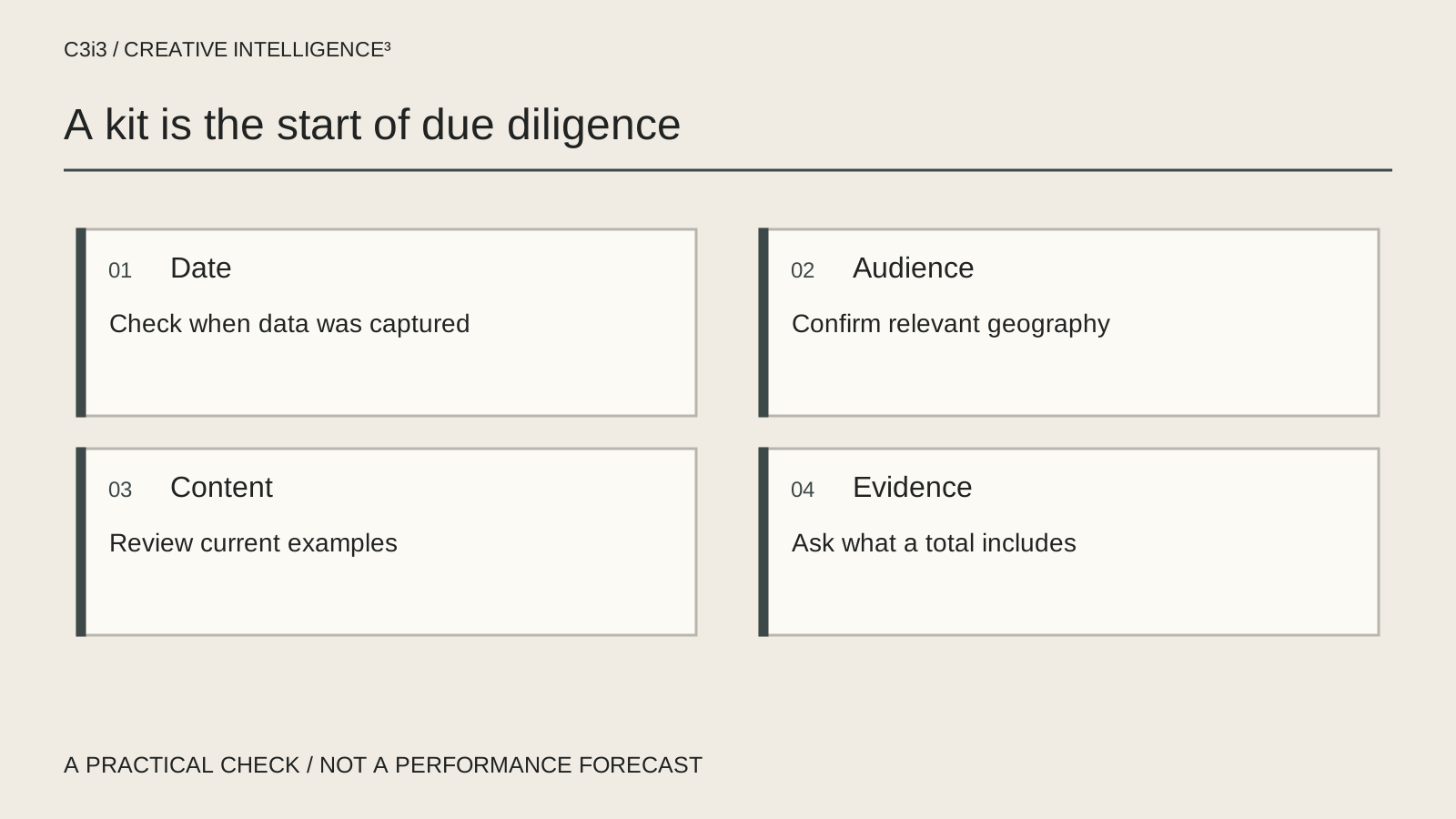
Treat the influencer media kit as the beginning of due diligence. It should help your team decide what fits, what needs verification and what to ask next. You do not need every private detail about a creator's business. You need a clear, current view of the evidence relevant to your own brief.
Is the media kit current and clearly sourced?
Look for a preparation date and a reporting period beside the numbers. “Current audience” is not precise enough when your launch depends on a particular market or content format. Ask when the information was collected and whether it describes the whole account, a recent period or selected posts.
A screenshot without context can be misleading even when it is genuine. It may show a different platform, an unusual campaign or a time range that does not represent current activity. Ask for the relevant context without requesting unnecessary personal information or account access.
Keep a short evidence register. Label information as public, creator-supplied or not yet confirmed. This prevents a rough estimate from becoming an official campaign assumption after the kit moves through several people. If you update the brief later, retain the source date so your team knows which version supported the decision.
Does the audience information match the markets you can serve?
A creator's identity and home city do not establish the location or characteristics of their viewers. If your product is available only in selected markets, ask for recent aggregated geography information where the platform provides it. Do not assume that a Korean American creator has a predominantly Korean American audience, or that English-language content reaches only US viewers.
Be equally careful with interests and age ranges. Use appropriate reporting rather than visual guesses. Some audience information may be limited or unavailable. YouTube's Analytics overview explains its reporting areas and notes that certain data can be restricted.
The useful question is whether the available evidence supports your planned task. A broad lifestyle audience may fit a general household product while requiring a more careful explanation for a specialist device. Mark an unanswered audience question as unanswered. That is more useful than a confident but unsupported persona.
Are you comparing the right performance measures?
Subscriber count describes an account relationship. It is not the number of people who will watch your campaign. Views, unique viewers, watch time and interactions answer different questions. A media kit is easier to assess when those measures are labeled and separated.
Compare content with similar format, subject and age. A short clip published yesterday should not be judged against a tutorial that has been discovered through search for several years. Ask whether any examples used paid distribution, and keep that information with the comparison.
| Evidence | Useful question | Do not assume |
|---|---|---|
| Subscribers or followers | What is the account's established scale? | Every follower will see the campaign |
| Recent comparable posts | How does this format usually perform? | The next post will repeat it |
| Audience geography | Does the reachable market fit? | All viewers can purchase |
| Attributed actions | Which actions were recorded under stated rules? | The creator caused every recorded sale |
Do the work samples show the skill your campaign requires?
Review actual content, not only a list of former clients. Look for the moment where the creator explains the product, the way they handle a limitation and whether the audience can understand what to do next. A beautiful montage and a useful demonstration are different skills.
Ask what role the creator performed in an example. Concept development, filming, editing, publication and content licensing can be separate tasks. A brand logo alone does not establish the scope or results of a past relationship. Do not reproduce those logos in your own material without appropriate permission.
Choose a few samples that resemble the job you want done. Note the subject, format and specific skill demonstrated. For an app, that might be a clear walkthrough of a useful task. For skincare, it might be careful product explanation without unsupported claims. Record what the sample proves, not a general judgment that the creator can sell anything.
Are scope, rights and review expectations visible?
A media kit may summarize formats, but the campaign still needs its own brief. Confirm which channel, deliverable and publication window are under discussion. If you need alternate versions, advertising use or access through a platform's partnership tools, discuss those requirements explicitly.
Separate factual review from a demand for an enthusiastic recommendation. A brand can provide accurate product information and correct genuine mistakes without asking the creator to invent personal experience. Agree on who consolidates feedback and how new requests affect the scope.
Use plain labels for relationship disclosure. The FTC's disclosure resource is a useful starting point for understanding why material brand relationships must be clear to the audience. Keep disclosure and permission questions with the campaign brief rather than treating them as an optional line at the end of production. For contract interpretation or specialist requirements, obtain appropriate professional advice.
What should your team request before making the final decision?
Send a short list of remaining questions tied to the campaign. For example: recent audience markets, two comparable work samples, availability for the proposed format and confirmation of the intended reuse. Explain why each item is relevant. Avoid requesting a broad export of private analytics when a smaller aggregated view would answer the question.
Create a decision note with three headings: fit, evidence and open questions. The person approving the campaign should be able to see why the creator was selected and what remains uncertain. Do not hide missing evidence behind a high overall score.
After agreement, keep the kit as a reference and use the brief to govern the work. Update your records when the scope changes. A media kit helps open a partnership discussion; it is not a substitute for shared expectations, permission checks or a tested customer journey. The final decision should be understandable to someone who never attended the first call.
Keep this checklist beside you
Questions before the next step
Should a media kit include exact audience demographics?
It should include relevant, supportable information where available, with dates and reporting context. Brands should not expect a creator to invent details that a platform does not provide. Ask for aggregated evidence appropriate to the campaign, and mark unavailable information clearly.
Are previous brand logos proof of campaign performance?
No. They may indicate past work, but they do not establish the creator's role, deliverables or results. Review approved examples and ask what the creator contributed. Avoid assuming that a relationship permits either party to publish confidential performance information.
Can we choose a creator using a single engagement rate?
A single rate can conceal differences in format, audience and reporting period. Review the underlying interactions and compare appropriate content. Use several relevant observations to support the decision rather than treating one percentage as a universal measure of quality or sales potential.

How C3i3 Can Help
C3i3 helps brands translate media kits into a practical selection brief: the audience question, the evidence available and the production scope that needs agreement. We can coordinate creator research with campaign planning, useful landing pages and an appropriate measurement approach.