






































In this article
A hotel wants more international attention. A tourism brand wants visitors to explore an unfamiliar route. Both search for travel influencers, yet the same attractive video will not necessarily solve both problems. One campaign needs to explain a stay; the other may need to make a journey feel manageable.
For Korea campaigns, practical detail is part of the creative assignment. Transport, language, filming access and the difference between dreaming and booking affect whether viewers can use the story. Choose a creator for the actual task, then prepare the information needed to perform it honestly.
Is the campaign meant to inspire a trip or help someone book?
Define the visitor stage before choosing a creator. A viewer who has never considered Korea may need an understandable introduction. Someone planning a trip may need route context, transport information or a clearer picture of what a hotel makes convenient.
Choose one main question. For a hotel: can I use this as a practical base for the activities I want? For an experience: what will I do, who is it suitable for and what should I prepare? These questions support a stronger assignment than a request for a cinematic montage.
Match the next step to that question. Discovery content can lead to further exploration. A booking page needs current practical information and the correct reservation route. Decide which stage the campaign will serve rather than judging every viewer as an immediate customer. This makes the creative brief and the later report easier to assess.
For example, a hypothetical accommodation campaign might ask the creator to show the walk from the appropriate transit stop, the entrance process and the room features relevant to a particular visitor. The hotel's page can then explain current reservation details. This is a planning example, not a report of a completed client project.
Do not overload the assignment with every nearby attraction. A coherent visitor question gives the story a purpose and makes factual checking manageable. If the route changes during production, update the instructions and the linked page together rather than leaving two conflicting versions for future guests to discover.
Which travel work should you inspect before making a shortlist?
Look beyond recognizable landmarks. Does the creator explain how an experience fits a real trip? Are directions and context clear? Is the distinction between an ordinary visit and a hosted campaign visible when applicable? Save examples that demonstrate the exact capability your assignment needs.
Review how the creator handles unfamiliar situations. Travel work involves changing schedules, weather and details that become outdated. A candidate does not need to know every destination already, but should be prepared to verify information and adapt the planned treatment.
Miss Mina's official FAQ documents a food-and-travel focus in her own words. It is a useful discovery example, not evidence of current availability for a particular hotel or campaign. Apply that distinction to every creator. Inspect recent relevant work, confirm the proposed assignment and avoid presenting historical biographies as current booking information.
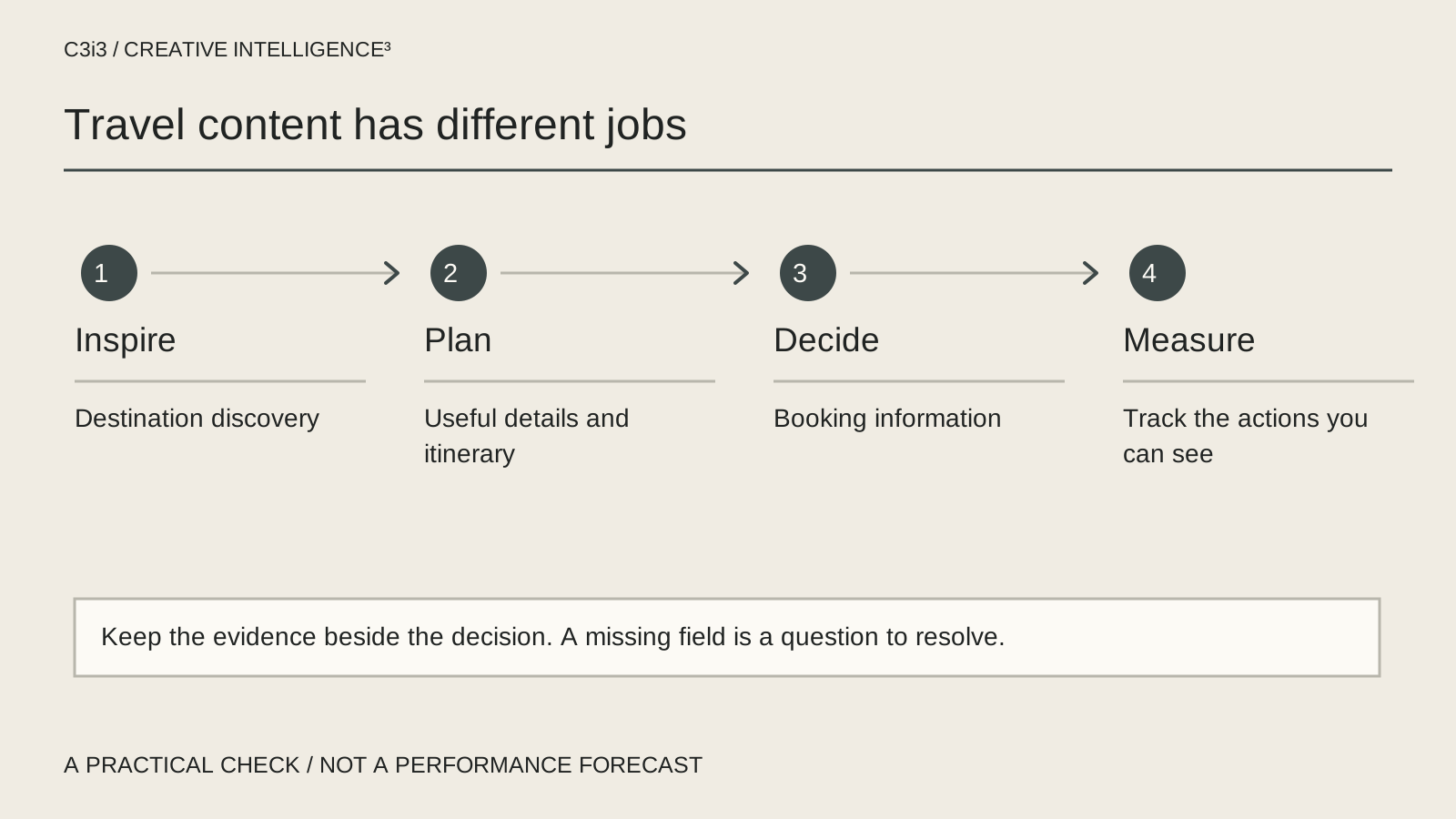
How can a brief connect inspiration with useful travel information?
Separate the story from the practical details, then connect them. The story creates a reason to care; the details help someone act without misunderstanding the experience. A creator can show a route while a linked page provides current reservation and access information.
| Visitor stage | Useful content | Next step |
|---|---|---|
| Discovering | A reason to consider the destination | Explore a destination guide |
| Planning | Route and activity context | Review practical details |
| Comparing | What distinguishes the experience | Read the relevant operator page |
| Booking | Accurate reservation instructions | Use the correct booking route |
The Korea Tourism Organization's VISITKOREA site offers official planning resources. Verify time-sensitive details with the responsible operator too. A tourism reference does not replace the hotel's own current access, check-in or reservation information.
What filming access and production details require agreement?
Identify who controls each location and confirm what may be filmed. A hotel room, a restaurant service area and a public attraction may have different access rules. Do not promise a shot before the relevant permission exists.
Plan around other guests and staff. Rooms, food, products, scenery and practical details can tell a useful story without making strangers campaign subjects. Arrange an alternative treatment for poor weather or schedule changes. A changed plan is better than staging a misleading experience solely to match the original storyboard.
Define which factual details the operator reviews and where the creator retains editorial judgment. Agree on the uses of delivered footage. Appearing in a public travel video does not automatically give the business permission to download, edit and advertise with that content. Resolve this before production rather than after someone has already built an advertisement.

Can the intended audience use the travel offer?
A creator's nationality or current location does not identify viewers' departure countries or travel intentions. Request relevant, dated audience evidence. Discuss whether the content reaches people considering the kind of trip you offer without asking the creator to guarantee future travel.
Check the linked destination. Can an international visitor understand the experience and reservation process on a phone? Are transport and access explained? If the visitor must change language or contact a different operator, make that transition clear.
YouTube notes that some analytics data can be limited. A missing geography detail is an unresolved question, not a reason to count every viewer as a potential guest. Record important assumptions before production so the campaign team understands what the available evidence establishes and which decisions remain uncertain.
What should the campaign report after publication?
Save the public addresses, publication dates and agreed reporting window. Record what each source measures. Platform attention, visits to an itinerary, reservation starts and completed bookings are different actions. The same person may appear in several reports, while a later booking may not be attributable.
Review practical questions as well as totals. Repeated questions about location or access can reveal gaps in the destination page. Address those gaps before concluding that a larger creator would have solved the campaign problem.
Assign ownership of updates. Routes change, activities can close temporarily and booking links can break. Decide who checks essential details and when the creator should receive a correction. Travel stories may remain discoverable after a launch, so maintenance is part of making them useful. An appealing article that sends someone to incorrect information is an unfinished customer journey.
Keep this checklist beside you
Questions before the next step
Must the creator already live in Korea?
Not necessarily. Local knowledge can help one assignment, while an international visitor perspective can answer different questions. Choose the role the campaign requires and verify the practical ability to perform it. Residence does not establish audience fit or interest in your specific project.
Do many video views prove booking demand?
No. Travel content serves entertainment, discovery and planning as well as booking. Define the intended stage and report the information you can actually measure. Keep reservation activity separate from platform attention and identify attribution gaps.
Can a hotel reuse a travel video in an advertisement?
Only within agreed permissions. Publication, editing and advertising uses should be addressed before filming. Hosting a visit or appearing in content does not automatically grant unrestricted rights to the creator's footage.

How C3i3 Can Help
C3i3 can help translate a hospitality objective into a clear creator assignment and a practical campaign destination. Bring the visitor you want to reach, the experience you can provide and the questions a potential guest needs answered.