






































In this article
Your product could appear in a morning routine, a packing video, an outfit discussion or a desk setup. That range makes lifestyle influencers appealing to brands. It also makes the lifestyle label too broad to tell you who can make your specific product relevant.
Start with an ordinary situation in which the product helps someone do something. Identify that situation, then review creators whose existing work gives it a natural place. A useful integration adds detail to a recognizable story rather than interrupting it with an unrelated product mention.
What does lifestyle mean for your actual product?
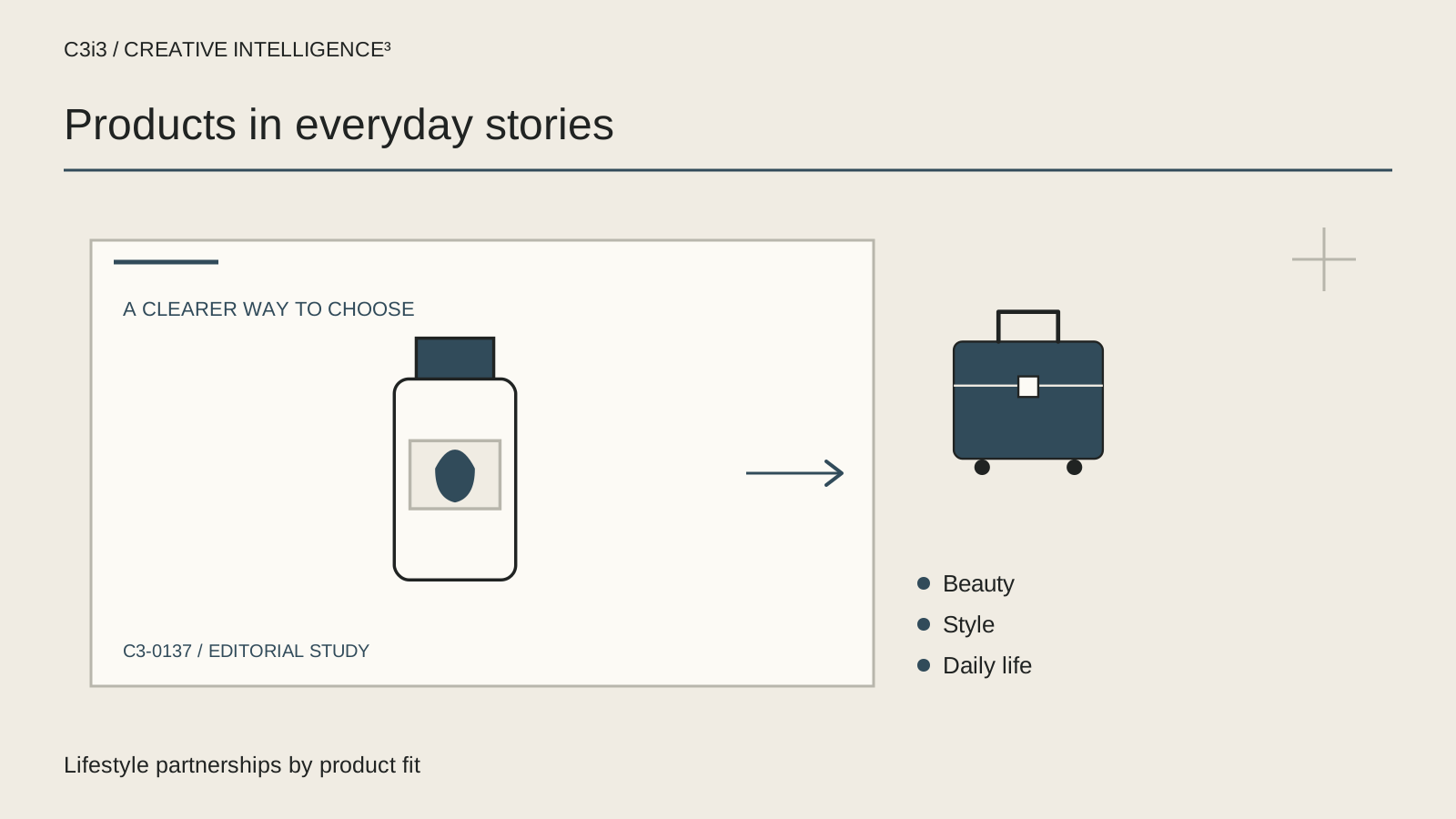
Lifestyle is a publishing category, not one customer need. Beauty, fashion, food, home, creative work and everyday technology can all appear, but each product requires a different explanation. Identify the situation first: getting ready, choosing clothes, organizing a workday or preparing for a trip.
Describe what the viewer should learn. A bag might need a clear view of how it is organized. An app might need a screen-based task. A service may need an explanation of what happens before, during and after a customer uses it. Do not ask a creator to turn an unclear offer into a convincing story through improvisation.
Try removing the brand name from the idea. If the situation still makes sense and the viewer still has a practical question, there may be a genuine content opportunity. If only the product mention remains, refine the assignment before choosing a creator.
Consider a hypothetical desk accessory. A useful integration might show the creator organizing a specific set of everyday items and explaining the practical arrangement. That is different from a disconnected beauty shot followed by a request to buy. The viewer should understand the task even if the brand name were removed.
The same test works for services. A creator demonstrating an appointment process can explain the stages without claiming they personally received a service they did not use. Keep the assignment's factual boundaries visible. Distinguish an illustrative walkthrough from an actual customer experience before the content is filmed.
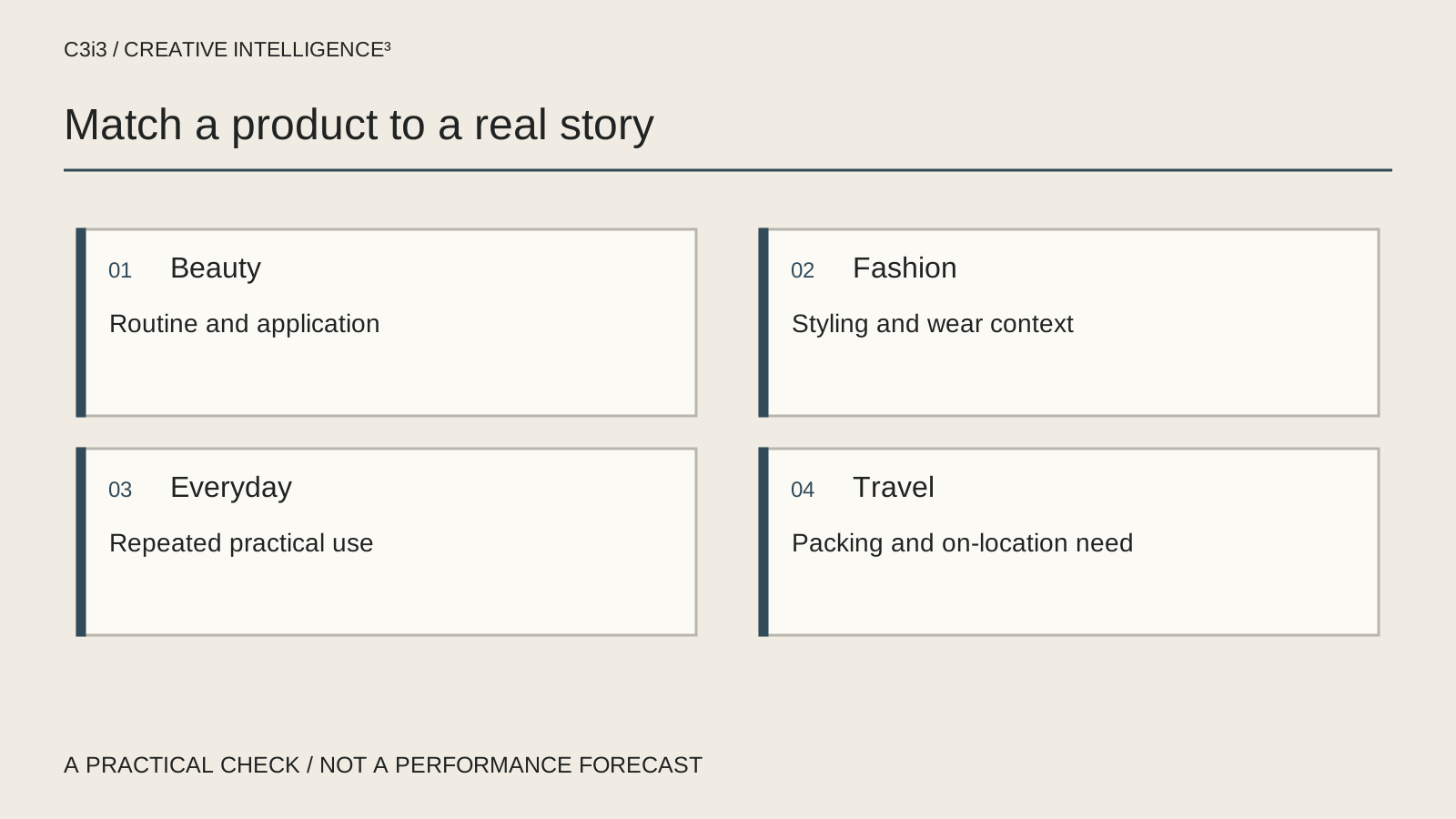
Which content moment fits beauty, fashion or an everyday tool?
Use the product's role to narrow the format. A beauty demonstration needs visual detail sufficient to understand the relevant use. Fashion content may need movement, styling context or the reason behind a choice. An everyday tool needs a task that makes its function visible.
| Product context | Useful moment | Viewer question |
|---|---|---|
| Beauty | A getting-ready step | What is shown and what is personal impression? |
| Fashion | An outfit decision | How does the item fit the occasion? |
| Home or desk | An organization task | What problem does the sequence address? |
| App or service | A guided customer task | What happens at each stage? |
These are assignment examples, not claims that any named creator uses your product. Ask whether the proposed moment is natural for the channel and allow the creator to explain when the fit is weak.
What can brands learn from different creator styles?
Oh No Nina's official channel is a starting point for reviewing lifestyle and creative storytelling. Her own Korean American experience video supplies direct background. For a brand, the next step is to identify a natural use case in current content rather than assume cultural context makes every Korean product suitable.
Jenn Im's channel provides another starting point for fashion and lifestyle research. Miss Mina's official website presents a different food-and-travel context. These examples explain why a broad label should be broken into real editorial settings.
This is a C3i3-curated creator-discovery discussion, not an independent ranking or confirmation of current availability. Inclusion does not imply endorsement or representation. Verify recent work, the proposed format and the appropriate business contact before approaching anyone.
How do you inspect audience fit without guessing from identity?
Ask who can use the product, in which market and for what practical need. Request the evidence needed to assess those questions. Language and cultural context may shape the creative approach, but they do not prove where viewers live or whether they want the offer.
Compare like with like. A broad channel summary may not describe viewers of the particular format being proposed. Ask for the reporting period and context. Recent comparable work is useful; an exceptional result should remain an exception rather than become a campaign projection.
Keep private data requests narrow. YouTube's audience reports describe available audience information, some of which may be limited. If the evidence cannot establish a requirement, record the uncertainty. Do not transform missing data into a precise audience claim simply because the team wants the shortlist finished.
What should a useful lifestyle creator brief contain?
Supply the customer situation, verified product information and the next step. Specify what needs to be shown and why. Avoid a script that simply lists adjectives such as innovative or essential without explaining the product or the customer's task.
Clarify where the creator has discretion. A brand may need accurate naming, readable packaging or a correct service sequence. Those requirements do not mean every sentence should sound like a brochure. A recognizable point of view is often part of why the creator was considered.
Also clarify relationship disclosure and permitted uses. Sponsored recommendations need an appropriate disclosure; the FTC's guidance is a primary reference. Agree on factual review and usage scope before production. If a product is unsuitable for the proposed experience, change the assignment rather than asking the creator to perform an opinion.
How can a brand tell whether the integration was useful?
Return to the agreed customer question. Did the content make the product's role understandable? Could viewers recognize the relevant feature and find the next step? An attractive shot can support the message, but it should not be the only evidence the task was completed.
Review platform attention and destination activity separately. Watch time, comments, visits, enquiries and attributed purchases describe different things. Not every viewer saw the whole explanation, and not every click represents a buyer. Use the reporting window and definitions agreed before publication.
Identify a practical improvement. If people ask questions the destination should answer, fix the page. If the demonstration is confusing, improve its sequence. If the offer has little connection to normal content, reconsider the match. Publishing more material does not replace understanding why this particular product belongs in the story.
Keep this checklist beside you
Questions before the next step
Can lifestyle creators promote services too?
They can be relevant when the service plays a clear role in the audience's actual tasks. Explain the process and intended customer accurately. Do not force an unrelated professional service into a channel solely because the account has a large following.
Does visual style matter more than audience fit?
Style can help the treatment, but it does not establish who the content reaches or whether the offer matters to them. Consider it after the core task, market and content requirements. A visually consistent campaign can still be a poor product match.
Should a creator read the exact brand script?
Agree on essential factual points and appropriate review while discussing how the creator naturally communicates. A script can suit some assignments, but must not require an invented personal opinion or imply a product experience that never occurred.

How C3i3 Can Help
C3i3 helps brands connect a customer task with relevant creator content, clear product information and a useful landing page. We can research possible fits and coordinate production while keeping assumptions, approvals and measurement limits visible.