






































In this article
You search for the YesStyle affiliate program and find creator codes, affiliate tutorials, shopping rewards and application advice that does not all describe the same arrangement. It is easy to start filling out a form before deciding which route belongs to your business. That can create account conflicts and leave you measuring the wrong activity.
The useful first question is which official program matches your publishing model. This guide focuses on the checks a beauty, fashion or lifestyle creator can make before applying. It does not promise acceptance or repeat headline earnings claims.
Is the YesStyle Influencer Program the same as an affiliate program?
People often use affiliate as a broad description of any creator arrangement involving attributed purchases. That is not precise enough for an application. The retailer's program names, account rules and operating terms determine what you can actually do. A tutorial using an informal label should not decide which account you connect.
The official YesStyle Influencer Program page is the creator-facing starting point. Its site also links to a separate affiliate pathway. Review both descriptions if you publish across a website and social channels, but do not assume you can participate in both. The complete influencer terms explicitly address simultaneous participation.
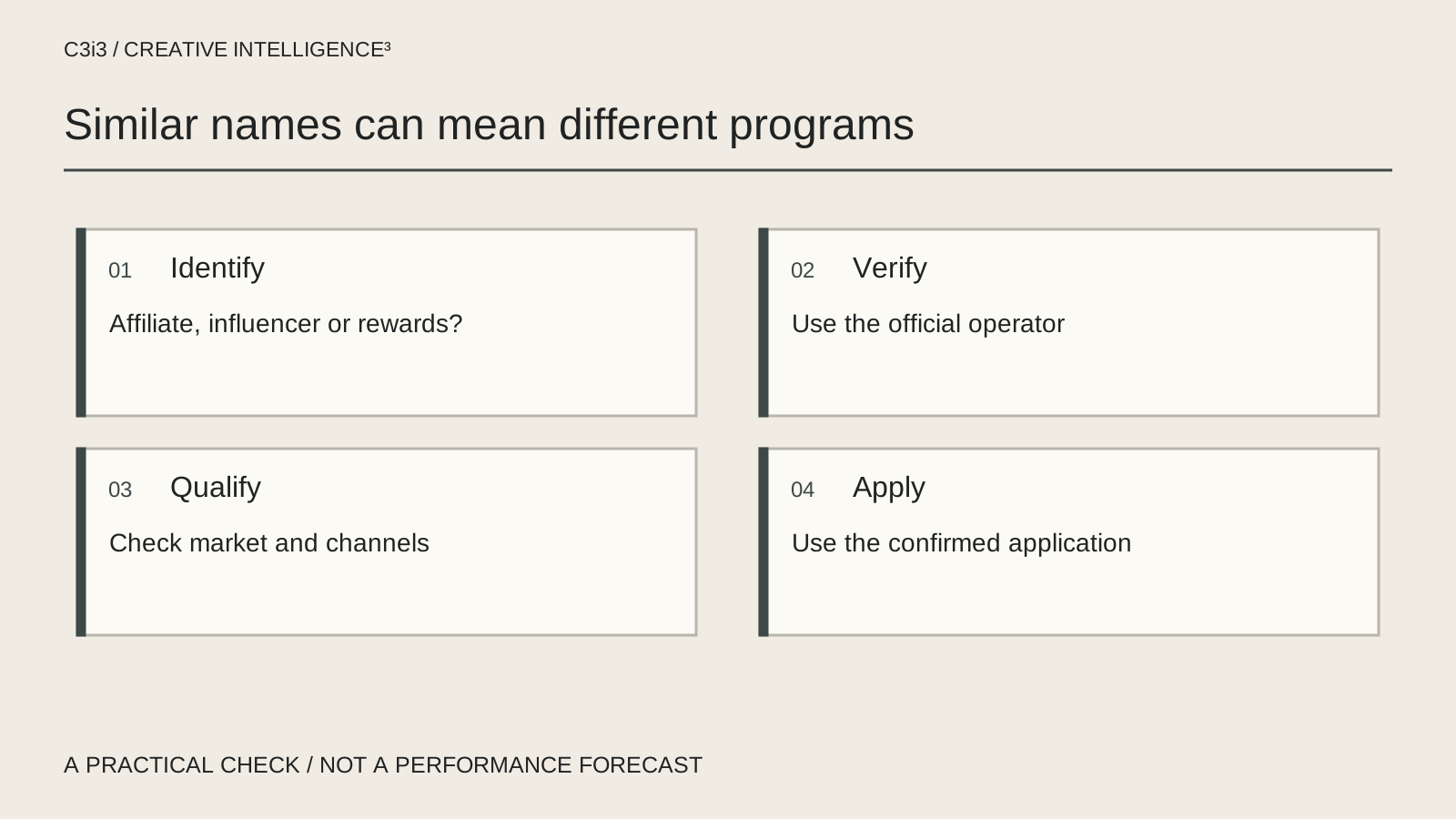
Write your actual model in one sentence: for example, an independently owned review website, a social video channel or a publication managed by a company. Then compare that model with the official application. Keep the answer in your records so a later manager does not accidentally create a second, conflicting account.
Which account and content should you prepare before applying?
An application should lead to content that already demonstrates what you make. Check that the channel is publicly accessible where required, that recent posts are representative and that the name and links identify the same creator. Do not submit a borrowed account or examples you do not control. A business contact should be monitored by the person handling the application.
YesStyle's current influencer terms identify eligible social platforms and describe review of content, audience quality, activity and suitability. They also limit account connections and approved promotion accounts. Read the current wording before connecting a channel; do not assume it is easy to move later.
Prepare a short explanation of your editorial focus. A creator covering everyday skincare routines can point to a clear example of that work. A fashion creator can show how product information is incorporated into an outfit explanation. The purpose is to make the application understandable, not to inflate its importance. Keep private analytics out of public documents and provide them only through a verified application route when requested.
What should you check before connecting your social channels?
Treat the connection step as an ownership decision. Identify the account that will hold the program relationship, who controls its recovery method and who is allowed to manage it. An agency can help organize the material, but shared support should not mean that the creator loses control of the channel.
Make a checklist before proceeding. Confirm the official domain, the intended creator identity and whether an existing relationship already uses the channel. Record any application reference in a private operations document. Do not open repeated applications simply because a confirmation email is slow to arrive. Check the existing application state and official support route first.
| Check | Useful evidence | If unclear |
|---|---|---|
| Channel ownership | Owner can access and recover the account | Resolve control before connecting |
| Existing enrollment | Known program account and status | Ask official support before duplicating |
| Publishing identity | Consistent public name and working profile links | Correct broken links first |
| Management access | Named person handling updates | Define responsibility in writing |
Why can a creator link or code fail to receive attribution?
A working destination and an attributed transaction are different things. A link may open the correct product while another marketing touchpoint takes priority in the retailer's reporting. A viewer may switch devices or return through another route. Do not promise that every interested viewer or every use of a code will be credited to you.
YesStyle's terms describe attribution priority, including situations where another eligible marketing channel takes precedence. Read that section alongside the application instructions. Avoid reducing it to a slogan about a link or a code always winning. The rules are specific enough that an old social tutorial may not explain the current arrangement correctly.
For your own records, connect each placement with its destination and reporting reference. Check the published address after copying it into a description or profile tool. Keep link parameters intact. When a reporting question arises, save the relevant dates and placement details without collecting a viewer's unnecessary personal information. A clear record makes a support inquiry more useful than a general statement that the link did not work.
How can you create useful YesStyle content without making unsupported claims?
Start with a question your audience has already asked. Perhaps they need to understand a product's format, compare packaging or locate the item you demonstrated. Show the product accurately and separate your observations from information supplied by the seller. If you have not used it, describe the content as research or a selection rather than a personal review.
Product descriptions change, and a creator should not casually transform them into stronger claims. A routine video can explain how you applied a cosmetic without claiming that it treats a condition. Avoid an edited before-and-after sequence that suggests a result you have not established. Keep the explanation useful for someone who decides not to buy.
Place a clear explanation of the commercial relationship with the recommendation. Do not rely on a vague group of hashtags or an unrelated profile statement. If you reuse the content in a different format, check that the explanation remains visible. Read the program's content and reuse provisions as well; a good publishing plan includes where the material may appear after your original post.
What should you maintain after an application decision?
Keep the official response, connected-account information and current terms together. If the application is declined, use the retailer's stated process rather than changing details to make a duplicate application appear unrelated. If accepted, check that the approved channel and intended promotion method match what you plan to publish.
Build a small content inventory before the first placement. Include the article or video, product destination, publication date and last review date. Review old links when products disappear or program conditions change. Do not replace a reviewed product with an unrelated item while retaining the old review language.
Set aside a regular opportunity to compare your content questions with the available reporting. Views, clicks and finalized outcomes should remain separate. When support is needed, describe the exact placement and issue through YesStyle's official support route. The goal is a manageable publishing system with accurate records, not an ever-growing list of codes that nobody knows how to update.
Keep this checklist beside you
Questions before the next step
Do I need a specific follower count to apply?
Do not rely on a third-party article for a universal threshold. Review YesStyle’s current official application and eligibility terms, which describe several aspects of account suitability. A stated application route is not an assurance of acceptance. Show genuine, recent work and provide accurate account information.
Can my manager connect my channel for me?
Support with preparation is different from control of your account. Confirm who owns the program account, who can recover the channel and what permissions the connection requires. Use the official process and keep access under the creator’s control. Do not provide credentials through unsolicited messages.
Should I publish links while an application is pending?
Do not represent yourself as an accepted participant before the official decision. Prepare useful content and an inventory, then confirm the approved link and channel instructions. An ordinary product link, an application and an active affiliate relationship are separate states.

How C3i3 Can Help
C3i3 can help organize creator application materials, product content and the reporting workflow around them. We can review the information journey from a video or article to the relevant retailer page and identify unclear account or link ownership.
The retailer controls eligibility and participation. Our role is to help make the content and operations easier to manage, with no promise of application approval or earnings.