






































In this article
You want to feature beauty products, but searching for the Ulta affiliate program brings up several names and different application links. A creator, a publication and an Ulta employee should not automatically start in the same place. The first decision is which program describes your real role.
This guide helps creators and publishers find the official starting point, prepare accurate material and avoid confusing an application with an active arrangement. It also outlines the practical content and tracking work that comes after joining. Program participation does not replace a useful recommendation or establish a particular result.
Which Ulta affiliate program should you apply to?
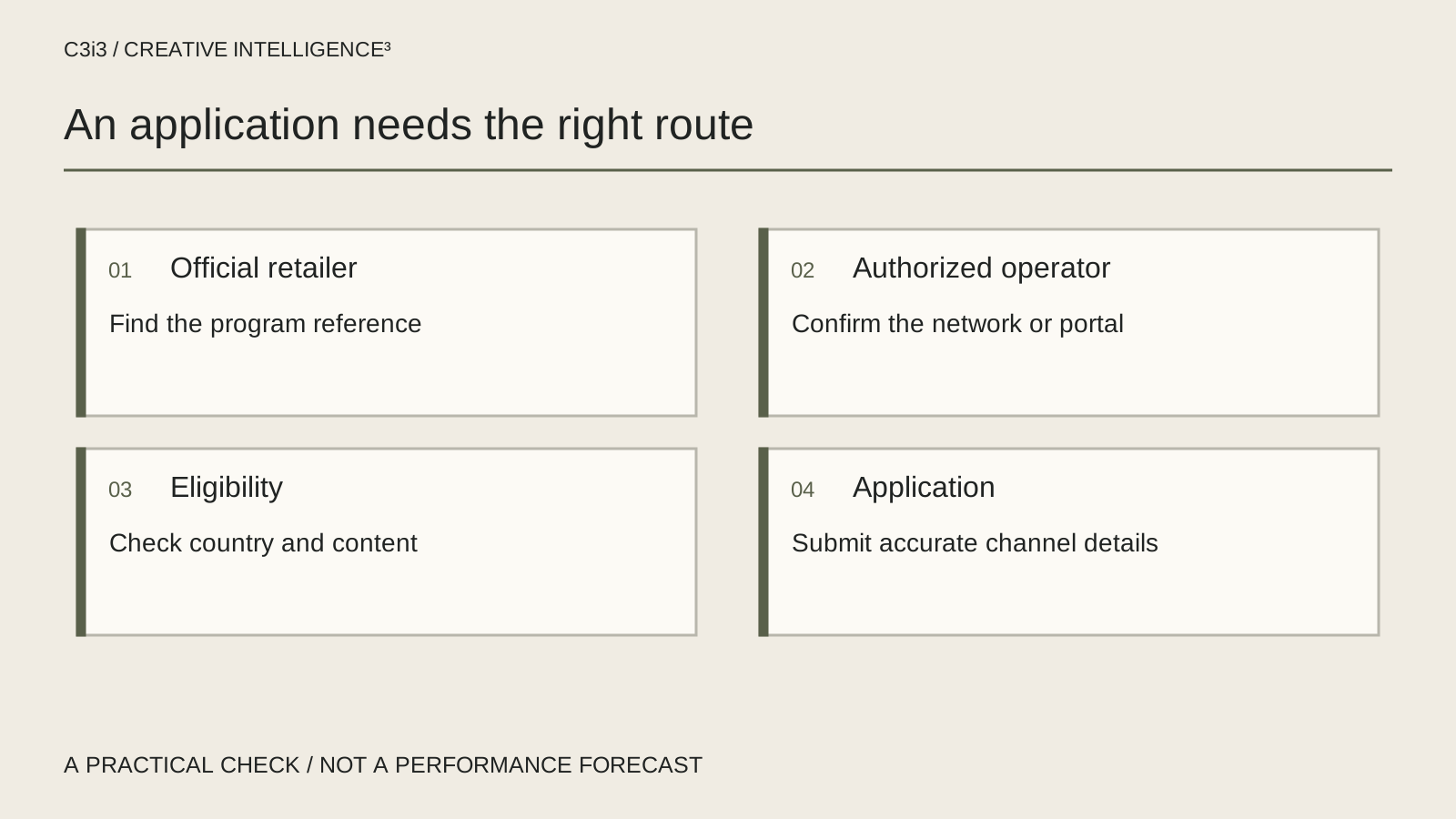
The official Ulta Affiliates & Creators page identifies three different pathways: UB Creates for creators, an Impact route for publishers and an Associate Ambassador program for Ulta employees. Use the current links on that page rather than assuming a similarly named opportunity is the right application.
Your actual publishing activity should guide the choice. A social creator who makes beauty videos and a company operating a searchable editorial site may need different account arrangements. If you do both, explain that clearly in the application or ask the official program contact which route is appropriate. Do not create multiple accounts just to see which one is accepted.
Keep the program name, owner, starting URL and application status in an operations record. That simple record prevents a manager from restarting the process or confusing a network membership with advertiser approval. It also makes later reporting easier to interpret, because the team knows which arrangement governs each placement.
How can you tell whether an application link is legitimate?
Start on the retailer's own website and follow its application control. A legitimate retailer can use an external platform to manage applications, so a different destination domain is not automatically suspicious. What matters is whether the current retailer page leads there and whether the request matches the task you intended to perform.
Check the page before entering account information. Confirm the program name, the role you are applying under and the information requested. Keep passwords and account recovery details out of emailed forms or unsolicited messages. If a social account connection is requested, review the permissions and confirm that the intended account is selected.
An old blog post is useful context, not the final authority for the enrollment route. Avoid copying someone else's referral parameters into your application research. If the retailer's link or destination does not work, use official support rather than searching indefinitely for alternate forms. Resolving an unclear route is preferable to sending business information through a site whose relationship to the program has not been established.
What application material helps explain your beauty content?
Make it easy for a reviewer to see what you publish and whom it is meant to help. Provide working public links and representative examples, not an archive of everything you have produced. Choose material that demonstrates clear explanations, useful product context and accurate presentation.
| Material | What it explains | Check before sharing |
|---|---|---|
| Current profile or website | Identity and editorial focus | Public links work |
| Representative tutorial | How you explain a real product task | Rights and relationship information are clear |
| Audience evidence | Who the recent content reaches | Figures are genuine and dated |
| Business contact | Who handles the application | Inbox is monitored by the correct owner |
A concise pack should reduce uncertainty rather than exaggerate reach. State which platform and period any figures describe. Keep private reports in the application process instead of making them public unnecessarily. If your content direction is changing, show the relevant recent work and explain the change plainly.
How should creators plan recommendations after approval?
Approval does not decide which product belongs in your next post. Start with the audience's question and the experience or research you can contribute. A comparison might explain applicator differences. A tutorial might demonstrate the order of a routine. A collection might help a viewer locate products already discussed in a video.
Describe your basis accurately. Do not imply that a researched product list is a firsthand review. Avoid turning a personal cosmetic observation into a universal result or a treatment claim. Useful limitations belong beside benefits, especially when the product format or application method may not suit the task a viewer has in mind.
Keep the content inventory separate from the application record. Record which product appears in each placement, the destination and who will maintain it. If content is also part of a paid campaign, document that scope separately. An affiliate link does not establish permission to reuse another party's material or automatically create an agreement for a brand to reuse your work.
Why should affiliate reporting separate clicks from confirmed activity?
Attention, navigation and transaction reporting answer different questions. A post can attract comments without producing a product click. A link can be clicked when the visitor is only comparing options. An initial transaction record can later change. Treat those as stages rather than adding them together as if they were equivalent outcomes.
Choose a reporting question for each content task. For a tutorial, you may want to know whether people found the relevant products. For a comparison article, the useful question may be which buying route readers tried to use. Match those questions to the reports actually available under your approved arrangement.
Before comparing reports, align their date ranges and check the applicable attribution conditions. Record unavailable data honestly. Do not reconstruct a viewer's private shopping activity or infer a commission merely from a public comment. If figures appear inconsistent, preserve the placement and date information needed for an official support question. A useful measurement system identifies what needs attention without pretending to show every step of the customer journey.
What should you check before publishing an Ulta affiliate placement?
Test the finished placement in the format the viewer will use. On a phone, open the article or description and follow the relevant link. Confirm that it lands on the product or collection described. Check current product availability for the intended audience and remove statements based on old application advice.
Keep relationship information understandable beside the recommendation. If you shorten a caption or repurpose a video, check that the explanation survives the edit. A polished layout should not make the business relationship harder to see. The recommendation should remain useful even if the reader decides not to buy.
Assign a maintenance owner. That person should know where official program messages arrive, which links are live and how to update a discontinued product. Review content before reusing it in another campaign. An organized first placement establishes a process you can repeat: clear purpose, appropriate program route, accurate product information, a tested destination and reporting that distinguishes observed activity from assumptions.
Keep this checklist beside you
Questions before the next step
Can a social creator apply without a traditional blog?
Ulta’s official page describes a creator pathway distinct from its publisher route. Review the current conditions and application for that pathway rather than assuming a traditional website is always required. The program controls approval, so an available application is not a promise of acceptance.
Does joining a network mean the retailer has approved me?
Do not assume that network access and advertiser acceptance are the same state. Check the specific program response and the terms shown for your account. Keep the status in your records and wait for the appropriate confirmation before describing yourself as an approved participant.
Should a publisher and a creator use identical application materials?
They can share accurate background information, but the evidence should explain the actual publishing model. A publication may need to show its website and editorial audience, while a social creator should highlight relevant channel work. Select representative examples and avoid inflating metrics or claiming a role you do not hold.

How C3i3 Can Help
C3i3 helps brands and creators organize affiliate content around clear audience questions and practical publishing workflows. We can help prepare a useful evidence pack, map the buying journey and define responsibility for links and reporting.
Bring the channels, product categories and application route you are considering. We can review the content and operational needs without promising program acceptance, retailer placement or financial outcomes.