






































In this article
You search for the Sephora affiliate program, but the advice you find may describe an older publisher application, a creator storefront or a separate campaign opportunity. Those are not the same decision. Applying through the wrong route can waste time and make it harder to understand what you are actually signing up to manage.
Start with the retailer's current pages. This guide explains how to separate the available routes, prepare useful application material and organize product recommendations around your audience. It is a research and operating checklist, not an assurance of acceptance or a claim about what you will earn.
Which Sephora affiliate route matches your channel?
The official Sephora affiliates page is the starting point for the current options. It describes My Sephora Storefront and also retains information about a publisher relationship through Rakuten. The retailer's storefront announcement explains the creator-focused U.S. launch. Those are useful distinctions when older guides point directly to a network.
Describe your publishing model before choosing a route. A website with searchable product comparisons needs a different operating plan from a channel built around routines and demonstrations. A team managing several properties also needs to decide which business or creator owns each application. Do not use one person's identity merely because they already have an account somewhere.
Follow the official application link from the retailer page and review the terms presented there. Conditions, available tools and review processes can change. Keep the source page and review date in your records so a later teammate understands why you chose that pathway.
What should a creator prepare before applying?
Prepare an application that can be understood without a long explanation. Your channel links should work, recent posts should reflect your actual subject and the public business contact should reach the person responsible for the application. If the site asks for supporting material, supply genuine examples you have permission to share.
Choose examples that show how you help someone make a beauty decision. A tutorial can demonstrate application clearly. A comparison can explain the difference between product formats. A routine can place an item in a realistic context. A collection of polished product shots alone may not show whether you can answer the questions your viewers ask.
Avoid filling gaps with invented audience claims. If you provide analytics, use current figures from the channel and state the reporting period. Distinguish subscribers from recent viewers and overall reach from a particular campaign. Keep private analytics in the verified application workflow rather than exposing unnecessary account information in a publicly accessible file. The objective is a clear, accurate application, not the largest possible set of numbers.
What is the difference between an affiliate storefront and a paid collaboration?
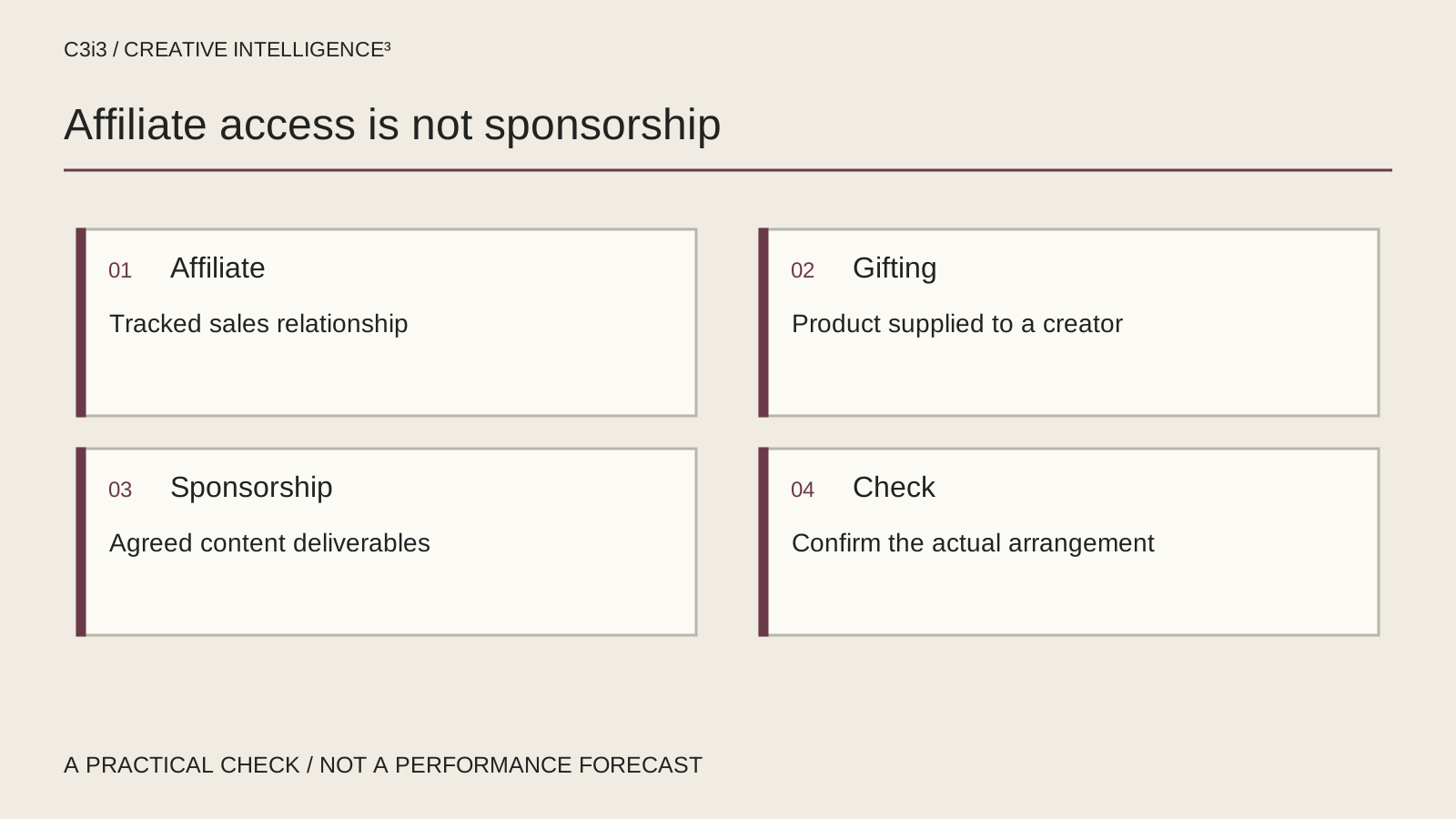
A storefront is a way to organize recommendations and connect them with a shopping path. A paid collaboration is an agreement about specific work and its conditions. One relationship does not automatically establish the other. A product arriving in the mail also does not explain what publishing obligation, if any, has been agreed.
| Arrangement | What to document | Avoid assuming |
|---|---|---|
| Application | Route, owner and current review status | That submission means approval |
| Affiliate participation | Approved placements and attribution rules | That every view creates a transaction |
| Storefront content | Product selection and maintenance owner | That recommendations never need updating |
| Paid collaboration | Deliverables, permissions and approval process | That an affiliate agreement includes a campaign |
Use precise language in emails and media kits. A brand should be able to tell whether you are proposing a content project, sharing a shopping destination or asking a program question. This also makes your own reporting clearer, because the purpose and evidence for each activity remain separate.
How should a beauty creator choose products for a storefront?
Organize around reader needs rather than treating the storefront as a complete catalog. A viewer looking for the items in a particular routine should be able to find that selection quickly. Someone comparing formats needs a useful explanation, not a long row of unrelated products. Name collections by the task they serve.
Include products you can discuss accurately. Identify firsthand observations as such and separate them from manufacturer information. If a selection is based on research rather than testing, say that. Do not imply that a polished mockup or generated image documents a product you have used. Keep any necessary image permissions and campaign restrictions with the editorial record.
Review old selections when products become unavailable, change names or no longer match the surrounding content. An update should not silently turn an earlier review into an endorsement of a different item. Explain changes where they matter to the reader. A maintained set of focused recommendations can be more useful than a large collection that sends people to products the creator no longer discusses.

What should you check when storefront reporting and content performance differ?
A content platform measures attention and interaction in its own environment. A shopping or affiliate platform measures activity according to a different set of events and rules. Do not combine those reports as if they were a single complete customer journey. A video view is not evidence of a product click, and a click does not prove a finalized transaction.
Define the questions you need the reporting to answer. Did a viewer reach the intended collection? Was a destination product available? Which content placement was being used? Are reported outcomes pending, adjusted or final? Keep dates and reporting periods aligned before comparing results.
Record what you cannot see. Privacy choices, multiple devices and other marketing interactions can leave gaps. Avoid assigning every untracked purchase to the creator or assuming that no visible purchase means the content had no value. When a discrepancy requires support, provide the relevant placement and date through the official route. Use the platform's current terms to interpret the report instead of adopting an old third-party explanation as a universal rule.
What needs checking before your Sephora content goes live?
Preview the complete experience on a phone. Open the link from the finished article, video description or profile tool. Confirm that the destination is the one you describe and that the products are relevant to the intended market. Remove claims of enrollment, availability or personal experience that you have not confirmed.
Make the commercial relationship clear beside the recommendation. Keep the explanation visible when adapting a long video into a short post or moving a recommendation into an article. A shopper should not need to guess whether a buying link has a business relationship behind it.
Set a review owner and date. Check the official program page again when changing account arrangements, adding a new channel or using content in a different campaign. Keep the original scope of any paid work separate from the affiliate content inventory. This gives you a practical way to maintain accurate recommendations without assuming that a program page or application will stay unchanged forever.
Keep this checklist beside you
Questions before the next step
Does applying to My Sephora Storefront guarantee acceptance?
No. An application is a request for consideration under the program’s current conditions. Use the retailer’s official application route and provide accurate information. Wait for the official decision before describing yourself as an accepted participant or planning content that depends on particular account features.
Is a storefront the same as a sponsorship?
No. A shopping destination and a commissioned content project are different arrangements. Clarify deliverables, permissions and any approval process separately when discussing a campaign. Do not describe an affiliate relationship as evidence of a paid brand partnership.
Should I keep every product I have ever mentioned in my storefront?
Review products for relevance and availability rather than automatically retaining everything. Use focused collections connected to actual content, check old destinations and explain meaningful changes. A reader should be able to understand why an item is included and which statements reflect your own experience.

How C3i3 Can Help
C3i3 can help creators and brands plan useful beauty content, product selections and the path from a recommendation to a shopping destination. We can organize application materials, content responsibilities and reporting questions into a manageable workflow.
We do not control retailer eligibility or campaign approval. Bring your channels and the customer journey you want to improve, and we can discuss the content and tracking work required.