






































In this article
One buyer wants to see the installation. Another cares about the reporting screen. A third needs to understand which configuration applies to their situation. A single long demonstration can make each person wait through material they do not need.
Interactive video offers a different structure: let the viewer choose the next relevant explanation. The value comes from a useful decision map, not from adding buttons to every scene.
Which decisions deserve an interactive path?
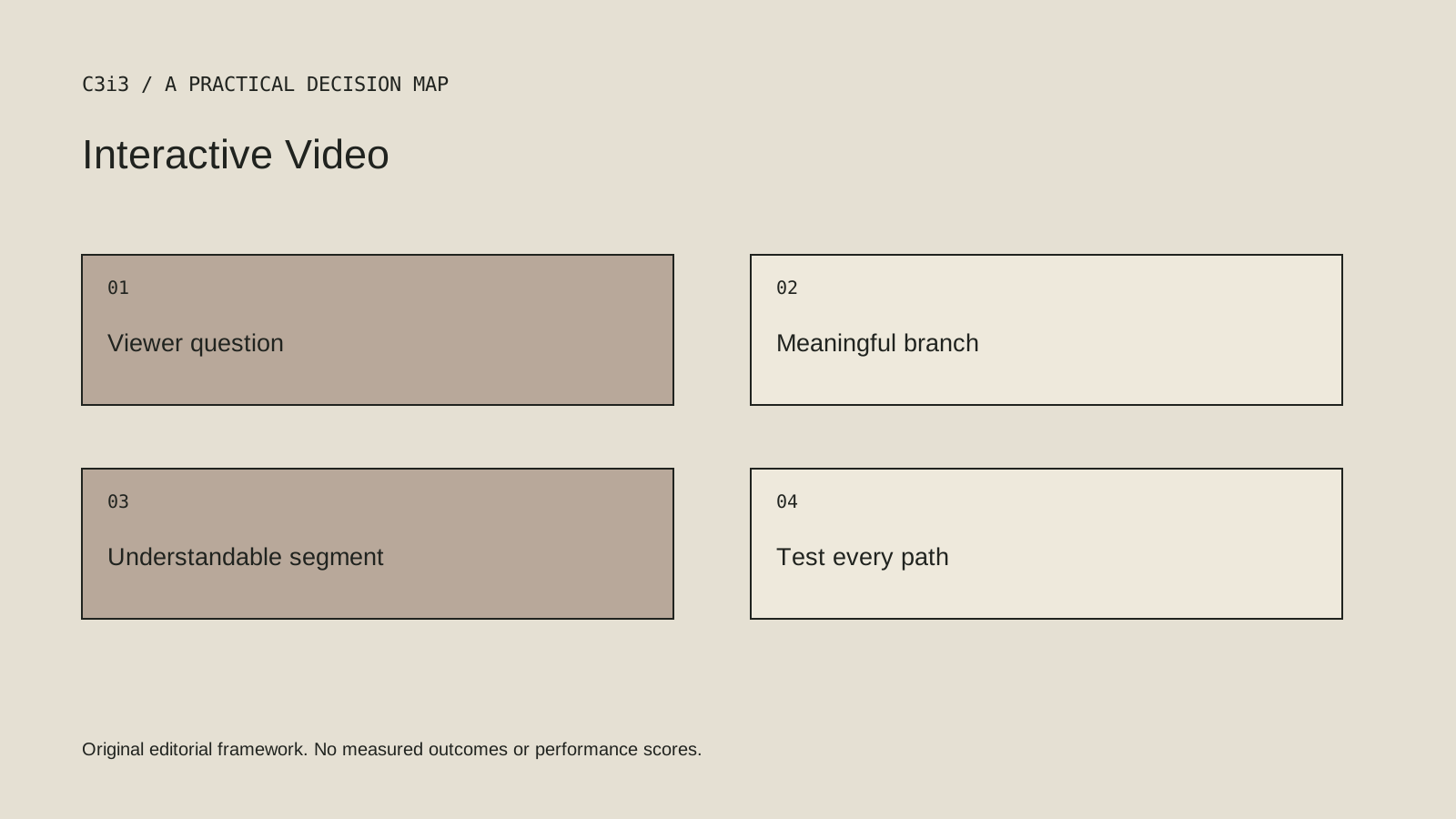
Look for questions that lead to genuinely different information: product configuration, use case, role or stage of evaluation. If every button leads to essentially the same pitch, the interaction adds work without helping the viewer.
Begin with a short map on paper. Name what the viewer knows at each point and what they need next. This helps prevent a branching experience from becoming an elaborate version of an unclear sales presentation.
How should you write the individual segments?
Give each segment a single job and enough context to make sense when reached directly. Avoid references to an earlier scene that a particular path may skip. Keep product claims and terminology consistent across the branches.
Use the same approved source information for every segment. When one feature changes, the team should be able to identify which paths require updating. A collection of separate scripts without a shared reference can drift into contradictions.

What should the interface make obvious?
Show what can be selected, what happens after selection and how to return or continue. Use readable labels that describe the information rather than vague instructions such as discover more. Keep keyboard access and an understandable linear alternative in the design.
Do not require a viewer to make a complicated choice before they understand the offer. The first screen should help them orient themselves. Interaction should reduce uncertainty, not turn a demonstration into a navigation test.
What must be checked before publication?
Test every branch and destination with the final media. Check mobile controls, captions, audio, pause behavior and any linked page or form. An unpublished or outdated destination can interrupt the explanation even when the video itself works.
Review loading behavior as well. A path-based experience should not automatically require every visitor to download every possible clip. Choose an implementation that suits the actual audience and preserves useful content when an interactive feature fails.
What can the results tell your team?
Selections can suggest which explanations viewers seek, but they do not reveal the complete buying decision. Combine interaction evidence with user feedback and appropriate enquiry information. Avoid treating a clicked path as proof of purchase intent.
Use the findings to improve the underlying product explanation. If nearly everyone needs the same detail, that information may belong earlier on the main page. The interaction can teach the business something even when the next version becomes simpler.
Put the decision into practice
- Give each branch a distinct information purpose.
- Make segments understandable when reached directly.
- Provide clear controls and a linear alternative.
- Test every branch and linked destination.
- Use selections as clues rather than proof of intent.
Sources and editorial method
Reviewed November 6, 2026. Linked announcements retain their original dates. Product documentation establishes described capabilities; it does not establish that a subject is currently a search breakout. Examples and decision frameworks are editorial analysis.
Questions readers ask
Does interactive video suit every commercial?
No. A short linear explanation may be clearer when the message is simple. Use branching when the viewer has meaningful choices.
Can interactive video help a complex B2B product?
It can organize different explanations for different questions. It still needs accurate product information, a clear interface and testing with the intended audience.
How C3i3 can help
C3i3 helps businesses turn a clear customer question into useful content, a coherent digital experience and a manageable production process. Bring the product, page or workflow you are reviewing so we can discuss the work it needs.