






































In this article
A buyer rotates an item because they need to see the connection on the back. Another wants to understand how a configuration changes the assembly. Those are specific information problems. They are stronger reasons to consider 3D product visualization than simply wanting the website to look more advanced.
A model can add useful views, but it also adds another representation of the product that someone must verify and maintain.
What should a customer learn from the model?
Choose the decision first: understanding proportions, inspecting a detail, comparing configurations or seeing how components relate. A rotating object that reveals no additional information can become decoration rather than a buying aid.
Write the question on the brief and identify the view that answers it. This gives the team a practical acceptance test. The correct output may be an interactive model, an exploded diagram or a short sequence of annotated reference images.
Where does a dependable model begin?
Use accurate reference material and identify who can confirm it. A designer’s attractive interpretation is not a substitute for product specifications when the shape or dimensions influence the purchase. Separate engineering accuracy from presentation choices such as background and lighting.
If several variants exist, list which one the asset represents. Keep an identifier and revision date with the file. When the product changes, that record helps the team decide whether a previously approved model remains appropriate.

How do you integrate 3D into a product page?
Platforms such as Shopify document support for 3D product media, but the available presentation depends on the implementation and supported devices. Confirm the technical requirements before commissioning files.
Give the model a useful place among reference photographs, specifications and explanatory text. Show controls clearly and preserve a dependable fallback. A customer should not lose access to important product information because an interactive view cannot load or cannot be operated.
What should the performance review include?
Check the actual page on representative mobile devices and connections. Review file weight, the initial loading experience and whether the model delays more important information. An asset can be impressive in a studio demonstration and cumbersome on the buying page.
Use a poster or reference image where appropriate and load additional interaction deliberately. The aim is to let the customer choose detail without making every visitor download the heaviest experience before understanding the product.
How should a team judge whether it is worth maintaining?
Ask whether the asset answers questions that previously required a call, a separate document or several confusing photographs. Look for evidence in user feedback and recurring enquiries rather than assuming interaction is valuable by itself.
Assign an owner for product revisions and platform changes. A correct, maintained diagram can be more helpful than an elaborate model that gradually stops matching the item. Choose the representation the business can keep accurate.
Put the decision into practice
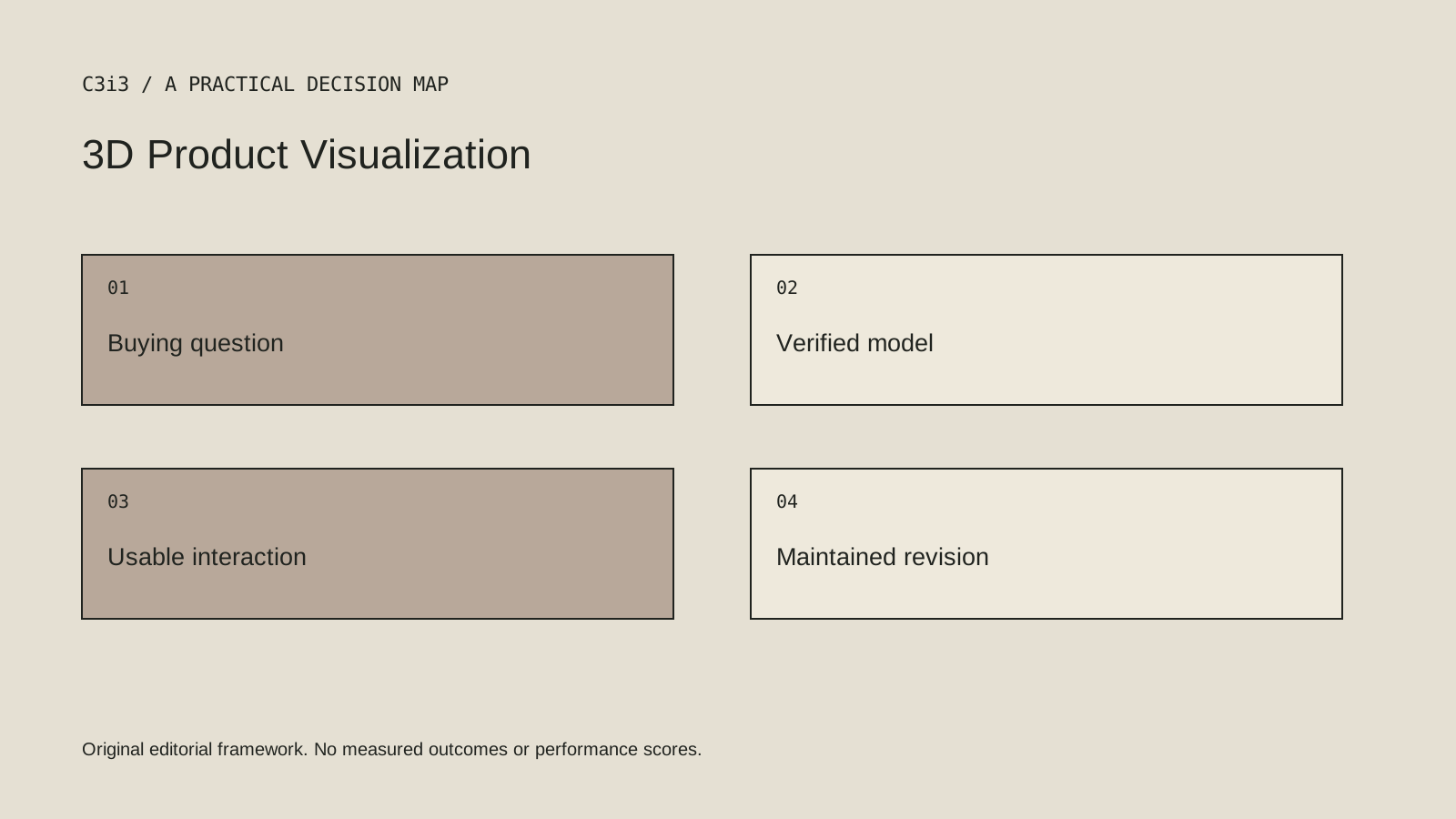
- Name the buying question before choosing the format.
- Verify the model against approved product information.
- Record the variant and revision.
- Provide an accessible fallback.
- Test loading and controls on a phone.
Sources and editorial method
Reviewed November 6, 2026. Linked announcements retain their original dates. Product documentation establishes described capabilities; it does not establish that a subject is currently a search breakout. Examples and decision frameworks are editorial analysis.
Questions readers ask
Does every product need an interactive 3D model?
No. Use the format when it adds useful information. Reference photographs, detail views or a diagram may answer the question more simply.
Can a generated concept model act as a technical specification?
Do not assume it is accurate. A technical representation needs verification against the actual product and the requirements of its intended use.
How C3i3 can help
C3i3 helps businesses turn a clear customer question into useful content, a coherent digital experience and a manageable production process. Bring the product, page or workflow you are reviewing so we can discuss the work it needs.