






































In this article
You have explained the same process to several customers. You have a checklist that prevents a recurring mistake. You have a way of organizing an assignment that other people struggle to manage. Some of that knowledge may be useful as a digital product.
The sensible starting point is not a promise of passive income. It is a specific task that a buyer would find easier with a well-made resource.
What could become a digital product?
A template, worksheet, instructional resource or small software tool can package part of an existing skill. The format should follow the task. A process that needs an editable working file may not be well served by a long video course.
Write down what the person should be able to do after using the resource. Avoid a broad promise such as transform your business. A more useful objective is organize the information needed for a particular handover or evaluate a specific set of options.
How do you separate your knowledge from someone else’s material?
Review the source of every example, image, dataset and template. A resource created during client work may contain information or rights you cannot republish. Replace private examples with clearly labeled hypothetical material where appropriate.
Do not assume that generating a new version removes a third party’s rights or makes confidential information public. Keep a source and permission record. Ask an appropriate adviser about an unresolved ownership issue before distributing the product.

What should the first version contain?
Include enough instruction to make the resource usable without requiring the buyer to guess how it works. Show one clear example and explain the boundaries. If the resource is a spreadsheet or tool, test the interactions and calculations that matter to its purpose.
Keep the promise proportionate to the deliverable. A planning worksheet can help organize a decision. It should not be presented as a guarantee of legal compliance, a job, a customer or an earnings result.
How do you test whether it is useful?
Ask people in the intended audience to complete the task using the resource. Observe where they hesitate or misinterpret an instruction. A compliment about the design is different from evidence that someone can use the product successfully.
Use that feedback to improve the instructions and examples. If every person needs a separate explanation, consider whether the product is missing a necessary step or whether the task actually requires a service rather than a self-contained file.
What belongs on the product page and after delivery?
Explain the format, included files, compatibility, intended user and support boundaries. Show a truthful preview so a buyer understands what will arrive. Check the delivery process and provide an appropriate contact route for problems.
Assign an owner for updates. A resource about a changing platform can become outdated even when the file still downloads correctly. Maintain a version record and make clear when the content was reviewed. A digital product is still something a business must manage.
Put the decision into practice
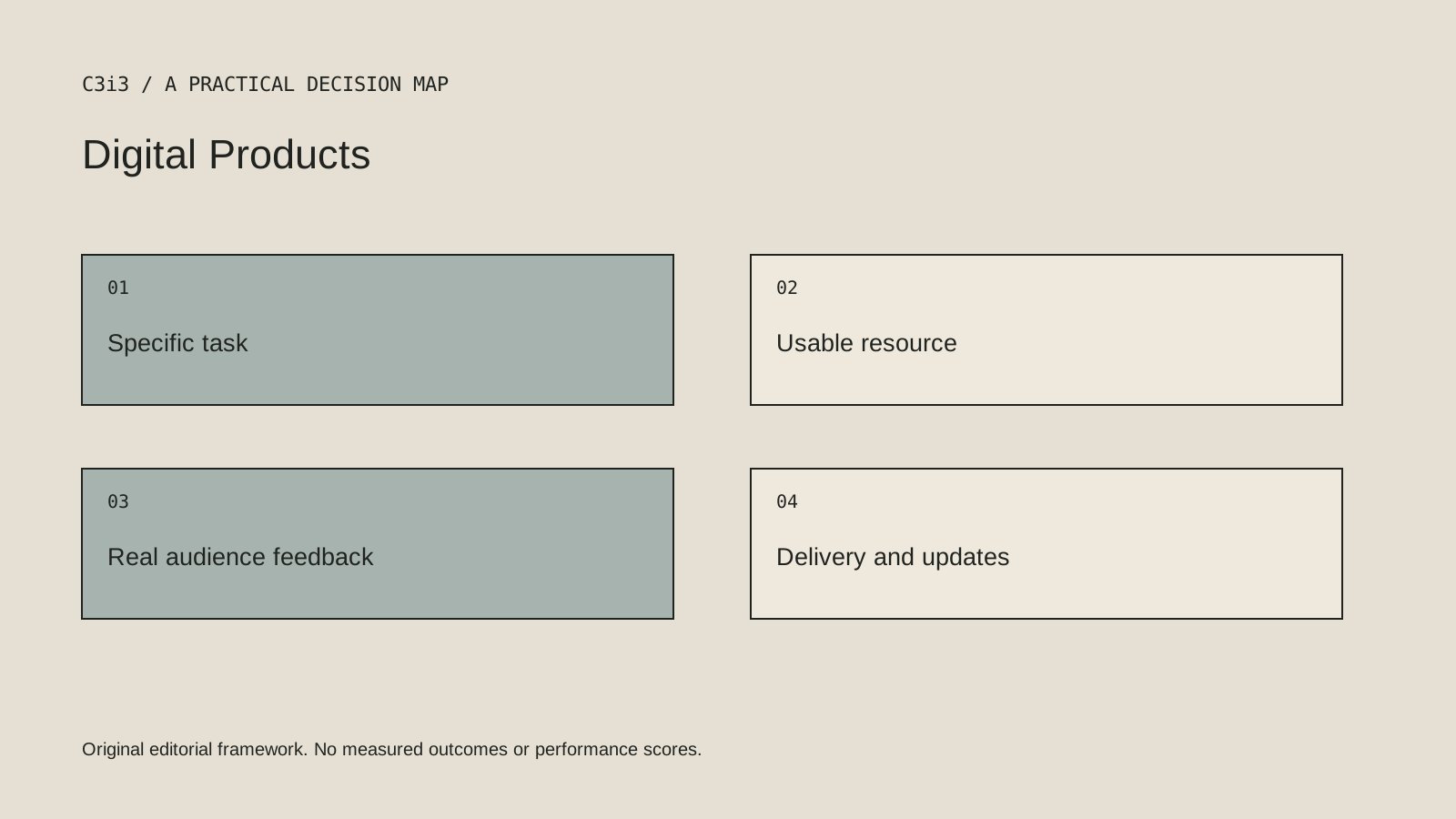
- Choose a specific task and intended user.
- Check ownership and permissions for included material.
- Test the resource with someone outside the production team.
- Describe the actual deliverable and limitations.
- Plan delivery, support and updates.
Sources and editorial method
Reviewed November 6, 2026. Linked announcements retain their original dates. Product documentation establishes described capabilities; it does not establish that a subject is currently a search breakout. Examples and decision frameworks are editorial analysis.
Questions readers ask
Does a digital product have to be software?
No. A template, workbook, educational resource or other suitable digital deliverable may be appropriate. Choose the format that helps the task.
Does creating one guarantee recurring income?
No. Demand, distribution, usefulness, support and other factors affect the business. Treat it as a product to validate, not a replacement-income promise.
How C3i3 can help
C3i3 helps businesses turn a clear customer question into useful content, a coherent digital experience and a manageable production process. Bring the product, page or workflow you are reviewing so we can discuss the work it needs.