






































In this article
A business owner sees an impressive generated clip and asks a reasonable question: do we still need a production shoot? Sometimes a particular scene can be generated. That is different from saying the entire commercial has been solved.
A commercial has to explain something true about an actual offer. It needs a sequence that a viewer can follow, sound that supports the message and a destination that matches the ad. Treat the generator as one production choice inside that larger assignment.
What does an AI video generator actually produce?
Adobe documents a workflow for generating clips and adding them to an editing timeline. Reference frames can help guide a scene. That capability can be useful for a concept, an atmospheric transition or an image that would be difficult to capture. It does not independently establish that a product performs as shown.
Begin with a shot list that identifies the purpose of every scene. Is this explaining a mechanism, showing an actual result or establishing a mood? That distinction tells the production team which material can be illustrative and which must be supported by something real.
Which parts of a commercial should you film?
Consider a company demonstrating how an equipment component is installed. A generated industrial setting might provide context, but a fabricated hand movement or connection could teach the wrong procedure. The installation sequence is evidence, not decoration.
The same distinction applies to food, clothing, a software interface or an actual service visit. Do not let an attractive output quietly change the offer. If the product, process or result cannot be depicted reliably, use controlled photography, a screen recording, a diagram or a clearer explanation instead.

Why do generated scenes need an editing plan?
An assortment of beautiful clips does not automatically become a story. The viewer still needs to recognize what is being offered, understand why it matters and know what to do next. Decide that order before generating alternatives.
Build a rough edit using simple placeholders. Check whether the message works without relying on spectacle. Then identify where generated material adds meaning. This makes it easier to reject a visually impressive scene that interrupts the explanation rather than improving it.
What should the approval checklist include?
Compare the finished sequence against the real product information. Check labels, dimensions, interface text, continuity and any implied performance claim. Review the sound and captions as carefully as the image. A voiceover can make a claim that the visuals never support.
Record where each asset came from and the permissions or product terms relevant to its use. Commercial-use language from a vendor is not a universal answer to questions about trademarks, likenesses or third-party material. Escalate an unresolved rights question before publication.
How do you choose a hybrid production approach?
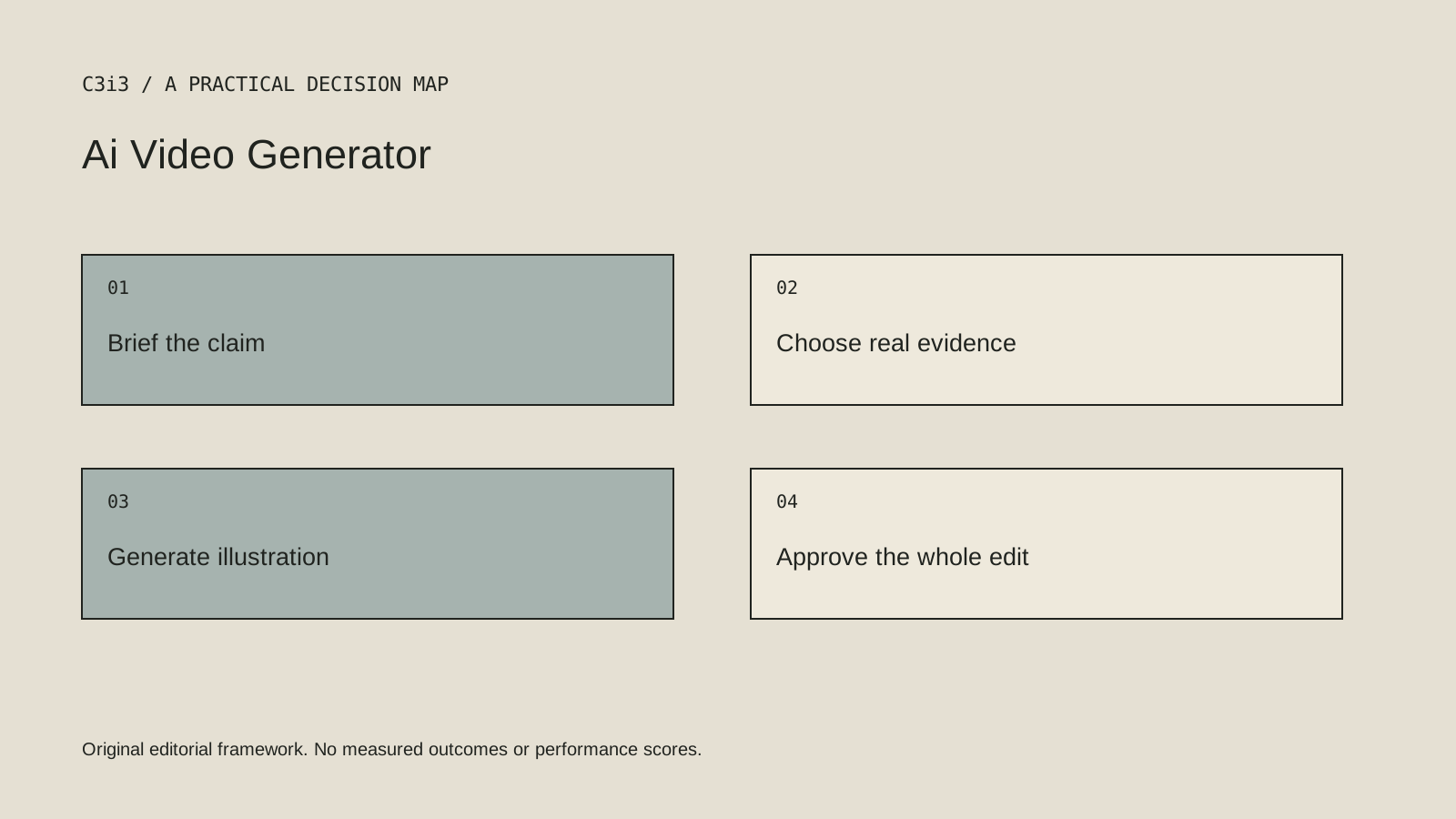
Write two lists: scenes that require evidence and scenes that explain or illustrate. Allocate a method to each, then review the whole sequence as one commercial. This can produce a small, purposeful shoot rather than an all-or-nothing argument about AI.
The useful question is not whether a generator can make something cinematic. It is whether each production choice helps a buyer understand the business accurately. Keep that test visible when comparing concepts, revisions and final exports.
Put the decision into practice
- Give each planned shot a clear purpose.
- Separate illustrative scenes from evidence of a product or service.
- Review the complete edit, captions and sound.
- Keep an asset and permission record.
- Check that the landing page matches the commercial.
Sources and editorial method
Reviewed November 6, 2026. Linked announcements retain their original dates. Product documentation establishes described capabilities; it does not establish that a subject is currently a search breakout. Examples and decision frameworks are editorial analysis.
Questions readers ask
Can generated video replace every product demonstration?
No. A depiction must accurately represent the product and the claim being made. Some demonstrations need real footage, a verified screen recording or another dependable form of evidence.
Does this article recommend a specific generator?
This is a production decision guide. Compare tools separately against the required output, terms and editing workflow rather than assuming one tool suits every commercial.
How C3i3 can help
C3i3 helps businesses turn a clear customer question into useful content, a coherent digital experience and a manageable production process. Bring the product, page or workflow you are reviewing so we can discuss the work it needs.