






































In this article
Your team can write a polished article around a phrase no customer uses. Keyword research tools help investigate the language and demand behind a topic, but the final decision still requires understanding what the searcher wants.
These five options offer different evidence. Use them to develop an informed question, not to turn a large volume figure into a promise of visitors.
How we chose these 5 options
This editorial shortlist uses official product documentation and the practical criteria below. The order groups different workflows; it is not a laboratory performance ranking. We have not represented these products as hands-on tests. Features, availability and account access can change, so check the linked documentation for your intended setup.
| Criterion | Question to answer |
|---|---|
| Customer wording | Does the term describe a question our audience genuinely asks? |
| Market and date | Which country, language and reporting period does the estimate cover? |
| Page purpose | Would one useful page satisfy the terms we plan to group? |
1. Google Keyword Planner
Google Ads keyword discovery and campaign keyword planning.
Consider it for: Checking search wording and advertising-oriented demand evidence.
Check before choosing: Its advertising planning metrics should not be presented as organic ranking forecasts.

2. Ubersuggest
Keyword discovery, site audits and project tracking.
Consider it for: A connected workflow for keyword planning and website issue review.
Check before choosing: Confirm the language, location, data date and plan access for each report.
3. Semrush
Keyword, competitor, technical health, rank and AI-visibility toolkits.
Consider it for: Teams that need several research and reporting workflows.
Check before choosing: Check the exact toolkit and limits rather than assuming every feature is included.
4. Ahrefs
Keywords Explorer, Site Explorer, Site Audit and rank/brand reporting tools.
Consider it for: Comparing search opportunities with competitor and backlink evidence.
Check before choosing: Third-party estimates are not the same as the site’s first-party analytics.
5. Bing Webmaster Tools
Keyword research, technical Site Scan and indexing tools.
Consider it for: Adding Bing-specific search evidence alongside Google reports.
Check before choosing: Bing demand and indexing are different from Google data.
How to narrow the shortlist
Begin with the service or product in the words a customer would use. Expand into questions and specific situations, then inspect the type of page currently answering the query. Someone searching for a definition may need a different experience from someone comparing providers.
Keep the original keyword separate from your proposed headline. A question title can contain a researched term without inheriting that term’s entire search volume. Group close variants when the same page can genuinely answer them instead of producing a separate thin article for every wording.
A practical check before committing
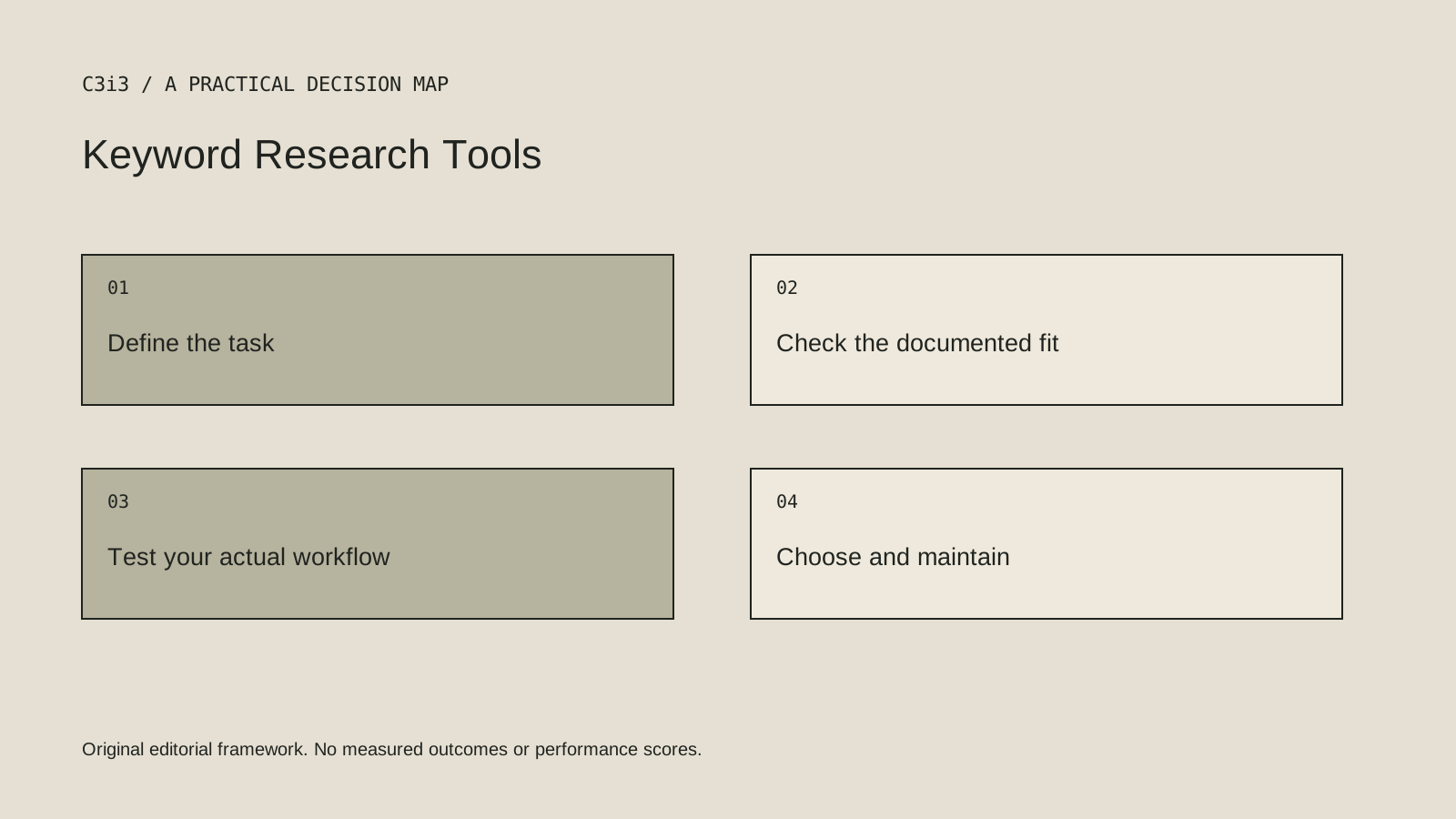
Choose one familiar customer question and compare the wording, market and evidence returned by the tools. Write a short brief explaining who searches, what they need and what your page would add. If the brief cannot explain that connection, the keyword needs more investigation before writing begins.
What this comparison does not establish
Google Ads planning data, Bing research and third-party organic estimates describe different evidence. Do not combine their numbers as if they were one measured audience.
Put the decision into practice
- Does the term describe a question our audience genuinely asks?
- Which country, language and reporting period does the estimate cover?
- Would one useful page satisfy the terms we plan to group?
- Review the current official documentation and actual handover.
Sources and editorial method
Reviewed November 6, 2026. Linked announcements retain their original dates. Product documentation establishes described capabilities; it does not establish that a subject is currently a search breakout. Examples and decision frameworks are editorial analysis.
Questions readers ask
Is the first option the best choice for every business?
No. The list covers different use cases. Use the stated criteria and your actual requirements to decide which options deserve further evaluation.
Are these hands-on product reviews?
No. They are research-based editorial comparisons using official documentation and practical selection criteria. No claim of personal testing or a guaranteed result is made.
How C3i3 can help
C3i3 helps businesses turn a clear customer question into useful content, a coherent digital experience and a manageable production process. Bring the product, page or workflow you are reviewing so we can discuss the work it needs.