







































In this article
A business can have an accurate website and still find an outdated listing, a duplicate record or a confusing service description elsewhere. Local SEO tools help identify those details, but they do not create a real office or establish that a business is eligible for every profile feature.
Start with the genuine business information. Then choose a tool for the specific maintenance or visibility question.
How we chose these 5 options
This editorial shortlist uses official product documentation and the practical criteria below. The order groups different workflows; it is not a laboratory performance ranking. We have not represented these products as hands-on tests. Features, availability and account access can change, so check the linked documentation for your intended setup.
| Criterion | Question to answer |
|---|---|
| Business accuracy | Can we review the real name, phone, website and relevant listing details? |
| Visibility context | Does the report identify the query and location being observed? |
| Ongoing ownership | Who can correct a record and review later changes? |
1. Google Business Profile
Business presence management on Google Search and Maps.
Consider it for: Maintaining the actual business record before buying monitoring tools.
Check before choosing: Eligibility, accurate representation and verification still apply; a profile is not a ranking guarantee.

2. BrightLocal
Local visibility tracking, listings and review management capabilities.
Consider it for: Monitoring local presence across locations and neighborhoods.
Check before choosing: Check the geographical coverage and workflow needed for each location.
3. Whitespark
Local rank tracking, citation finding, profile and reputation products.
Consider it for: Investigating citation opportunities and local ranking patterns.
Check before choosing: Its separate tools and services address different jobs; choose the needed workflow.
4. Semrush Local
Listing management, reviews, profile optimization and Map Rank Tracker.
Consider it for: A team combining local presence work with a wider research stack.
Check before choosing: Confirm local toolkit coverage and access separately from the main SEO toolkit.
5. Localo
Google Business Profile tracking, auditing, content, reviews and reporting.
Consider it for: An owner or agency maintaining an ongoing profile workflow.
Check before choosing: Assess suggested tasks against Google’s actual business rules rather than automating unreviewed changes.
How to narrow the shortlist
Keep a source of truth for the business’s public information and authorized accounts. For a service-area business, follow the platform’s rules for address display and coverage. A list of cities is not a substitute for genuine operations, and adding service areas does not guarantee equal map visibility everywhere.
Use reporting to ask narrower questions. Is the wrong website linked? Does a duplicate record exist? What does a particular search observation show? Keeping these questions separate makes it easier to choose the relevant workflow and assign corrections.
A practical check before committing
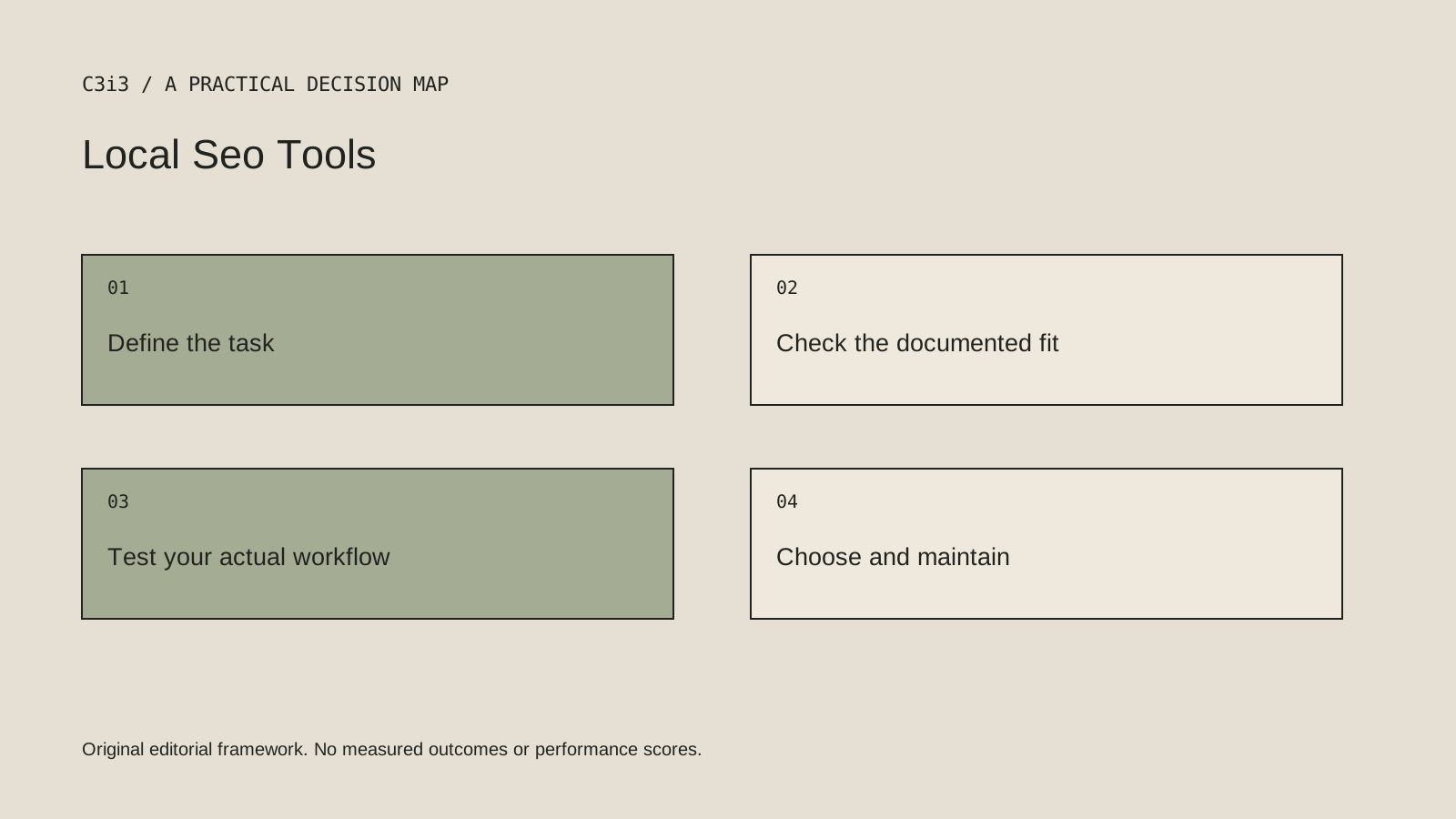
Review one actual listing from discovery through correction and follow-up. Confirm who controls the account and what the tool can change versus merely report. For a location-based visibility report, retain the query, observation location and date so a later comparison is meaningful.
What this comparison does not establish
Map visibility is influenced by factors a listing tool does not control. Avoid interpreting a grid or score as a placement guarantee.
Put the decision into practice
- Can we review the real name, phone, website and relevant listing details?
- Does the report identify the query and location being observed?
- Who can correct a record and review later changes?
- Review the current official documentation and actual handover.
Sources and editorial method
Reviewed November 6, 2026. Linked announcements retain their original dates. Product documentation establishes described capabilities; it does not establish that a subject is currently a search breakout. Examples and decision frameworks are editorial analysis.
Questions readers ask
Is the first option the best choice for every business?
No. The list covers different use cases. Use the stated criteria and your actual requirements to decide which options deserve further evaluation.
Are these hands-on product reviews?
No. They are research-based editorial comparisons using official documentation and practical selection criteria. No claim of personal testing or a guaranteed result is made.
How C3i3 can help
C3i3 helps businesses turn a clear customer question into useful content, a coherent digital experience and a manageable production process. Bring the product, page or workflow you are reviewing so we can discuss the work it needs.