






































In this article
Your product is ready, your creator list looks promising and the outreach email sounds enthusiastic. Then nothing happens. It is tempting to send more messages, change the subject line or assume creators are not interested in smaller brands.
Often the message asks the recipient to do too much work. They cannot tell why you chose them, what you want made, whether the product is relevant or who is responsible for the discussion. Good influencer outreach removes that uncertainty. It gives the creator enough information to decide whether a conversation makes sense.
Is the email going to the creator's actual business contact?
Begin at the creator's official channel or website. Check the published inquiry instructions and whether a manager or agency is named. Similar usernames, repost accounts and third-party contact databases are not equivalent to a verified business route. Do not assume a guessed email belongs to the right person.
Keep the source link and the date in your working list. This is particularly useful when a creator changes management or separates personal and commercial accounts. If the official profile asks for a form, use that route instead of sending the same pitch through every public channel.
Your first message should also make your own identity easy to verify. Use a business email, a working company website and a clear signature. Explain your role accurately. If an agency is making the inquiry, identify the brand it is authorized to discuss or explain what can be shared at this stage. An unclear sender makes even a relevant offer look like a risky interruption.
Does the creator know why you selected them?
Replace “we love your content” with one useful observation. Mention a specific format or topic and explain how it relates to the proposed work. You do not need to flatter the creator or summarize their entire channel. You need to demonstrate that the inquiry was selected with care.
For example, a kitchen storage brand might refer to a recent small-space organization video and ask whether a demonstration addressing drawer measurements fits the creator's audience. That is more useful than praising their lifestyle aesthetic and attaching a large catalog.
Keep the claim proportionate. A public video can show a topic and presentation style. It cannot establish private audience income, purchase behavior or willingness to recommend your product. Say what you observed and ask about the missing information. The goal of the first message is to open an informed discussion, not pretend the brand has already completed a full audience audit.
What belongs in a first influencer outreach message?
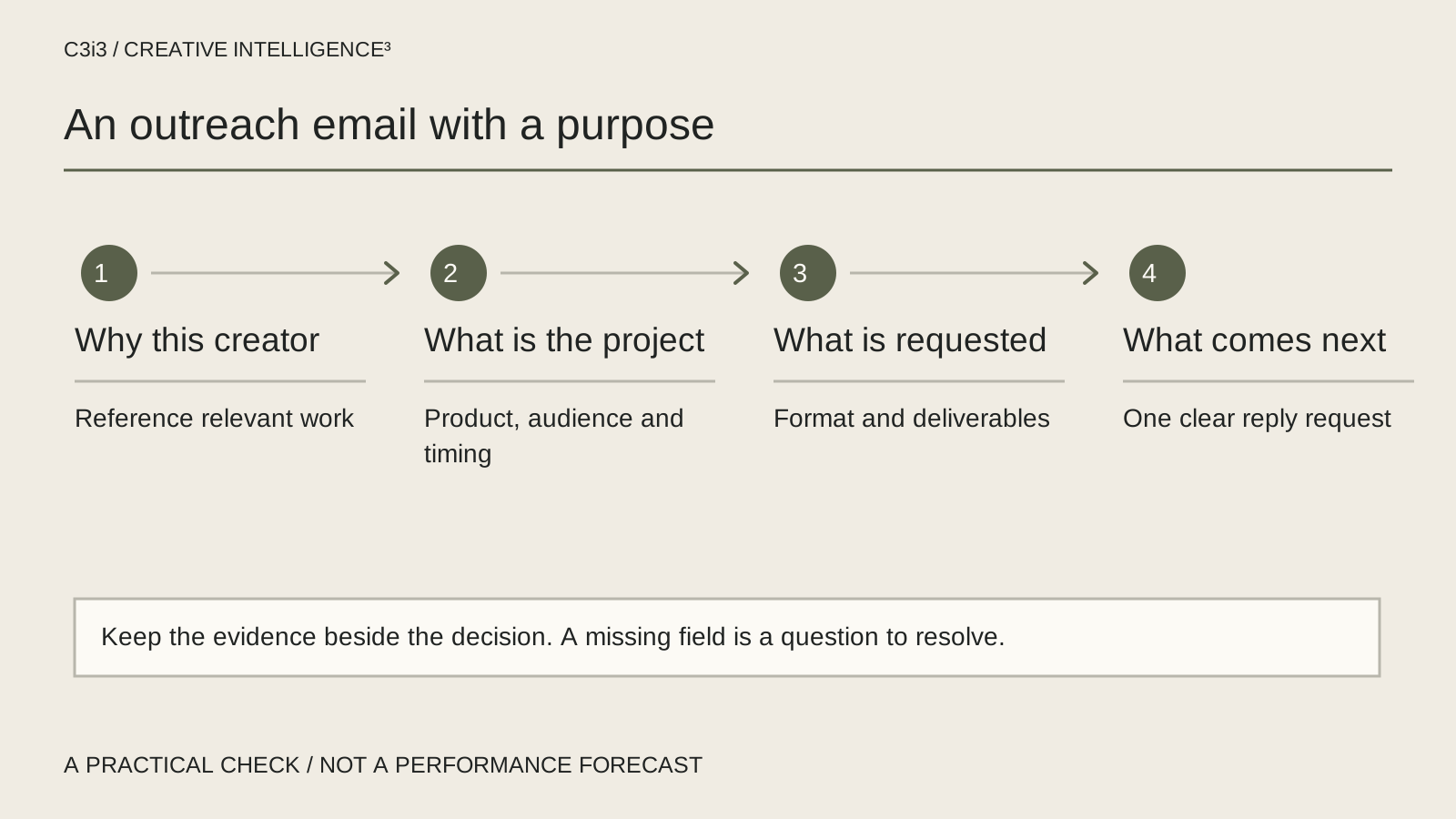
Give the recipient enough context to assess fit without opening a folder full of attachments. A useful first email can cover the brand, product, intended audience, proposed content format, approximate timing and the next step. If the scope is still flexible, say which decisions are open.
Here is an illustrative structure, not a promise of a response:
| Part | What to include |
|---|---|
| Subject | Brand name, product category and collaboration question |
| Reason | The relevant creator content you reviewed |
| Fit | The customer task your product addresses |
| Scope | Proposed channel, format and production window |
| Next step | Ask whether to share a brief and discuss availability |
Use plain wording: “We are planning a product demonstration and would like to discuss whether the topic fits your audience.” Avoid sending a finished script as if participation has already been agreed.
Are you asking for a collaboration or an undefined favor?
Be specific about the kind of relationship you are proposing. Sending a product, requesting a sponsored post, seeking affiliate participation and licensing existing content are different conversations. A creator should not have to discover the actual request after several emails.
Do not use a casual phrase to conceal a large list of deliverables. If your campaign depends on multiple versions, usage in advertising, a particular platform or a reporting requirement, identify that scope before asking for production. You can discuss details in a brief, but the first contact should not create a false impression.
Also leave room for a genuine product assessment. The FTC's guidance for influencers makes clear that endorsements should reflect truthful experience and that relevant brand connections need appropriate disclosure. A usable brief supports accurate product explanation. It does not ask the creator to hide the relationship or claim experience they do not have.

How should you follow up when there is no reply?
A follow-up should reduce uncertainty or add relevant information. You might confirm the production window, explain a changed product availability date or provide a concise brief that was requested. Repeating “just checking in” without context gives the recipient little reason to reconsider.
Keep a record of the original contact, follow-up and response. Agree on a reasonable internal follow-up policy rather than letting several colleagues contact the same person independently. If the creator declines or asks not to be contacted, update the list and respect that instruction.
Silence is not permission to escalate into personal channels, repeatedly message relatives or search for private contact details. It may simply mean the fit or timing is wrong. Review your own outreach patterns: are messages specific, sent to the correct route and easy to assess? Fix those issues before increasing volume. A smaller set of well-grounded inquiries can produce clearer learning than indiscriminate sending.
What should happen after a creator expresses interest?
Move from a pitch to a shared working brief. Confirm the intended audience, the product information available, the proposed deliverable and the decision-maker on each side. Record deadlines as discussed rather than treating a hopeful launch date as an accepted commitment.
Separate content production, publication and reuse permissions. A creator may be open to one format but not another. Ask which elements suit their channel and which need different production. Clarify the review process so factual checking does not become an unexpected demand to replace the creator's voice.
Finally, prepare the customer journey before the content goes live. Supply the right page or approved product destination, verify that it works on mobile and coordinate any measurement requirements. Google's campaign URL guidance is useful when a website link needs consistent campaign labels. Outreach succeeds operationally when an interested creator can move into a clear process, not when the team merely receives a positive email.
Keep this checklist beside you
Questions before the next step
Should we put the creator's name in the subject line?
A name can help identify the intended recipient, but it does not replace a relevant proposal. Use a subject that makes the brand and purpose understandable. Avoid misleading urgency or implying an existing agreement. The content of the message should demonstrate why this creator was selected.
Can we send the same brief to every creator?
Keep common product facts consistent, but adapt the creative question and audience fit. Different creators may need different formats or explanations. Maintain a shared source of approved information so personalization does not introduce contradictory claims or promises.
Should we send product before the creator replies?
Confirm the appropriate process and shipping arrangements first. An unsolicited delivery does not establish consent to publish or permission to reuse content. Clarify the purpose of any shipment and the proposed relationship before treating it as part of a production plan.

How C3i3 Can Help
C3i3 can help research relevant creators, prepare clear outreach and build the brief, landing page and reporting process around an agreed campaign. Bring the customer problem and the product facts. We can help make the next conversation specific enough for both sides to assess.