







































In this article
Your company has followers, subscribers and people who repeatedly see its content. Then a platform changes its interface or account access becomes difficult, and the team discovers how little it can explain about the relationship outside that system.
First party data is a practical subject because it begins with interactions your organization has directly with people. It is not permission to collect everything, and it is not the same as owning the people in your audience.
What counts as a direct customer relationship?
A person may complete an enquiry, subscribe to a newsletter, create an account or purchase through a business’s own process. These interactions can supply information the organization uses to serve them, subject to applicable requirements and the explanation given at collection.
A social follower is a different relationship. The platform controls much of the interface and reporting. Use both channels where helpful, but do not assume that a follower count supplies a usable customer contact record.
What information should you collect?
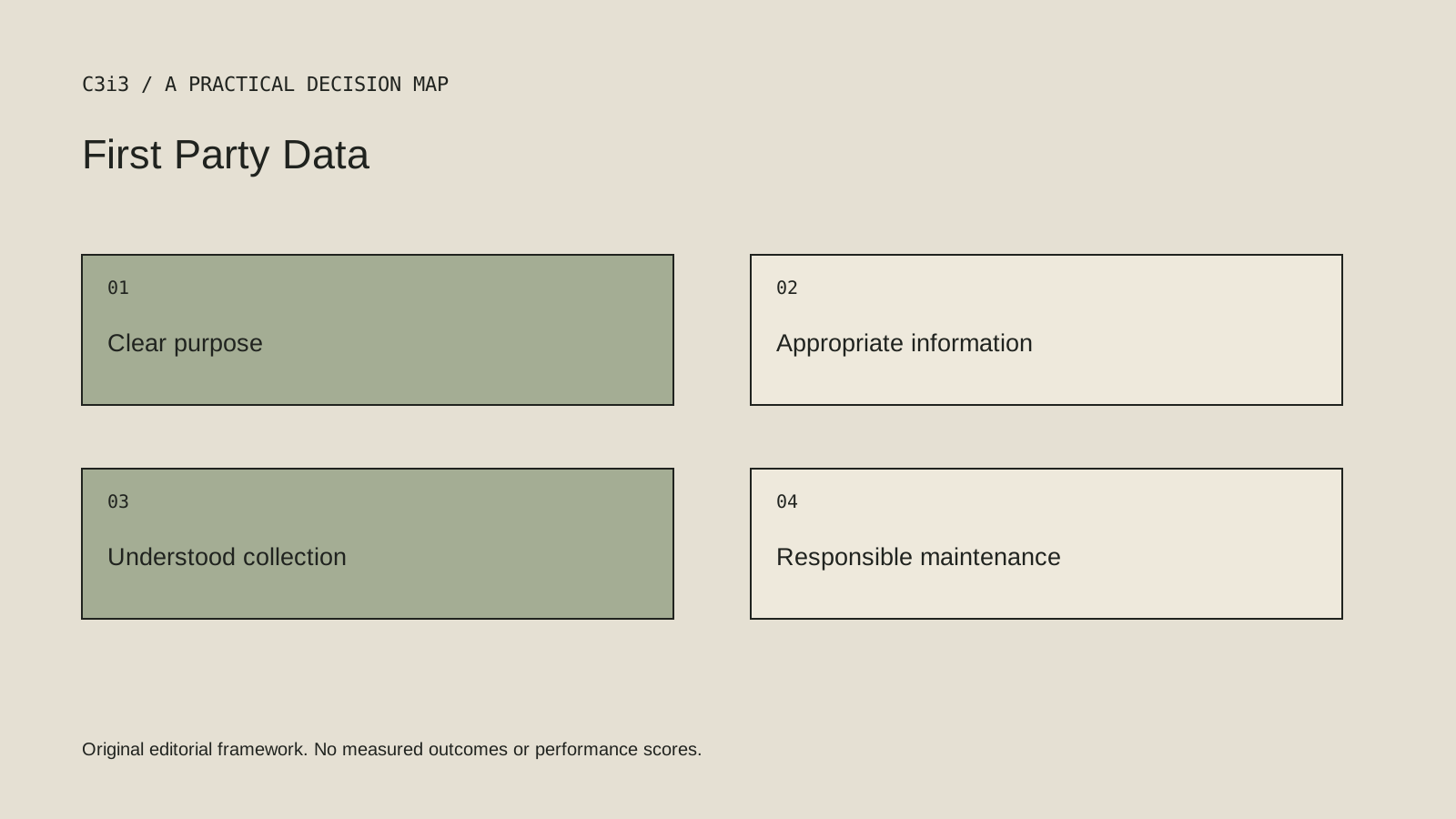
Begin with the action being requested. An enquiry may need a way to reply and enough context to route the question. A newsletter subscription may need much less. Each additional field should have a purpose the team can explain.
Avoid collecting sensitive or speculative details simply because a form builder makes it possible. More information can create more work, more confusion and more responsibility. A smaller accurate record may be more useful than a large collection no one maintains.

How should the website explain the exchange?
Make the next step understandable. Tell someone whether they are requesting a reply, subscribing to ongoing communication or creating an account. Do not merge these choices into one vague button when the consequences differ.
Review the privacy information and the actual implementation together. The explanation should reflect the systems receiving the data and the relevant choices available to the person. Have appropriate specialists review requirements for the jurisdictions and activities involved.
Who keeps the records usable?
Assign responsibility for access, corrections, unsubscribes and retention. A database becomes less trustworthy when records are copied into personal spreadsheets or used for purposes the original team never considered.
Keep a simple map of where information goes after a form submission. Include email notifications, customer systems and any automation. Test the process with a controlled record so the team understands what is created and which systems need updating when a request changes.
How does this support a stronger content strategy?
Direct questions reveal what customers do not yet understand. Use appropriately handled, anonymized themes to improve guides, product pages and follow-up communication. Do not publish a private enquiry as a public case study without permission.
An owned connection complements platform discovery. A helpful video may introduce the business; a useful subscription or enquiry process can support an ongoing relationship. The objective is a clear exchange people understand, not collecting a contact at any cost.
Put the decision into practice
- Define the purpose of each information field.
- Distinguish an enquiry from a subscription.
- Map the systems receiving the submission.
- Assign access, correction and retention responsibilities.
- Use customer questions without exposing private information.
Sources and editorial method
Reviewed November 6, 2026. Linked announcements retain their original dates. Product documentation establishes described capabilities; it does not establish that a subject is currently a search breakout. Examples and decision frameworks are editorial analysis.
Questions readers ask
Does first party data mean we can use it however we want?
No. Collection, notice, consent where required and applicable privacy obligations still matter. Direct collection does not remove those responsibilities.
Should we abandon social platforms?
No. Use them for appropriate discovery and engagement while maintaining dependable ways for interested people to interact with the business directly.
How C3i3 can help
C3i3 helps businesses turn a clear customer question into useful content, a coherent digital experience and a manageable production process. Bring the product, page or workflow you are reviewing so we can discuss the work it needs.