







































In this article
A virtual ambassador can appear in a campaign without ever attending a shoot. That makes the format intriguing to a brand. It also introduces a basic question for the audience: what, exactly, is this character claiming to know?
A fictional guide explaining a product is one arrangement. A fabricated customer claiming to have used it is another. Before discussing the character’s appearance, decide the role it will play and the impression the campaign will create.
What is the difference between a character and a testimonial?
A character can present information without pretending to be an independent customer. A testimonial asks the audience to give weight to someone’s stated experience. If that experience never occurred, the problem is not solved by making the avatar look realistic.
The FTC’s reviews and testimonials guidance distinguishes the use of virtual characters from deceptive claims. Keep the script explicit about whether the speaker is a brand representative, a fictional narrator or an actual person whose experience is being quoted with permission.
What should a virtual ambassador be allowed to say?
Start with the same claim file you would give a human presenter: what the product does, what evidence supports it and what conditions matter. Remove first-person statements that imply a nonexistent life, purchase or result.
An ambassador can explain a feature or introduce a demonstration. It should not casually describe a personal recovery, financial outcome or product test that never happened. A believable voice does not make an unsupported statement more reliable.

How does a brand preserve audience trust?
Give readers enough context to understand the presentation without asking them to solve a puzzle. Consider the name, profile description, captions and placement together. A disclosure that appears only after someone visits a separate policy page may not explain the relationship where the recommendation occurs.
Also consider what happens in replies. If the character responds to customers, decide who reviews those replies and what questions must be escalated. The fictional identity does not remove the company’s responsibility for what its campaign communicates.
Where might an AI character be useful?
A deliberately illustrated guide may help explain a software workflow, introduce a recurring educational series or maintain a consistent campaign voice across formats. Those uses can be evaluated against a brief without inventing a human biography.
A real creator brings something different: actual experience, relationships and a perspective an audience can investigate. Compare the needs of the campaign before choosing. A fictional character is not automatically a substitute for those contributions.
What should you decide before production?
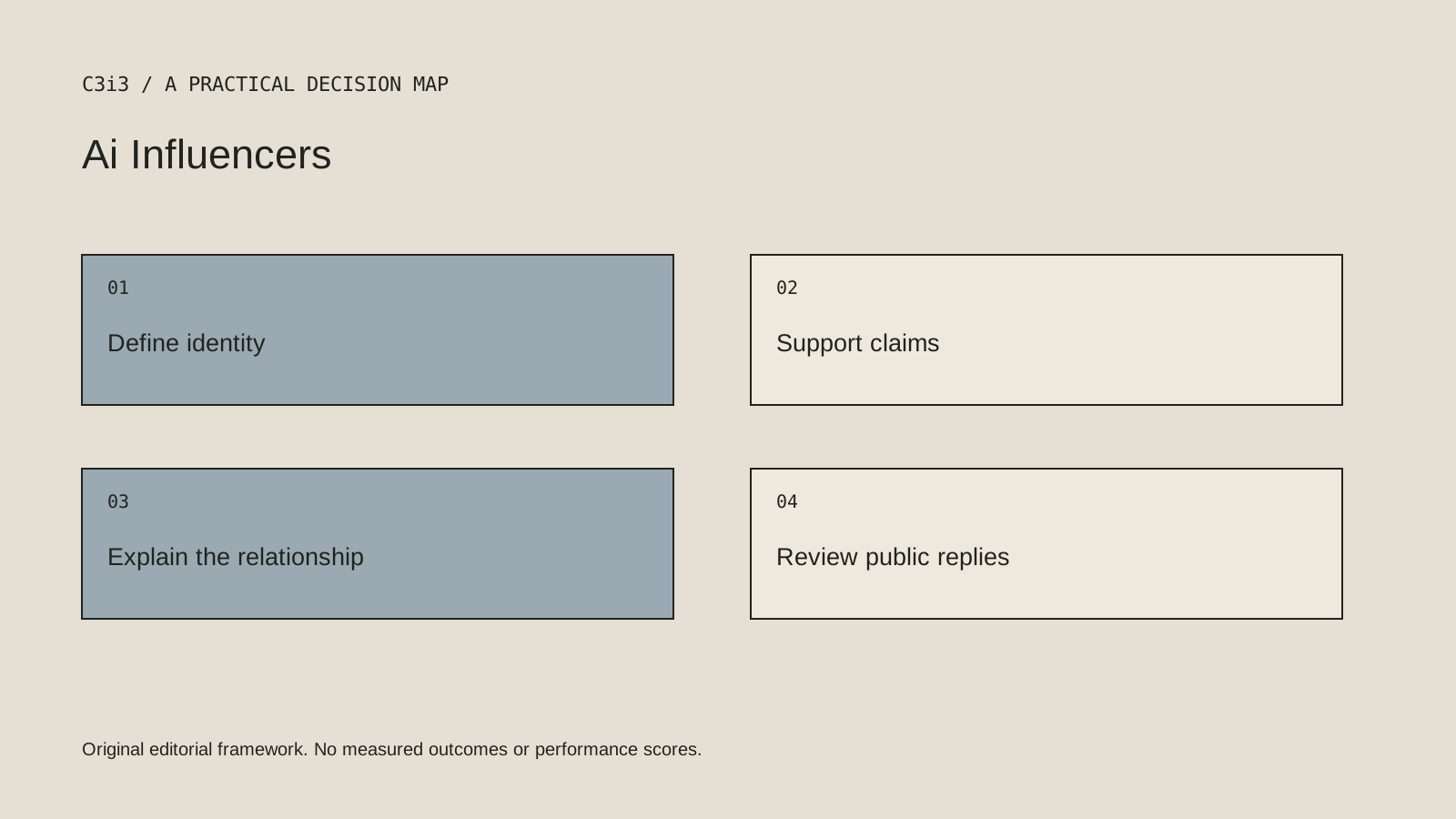
Write a character policy covering identity, claims, disclosures, permitted channels, reply handling and approval. Keep it short enough that the people creating the content will use it. If you adapt a real person’s appearance or voice, resolve the relevant permissions separately.
Then test the concept with someone who has not seen the brief. Ask who they think is speaking and what they believe happened. A misunderstanding at this stage is useful feedback, not something to hide with more polished artwork.
Put the decision into practice
- Define the character’s role before designing its appearance.
- Remove invented personal experiences and product tests.
- Support product claims with appropriate evidence.
- Review disclosures where the recommendation appears.
- Assign responsibility for replies and corrections.
Sources and editorial method
Reviewed November 6, 2026. Linked announcements retain their original dates. Product documentation establishes described capabilities; it does not establish that a subject is currently a search breakout. Examples and decision frameworks are editorial analysis.
Questions readers ask
Are fictional AI brand characters automatically prohibited?
No blanket prohibition follows from the FTC guidance discussed here. Deceptive claims, fake testimonials and other misleading uses remain concerns.
Can a virtual ambassador use a real creator’s voice?
Do not assume that access to a recording supplies permission. Resolve the applicable authorization and contractual terms before creating or distributing a replica.
How C3i3 can help
C3i3 helps businesses turn a clear customer question into useful content, a coherent digital experience and a manageable production process. Bring the product, page or workflow you are reviewing so we can discuss the work it needs.