



































In this article
The phone keeps ringing, but the jobs are wrong. Someone needs a cabinet hinge replaced. Someone wants a single tile repaired. Meanwhile, your team has the experience and capacity for complete kitchen remodels. More traffic would simply give the office more calls to decline.
This is a positioning problem worth investigating before buying another advertising package. A contractor brand strategy connects the work you want with the way customers recognize, evaluate and contact you. It starts with the business you can deliver, then carries that message through the website and the first conversation.
Diagnose the lead mismatch before redesigning anything
Pull together a manageable sample of recent enquiries, including ones you declined. Record the requested job, source when known, reason for poor fit and whether the caller ever saw a service page. You may discover an old repair advertisement, a misleading directory category or a homepage that lists every possible task.
Separate a communication problem from a capacity problem. If the business still depends on smaller work between larger projects, decide how that work will be handled. Removing it from every page without an operational plan can create another problem.
Write the decision plainly: which projects should receive the main marketing attention, which remain available by referral, and which are outside the business. This becomes the brief for the website rather than a slogan someone has to interpret.
Define a project offer a homeowner can recognize
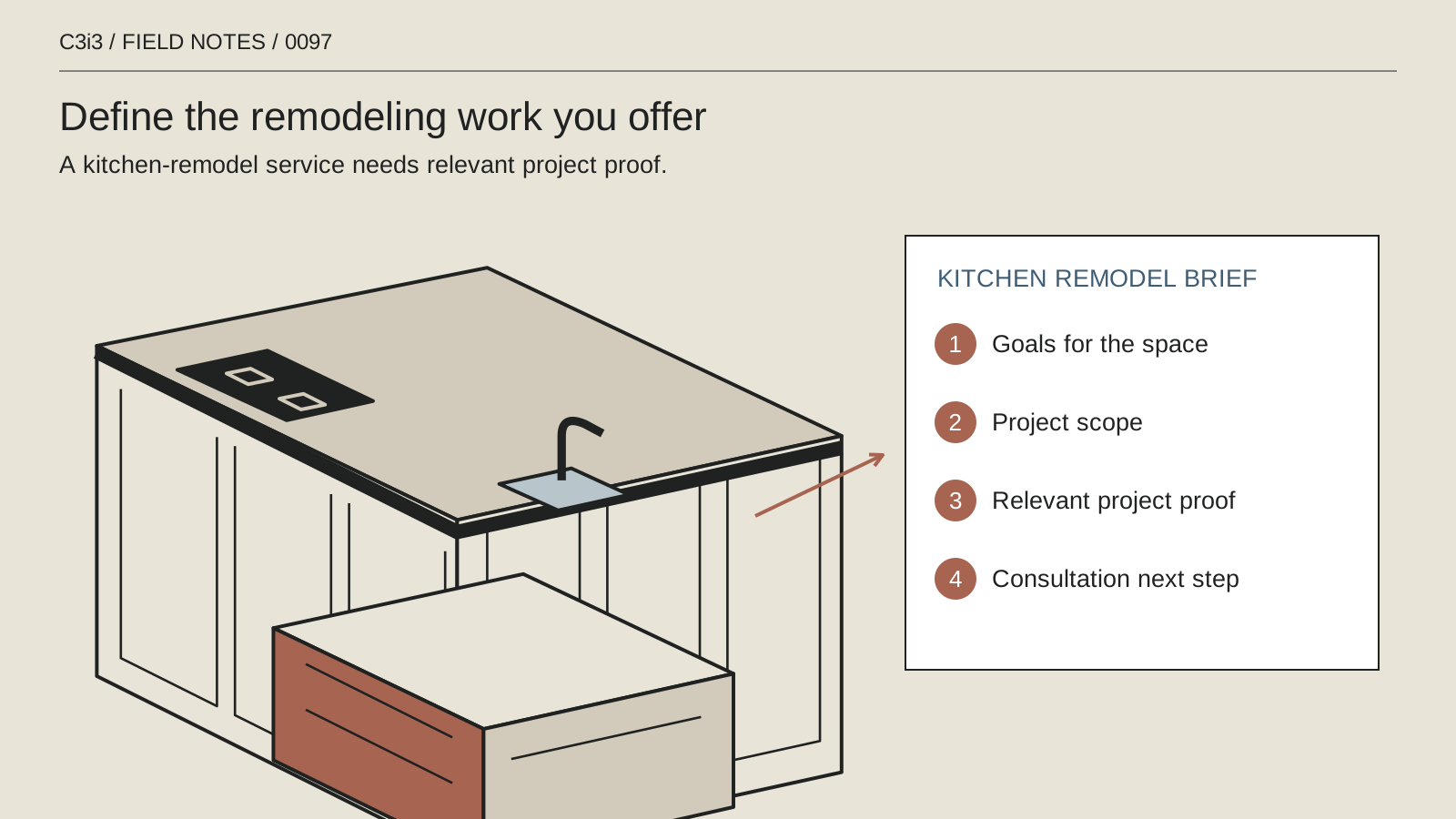
Kitchen remodeling is still a broad description. Explain the kind of engagement you support: an existing footprint, a layout change, a coordinated full renovation or another genuine specialty. State what you manage and which responsibilities belong to the homeowner or other professionals.
Translate internal preferences into helpful customer information. Instead of saying premium clients only, describe the planning process, design coordination, project stages and expected decisions. Explain how an initial conversation becomes a defined planning engagement and which deliverables belong to each stage.
Use the same boundaries in estimates and intake. A polished service page cannot solve a salesperson describing unrelated work to every caller. Your offer needs to survive the first real conversation.
Use project evidence that matches the desired work
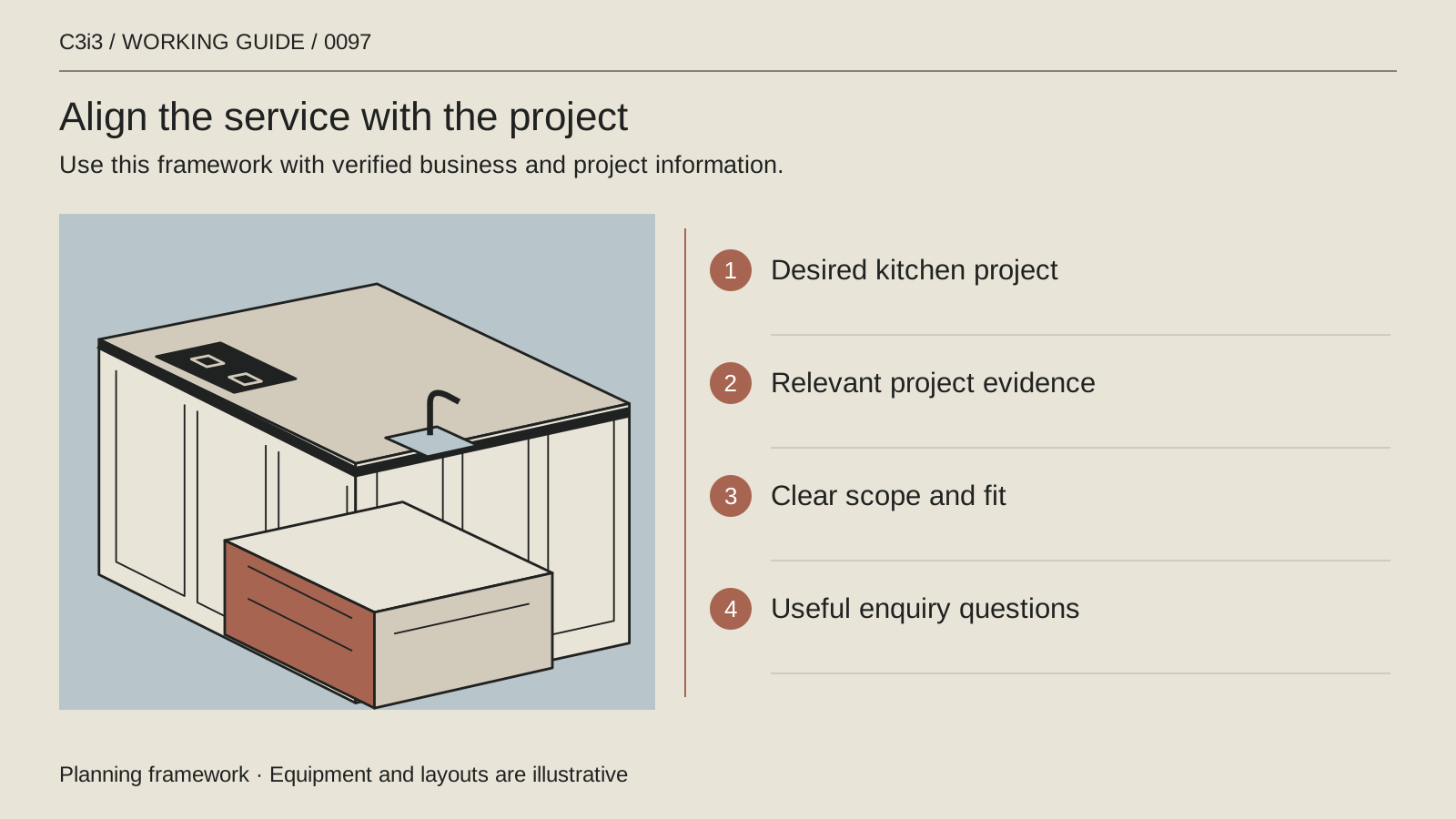
A gallery full of small repairs teaches visitors that small repairs are your specialty. Select relevant kitchen projects and explain the starting condition, scope, constraints and completed work. A before-and-after image becomes more useful when the reader understands why the changes were made.
Keep responsibilities accurate. Distinguish your construction role from design, engineering or work completed by another firm. Get appropriate permission before publishing customer interiors, identifying details or testimonial material. Do not present an illustrative rendering as a completed project.
Create a short evidence checklist for every project story: relevant scope, clear role, useful photographs, an explanation of decisions and permission to publish. Two specific stories can answer more buyer questions than a large unexplained image wall.
Make the page and the search message agree
Inspect the words customers see before they arrive: search titles, advertisements, profile descriptions and links from other pages. If they describe handyman help while the destination explains full renovations, you have created a mismatch before the first paragraph.
Build a focused kitchen remodeling page that explains the actual service and coverage. Link to it from relevant project stories and the main navigation where appropriate. Avoid creating near-identical city pages merely to repeat the same message. Local context should reflect real service differences and useful information.
Keep the first screen simple: what work you do, evidence of fit and a sensible next step. Our contractor website design guide explores that customer path in more detail.
Qualify the project without turning the form into homework
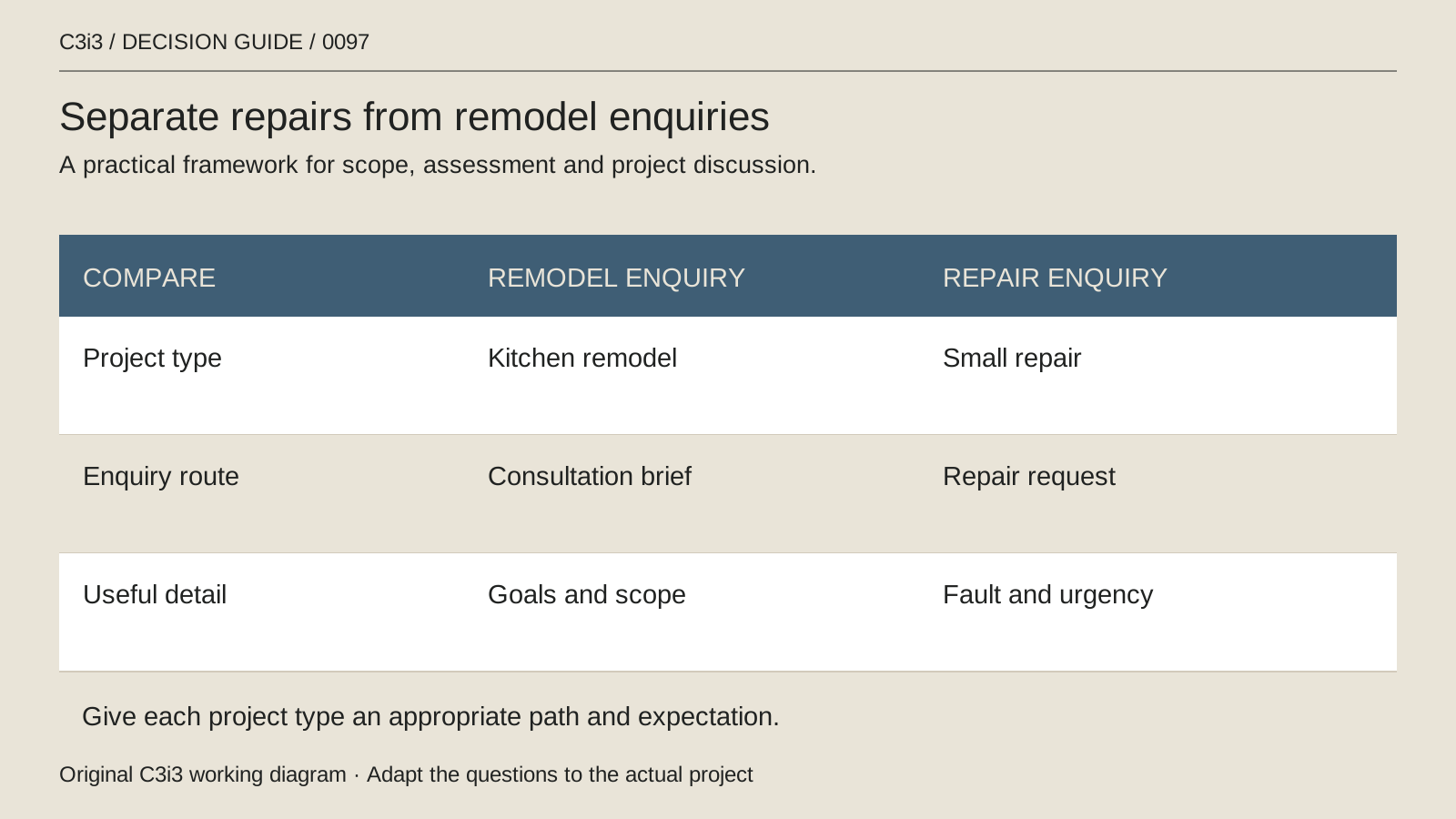
Ask for the information the office uses to decide the next step: service requested, general location, project description and timing. Explain what happens after submission. A short form with a dependable response can be more useful than a detailed questionnaire nobody finishes.
Ask about the project stage and the decisions still to be made. Explain why you need that information and allow an unsure answer. A homeowner should not have to finalize the design before learning whether your process fits the project.
Give unsuitable visitors an honest answer. A brief note about work you do not currently take can prevent frustration. Test the form on a phone, confirm delivery and ensure someone owns the follow-up. Branding includes what happens after the button.
Measure better-fit enquiries, then choose the next improvement
Compare the mix of enquiries before and after a clearly recorded change. Track relevant project requests, consultations, estimates and the reasons opportunities stop. A smaller number of enquiries may be commercially better if they fit the work and capacity you actually have.
Do not declare success from one week or an isolated large project. Seasonality, advertising changes and referral activity can affect the results. Record those influences and use enough context to make a reasonable decision. The SBA's market research guidance provides a useful starting framework.
The supporting guides below examine the same issue through positioning, identity, research, acquisition and content. Pick the weak point you observed rather than commissioning every marketing service at once.
A project-fit worksheet
| Touchpoint | Question to check | Useful evidence |
|---|---|---|
| Service page | Does it describe the remodel scope? | A clear engagement explanation |
| Portfolio | Does it show comparable work? | A permitted, scope-led project story |
| Enquiry | Can the office identify fit? | Project stage and a named response owner |
Keep this checklist beside you
Questions before the next step
Do I need a new logo to attract larger remodeling projects?
Not necessarily. Start with the offer and evidence. A new visual identity may help if the current presentation is inconsistent, but it cannot replace relevant project experience or a clear explanation of scope.
Should I remove every mention of small repair work?
Decide based on your business model. If you still provide it, give it an appropriate route without letting it dominate the offer you want to grow. Keep the office and website aligned.

How C3i3 Can Help
C3i3 can help review the gap between your desired projects and the messages customers see. Our marketing strategy work can connect audience research, positioning, project evidence and the website enquiry process.
Bring a few recent enquiries, the work you want more of and the pages you currently promote. We can identify a focused first improvement and define how to judge it. You do not need a complete rebrand to begin a useful conversation.