



































In this article
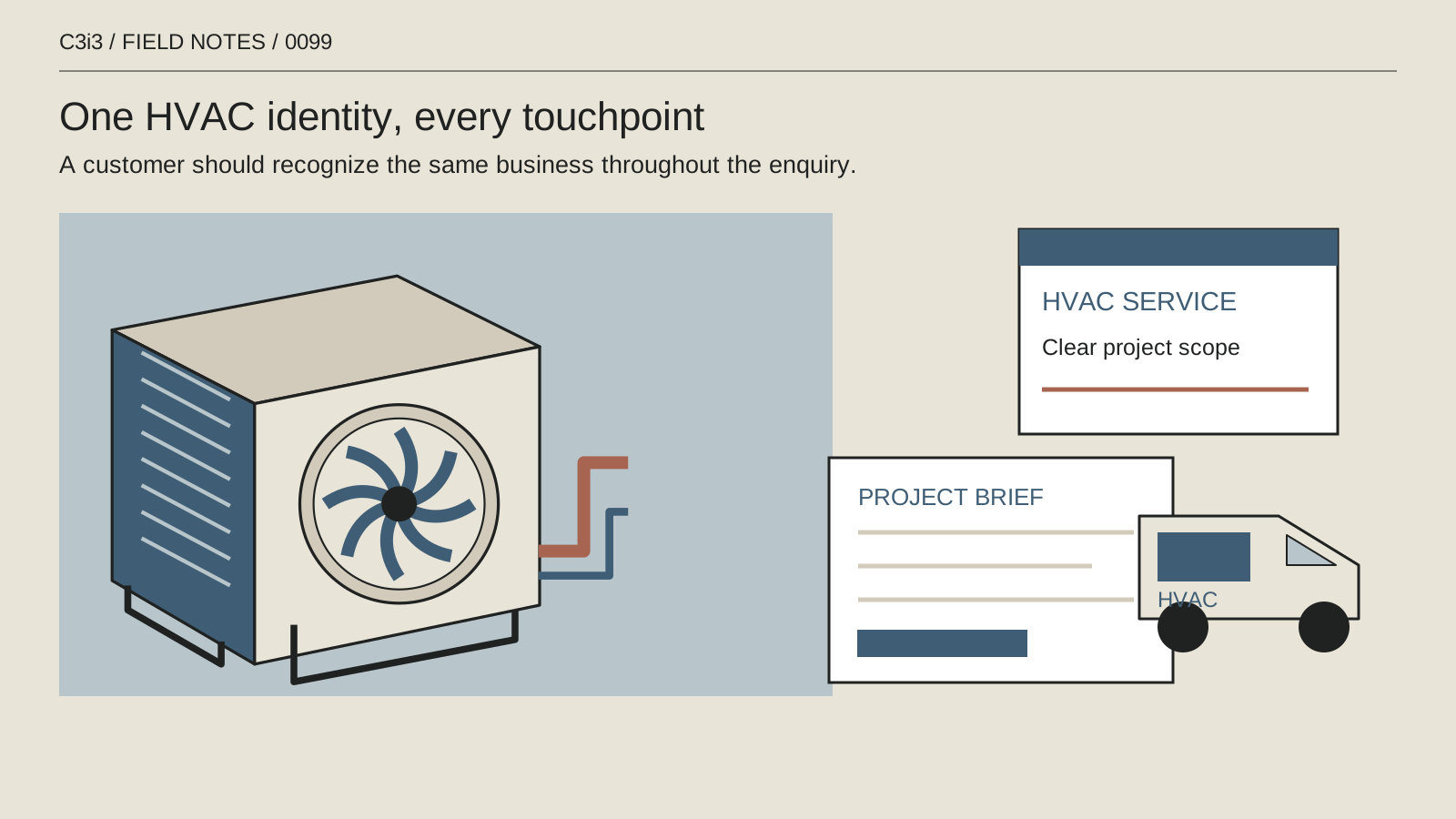
A homeowner finds a sharp-looking HVAC website, then receives a proposal with an older logo and a different company name treatment. The truck arrives with a third version. None of these differences proves poor workmanship, but they leave the customer with an unnecessary question: is this the same business?
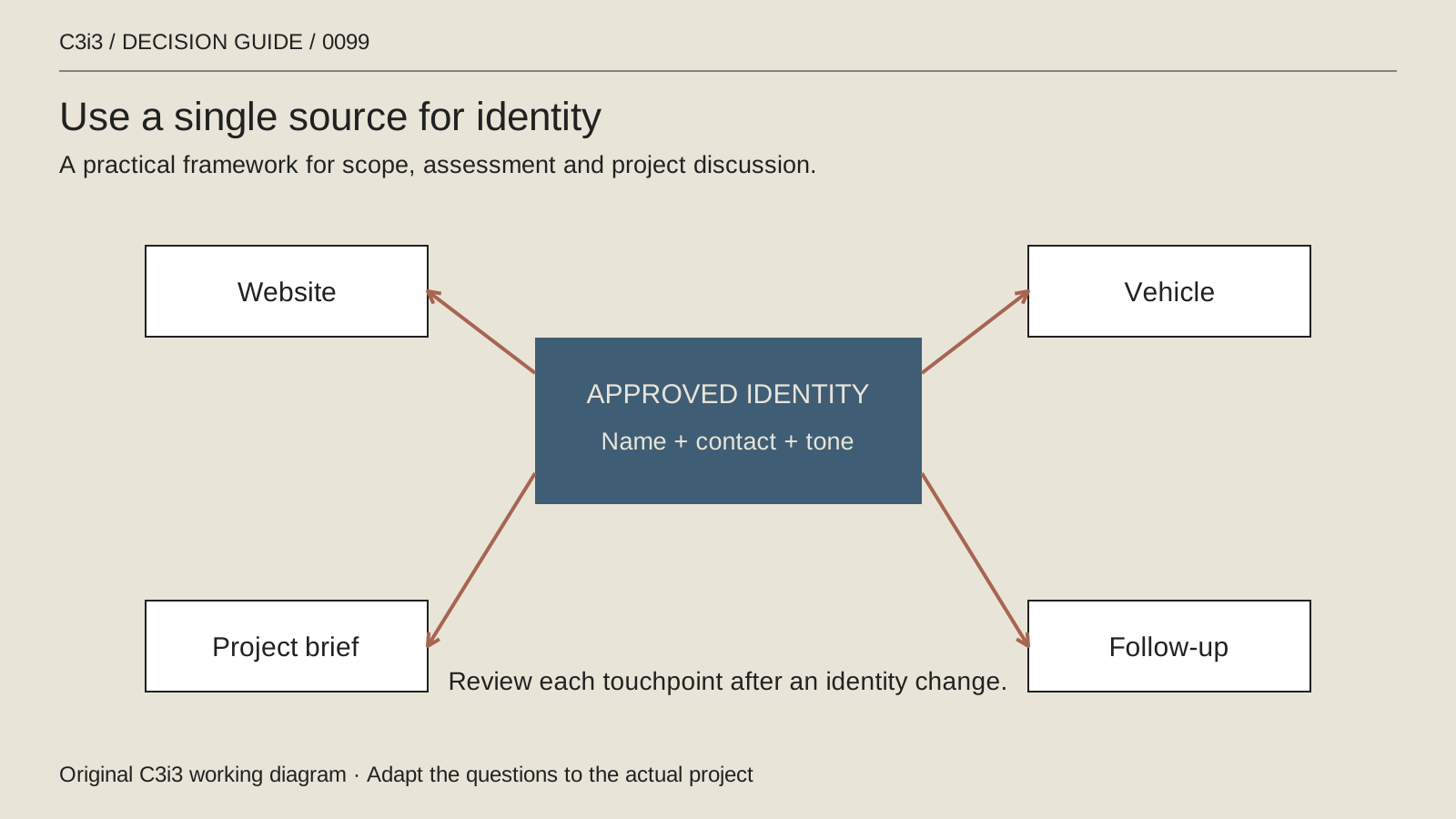
A useful HVAC brand identity system reduces that uncertainty. It gives your staff, sign shop, website team and office a shared set of assets and rules. Start with the places customers use to recognize you and approve work, rather than designing a thick brand manual nobody opens.
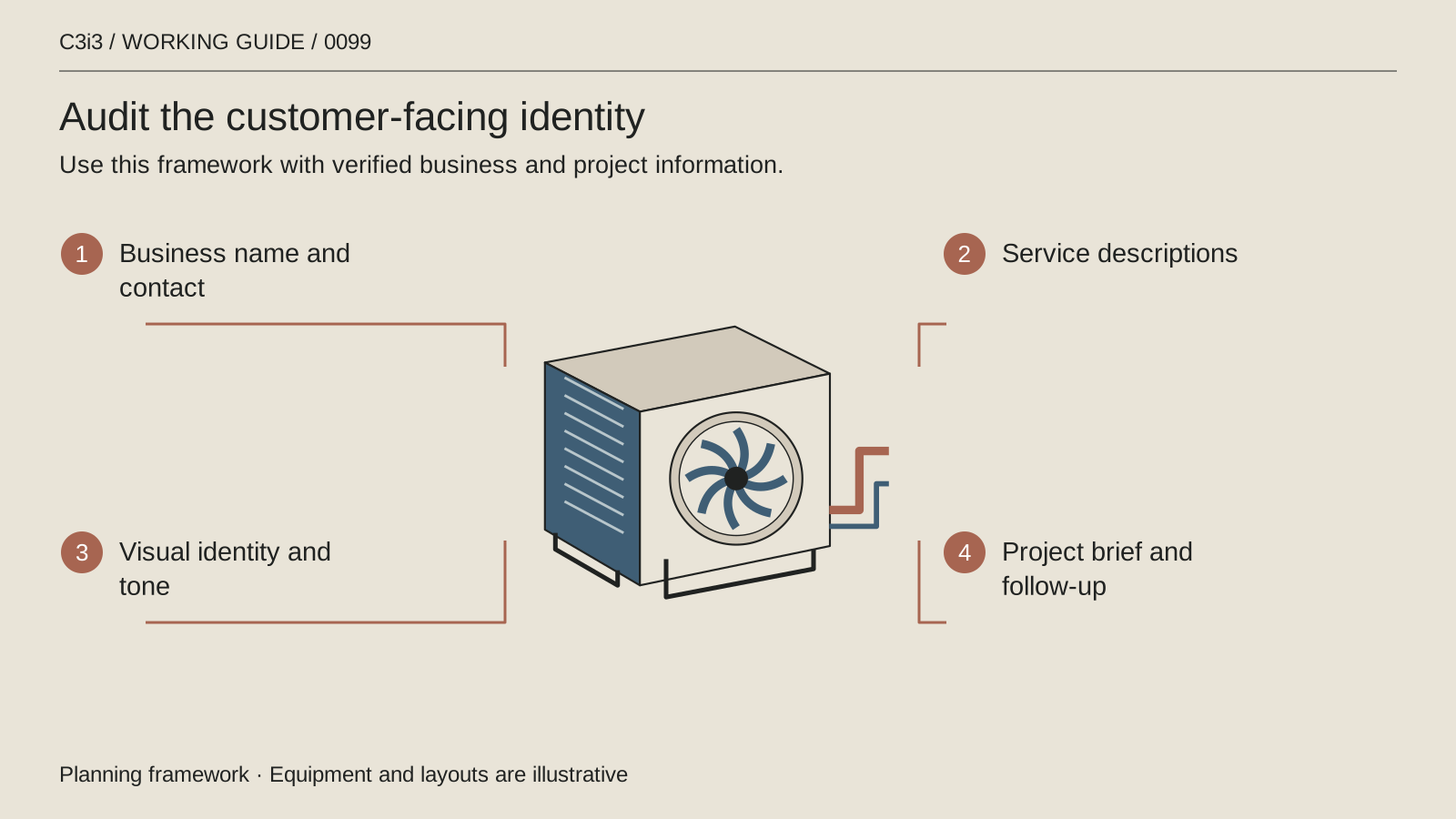
Find the inconsistencies customers actually encounter
Collect screenshots and examples from a normal customer journey: a search result, service page, booking confirmation, estimate, vehicle and invoice. Put them beside one another. Record differences in the business name, logo, telephone number, colors and wording of the service.
Separate visual inconsistency from incorrect information. An outdated number or unclear business identity deserves attention before a subtle spacing issue. Check which materials are still active and which are historical files that nobody uses. This keeps the audit focused on real exposure.
Ask the office which documents staff routinely copy to begin new work. Those unofficial templates often explain how old branding survives. The goal is to replace the source of the inconsistency, not simply repair the most visible example.
Create a small, usable identity kit
Define the approved primary logo, a version for dark backgrounds and a practical small-format version where needed. Include appropriate file types for print and digital use. A tiny website image stretched across a vehicle is not an adequate production asset.
Document color values, type choices and minimum spacing with plain examples. Show what happens on white, dark and photographic backgrounds. Your suppliers should be able to produce a consistent result without guessing which downloaded file is current.
Keep business details in a maintained reference as well. The identity kit should distinguish the public brand from required legal or licensing information, with the responsible business adviser reviewing the latter. Do not remove necessary disclosures merely to make a layout cleaner.
Prioritize the proposal and the service page
These two touchpoints frequently sit close to a purchase decision. Make the proposal easy to associate with the service page the customer read. Use the same approved identity and a clear description of the actual business providing the work.
Consistency does not mean decorating every page. Give scope, exclusions, options and the next step a readable hierarchy. Important details should not disappear into pale fine print beneath a large logo. A proposal template is useful when it helps the customer find information as well as recognize the sender.
Align service names across the website and office documents. If one calls an offer a heat pump installation and another uses an unexplained internal package code, provide a clear connection. Familiar wording helps a customer continue the same conversation.
Design for vehicles and small screens separately
A vehicle identity needs to remain recognizable at a distance; a phone screen needs readable information at close range. Use the same system while adapting the composition. Copying a complex desktop banner onto a truck or a business card rarely serves either setting well.
Give the sign supplier approved vector files and request a proof at the actual production specification. Test website headers and contact buttons on small screens. Make sure a dark-background logo does not acquire an accidental white rectangle in one channel.
Use real constraints when approving layouts: available space, contrast, printing limits and maintenance. Avoid shrinking every element until the design technically fits. A simpler approved variant is usually more dependable than an improvised version created under deadline pressure.
Make the next new asset easy to produce correctly
Create templates for the materials used most often: estimates, service reminders, social graphics and simple project explanations. Include examples with realistic text lengths. A template that only works with a two-word headline will break as soon as the office uses it.
Store current files in a shared location with clear names. Archive superseded versions separately and label them accordingly. Give outside vendors an explicit route for requesting the right file instead of allowing them to copy whatever appears first in an image search.
Assign responsibility for approving changes. The owner need not personally position every logo, but someone should decide whether a new treatment belongs in the system. This is how an identity remains coherent after the initial design project ends.
Check recognition without claiming a branding miracle
Ask customers and staff whether the materials clearly look like the same business and whether they can find the next step. Observe misunderstandings in actual calls. Keep the review practical rather than asking people to vote for a favorite color.
An identity refresh does not establish that bookings will increase by a particular amount. Service quality, availability, scope and response all affect the commercial result. Track relevant changes, but do not attribute to a new logo every improvement that happens afterward.
If your larger problem is the type of work people request, revisit the contractor brand strategy framework. Identity expresses an offer. It cannot choose the offer, prove technical competence or fix an unanswered enquiry on its own.
Keep this checklist beside you
Questions before the next step
Does consistency mean every graphic must look identical?
No. Layouts should suit their purpose. Shared logo rules, typography, colors and business information create recognition while allowing a vehicle, estimate and mobile page to work differently.
Can I keep my existing HVAC logo?
Often yes. If it remains suitable and usable, organize its files and applications first. A replacement should solve an observed problem rather than become the default answer to inconsistency.

How C3i3 Can Help
C3i3 can help audit your HVAC identity across website pages, proposals and everyday marketing materials. Our brand identity work can establish practical assets and templates that your team and suppliers can use.
Bring examples of the materials customers currently receive. We can identify where recognition or readability breaks down and prioritize a manageable correction. The result should be a working system for your business, with an owner and usable source files.