



































In this article
Your portfolio looks good, yet the homeowner planning a whole-home renovation chooses another firm. It is tempting to assume the winner had a more impressive portfolio or a clearer process. Often the unanswered question is more practical: can this company manage a project this complicated?
Brand positioning for remodelers should make the answer easier to evaluate. Whole-home work asks a buyer to consider coordination, disruption, decisions and accountability. Attractive finished rooms matter, but they do not explain how your business handles the months between the first meeting and the completed home.
Identify the uncertainty behind a lost consultation
Review recent conversations and proposals where the homeowner chose another route. Record the questions they asked repeatedly: who coordinates the design, whether they can stay in the property, how decisions are approved or what happens when conditions change. Treat these as research prompts rather than objections to overcome.
Where appropriate, ask a former prospect for brief feedback without arguing with the answer. Avoid assuming every lost project was a question of visual style. A buyer may have understood another firm's process more clearly, even when your technical capabilities were similar.
Look for patterns across several conversations. One person's preference is not a market conclusion. The useful outcome is a short list of uncertainties your website and consultation should address with real information.
Position the business around a genuine operating strength
Choose a strength your team can demonstrate in whole-home projects. It might be occupied-home coordination, a defined collaboration process with outside designers or detailed preparation before construction. Describe what that strength changes for the homeowner and what responsibilities remain theirs.
Avoid choosing a position solely because competitors use the same attractive phrase. Full service, luxury and seamless need an explanation. If the team does not provide design, say how design coordination works instead of implying an in-house capability.
Draft a working statement: we help this kind of homeowner complete this scope through this actual process. Test it against completed jobs, staffing and delivery capacity. The statement is useful only if the business can support it consistently.
Turn a project story into evidence of coordination
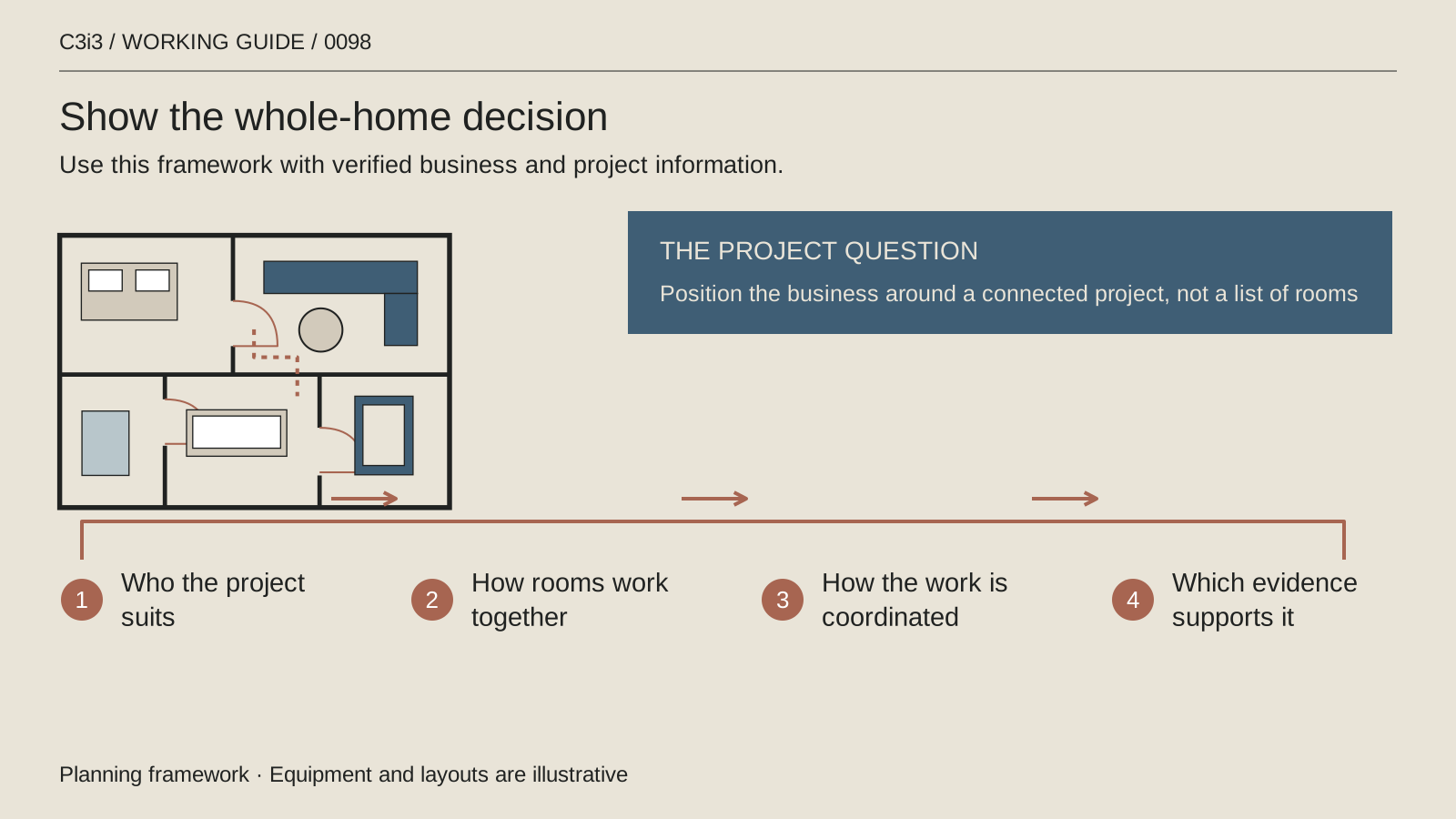
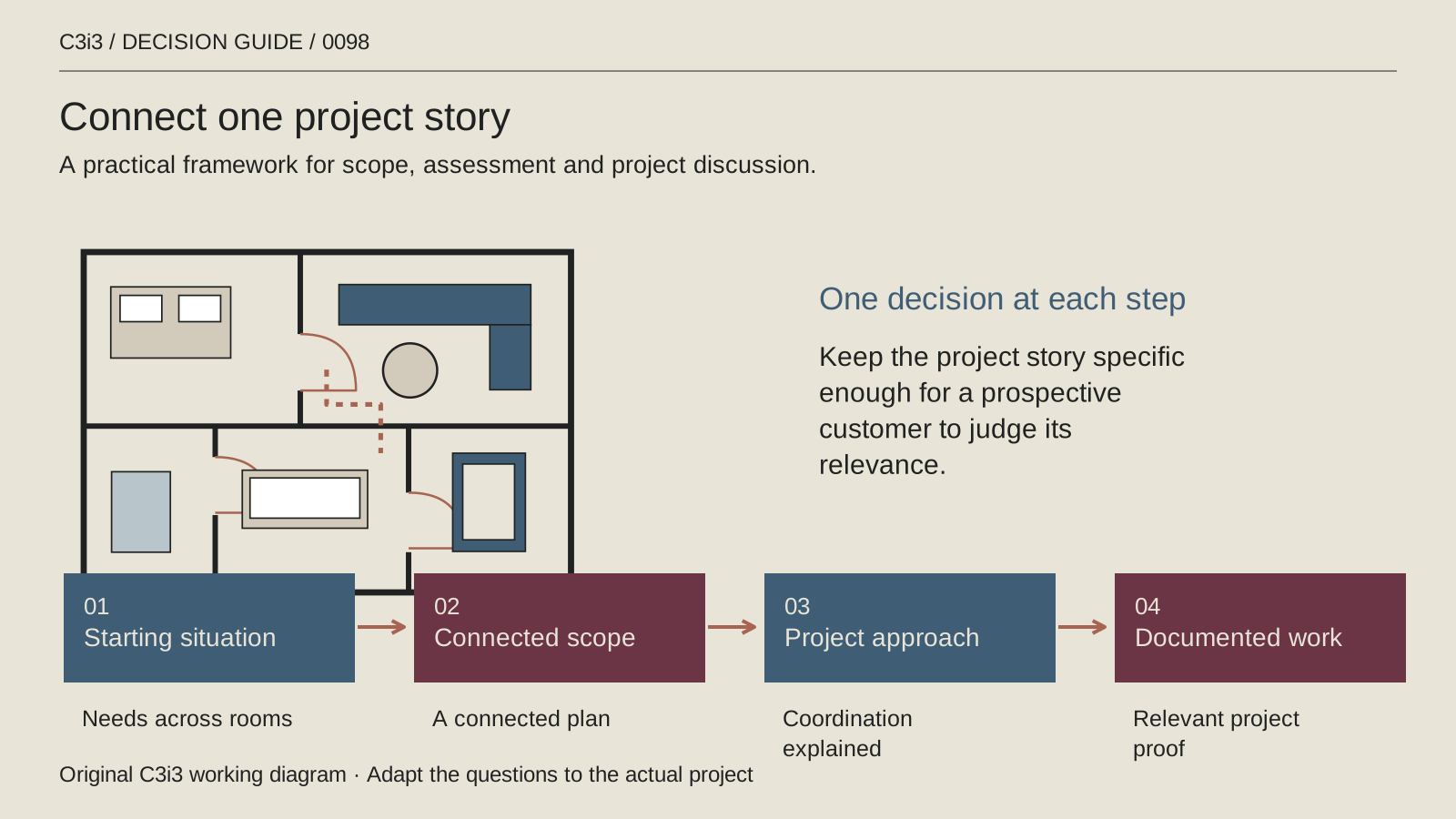
Organize a whole-home project story around the work, not an endless gallery. Begin with the homeowner's objective, the scope and the constraints. Explain a decision that required coordination and show the relevant stage or result. State your role accurately.
For example, a story might explain how a phased schedule accommodated a defined access restriction. That is an illustrative editorial approach, not permission to invent a client project. Use only documented experiences and approved details from the actual job.
Avoid publishing addresses, security arrangements or private family information. A useful story can be specific without identifying a household. Our project story guide shows how to turn existing material into a clearer narrative.
Explain the planning stage before asking for trust
Tell a prospective customer what happens in the first stage: the information you gather, who attends, what you can assess and what remains unresolved. Explain the consultation deliverable and boundaries before asking someone to book.
Show decision points rather than a fictional universal timeline. Whole-home projects differ in existing conditions, scope and approvals. A simple process diagram can identify planning, scope agreement, construction preparation, delivery and handover without describing that every project takes the same number of weeks.
Link to detailed service information where it helps. Keep contractual terms in the appropriate documents and have responsible professionals review technical or legal statements. The website should help a reader prepare, not impersonate a project-specific agreement.
Use a service page that lets the right buyer self-select
Describe the whole-home scope in language homeowners recognize. Explain what kinds of projects you take and how you work with the other professionals involved. Place relevant evidence near the claims it supports instead of hiding every project story in a separate portfolio.
Use an enquiry prompt that invites the project context: what they hope to change, the general location and where they are in planning. Allow uncertainty. Someone researching a major renovation may not know the complete scope or final specification yet.
Align the page with your wider contractor brand strategy. If every advertisement promotes minor repair tasks, a single whole-home page is unlikely to change the overall impression by itself.
Evaluate positioning through conversations and project fit
Review whether new prospects arrive with a better understanding of the process. Ask which information helped them and what remained unclear. Compare the kinds of projects reaching consultation and whether the team can deliver them responsibly and consistently.
Keep enquiry volume, qualified consultation and signed work separate. A page that brings many interesting conversations can still fail commercially if the scopes fall outside your capacity. Track the reason each opportunity advances or stops, using a simple shared record.
Revise the explanation when evidence points to a specific misunderstanding. Positioning becomes stronger through clearer messages and delivery, not through repeatedly replacing one ambitious adjective with another. Preserve the useful parts of the site while fixing the gaps you can identify.
Keep this checklist beside you
Questions before the next step
Should I call the business a luxury remodeler?
Only when that description accurately reflects the projects, service and customer experience. Specific evidence about scope and coordination helps readers evaluate you more than the label alone.
Can the same website serve smaller remodels too?
Yes, with distinct service explanations and clear routes. Avoid forcing every visitor into the same offer. Make it easy to understand which engagement fits the project being planned.

How C3i3 Can Help
C3i3 can help turn your actual remodeling capabilities into a clear market position and a useful website narrative. Our brand positioning services connect audience questions with messages and evidence your team can support.
We can review service copy, project stories and the consultation path together. Bring the questions prospects ask and a completed project you are permitted to discuss. That gives us a concrete starting point without inventing a new identity for the business.