



































In this article
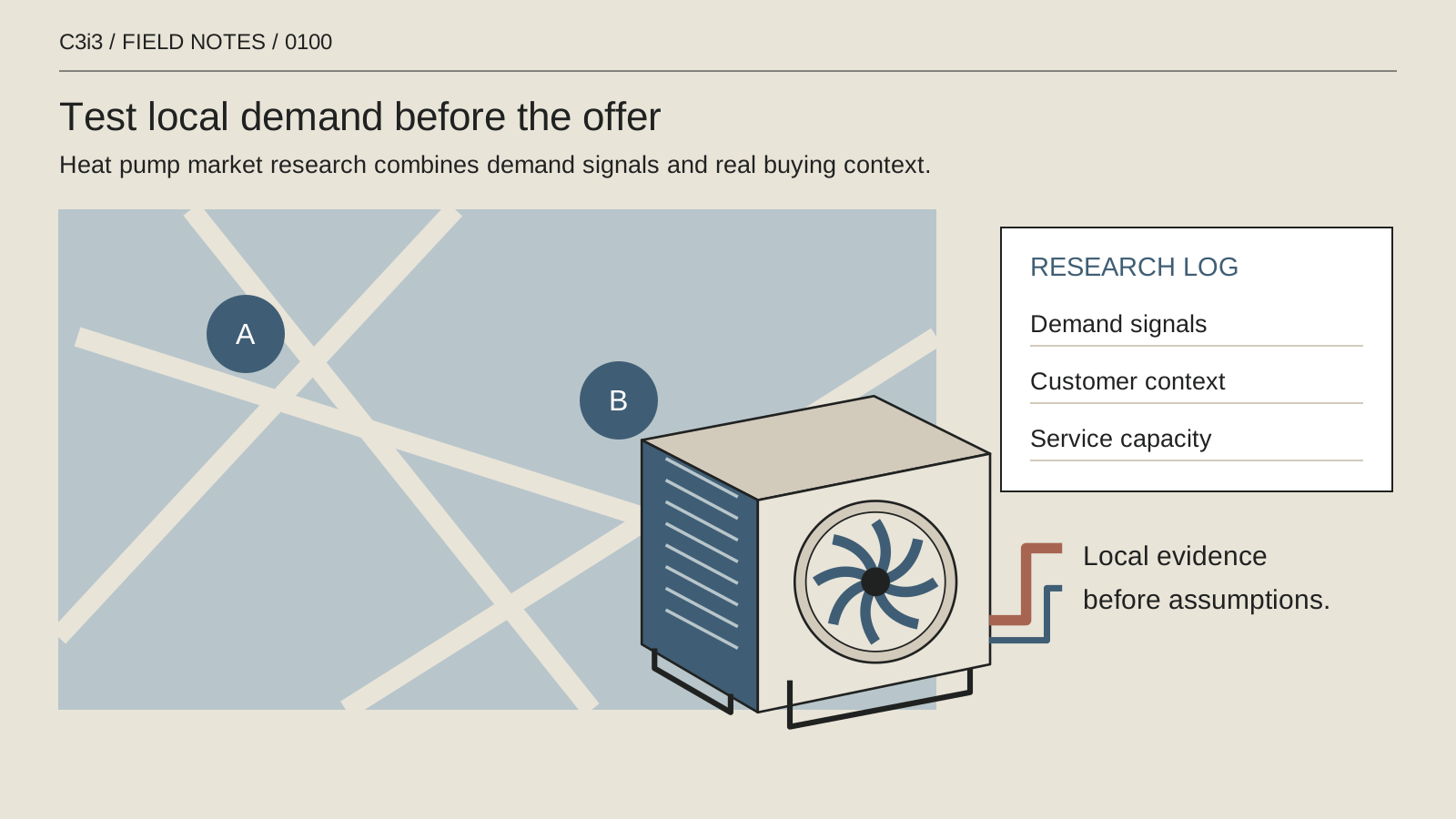
Heat pumps appear everywhere in industry conversations, but that does not tell you whether your next installation crew will stay busy. National attention, local search activity and qualified demand are three different things. Promoting a topic because it feels popular can attract people the business cannot yet serve.
Market research should turn that uncertainty into a decision. You need to understand where potential customers are, what they are trying to solve, what information they need and whether your business can deliver the work. Search tools are one input to that decision, not a substitute for the whole investigation.
Define the market you can actually serve
Begin with the installation work and geography your operation supports. Note travel limits, appointment availability, equipment experience and the types of property you can assess. A large surrounding population is not automatically your accessible market.
Write down the decision you need the research to support. Are you deciding whether to launch a dedicated service page, develop a focused campaign or add installation capacity? Each question requires a different level of confidence. Avoid collecting data without knowing which decision it changes.
In the Bay Area, a service boundary may cross several permitting jurisdictions and utility territories. Treat those differences as practical research questions. Describe coverage accurately and have the responsible specialists check the approval information relevant to each property type.
Separate installation searches from general curiosity
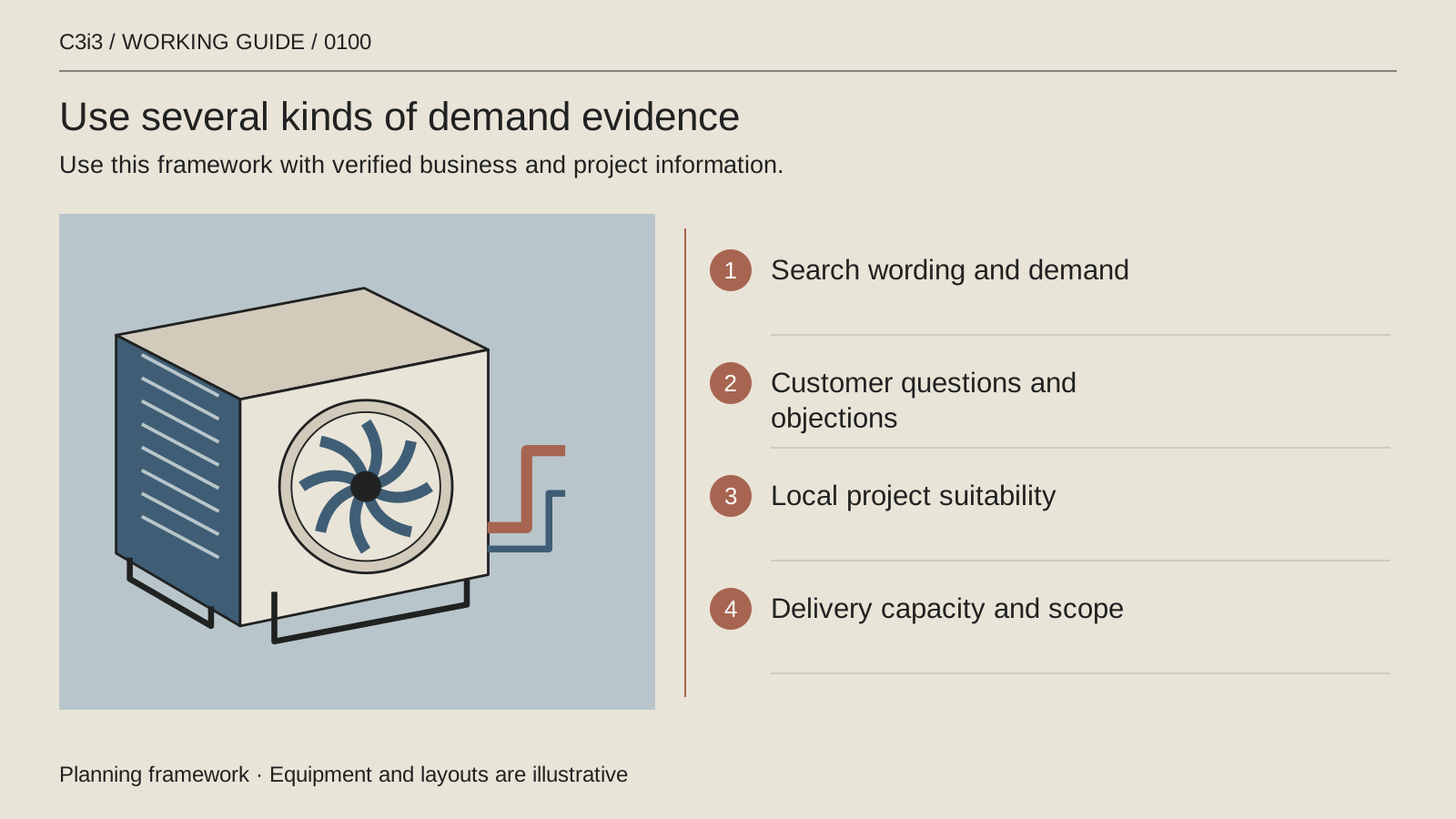
Group search phrases by task. Someone researching how a heat pump works is in a different situation from someone looking for an installer or replacement quote. Both can become useful readers, but they should not be counted as equivalent sales opportunities.
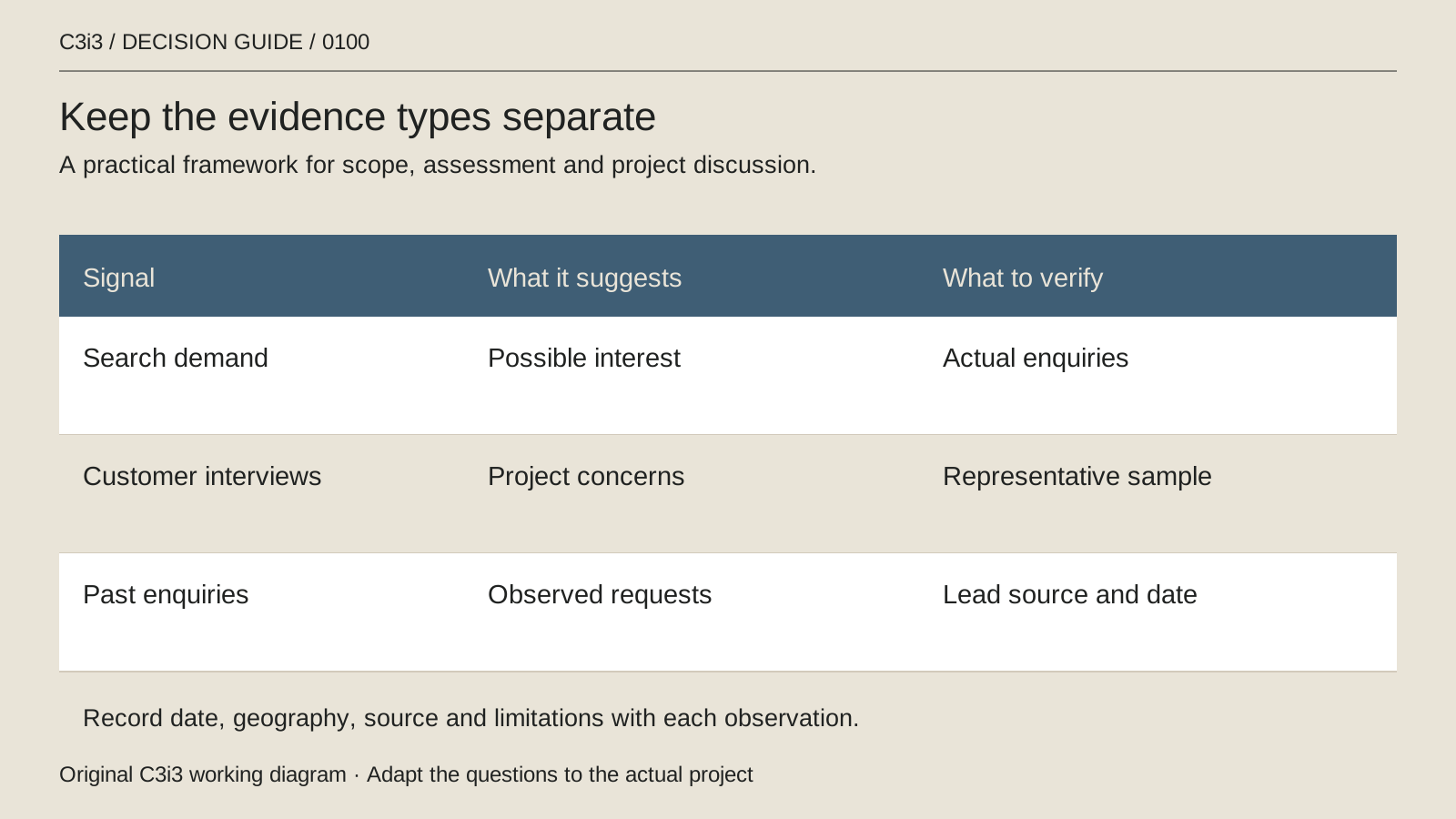
Record keyword estimates with the tool, geography and report date. Distinguish the measured phrase from an editorial title written around it. A national estimate for heat pump installation does not establish the monthly demand for an exact San Jose question.
Review the search results for the intended query to understand the competing page types. If the results mainly answer a technical question, a hard-selling service page may not meet the reader's immediate need. Use the observation to choose a suitable content or campaign destination.
Listen to the questions already reaching the office
Review calls, emails and estimate notes for recurring concerns: comfort, existing equipment, project disruption, electrical work or uncertainty about the assessment process. Record the customer's actual words while removing personal details from shared research material.
Ask a small selection of recent customers what prompted them to investigate and what information was difficult to find. Use open questions rather than steering them toward your preferred answer. A recurring question can identify a useful service-page section even when a keyword tool reports little data for its exact wording.
Compare enquiries with outcomes. A topic that creates many calls may still have poor fit because of property conditions, timing or your current capacity. Research should explain that difference before the campaign expands.
Compare offers, not just ranking positions
Privately inspect the types of information other providers make available. Do they explain assessment, scope, installation responsibilities and next steps? Record observable features without guessing competitors' enquiry outcomes, lead quality or installation capacity.
Look for a question your business can answer accurately and more usefully. For example, you might explain what a homeowner should prepare for an assessment and what remains unknown until the property is evaluated. That creates value without claiming that your process suits every home.
The SBA's market research framework distinguishes market questions and competitive analysis. Use both. High search activity with a poorly differentiated offer can still be a difficult place to distinguish your business.
Test a focused offer before assuming the market is proven
Create one useful installation page for the actual service you provide. Explain assessment, responsibilities and the enquiry process. Give homeowners a way to describe their situation without requiring them to choose equipment or diagnose their property online.
If you run a campaign, define its geography, customer task, destination and evaluation period in advance. Record qualified assessment requests and reasons leads do not fit. Agree on what the test is intended to establish and which observations would justify a change.
Keep campaign learning separate from broader market conclusions. An unsuccessful first offer could reflect a weak page, poor targeting or slow follow-up. Review the customer path before deciding that the entire service has no demand.
Maintain a record of changing assumptions
Create a simple research sheet with the question, source, finding, limitation and next action. Assign an owner to check claims that change, particularly program eligibility, availability and the business's installation coverage. Record when the information was reviewed.
Keep a maintained reference for the property types you serve, the assessment information you request and the specialists responsible for technical review. When the service changes, update the page, campaign brief and office instructions together so customers receive a consistent explanation.
Connect the findings to your heat pump offer positioning and the wider contractor strategy framework. Research is valuable when it changes a message, investment or operational decision you can name.
Keep this checklist beside you
Questions before the next step
Can search volume tell me how many installations I will sell?
No. Volume estimates describe searches for a phrase in a selected market. They do not tell you how many unique qualified households will contact your company or approve a project.
Should I target every Bay Area city at once?
Start with coverage you can support and information you can maintain. Expand when the customer experience and operational capacity justify it, using useful local context rather than duplicated pages.

How C3i3 Can Help
C3i3 can help connect search research with customer questions and a focused marketing decision. Our market research services can inform service positioning, content priorities and a practical test of your offer.
Bring your service coverage, recent enquiry patterns and the decision you are considering. We can identify which evidence is available, where uncertainty remains and what a useful next test would establish. Search demand becomes more valuable when it informs the way your actual business grows.