



































In this article
Two heat pump proposals can look similar while describing very different work. One includes an explained assessment and clear installation responsibilities. Another lists equipment and a brief scope summary, leaving you to guess what happens around it. Choosing from the equipment headline alone can hide the questions that matter most.
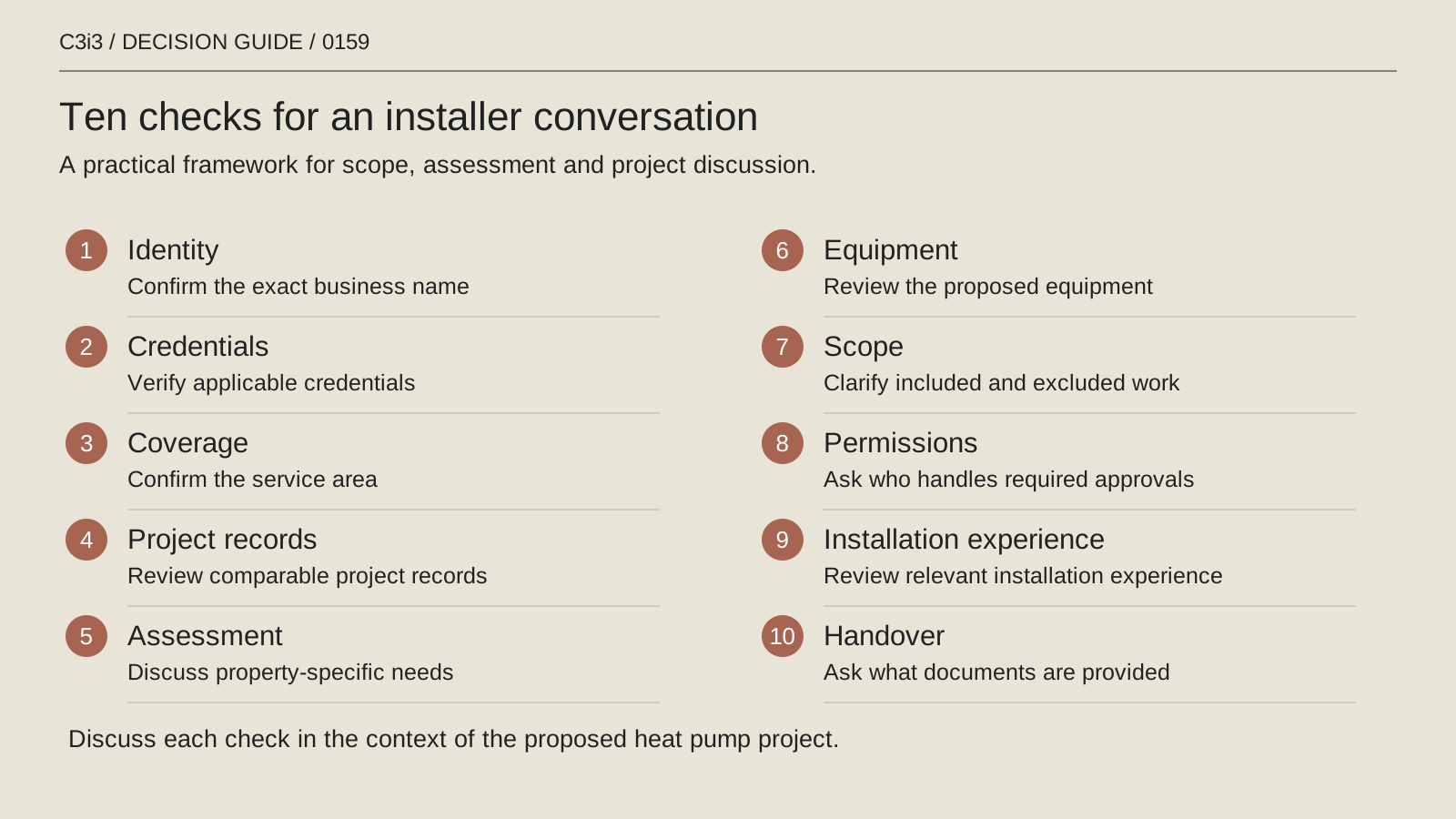
Use these ten checks when talking with San Jose HVAC contractors about a heat pump installation. The numbers organize the questions; they do not rank companies. This is a nameless hiring guide, with official resources you can use to verify information and request a clearer written proposal.
1. Confirm the business and license identity
Ask for the legal business name and license number, then check them in the CSLB's official lookup. Compare the result with the business named on your proposal. A number printed on a website is a starting point for verification, not the completed check.
Ask about relevant classification, license status and who will be responsible for the agreed work. Keep the verified details with the quotation.
2. Ask what assessment supports the proposed system
Ask how the contractor evaluates the property's needs and what information supports the proposed equipment and capacity. The explanation should relate to your home rather than rely only on the existing unit's label or a generic rule.
The DOE-supported replacement checklist provides useful assessment context. You are asking the professional to explain the basis of the proposal, not trying to design the system yourself.
3. Compare an itemized installation scope
Request a written description of the equipment, installation work and responsibilities included in the proposal. Identify removal, protection, cleanup and any related work the contractor says is necessary. Ask which items are items requiring further assessment.
Put proposals beside one another and mark missing information. A shorter proposal may leave responsibilities undefined. Resolve the differences before treating the proposals as equivalent engagements.
4. Clarify electrical and other coordination
Ask who evaluates any electrical requirements and who performs work outside the HVAC contractor's agreed scope. Do not assume every installation needs a panel upgrade, or that no additional work could be necessary. The property's assessment should determine the requirements.
Identify any separate professional, utility coordination or approval process. Request the responsibilities and unresolved tasks in writing so you know which parties must be involved before installation can proceed.
5. Confirm the San Jose permit route for your property
Ask who determines applicable approvals, obtains permits and arranges inspections. San Jose publishes HVAC guidance for single-family and duplex properties. Other property types or unusual scopes may follow a different route.
Confirm the current requirements with the responsible provider and city staff where needed. Do not assume the same checklist covers every home, building or installation method.
6. Review placement and installation assumptions
Ask how the proposed equipment location and associated work were assessed for the property. Discuss access, the areas affected and any conditions still needing confirmation. The explanation should connect to the actual site, not simply show an attractive example from another home.
Record who resolves remaining questions before the scope is finalized. Keep sensitive access information in the appropriate direct conversation rather than posting it publicly with quotation requests.
7. Understand the equipment and labor support terms
Ask for the actual written warranty and service terms that apply to the proposal. Distinguish equipment coverage, labor coverage and any separate maintenance arrangement. Identify registration requirements, exclusions and the contact for a future issue.
A long warranty headline does not explain every responsibility. Read the documents and ask for clarification about the terms that apply to your installation. Keep them with the contract and completion records.
8. Ask what completion and commissioning records you receive
Ask how the installation will be checked and what information you receive at handover. Request an explanation of controls, maintenance responsibilities and the records relevant to the agreed work. Have the contractor describe any testing or commissioning included in the scope.
Do not assume that switching the system on is the whole completion process. Clarify how outstanding items, inspections and customer questions are handled before you consider the engagement complete.
9. Review relevant installation experience
Ask the contractor to explain experience with the type of property and installation scope you are discussing. Request relevant examples or references through an appropriate process, with respect for other customers’ privacy. A large gallery alone does not explain who completed the work or what it involved.
Use the examples to ask about assessment, coordination and handover. Keep the conversation focused on comparable responsibilities rather than treating a photograph as proof of every capability.
10. Read the contract and change process carefully
Confirm the written scope, written responsibilities, responsibilities and process for additional work. Ask how unexpected conditions will be documented and authorized. Do not assume a verbal assurance automatically appears in the agreement.
The CSLB's contract guidance provides a useful consumer reference. Keep copies of the proposal, agreement, approvals and handover information. Seek appropriate advice if a significant term remains unclear before you sign.
Keep this checklist beside you
Questions before the next step
Does this article recommend particular San Jose installers?
No. It provides criteria for your own comparison and links to official resources. There is no named-company ranking or endorsement in this guide. The numbers refer to checks, not provider positions.
How should I compare two different installation proposals?
Use the same questions for each: assessment basis, included work, exclusions, coordination, approvals and handover. Mark missing information and ask for clarification. A clear written comparison helps you understand which responsibilities each provider is offering.

How C3i3 Can Help
C3i3 helps HVAC businesses explain services through marketing strategy, clear website content and useful visual guides. If you operate an installation business, we can review how your pages communicate assessment, scope and the customer's next step.
Bring the questions homeowners ask before accepting a proposal. We can help turn them into accurate service explanations while your qualified team reviews technical details. Business owners can also contact us about advertising opportunities in this guide; any future paid placement will be identified clearly.