



































In this article
The air conditioner is not working, the house is uncomfortable and the repair recommendation is difficult to understand. You do not need to become an HVAC technician to ask for a clear explanation before authorizing the work. You do need to understand what the recommendation covers and what remains uncertain.
These five questions help you compare an air conditioning repair proposal in San Jose. They organize a conversation with qualified professionals rather than diagnose equipment or rank repair companies. If the situation involves an immediate safety concern, follow appropriate professional or emergency guidance instead of attempting repairs from an online article.
1. What did the assessment find, and what remains uncertain?
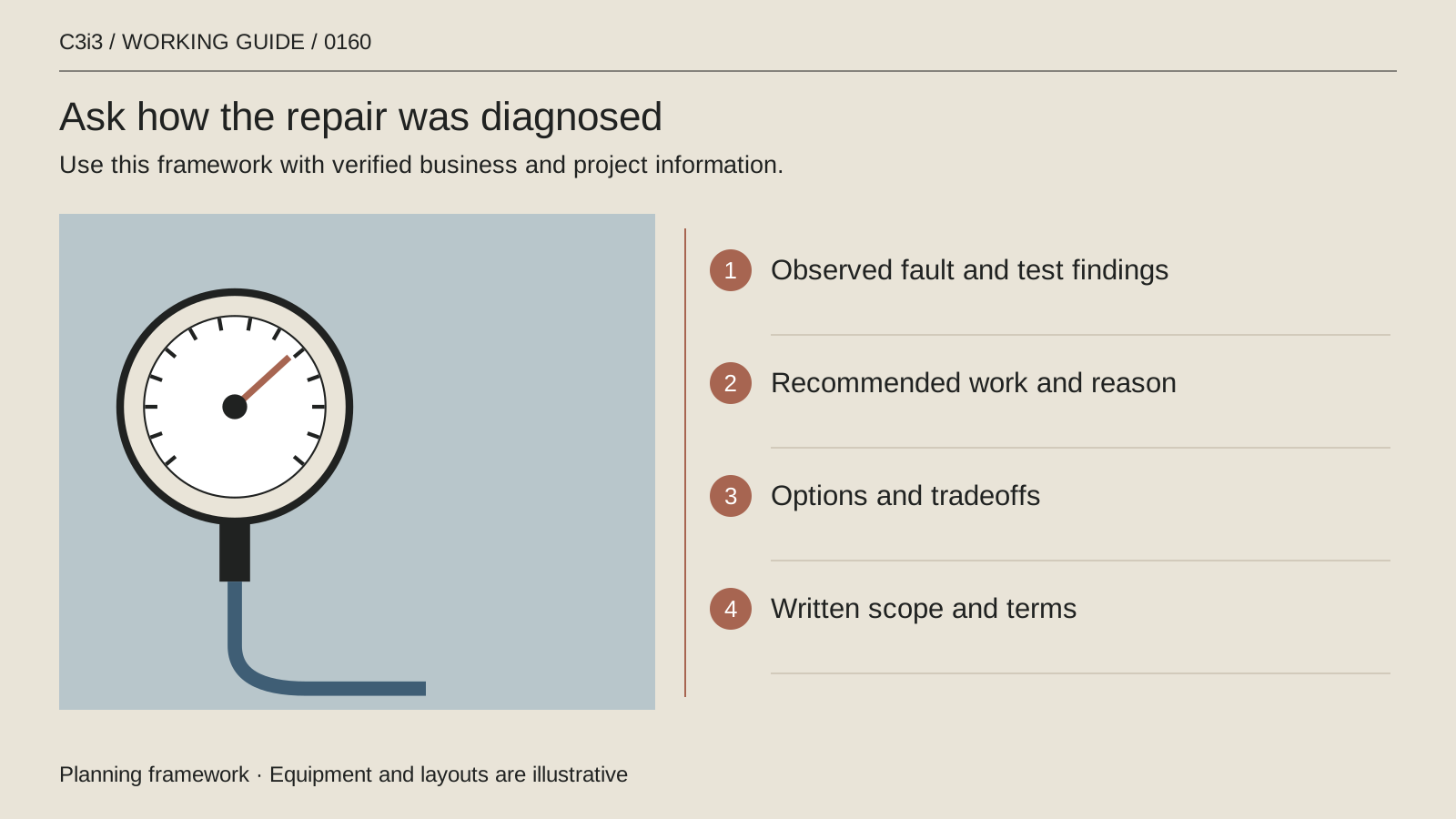
Ask the technician to explain the observed problem in ordinary language and identify the evidence behind the recommendation. Request a distinction between a confirmed finding, a suspected cause and any additional assessment needed. You should be able to understand why the proposed work follows from the findings.
Ask whether the recommendation addresses the immediate fault, a broader condition or both. A symptom alone does not establish the correct repair. Do not open equipment or attempt refrigerant or electrical checks to validate the diagnosis yourself.
Verify the provider's identity and relevant status through the CSLB lookup. Record the explanation and request any documentation the provider normally supplies. If the recommendation is substantial and unresolved questions remain, ask what a further qualified opinion would need to review.
2. What exactly is included in this repair scope?
Ask for a written scope identifying the work, parts or materials where applicable, labor responsibilities and exclusions. Clarify the assessment already completed, the proposed work and any conditions that could change the scope. A short service label does not tell you whether two offers cover the same engagement.
Ask whether cleanup, access arrangements or related work is included. If another party must complete a task, identify who coordinates it and whether its responsibilities are already in the proposal. Keep assumptions visible rather than filling the gaps yourself.
Compare equivalent scope before selecting a provider. A proposal with an unresolved condition needs clarification. The useful question is whether you understand that condition and the process for resolving it before additional work is authorized.
3. Why is repair recommended instead of another option?
Ask the qualified provider to explain why the proposed repair fits the assessed condition and what reasonable alternatives were considered. Depending on the situation, further assessment, a different repair or a replacement discussion may be relevant. The answer should relate to the equipment and property being evaluated.
Avoid accepting a universal age cutoff or a claim that one fault always means replacement. Ask which practical considerations influenced the recommendation, including condition, available support and the scope of work. The ENERGY STAR replacement overview is general background, not a diagnosis of your system.
Request the comparison in a form you can review. Ask the provider to identify the assessment information behind each option and the questions that remain unresolved. A responsible comparison makes uncertainty explicit.
4. What happens if additional work is found?
Agree on who can authorize changes and how the provider will explain them. Ask what happens if the initial repair does not resolve the reported issue or reveals another condition. A clear process helps both parties understand when the scope needs to be reconsidered.
Request written documentation for material changes rather than relying on an informal conversation you may later remember differently. Keep the original estimate and approved revisions together. Ask how scheduling and parts availability affect the next step, and record any unresolved dependencies.
Confirm whether the actual scope requires approvals and who checks that question. San Jose's residential HVAC guidance is a starting point for relevant property types. Do not assume that every repair follows the same permit route or that a replacement discussion is simply an extension of a minor service visit.
5. What written support and completion information will I receive?
Ask what the provider checks after completing the agreed repair and what findings or service record you receive. Request a clear explanation of the work performed, any remaining concerns and any actions the homeowner is expected to arrange.
Read the actual support terms. Identify the difference between a part manufacturer's coverage, the contractor's labor terms and a separate maintenance agreement. Ask who to contact if the same symptom returns and what conditions apply. Do not assume a brief verbal warranty statement covers every future issue.
Keep the documents with the estimate and provider information. The CSLB's consumer contract guidance can help frame questions about written responsibilities. Use the written agreement to understand the actual repair scope and the responsibilities that continue after completion.
Keep this checklist beside you
Questions before the next step
Should I always get another estimate?
Consider the scope, urgency and uncertainty of the decision. For substantial work with unresolved questions, another qualified opinion may help. Ensure the second provider reviews the same information before treating the proposals as directly comparable.
Can I use an online symptom checklist to confirm the repair?
An online guide cannot establish your equipment's condition. Use it to prepare questions and describe what you observed. Leave diagnosis and any electrical or refrigerant work to appropriately qualified professionals.

How C3i3 Can Help
C3i3 helps service businesses make technical offers easier to evaluate through clear content strategy, service pages and visual explanations. If you run an HVAC business, we can review the questions customers need answered before making an enquiry.
Bring your current repair page and the points your office repeatedly explains. We can help structure a useful, accurate customer path with technical review by your team. If you are interested in advertising in this guide, contact us to discuss the opportunity and clearly labeled placement options.