



































In this article
The patio enquiries look describing until you start returning calls. One customer wants a repair you do not offer. Another expected a completely different installation scope. A third has already hired someone because your reply arrived late. All three appear as leads in the dashboard, yet none became useful work.
Customer acquisition for landscapers is the complete path from recognition to a suitable project. Before buying more paver patio traffic, find the point where the current path breaks. The fix may be a clearer offer or a dependable response rather than a broader advertising campaign.
Build a simple enquiry outcome record
Use a shared sheet or the system the office already checks. For each enquiry, record the requested work, general location, source when known, first response, current stage and reason it stopped. Avoid collecting private information you do not need for the decision.
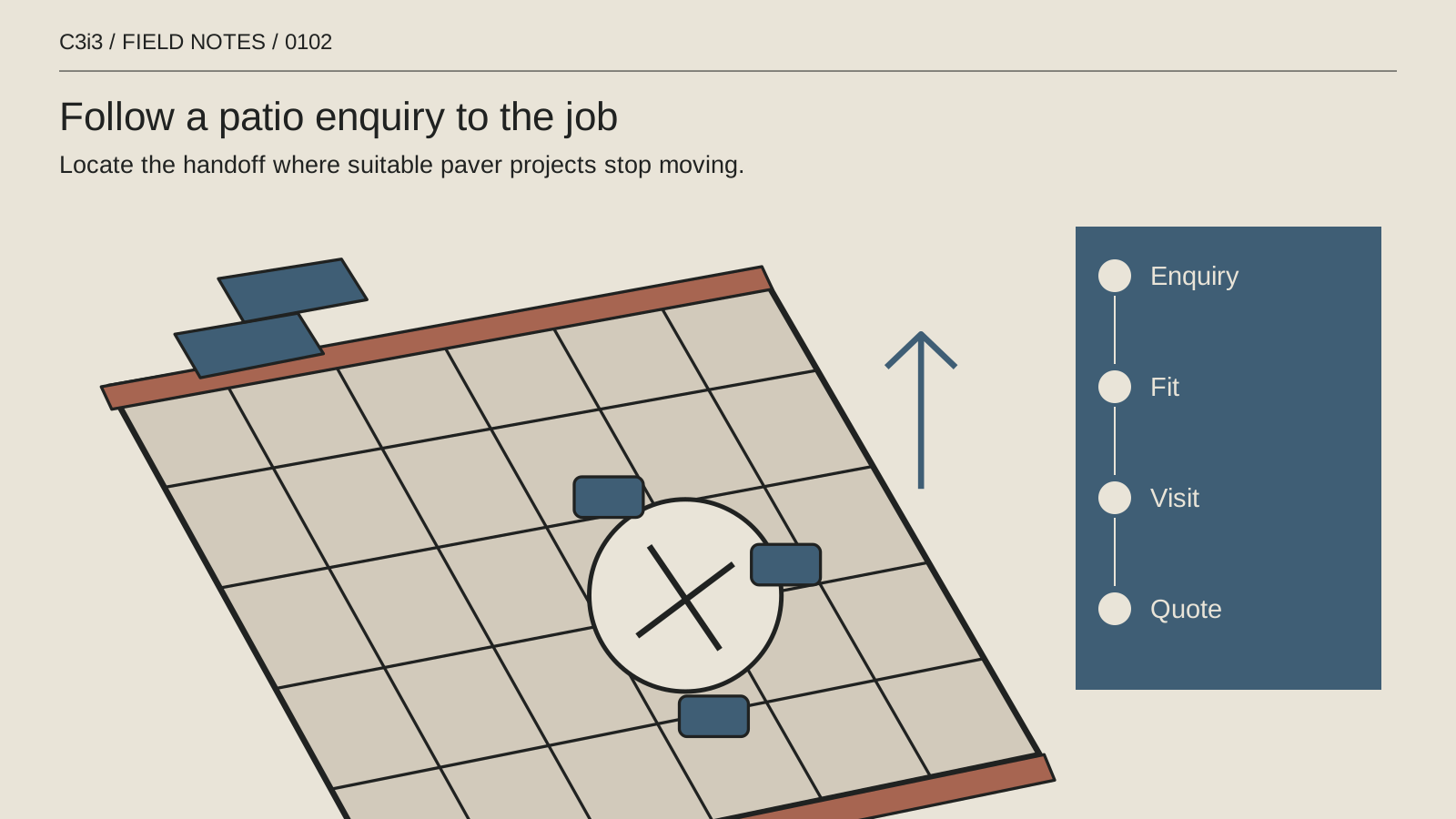
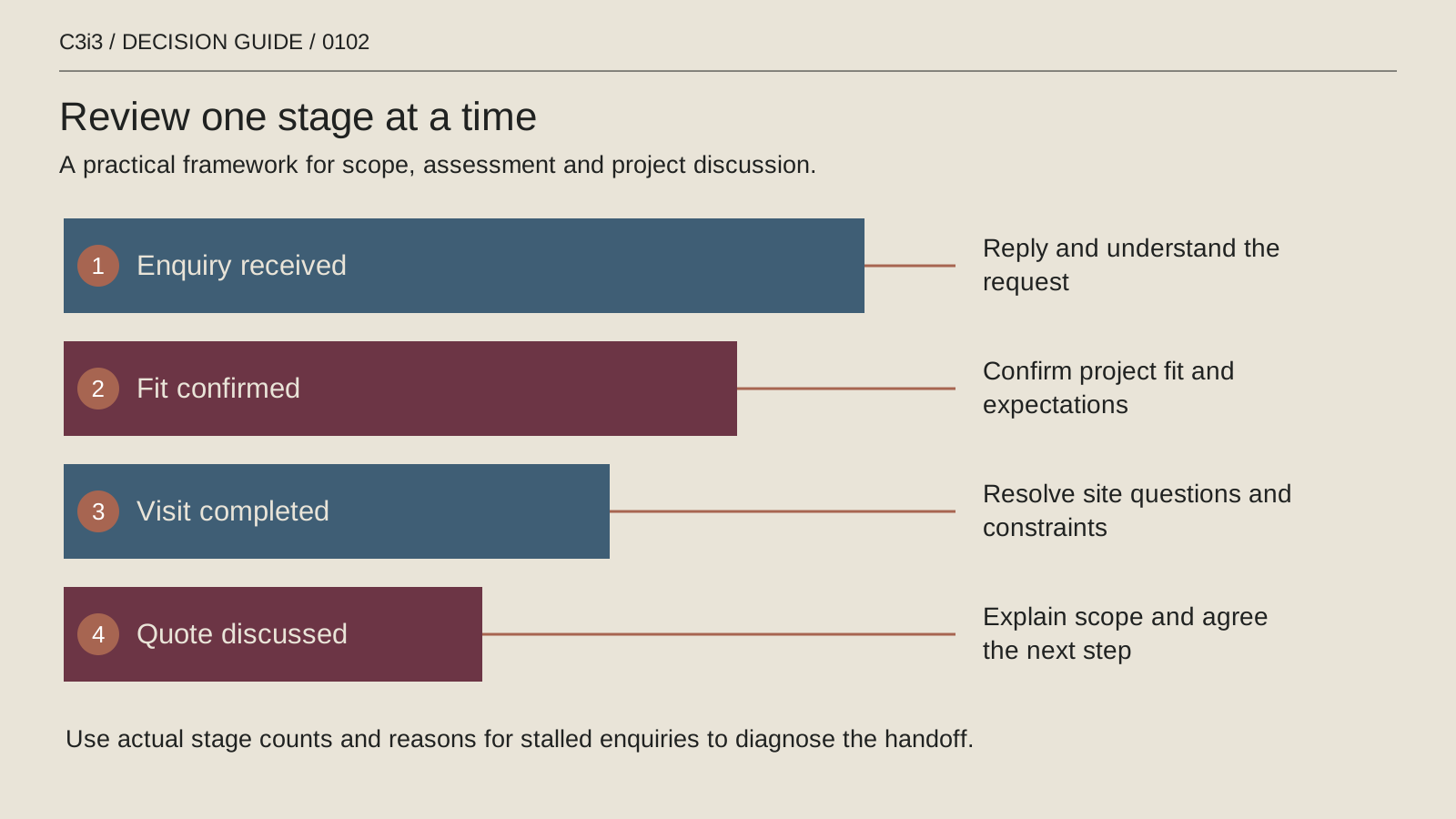
Agree on practical stages. Received, contacted, suitable, assessment arranged, proposal sent and decision recorded are enough to begin. Define what each means so different staff members do not report the same conversation differently.
Review a sample together. If most enquiries are never reached, the immediate problem differs from proposals repeatedly losing after an assessment. The record should show where to investigate, rather than encourage the team to blame a channel without evidence.
Make the paver patio offer specific enough to compare
Explain the patio work you actually undertake and how the project is assessed. Describe the planning conversation, relevant site considerations and what a quotation will cover. Avoid implying that a photograph alone can establish the complete scope or agreed responsibilities.
Show completed projects that resemble the work you want more of. Explain the brief, your role and useful decisions, with appropriate permissions. Attractive finished surfaces are stronger evidence when a customer understands the project context.
Distinguish full installation from small repairs if your business treats them differently. A visitor should not have to submit a long form to discover that the service they want is unavailable. Clear boundaries can improve fit while reducing frustration.
Find the gap between the advertisement and the page
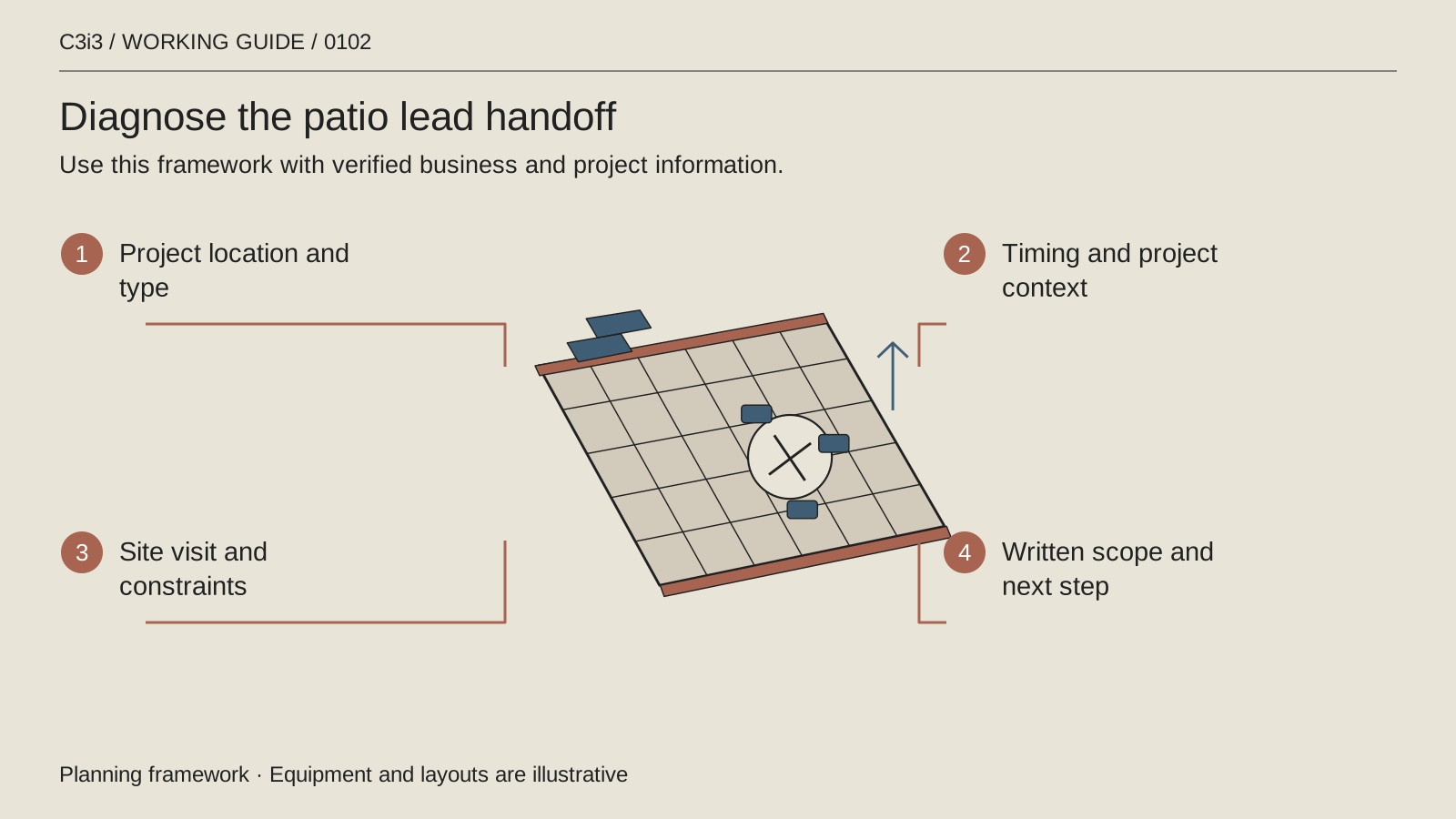
Compare the exact message in each active advertisement or listing with its destination. A minor-repair message leading to a complete patio design service creates a predictable mismatch. Record the source and described service before judging lead quality.
Keep the destination focused on the advertised task. If the campaign promotes paver patio installation, explain that engagement first, then link to other genuine services where useful. Do not make visitors search a general landscaping page for the offer they clicked.
Check the page on a phone with ordinary customer questions in mind. Can someone find the service boundary, relevant evidence and next step? Readability and contact access matter alongside the visual presentation.
Make first contact dependable and useful
Assign who responds and what happens when that person is unavailable. Set a response expectation the business can actually meet and communicate it accurately. An automated acknowledgement confirms receipt; it does not replace a useful conversation.
Prepare a short qualification prompt: what would you like to change, where is the project, and what stage of planning are you in? Ask only questions that help determine the next step. Do not make the customer solve technical site issues before speaking with your team.
Record whether contact succeeded and the agreed follow-up. Repeated messages without a clear purpose can feel intrusive. Use a respectful process that gives the prospect an easy way to continue, pause or decline.
Improve the quotation conversation, not just its appearance
If suitable enquiries reach proposals but do not proceed, examine the information customers receive. Can they understand the scope, assumptions, exclusions and next decisions? Do they know which questions remain open and how changes would be handled?
Ask for feedback where appropriate, without pressuring the customer to defend their decision. Confidence in scope, scheduling and communication can affect the decision. Do not label every lost proposal a poor-fit prospect simply because another bidder was chosen.
Use a clear summary alongside the formal documents. A visual scope diagram can explain what the proposal includes, provided it matches the actual agreement and does not replace required professional or contractual review.
Choose the acquisition metric that matches the problem
For a contact problem, review reached enquiries. For a fit problem, review suitable assessment requests. For a proposal problem, review comparable scopes and documented reasons for the decision. Keep raw traffic and form totals available without treating them as the business outcome.
Record the changes you make and any important seasonal or staffing context. Do not claim that a short test proves a universal conversion improvement. Learn from patterns and adjust the next step deliberately.
The SBA planning resources can help structure customer research. Connect that evidence to your wider contractor marketing strategy so acquisition supports the work the business wants to deliver.
A simple acquisition handoff record
| Stage | Information to keep | Responsible action |
|---|---|---|
| Received | Requested work and source when known | Assign first response |
| Contacted | Project fit and unresolved questions | Agree the next step |
| Proposal | Defined scope and decision status | Record the reason for the decision |
Keep this checklist beside you
Questions before the next step
Should I stop advertising if patio leads do not convert?
Investigate the failure point first. A campaign may attract suitable people while the response process loses them, or it may describe the wrong service. Pause or adjust based on the evidence and your operating capacity.
Is a shorter form always better?
No. Ask enough to route the enquiry usefully, but avoid unnecessary homework. Test whether the information helps the office and whether customers can complete the form comfortably on a phone.

How C3i3 Can Help
C3i3 can review the path from a landscaping offer to a qualified conversation. Our marketing strategy services connect campaign messages, service pages, enquiry forms and the information needed for follow-up.
Bring a small sample of recent paver patio enquiries and the pages or advertisements that generated them. We can identify the weak step and define a useful first correction. More traffic becomes a better investment when the business can handle the opportunities it already receives.