



































In this article
Your remodeling portfolio looks polished. The inquiries still ask for jobs you do not take, budgets that do not fit and start dates you cannot offer. A gallery can attract attention without helping someone understand whether your company is right for their project.
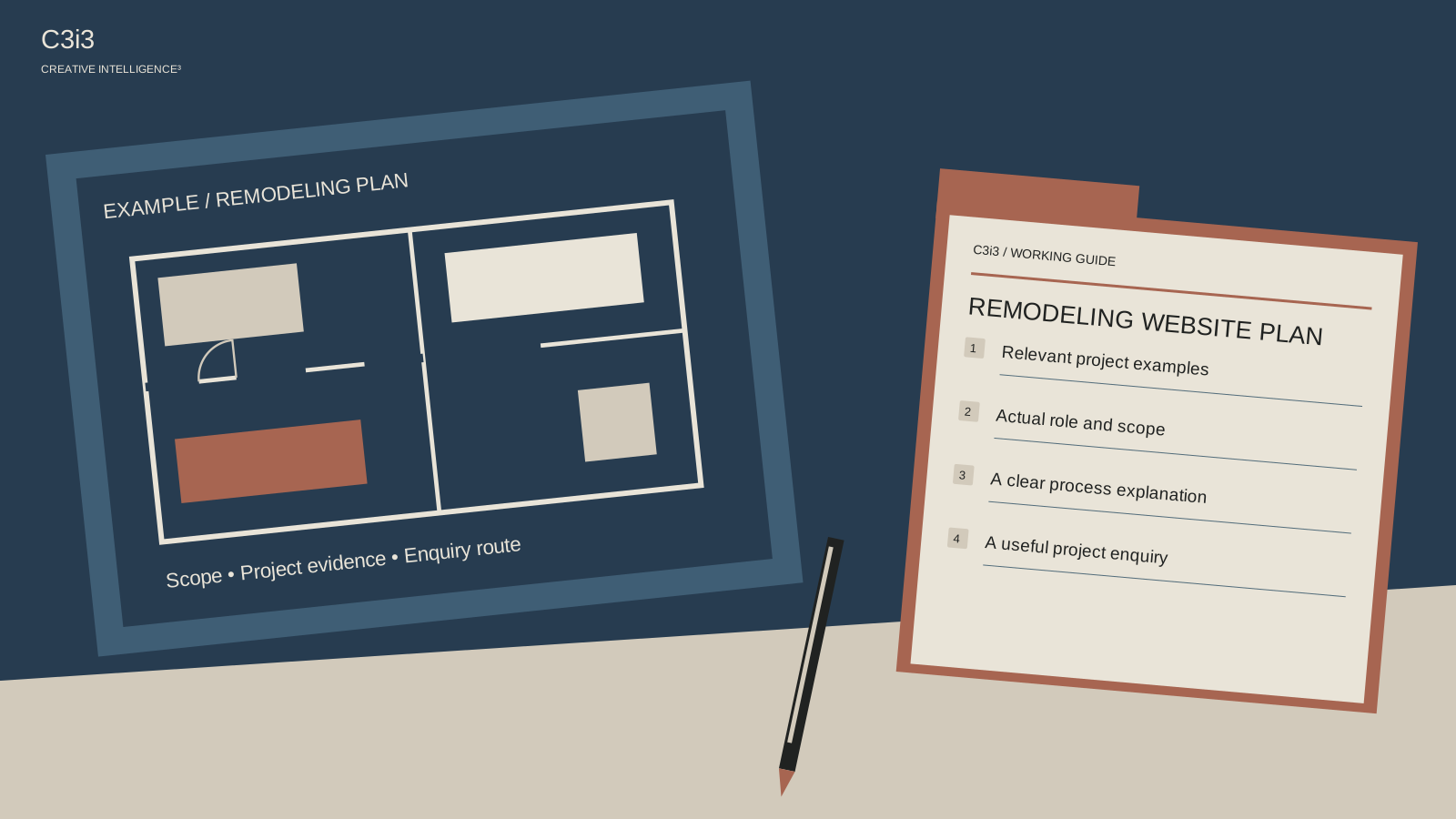
A useful remodeling website gives a homeowner enough context to start the right conversation. Kitchen and bathroom pages should show what you do, how you work and what information makes an initial consultation productive.
What should the first screen tell a homeowner?
State the service and who it is for. Are you a general remodeling contractor, a design-build company or a specialist handling a limited part of the project? Use the description that matches your business rather than a broad label chosen only for search.
Make service coverage and the next step easy to find. A visitor should understand whether you accept San Jose projects and whether the first contact is a consultation request, site visit or preliminary conversation. Do not promise an instant construction quote if the work requires assessment.
Show one relevant project image with a useful caption. The first screen does not need every award, city and service. It needs to make the visitor confident they have reached a business that handles the kind of project they are considering.
How should kitchen and bathroom pages differ?
A kitchen page might explain layout planning, coordination of cabinetry and appliances, and how scope is developed. A bathroom page may focus on use, access, fixtures and the planning questions your team addresses. Describe your process without giving technical instructions that replace professional assessment.
Avoid duplicating the same page and changing only the room name. Use different completed projects and questions from real consultations. Explain which services are included, which are coordinated with partners and which the homeowner must arrange separately.
If your company also offers minor updates, make the distinction from full remodeling clear. A homeowner seeking cabinet painting should not have to complete a lengthy whole-home project form to learn that the work is outside your scope.
What should a portfolio project explain?
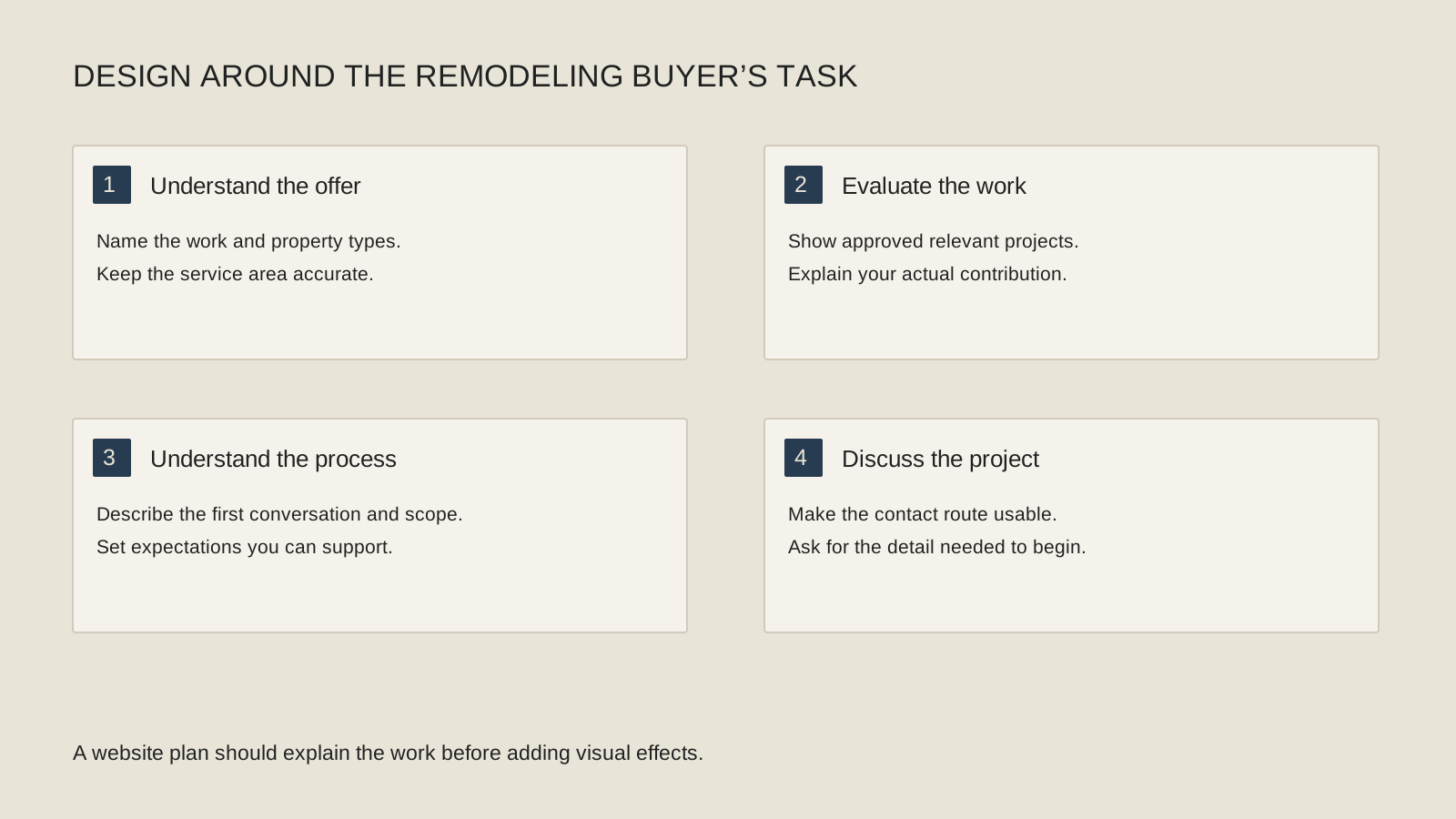
With permission, identify the starting problem, the owner's priorities, the agreed scope and your role. Explain what changed and what remained. A before-and-after image becomes more useful when readers understand why the work was planned that way.
Be precise about collaboration. If an architect, designer or specialty trade handled part of the project, do not claim that work as your own. Use project photographs only with the rights and permissions needed for publication.
Our project-story guide offers a practical structure. You do not need to disclose an owner's address or private budget. A clear scope description and relevant photographs can show experience while respecting the client's privacy.
The remodeling page decision checklist
Help the homeowner decide whether to begin a conversation.
Fit
Service, location and project type are clear.
Proof
A relevant project explains scope and role.
Process
Planning, assessment and scheduling are understandable.
Contact
A short form gives a realistic next step.
Should you discuss budget, timing and permits?
Explain how the business approaches these questions rather than publishing a universal answer. If you use a minimum project scope or investment range, keep it current and explain what it includes. Do not borrow an unrelated national average and present it as your company's quote.
Separate inquiry response, design or planning, approvals and construction scheduling. A homeowner can then understand why “when can you start?” may require more information. Avoid a precise completion promise that cannot account for site findings or approved changes.
For San Jose work, link readers to the city's Building Division and explain who coordinates requirements within your agreed scope. Verify requirements for the actual project; a marketing page should not declare that every kitchen or bathroom follows one permit path.
Which form questions improve project fit?
Ask for the property location, room or project type, a short description, approximate timing and contact details. If budget is important for routing, explain why you ask and allow a range or “not sure yet.” Keep the initial request proportionate to a first conversation.
Offer a way to share inspiration or plans later through an appropriate process. Do not force large uploads before someone knows whether you accept their project. Make required fields clear and ensure the form works with a keyboard and on a phone.
Tell people what happens after submission, using a response expectation the office can actually meet. A confirmation message should acknowledge receipt without implying the project is booked. Give an alternative contact route for accessibility or submission problems.
How do you improve the website after launch?
Review inquiries by project type, location and fit. Ask the team which questions still need repeated explanation. If everyone asks whether you provide design services, the website may be unclear about that role. If callers want repairs you do not offer, review the page language attracting them.
Connect those observations with relevant search and page data. The contractor local SEO framework explains how visibility and qualification fit together. Keep the focus on useful projects rather than adding more city pages without evidence.
Improve one weak decision point at a time. A clearer scope section, an understandable project story or a simpler first form may be more valuable than a complete redesign. Let real customer questions guide the next article, illustration or page revision.
Keep this checklist beside you
Questions before the next step
Do I need a separate website for kitchens and bathrooms?
Usually the first question is whether distinct pages within one website can serve the different decisions clearly. Separate domains introduce additional work and should have a specific business reason.
Should I put every project photo online?
Publish a curated selection that you have permission to use and can explain. Relevance and context matter more than the size of the gallery.

How C3i3 Can Help
Bring your service boundaries and approved project stories. C3i3 can help structure the website and inquiry brief around the remodeling work you want.