



































In this article
Your pool company's blog has maintenance tips, summer reminders and a few attractive pool photographs. Yet the repair calls you want are not arriving. Publishing more of the same may increase the archive without helping a customer who is trying to decide whether to contact a repair professional.
A useful content marketing strategy starts with the questions reaching the office and the repair work your team actually provides. The aim is to help someone recognize the next sensible step, understand the limits of online advice and reach the right service page when a professional assessment is needed.
Use office questions as the editorial starting point
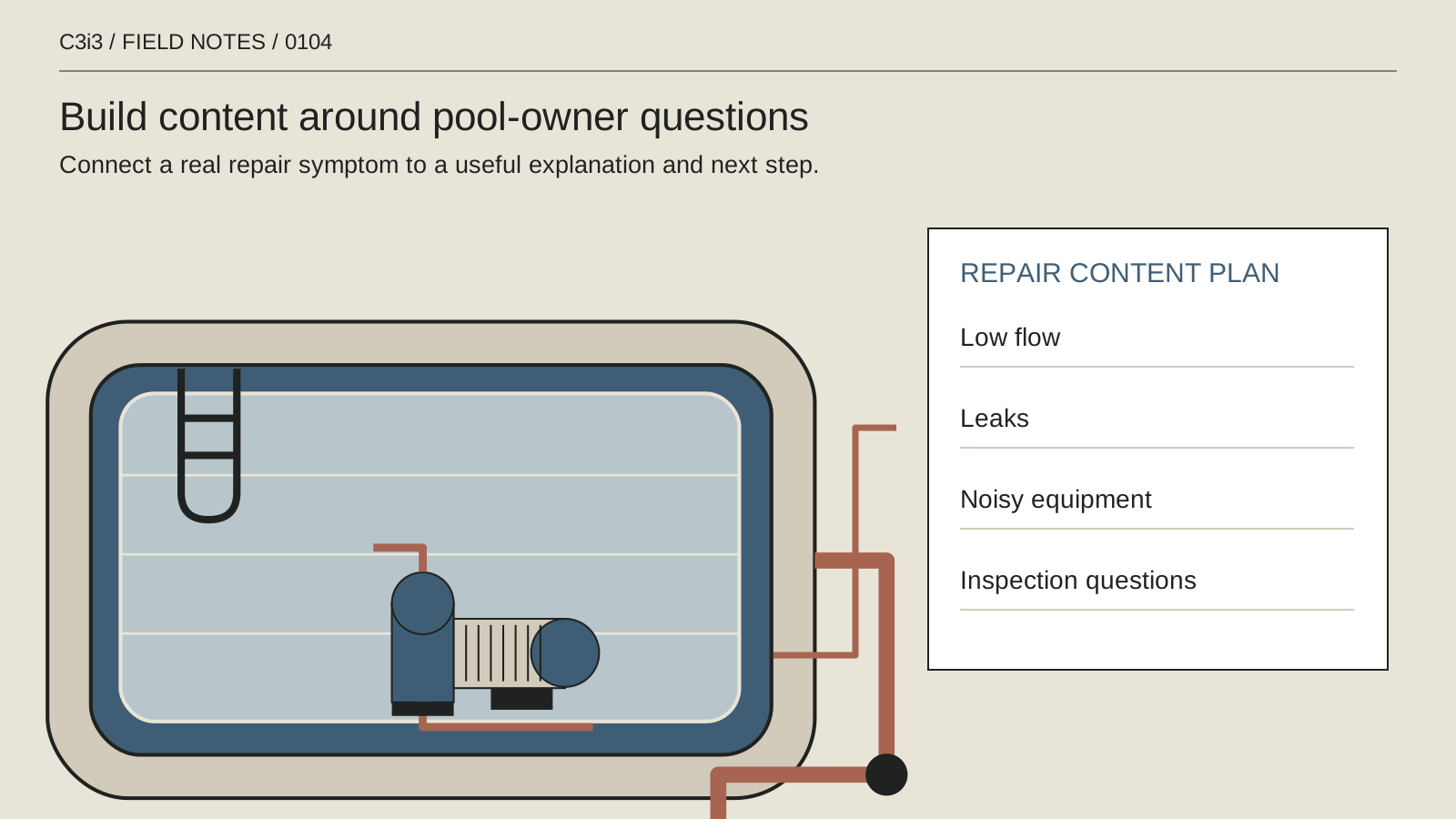
Review enquiry notes with the people who answer calls and perform assessments. List questions customers repeat about symptoms, scheduling, repair scope and what information to prepare. Remove personal details before sharing examples with the content team.
Group questions by customer task. Understanding an unfamiliar sound, comparing a repair proposal and arranging an appointment are different needs. A single article called everything about pools is unlikely to serve all of them clearly.
Prioritize questions linked to work the business can provide. If your team does not repair a particular system, do not attract customers by implying that you do. Useful content includes honest service boundaries and a clear explanation of where the enquiry should go.
Build a small question-to-service map
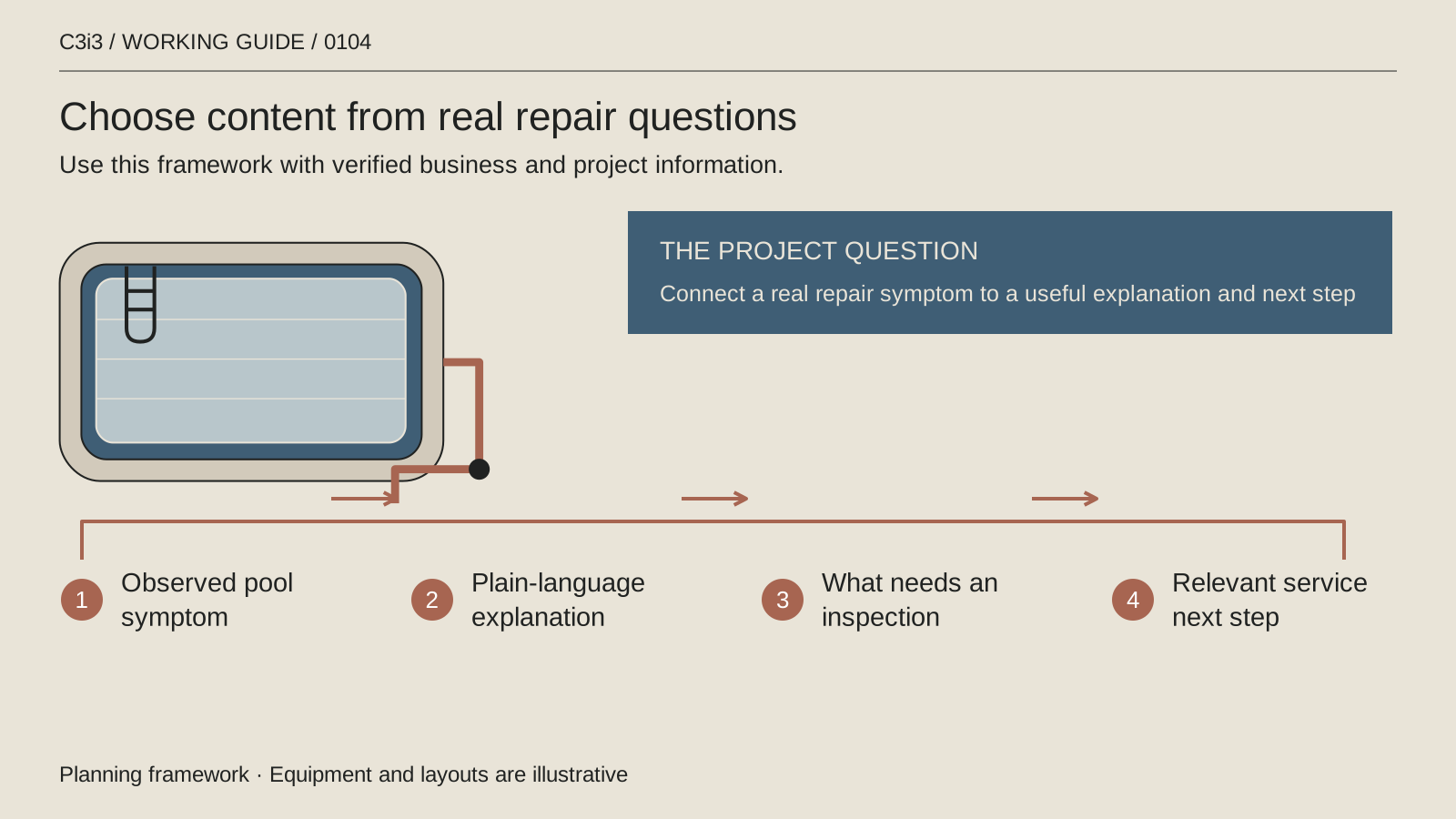
For each article, write the reader's question, the answer you can responsibly provide, the relevant service page and the next step. This keeps the editorial plan connected to the business without turning every paragraph into an advertisement.
For example, a guide can explain what information helps arrange a pump assessment, while the service page explains the actual repair engagement and coverage. Another guide can help compare the scope of written estimates. These are distinct tasks and deserve different explanations.
Distinguish general information from a diagnosis of a specific fault. A symptom can have several causes. Let a qualified professional establish the diagnosis rather than using a search-friendly headline to imply certainty about a customer's equipment.
Give readers something useful before requesting contact
Provide a preparation checklist: the equipment identification if safely available, a plain description of the issue, when it began and any existing service records. Explain how to send information through your normal enquiry process without including unnecessary personal or security details.
Do not instruct readers to open equipment, bypass protections or work on electrical, chemical or pressure systems. Have a qualified technical reviewer define the boundaries of the advice. An article can be helpful without becoming a repair manual.
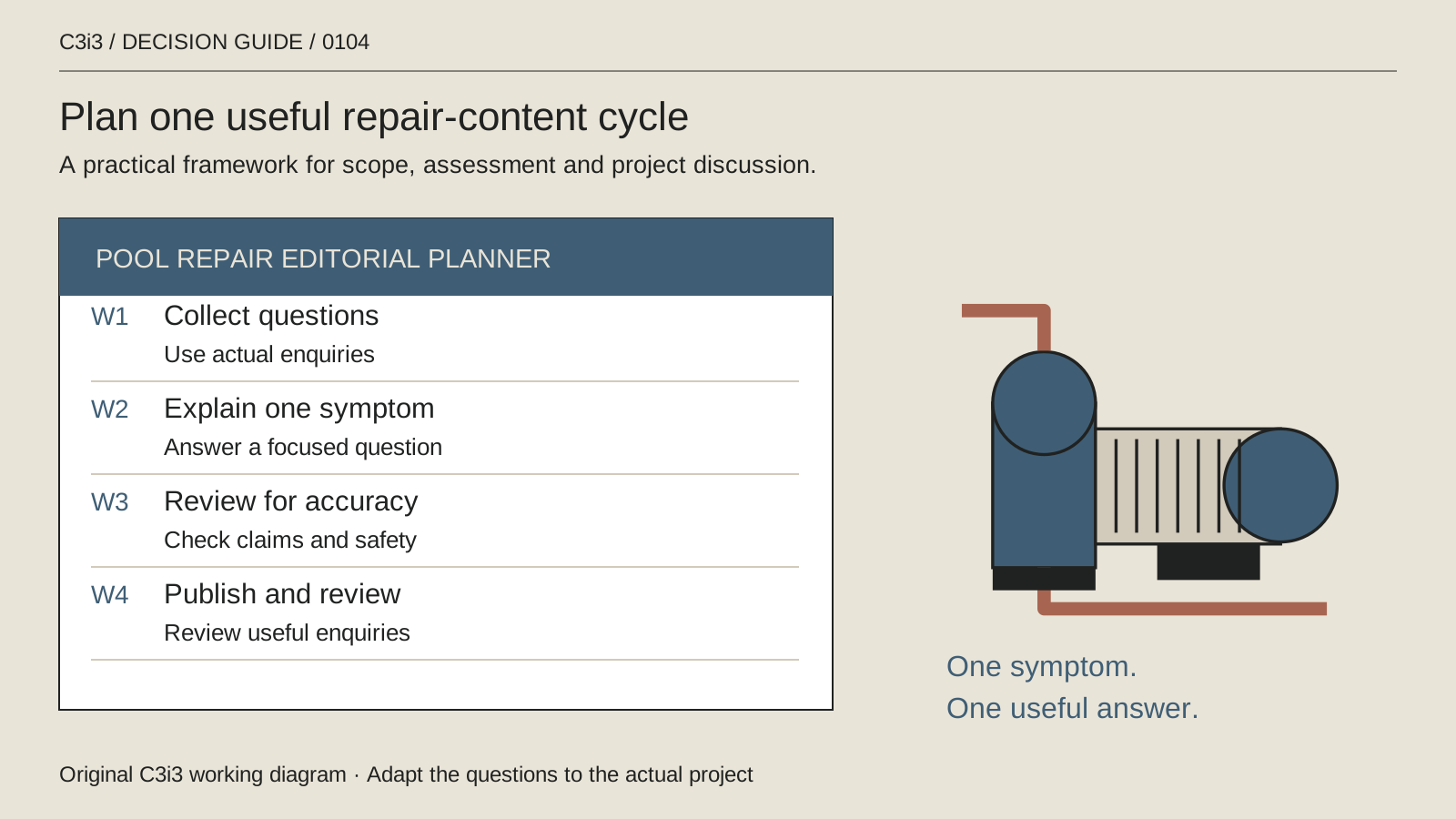
Use a simple diagram to explain the difference between a symptom, an assessment and an agreed repair. Label it as illustrative. That visual helps a customer understand why an online description is not the same as a confirmed scope of work.
Create evidence-led stories from real work
When permissions and records allow, publish a repair story explaining the reported problem, the professional assessment and the work your team performed. State relevant limitations and avoid making the result sound universal.
Use accurate photographs or clearly labeled illustrations. Do not attach a stock or generated image to language implying it shows a completed customer repair. Protect addresses, access information and other private details.
A useful story can also explain a decision: why further assessment was required or why a quotation included a specific responsibility. This is more informative than a claim that your company fixes every pool problem quickly. Have the technical reviewer approve the factual account before publication.
Make the article-to-enquiry route obvious
Link the guide to the relevant repair service using descriptive language. Explain coverage, appointment expectations and what happens after a request. Readers should not have to navigate a general homepage to find the service the article discusses.
Use a modest contact invitation after providing useful information. Ask for the project context rather than forcing a visitor through a long sales questionnaire. Confirm that messages reach the responsible person and that follow-up is handled consistently.
Check the experience on a phone. A helpful answer can lose its value if diagrams are unreadable, a table overflows or the contact form fails. Content strategy includes the delivery of the information, not just the words drafted in a document.
Maintain the useful content and review real outcomes
Assign an owner for technical review and updates when services, equipment coverage or appointment processes change. Keep the source and approval notes so the team knows which statements require a professional check.
Review relevant search activity, service-page visits and suitable repair enquiries together. A quiet period can reflect seasonality, service availability or a broken contact route as well as content. Investigate before deciding that the answer is simply more articles.
Google's helpful content guidance supports a practical editorial test: would this page help the intended reader complete a task? Connect that task to the contractor strategy pillar so the content serves the work you want.
Keep this checklist beside you
Questions before the next step
Should I publish pool repair advice every day?
Choose a pace your team can research, review and maintain. The useful unit is a complete answer to a real customer question. A daily schedule is not evidence of quality or business value.
Can AI draft technical pool content?
It can assist with structure or wording, but a qualified reviewer needs to verify the advice and limits. Do not publish generated diagnostic or safety instructions without the appropriate expert review.

How C3i3 Can Help
C3i3 can help structure a content strategy around the questions your pool customers ask. We can connect article topics, service explanations, visual guides and the enquiry route while your technical team approves the specialist information.
Bring a few recurring questions and the repair services you want to grow. We can develop a focused plan that gives readers useful answers and gives the business a clear way to review the work. You can begin with one strong question rather than a large publishing commitment.