



































You earned those reviews one customer at a time. Then you search for your service in Walnut Creek and a competitor with less visible review activity appears first. It feels as though Google is ignoring the part you worked hardest to improve.
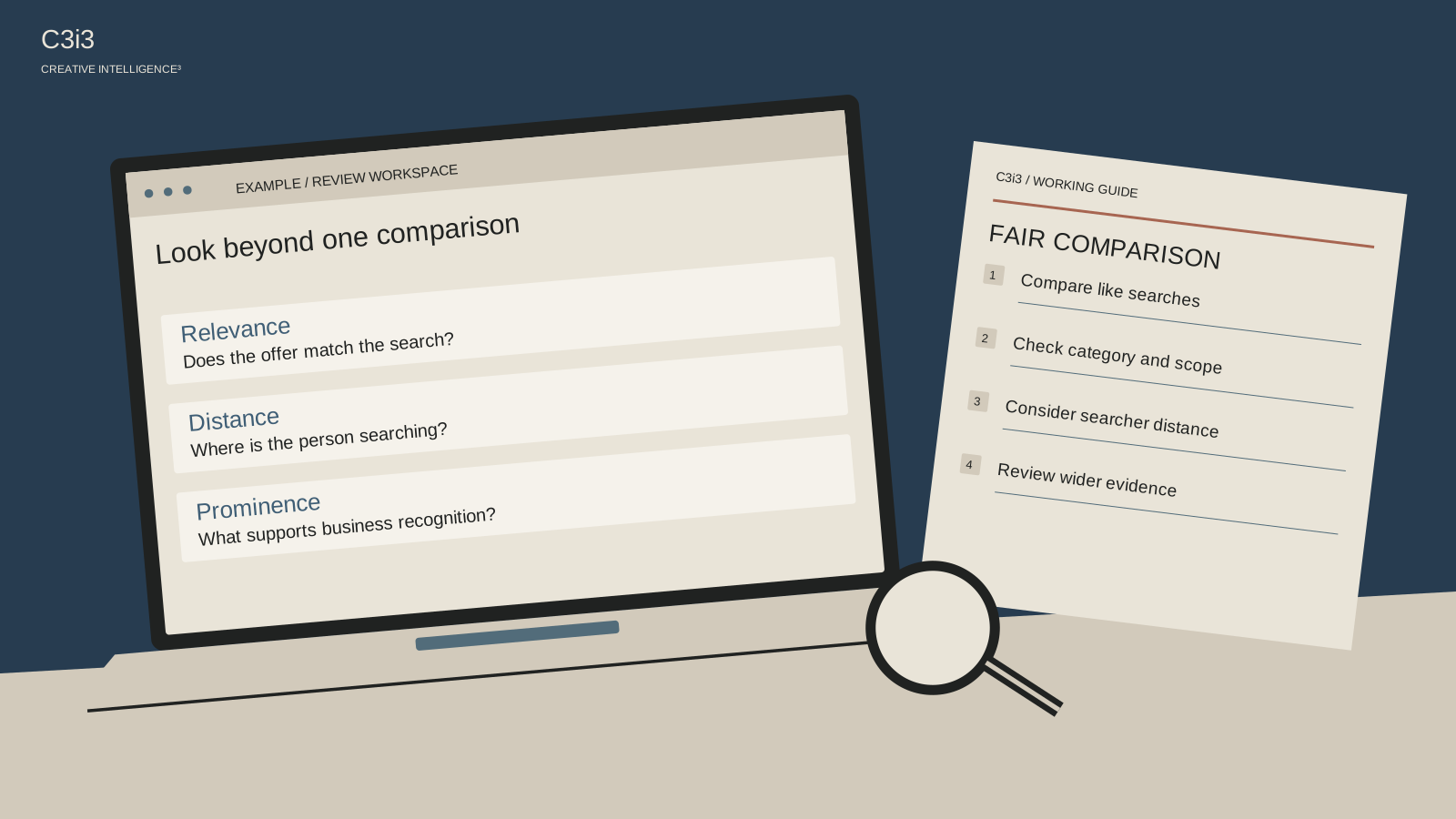
Reviews can help customers choose you, but they do not explain an entire local result. Before deciding that the answer is simply more reviews, compare the actual search, the service being offered and the information behind each listing.
Are you comparing the same search situation?
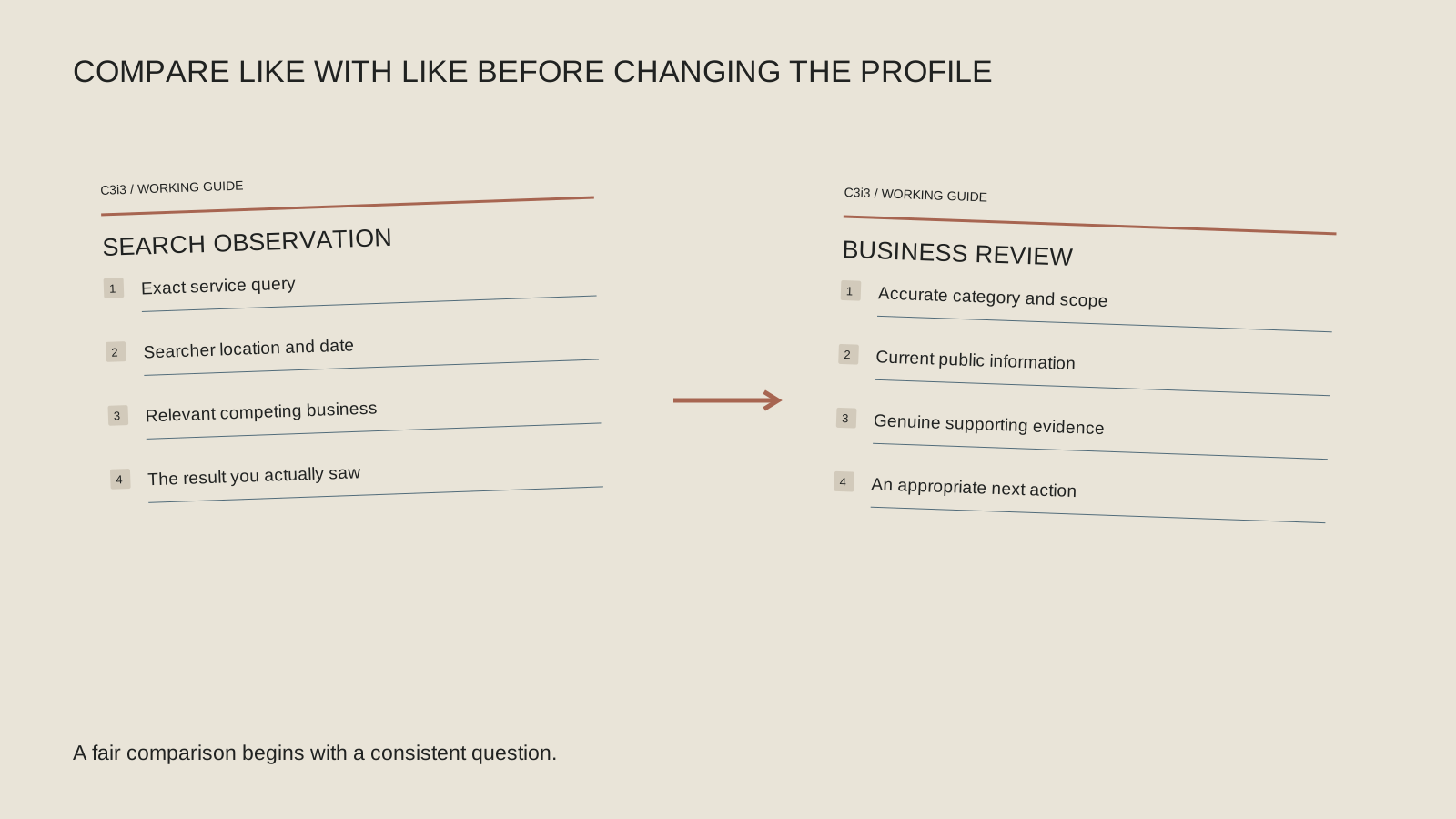
Record the exact query and the context of the check. A person near one business and a person elsewhere may not see the same result. A broad category query and a specific service query may also produce a different comparison.
Take a dated note rather than treating a single result as a permanent order of merit. If you repeat the check, keep the conditions understandable. Avoid asking several people to search different phrases from different places and combining the answers into one supposed position.
For an illustrative Walnut Creek service business, begin with the assignment you actually want to receive. A competitor appearing for a neighboring service category may not be winning the same opportunity. Define the customer task before deciding which public details deserve attention.
What does the competitor appear to answer better?
Look at the public information available without assuming access to the competitor’s internal results. Does its category describe the searched service more precisely? Is the service explanation clearer? Does its website provide a relevant destination with understandable examples?
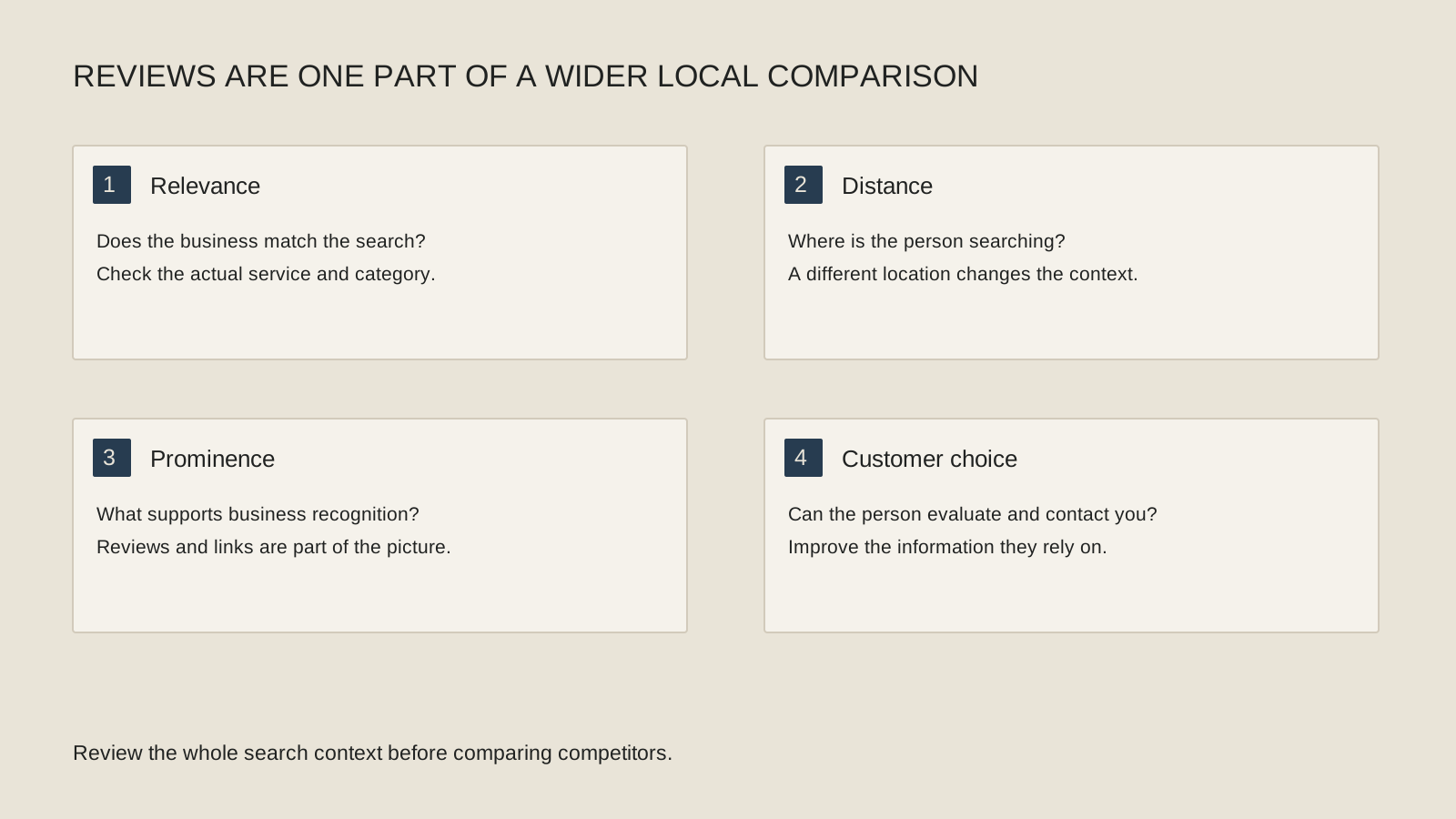
Use Google’s local-ranking explanation to keep relevance, distance and prominence in the discussion. A review total cannot isolate those factors or reveal the exact reason one result appeared above another.
Keep the comparison respectful and factual. You do not need to label a competitor undeserving to identify a gap in your own page. Record an improvement you can support, such as a clearer service description or an accurate category review, instead of copying its wording or making claims about how many customers it wins.
Does your website support the service your profile introduces?
Follow your profile’s website link. Can a visitor find the relevant service, recognize the intended customer and see suitable evidence? If the destination is a general homepage, it still needs a clear route to the answer they came for.
Review your actual contribution in project examples. A photograph and a logo may be less useful than a short explanation of the work. Our project-story guide shows how to use approved source material without turning proposed benefits into reported results.
For a business with several service lines, make the distinction between them understandable. The service-discovery guide explains the page-planning process. A profile and its website should introduce the same real offer rather than making the visitor assemble it from scattered clues.
Compare the whole customer invitation
Use this worksheet for your business first. Public competitor information can suggest questions, but it does not expose their internal performance.
Search context
What exact service did you search, and from what location context? Keep the query consistent before comparing appearances.
Relevance
Do the category, service explanation and destination page match the assignment? Identify an accurate improvement you control.
Evidence
Can a customer understand your role in relevant work? Use approved facts and a clear account of the contribution.
Experience
Can people contact the right person, and can real customers leave honest feedback? Keep actual inquiries alongside public review observations.
Are you asking for reviews in a way you can maintain?
Make it easy for actual customers to leave honest feedback without pressure. The Google review-request guidance explains the available review link and QR-code options. Keep the invitation understandable and connect it to a genuine customer experience.
Follow Google’s contributed-content rules when designing the process. Avoid incentives, fabricated experiences and selectively soliciting only positive reviews. A review program should help customers share what happened, rather than manufacture a desired public score.
Respond professionally to feedback where appropriate and route actual service problems to the person who can resolve them. Do not turn a public reply into an argument or disclose a customer’s private information. The useful business work includes improving the experience that leads to the review, not just increasing the number displayed.
What should you judge beyond position and review totals?
Look at whether appropriate customers can understand the offer and reach the team. Keep the available profile interactions alongside the inquiries you actually handle. A high position for the wrong service can create activity without helping the business.
Choose one confirmed information or handoff issue, correct it and record the action. Keep asking for honest feedback as part of ordinary service, while evaluating the rest of the customer path. A provider should be able to explain this work without promising that a particular review count produces a particular rank.
If the concern is nearby-city visibility, use the Dublin and Pleasanton guide. If profile views are present but conversations are missing, use the profile-to-inquiry checklist. Choose the investigation that matches the symptom.
Keep this checklist beside you
Two questions owners ask next
Can a business with fewer reviews rank above mine?
Yes. Reviews alone do not determine every local result. The query, search location and the broader relevance and prominence picture also matter.
Should I offer a discount for a Google review?
Do not build incentives into a Google review request. Follow Google’s review and contributed-content policies, and invite genuine feedback without pressure.

How C3i3 Can Help
C3i3 can help review your local SEO information and the website experience behind the profile. We can connect that review with service copy and useful customer-facing content where the offer or evidence needs clarification. Bring the searches you are comparing and the work you want customers to find. We can help identify practical improvements without reducing the assignment to a contest over review totals.