



































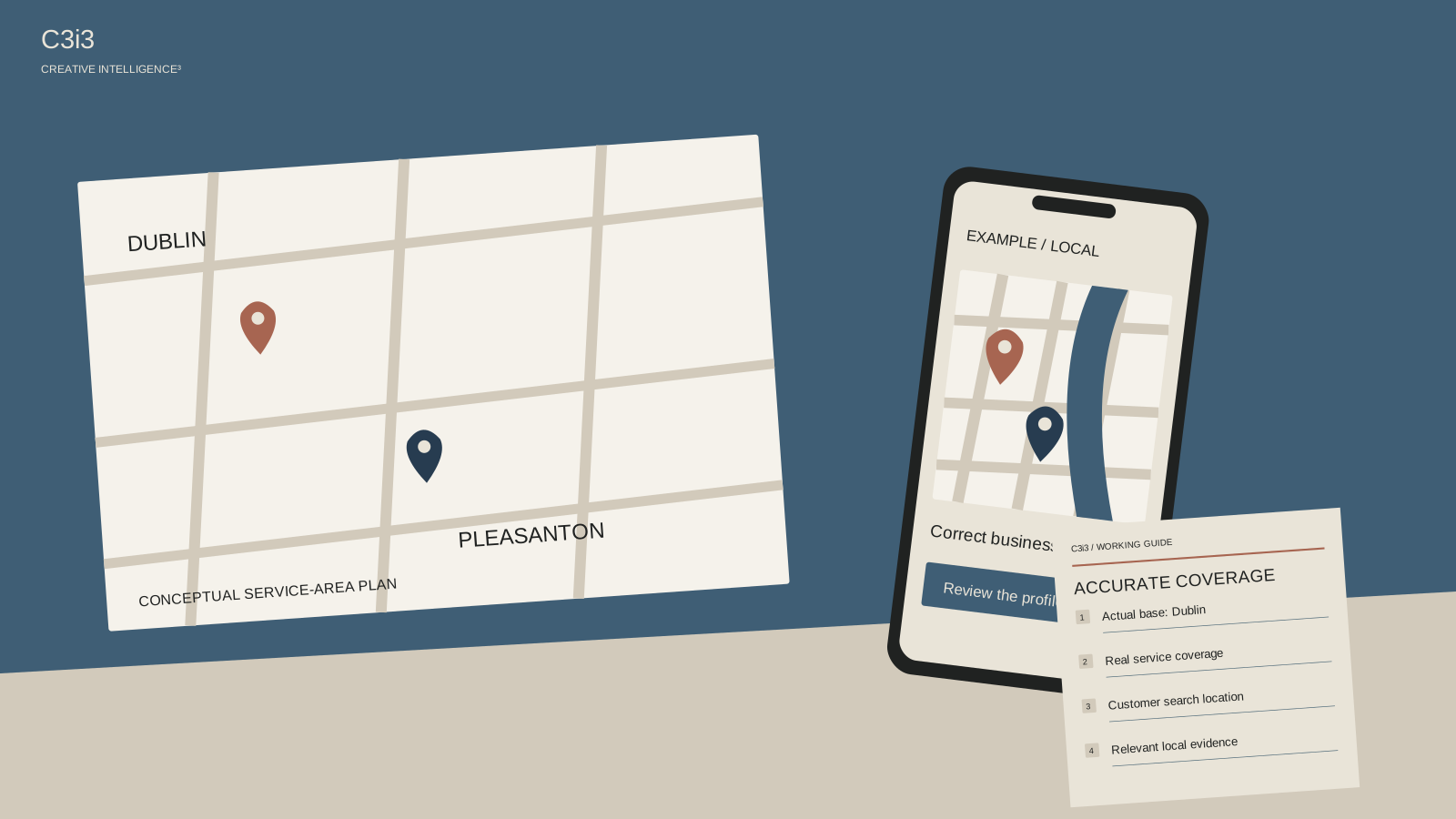
You work in Pleasanton, answer inquiries from Pleasanton and may have customers there. Yet a search made near your Dublin location looks much better than one made by someone in the next city.
It is understandable to ask whether a setting is wrong. Before adding another address or ordering a page for every city, separate the two things you want customers to find: your Business Profile on Maps and the useful pages on your website. They need related, but different, investigations.
What exactly disappears when the location changes?
Use the same service query in your comparison and record how the location was established. A search containing “Pleasanton” and a search for “near me” are not identical tests. Searching from your own account or office also may not reproduce a customer’s experience.
Note whether the gap concerns a Maps result, an ordinary website result or both. Save a dated observation with the query and location context. Avoid describing one person’s search as proof that nobody in Pleasanton can find the company.
Return to the Maps troubleshooting guide if the profile itself appears unavailable. If the concern is a website page missing from search, inspect that URL separately rather than changing the profile in the hope that both problems have the same cause.
Does your profile accurately explain where you work?
Review whether the business serves customers at its address, visits customers or uses a genuine hybrid arrangement. Google’s service-area guidance explains how service-area and hybrid businesses should describe coverage. The setup should reflect actual operations.
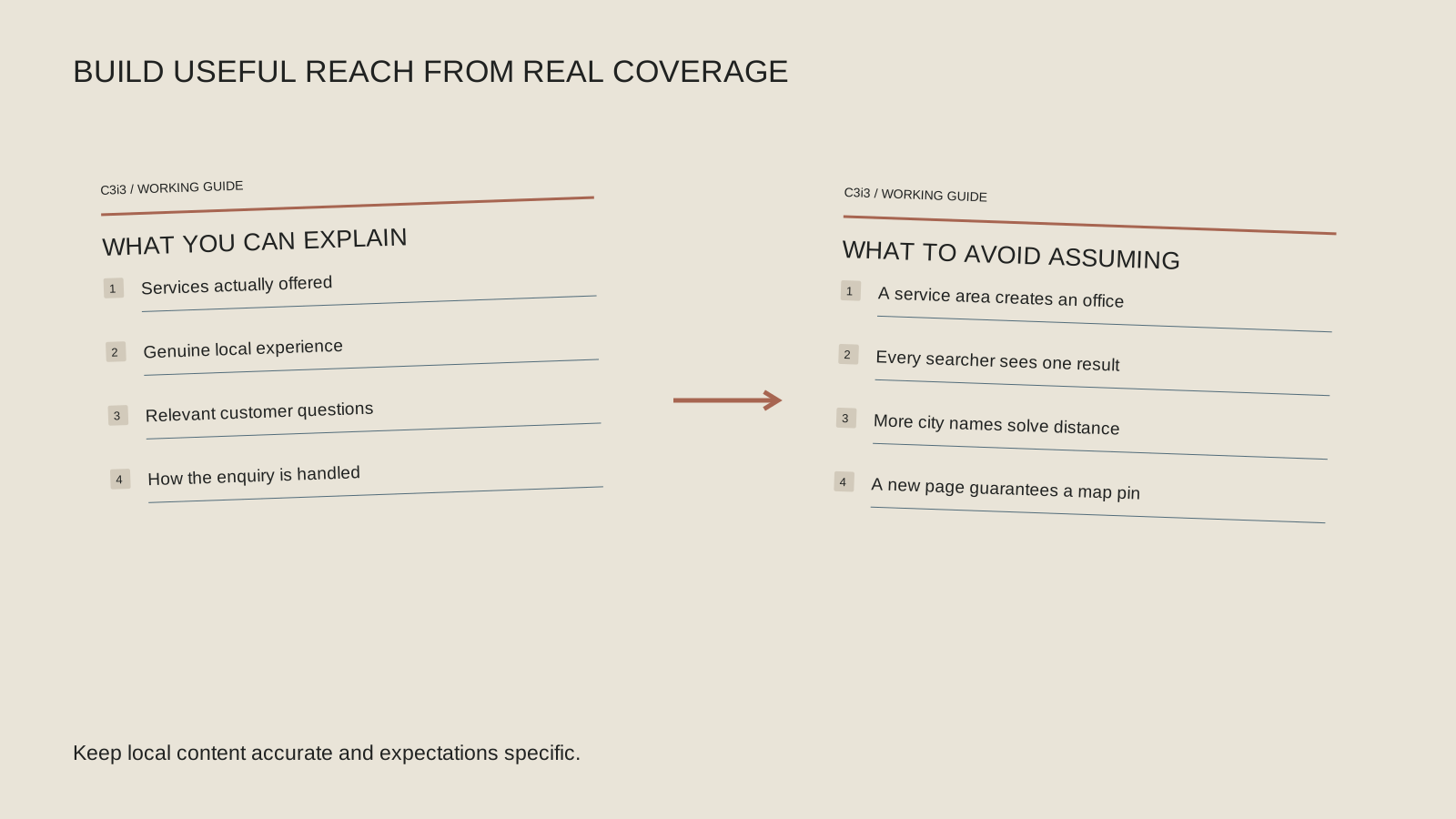
List the cities you genuinely serve and check contact information and hours. Do not invent a Pleasanton office because the business is willing to accept work there. A false location can mislead the customer and create a profile problem instead of solving a discovery problem.
Distance remains part of Google’s local-ranking framework. Treat accurate service coverage as useful information, not a promise that a listing will appear equally in Dublin, Pleasanton and every other nearby city. That distinction helps set a realistic scope for the review.
What would a Pleasanton customer need from your website?
Begin with the actual assignment. Can the customer identify the relevant service, see that their location is covered and understand how to start a conversation? Useful coverage information belongs close to the offer instead of being hidden in a long footer list.
Use approved examples of relevant work when you have permission. Explain your contribution and any practical information that genuinely changes the customer’s decision. If no meaningful content differs by city, one well-organized regional service page may be more useful than several thin versions.
The Oakland and Berkeley page-planning guide provides a decision worksheet. Although it uses different East Bay cities, the planning question is the same: can a separate page give the visitor a distinct, accurate answer worth maintaining?
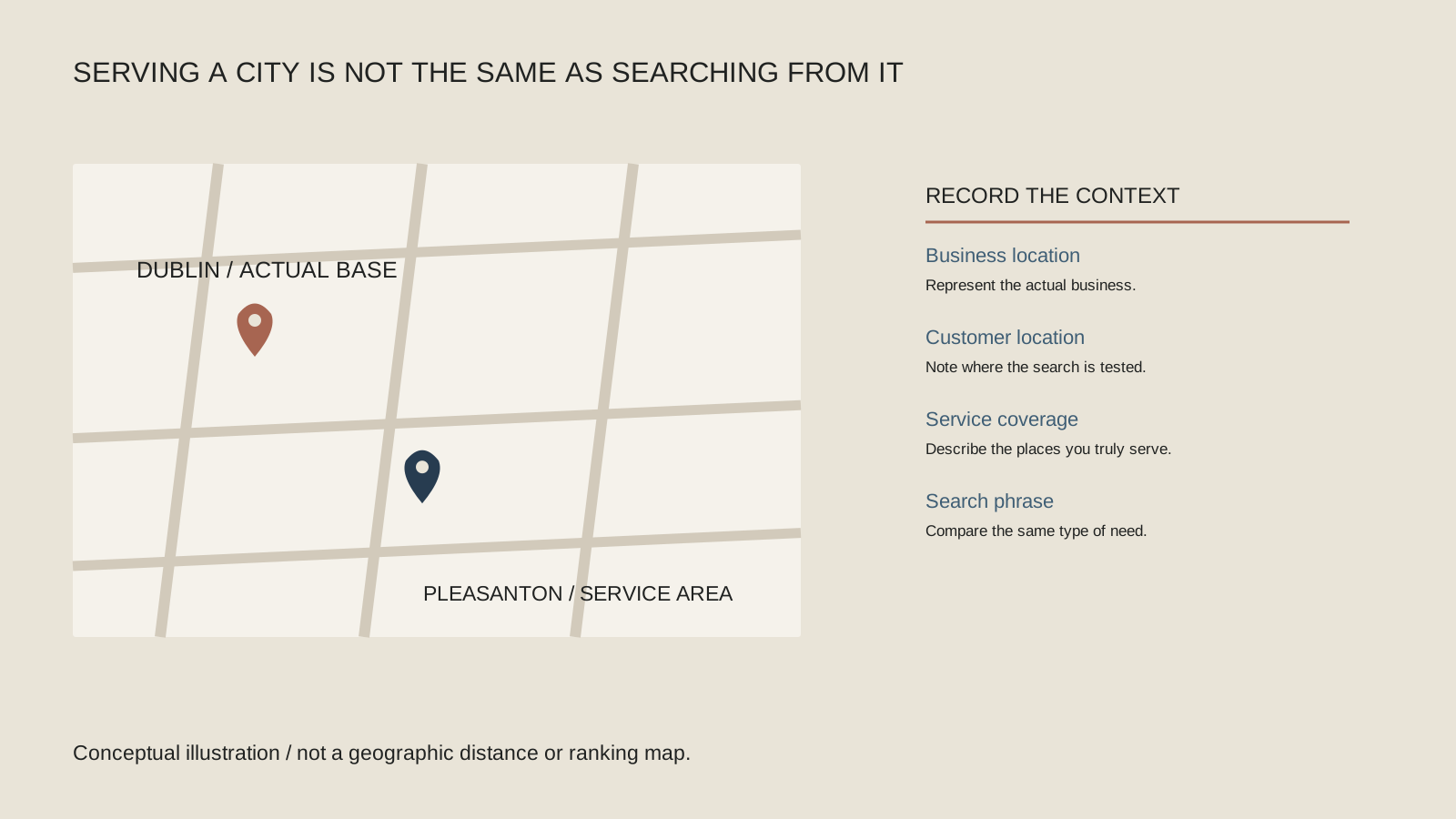
Dublin-to-Pleasanton visibility worksheet
The cities describe the business question. This is a conceptual review, not a map of ranking zones or guaranteed coverage.
Search observation
Write the exact query, date and search-location context. Identify Maps, website results or both as the concern.
Operating reality
Record the actual business location, customer-contact model and cities served. Keep an office claim separate from service coverage.
Customer information
Name the page that should explain the relevant service and coverage. Identify any approved local evidence worth adding.
Measurement limit
List what the reports and inquiry records can show. Keep city-modified searches, estimated location and confirmed customer details distinct.
How do you measure a city-level concern honestly?
Keep manual observations and reporting data separate. Standard Search Console performance reporting groups geography by country, not a built-in city filter. A query containing “Pleasanton” indicates wording in a search; it is not a complete count of all people located in Pleasanton.
Use the available Search performance dimensions for the questions they can answer. A dedicated page’s observations, relevant city-modified queries and volunteered inquiry location can each contribute context without becoming a complete regional attribution system.
For a larger company serving several markets, keep the same definition and method across reviews. For a small owner-led business, a consistent inquiry log may already make the conversation clearer. Record the source of each observation and leave unavailable information marked as unavailable.
What should you improve before expanding the footprint?
Choose an accurate information or customer-path problem you can actually fix: unclear coverage on a relevant service page, an unsuitable website destination from the profile, a missing project explanation or an incorrect public detail.
After the correction, repeat the relevant check and review subsequent inquiries. Do not keep adding cities, locations and pages without identifying what each addition is meant to help a customer do. More public entries also create more information to maintain.
If discovery starts working but the requests are a poor fit, use the inquiry-quality review. The objective is appropriate nearby customers finding and understanding a real service, not simply making the company name appear in more screenshots.
Keep this checklist beside you
Two questions owners ask next
Will adding Pleasanton as a service area guarantee visibility there?
No. It communicates coverage when appropriate to the business model. It does not create another office or guarantee how a particular local search will rank the profile.
Do I need a Pleasanton page immediately?
Only if a separate page has a useful job and substantive, accurate content. Review the existing service page and customer questions before commissioning another URL.

How C3i3 Can Help
C3i3 can help scope a local SEO review around your actual service area and customer needs. Our content strategy and website copywriting work can support useful coverage information where the site needs it. Bring examples of the searches, the pages involved and the locations you genuinely serve. We can help distinguish a profile question from a page-content question and choose a maintainable next step.