



































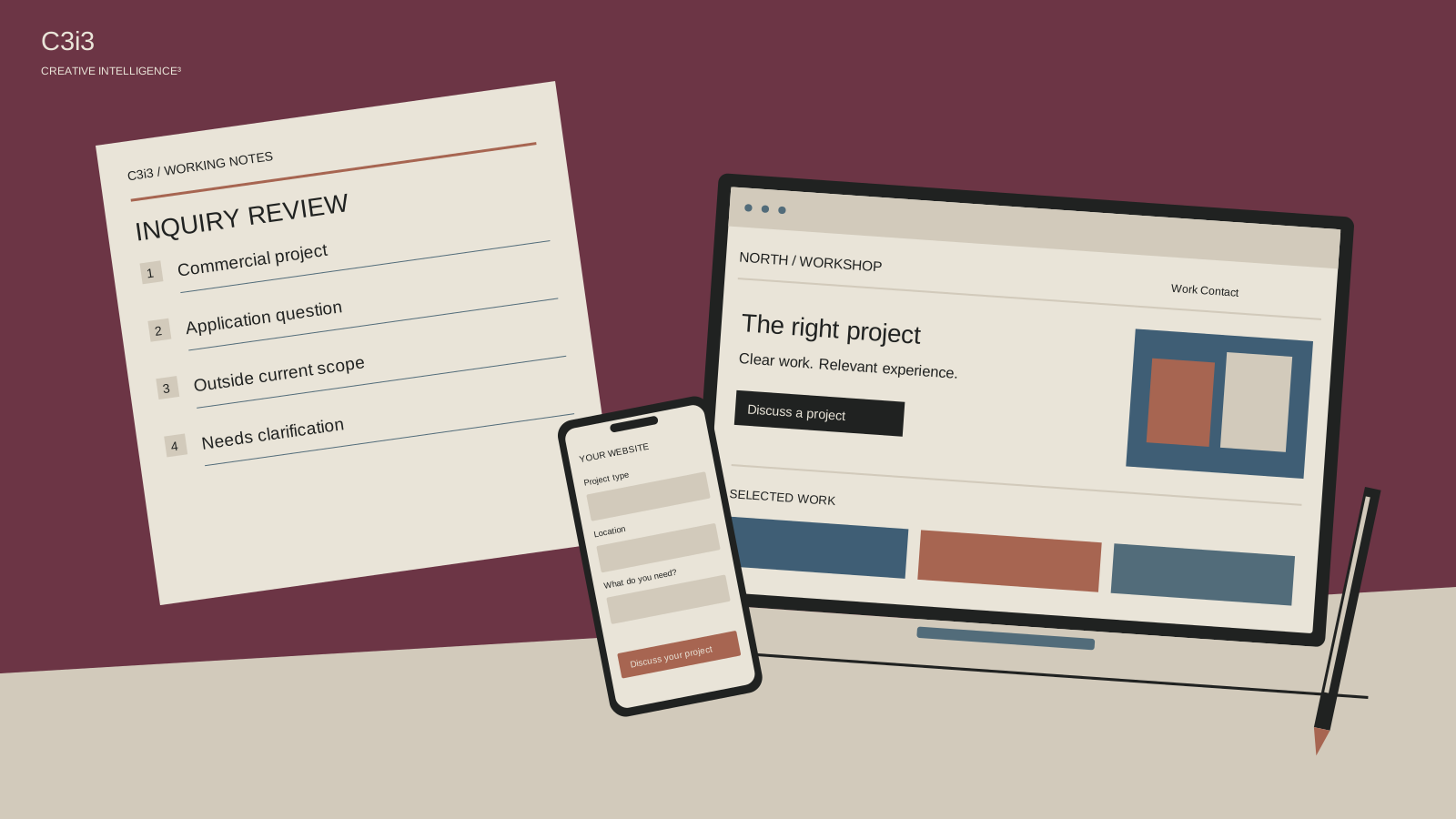
Another inquiry arrives. It is for work you do not offer, in a place you do not serve, on a timeline you cannot meet. You spend time replying, and the conversation goes nowhere.
After enough of these, it is tempting to decide that people never read. Sometimes your website is making them read between the lines. A broad promise, an old project or an unclear service label can leave a reasonable person with the wrong impression.
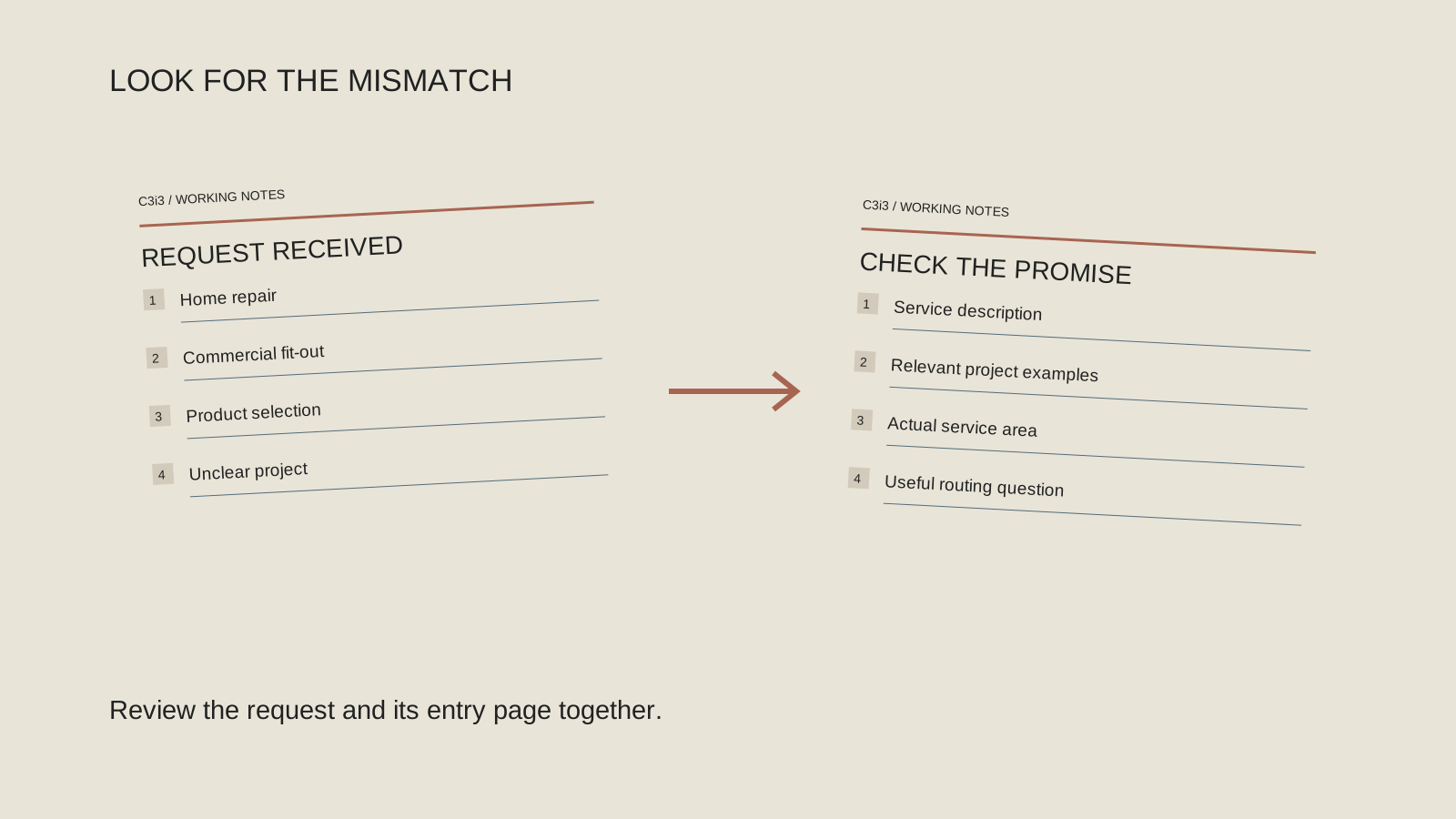
Before adding more form fields or blaming “bad leads,” compare the requests you receive with what your public pages actually suggest.
Separate a poor fit from an unfinished conversation
A person asking about price is not automatically the wrong customer. They may be trying to understand the category, compare options or find out whether a conversation is worthwhile. Someone without a complete brief can still become a good client.
Define fit using the work itself: service needed, project type, geography where relevant, technical requirements, timing and the commercial scope your business can support. Use those criteria consistently. Avoid replacing them with vague judgments about who sounds serious.
Review a manageable group of recent inquiries. Mark each as suitable, outside scope or unclear, and record why. Include the ones that became useful conversations so your review is not built entirely around frustrations. You are looking for a repeated mismatch that the website can help resolve. Some requests will remain unpredictable, and the page will never qualify everyone perfectly.
Follow the promise that brought them to you
Ask how people reached the business when that information is available. An advertisement for “all electrical work” could attract residential repairs even if the landing page emphasizes commercial projects. A directory category could be too broad. An old social post may still circulate after an offer changes.
Open the exact page or message where the conversation began. Compare its promise with what your team is willing and able to deliver. The fix may belong in that message, rather than on the homepage or in the contact form.
Where the source is unknown, record it as unknown. Don’t infer that every unsuitable inquiry came from a particular campaign because the timing seems convenient. If you use analytics, treat it as one source of evidence alongside the actual request. The customer’s words often reveal the expectation you need to investigate.
Find the invitation you did not mean to make
Read your service list and project examples as a newcomer. “Complete business solutions” could invite requests far beyond your actual scope. A prominently displayed residential project could imply that you still accept that work. A service-area page could suggest availability that has changed.
Replace a broad claim with a useful description of the assignment. An illustrative engineering firm might move from “We handle every stage of your project” to an accurate explanation of its engineering role and the stages it supports. The narrower statement can make the right conversation easier to begin.
Check photographs and captions too. A project image may imply that you designed, built or supplied the entire project when your role was specific. Explain the contribution you actually made. If your audience needs deeper positioning work, this is a useful input to brand positioning, rather than an instruction to make the company sound smaller.
Make the right customer feel recognized
Clear boundaries work best alongside a positive explanation of fit. Say which problems you help with, show relevant work and explain the information that starts a useful conversation. A long list of exclusions can make the company feel difficult to approach.
For a hypothetical Bay Area glazing company focused on commercial projects, show approved commercial work and explain the project information needed for an initial discussion. For an industrial supplier, distinguish product inquiries from requests for services you do not provide. These are different communication problems; neither is solved by adding “premium” to the headline.
If pricing depends on scope, explain the factors you need to understand before quoting. Do not invent a minimum price as a filtering device. A plain description of the project process can help a reasonable prospect decide whether to continue, even when a price cannot responsibly be displayed in advance.
Your right-fit inquiry worksheet
Complete these four sentences with your team. Keep them specific enough to guide the public message and the person replying.
We can help when…
Name the project, application or business problem your team is equipped to handle. Include a real service boundary when it matters.
The page currently suggests…
Record what a reasonable newcomer could infer from the headline, images, examples and offer at the entry point.
A useful first question is…
Choose the missing detail that changes your response, such as project type or application. Leave room for uncertainty when appropriate.
We will review…
Compare suitable and unsuitable conversations after the change. Check whether people you want to hear from still find a clear way forward.
Ask for enough information to route the conversation
Review the form with the person who answers inquiries. Which missing detail repeatedly prevents a useful response? It might be project type, application, location or timing. Add or clarify that question before demanding a complete specification from every visitor.
Offer an honest “not sure yet” route when uncertainty is normal. A manufacturer may need an application conversation before the buyer knows the model. A service-business owner may know the problem but not the name of the service that fixes it. Your form should help the handoff without pretending every visitor arrives as an expert.
Keep labels clear and distinguish required information from optional detail. The W3C forms tutorial provides practical implementation guidance. After revising the message, monitor both suitable and unsuitable conversations. Fewer total inquiries is not automatically success if the changes also discourage people you wanted to hear from.
A short checklist to keep beside you
Make one useful change first
Save one example of a mismatched inquiry and the page that may have encouraged it. Rewrite the unclear promise and review the next conversations with your team. For the wider journey, use our website customer-path review. When the right projects are hard to explain, the project-story guide can help make your actual expertise visible. The aim is a better first conversation for both sides.