



































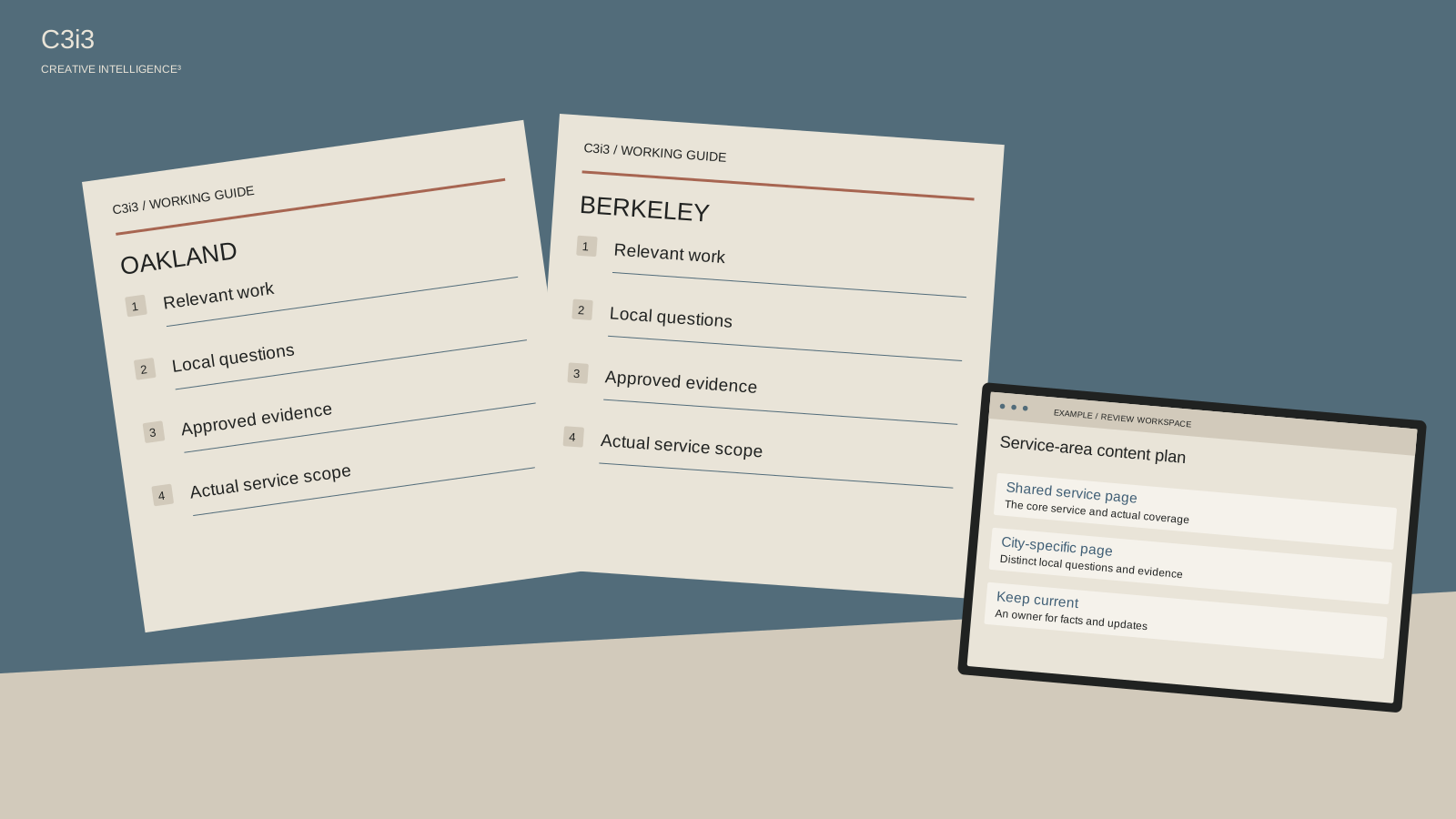
Someone recommends a page for every city you serve. The list grows from Oakland and Berkeley to the rest of the East Bay, and suddenly a small website project becomes a content-production program.
Separate pages can be useful. They can also become nearly identical pages that are difficult to maintain and give the customer very little. Before approving the list, ask what a visitor in each city would learn that a well-written regional service page cannot already explain.
What changes for the customer between the two cities?
Start with the assignment and the buyer, not a spreadsheet of place names. Does service availability, the customer-contact route, relevant project experience or another important fact differ between Oakland and Berkeley? Document the difference before creating the page.
Do not invent local details to make a template look distinct. If a requirement, office, project or service arrangement matters, confirm it with the business and the appropriate source. A local photograph or neighborhood reference should help explain something real, not imply a presence the company does not have.
For an illustrative contractor, approved project experience may support a useful city-specific explanation. For a business delivering the same remote service throughout the region, a strong regional page may answer the customer’s question more honestly and efficiently.
What can a strong regional page do?
A regional page can explain the offer once, describe genuine coverage and link to relevant projects or resources. It can help visitors understand how to begin without making them choose between several versions of the same paragraph.
Keep the service and the customer task central. Someone in Berkeley should be able to tell whether the company can help and how to contact it. Someone in Oakland should not have to infer coverage from a footer full of unrelated city links.
If the shared page is vague, fix that before deciding the only solution is more URLs. Our clarity test and message-fit worksheet can help identify the missing explanation. A clear regional service page also gives later local pages a sensible parent and context if they become justified.
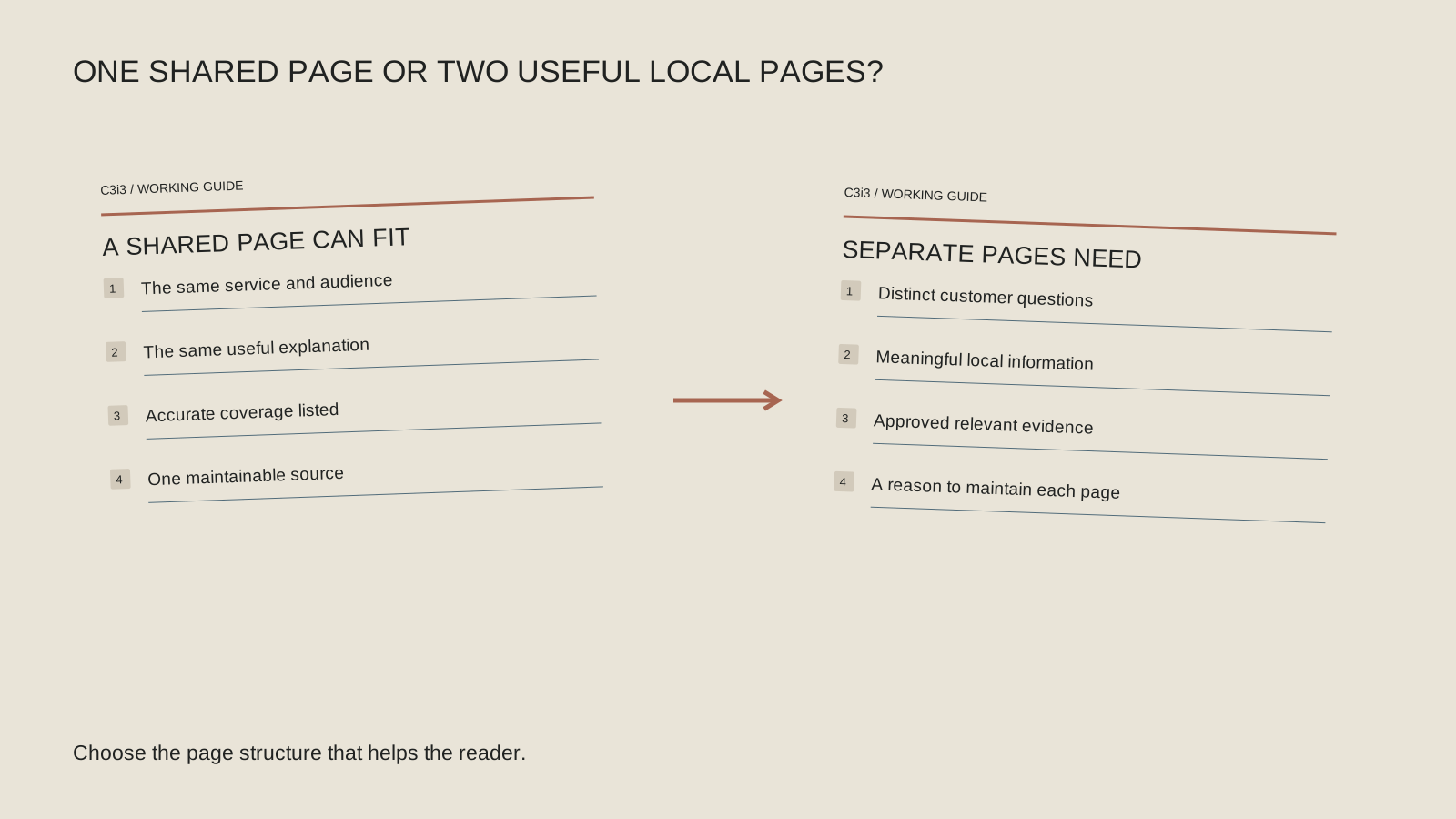
When does a separate city page earn its place?
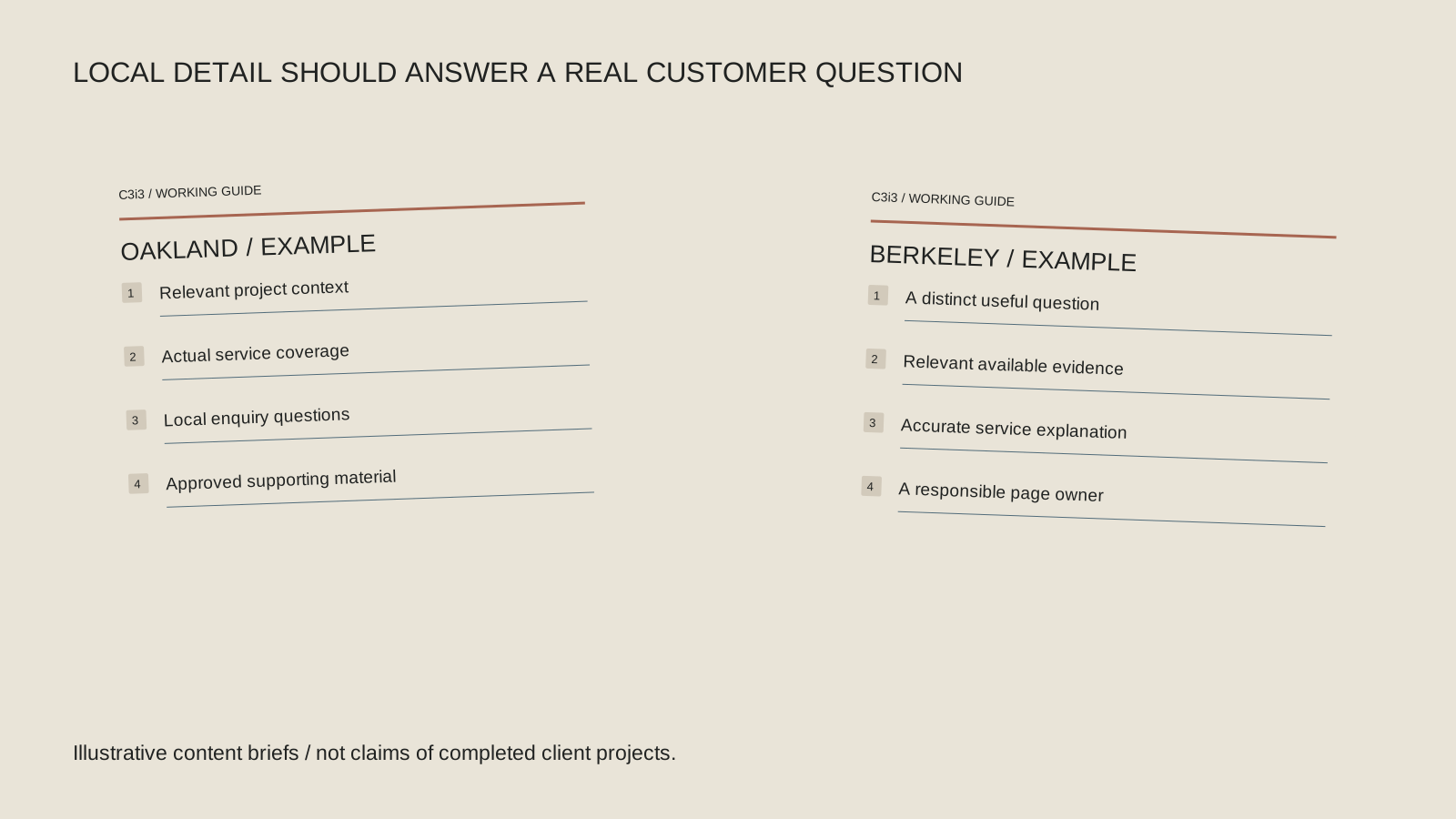
Write a brief with a specific visitor, question, factual source and next step. Include the content that is meaningfully local: a legitimate location, approved relevant work, documented service arrangements or another difference that affects the customer’s decision.
Give the page an owner who can maintain those facts. Link it from a useful, browseable service or location structure rather than hiding it as a destination for search alone. A person should be able to explain why the page exists after reading it.
Use Google’s doorway-abuse guidance as a boundary. Its concern includes substantially similar regional or city pages that funnel users elsewhere. The practical editorial test is whether this page itself delivers a useful answer rather than merely passing the visitor toward the real content.
One regional page or separate city pages?
Use the questions in order. This is a content decision guide, not a promise that a chosen format will rank.
Is the need substantially shared?
If the offer and useful explanation are the same, begin with a clear regional service page and accurate coverage information.
Is there a meaningful local difference?
Identify the specific fact or customer question. Gather approved evidence before commissioning a separate page.
Can the page stand on its own?
It should answer the visitor’s question and support a real next step, rather than serve only as an intermediate search landing page.
Can someone maintain it?
Assign a content owner, sources and a place in the site structure. Revisit the page if its purpose or factual basis changes.
Does a city page change your Business Profile location?
No. A website page describing work in Berkeley does not establish an office there. Keep the distinction between a physical location and a service area explicit in both the content and the business’s public information.
For service-area or hybrid businesses, review Google’s service-area documentation and the representation rules that apply to the actual operating model. Do not use a new page as the rationale for a fictional address or an unsupported location claim.
Maps and website discovery can support the same customer journey without becoming the same ranking system. The nearby-city visibility guide explains that difference. A useful city page may address a website-information gap while leaving other local-search questions to a separate review.
How do you avoid an expensive collection of stale pages?
Start with the highest-value customer need that has genuinely distinct information. Publish a limited, maintainable set and review what people use and ask afterward. More pages create additional responsibility for facts, links, images and contact details.
Keep a page inventory with purpose, source owner and review needs. If two pages become indistinguishable, consider whether a clearer shared page would serve readers better. If pages move or consolidate, plan the URL handling with the technical owner rather than deleting them casually.
Do not judge the plan solely by the number of city names in the navigation. Ask whether appropriate customers can find a useful answer and begin the right conversation. The discovery checklist helps connect that content decision with indexing, relevance and actual visits.
Keep this checklist beside you
Two questions owners ask next
Is it wrong to have both Oakland and Berkeley pages?
Not automatically. The issue is whether each page has a distinct, useful purpose and accurate substance, rather than being a near-duplicate created around a city name.
Should I add an address to make a city page more convincing?
Only present a legitimate location accurately. A service-area page is not evidence of an office, and the customer should understand the actual operating arrangement.

How C3i3 Can Help
C3i3 can help combine local SEO, content strategy and website copywriting into a maintainable page plan. We can review your real service coverage, existing content and approved project material before recommending a regional page, separate local pages or a focused improvement to what is already there. Bring the cities you serve and the customer questions that differ between them. We can help give each proposed page a clear job.