



































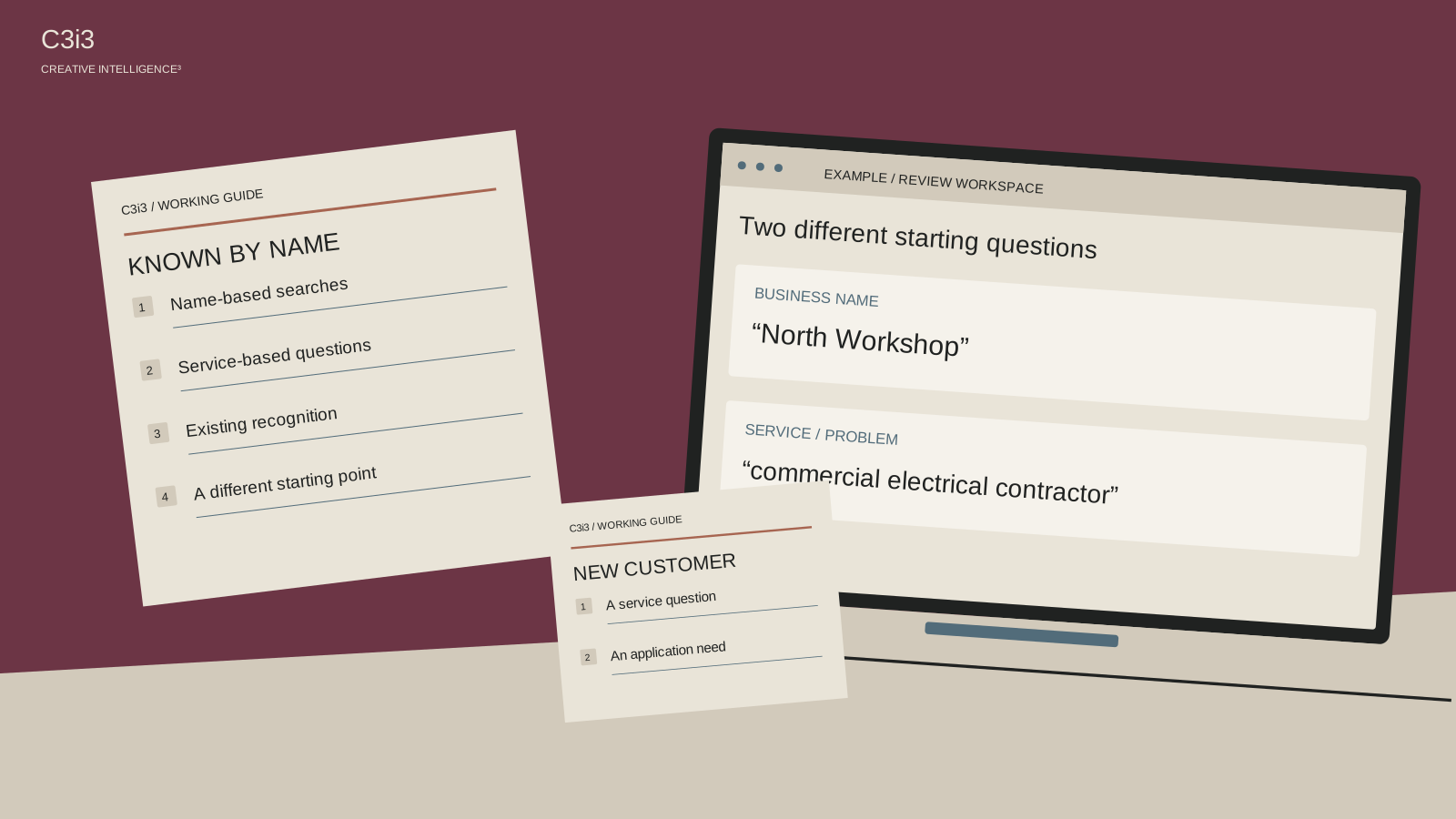
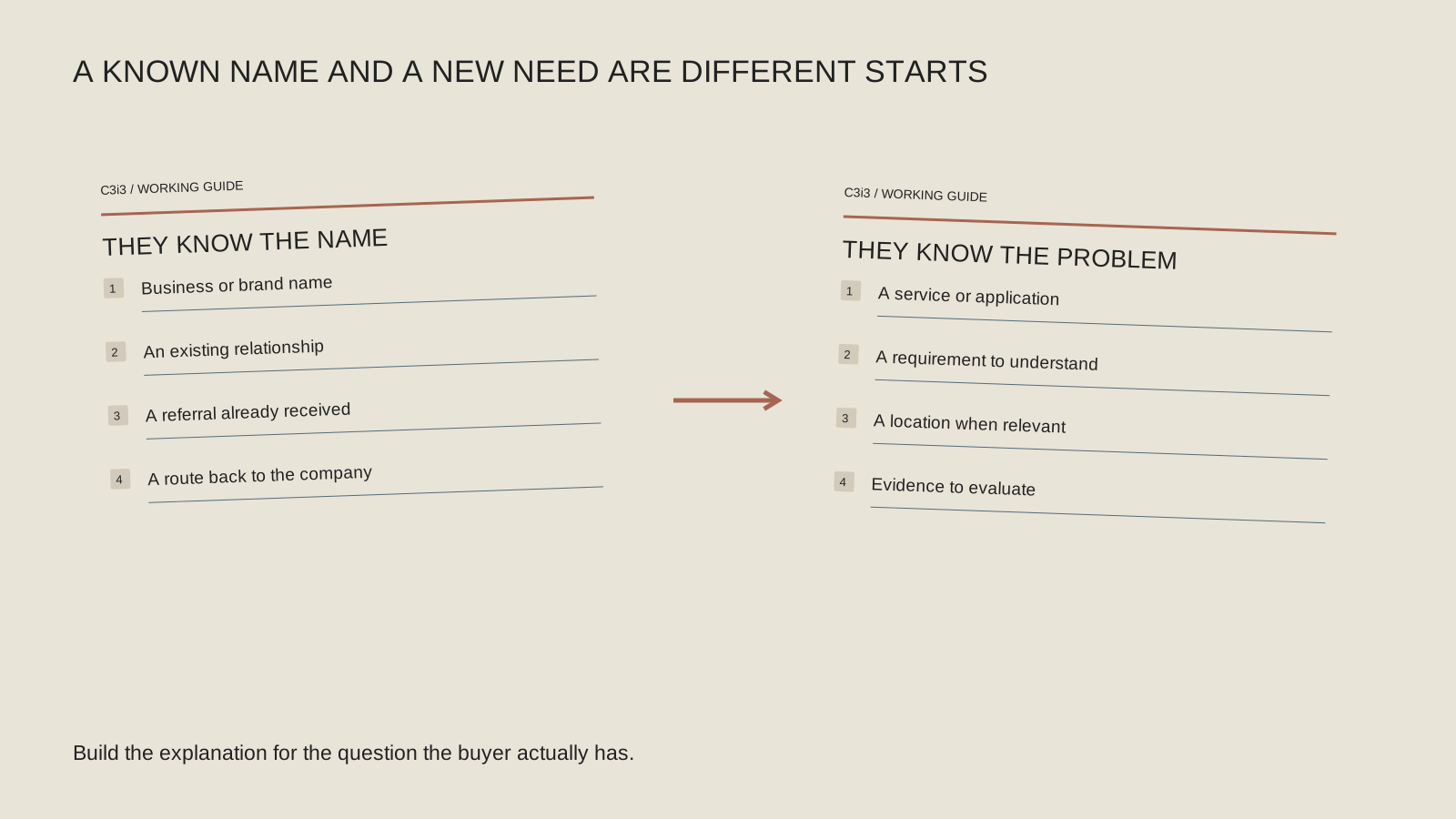
A customer recommends your company. The referral searches your name, finds the website and calls. That is valuable. But a buyer who does not know you searches for the service and finds everyone else.
For a San Jose B2B or service business, this can leave the website functioning mainly as a digital business card. The next task is to explain the work in the language of a customer who has never met you. Start with one valuable assignment rather than trying to rank for every broad term in the industry.
What do your existing searches actually describe?
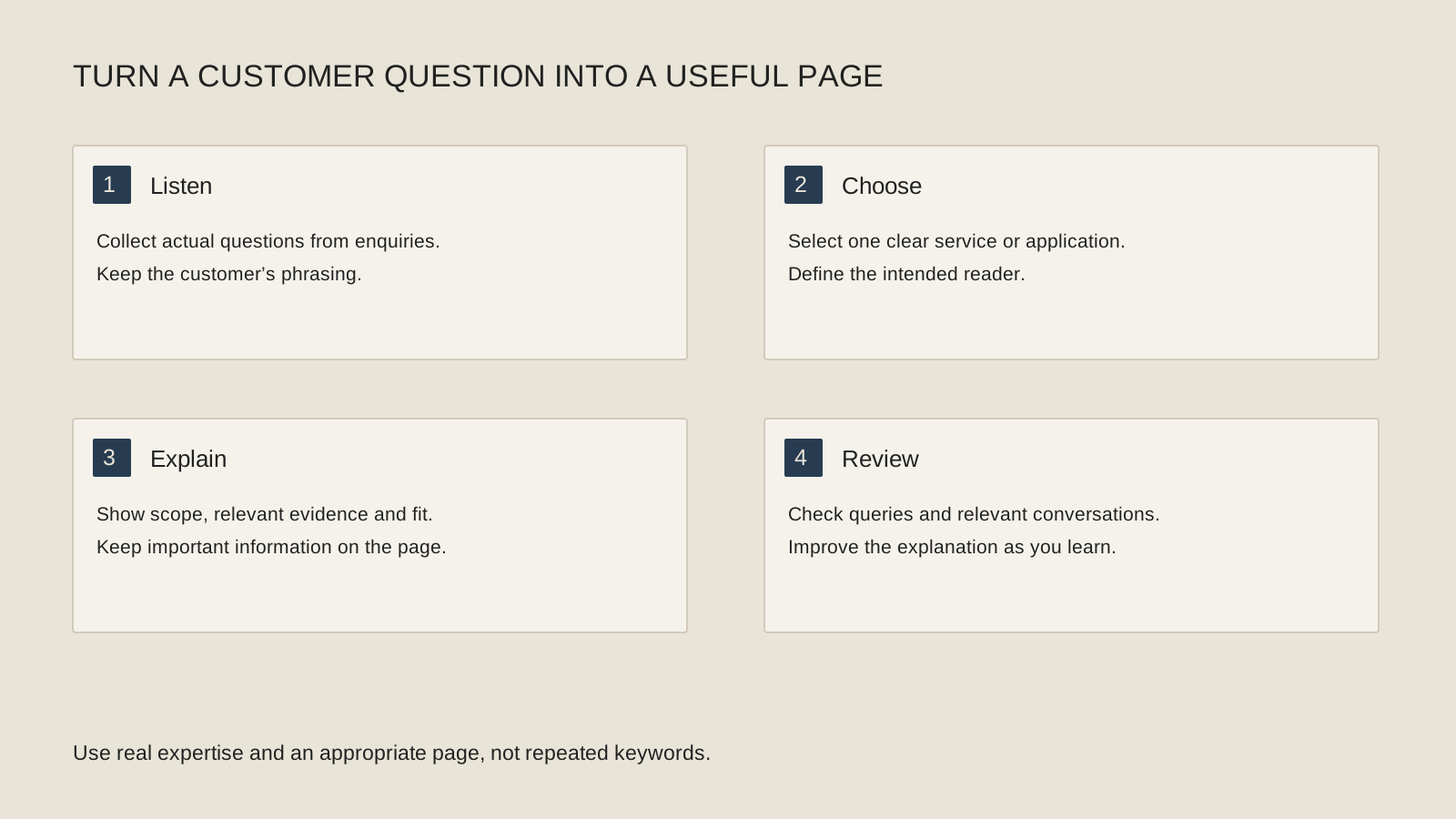
Review the available query information for your site and the pages receiving impressions and clicks. Mark obvious company-name variants separately from searches describing a service, product category or problem. Some queries may be unavailable in reports, so treat the visible list as evidence with limits rather than a complete transcript of demand.
Ask sales or the owner which requests become useful conversations. Their language can reveal a gap between the way the company introduces itself and the way a new buyer describes the need. Keep the original wording where it is helpful; internal department names are not always customer vocabulary.
For an illustrative San Jose engineering supplier, “our integrated capabilities” may be less useful to a newcomer than an accurate explanation of a product family, application or support assignment. Choose the question your team can answer well.
Pick one offer you would like a new buyer to find
Write a short description of the assignment, who it suits and what the buyer needs to understand before contacting you. Include real constraints, such as the product scope or service coverage, when they affect fit. Avoid selecting a phrase only because it sounds large or fashionable.
Use research to compare how people express that need and what kinds of results currently answer it. A query seeking a tutorial may need an explanation; a query comparing suppliers may need service detail and evidence. Google’s people-first content guidance is a useful reminder to begin with an audience and a purpose.
For a manufacturer, the priority may be an application discussion with a qualified buyer. For a professional-services firm, it may be a clearly defined engagement. Those are different briefs even when both companies say they want more traffic.
Does the existing service page answer the buying question?
Read the page as someone who knows the problem but not your company. Can they identify the service, understand your role and see whether the work fits their situation? A list of capabilities without explanation may leave the important choice unresolved.
Add the detail needed to make the offer understandable: the assignment, relevant audience, process at an appropriate level, evidence and a next step. Keep product and performance claims tied to approved information. The manufacturing strategy guide develops the evidence needs of technical buyers.
Use a page title that accurately introduces the subject and headings that help a reader find answers. Google’s SEO Starter Guide explains the basics. Repeating “San Jose” in every paragraph will not make an unclear offer more useful.
Turn one offer into a useful discovery path
Fill in this planning sheet before commissioning more pages. Each piece should serve a distinct customer question.
Priority buyer
Who needs this assignment, and what situation prompts them to look for help? Use actual customer conversations.
Service explanation
Which existing page should explain the offer, fit, evidence and appropriate next step? Clarify its job before adding another.
Supporting answer
What question deserves a separate explanation, comparison or project example? Identify the source material and reviewer.
Useful observation
Which relevant searches, visits and inquiry details will you review? Keep qualified conversations alongside traffic measurements.
What supporting content earns its place?
Choose questions that need a fuller answer than the service page can comfortably provide. A comparison, an application explanation, a project story or a practical checklist may help a buyer evaluate the work. Link those pieces to the relevant service and to each other when the connection helps the reader.
Avoid creating near-identical articles for every slight phrase variation. Start with the questions customers actually bring to your team and the expertise you can demonstrate. One well-explained example can be more useful than several generic definitions of the same service.
Clear answers and traceable facts also support an AI-readable presentation. They do not guarantee selection by an answer engine. The SEO, AEO and AIO comparison explains the terminology; the practical work begins with accurate information a customer can understand and use.
How do you know the plan is moving in a useful direction?
Record the starting pages, available queries and inquiry examples. After improving the priority page, look for relevant changes over a meaningful period rather than checking a single position every morning. Notice which new questions and conversations appear, not only whether the traffic total rises.
Keep brand searches valuable in the review. The goal is to add opportunities for new discovery while preserving a clear route for referrals and existing customers. If broad visibility grows but requests become less suitable, revisit the offer and audience rather than declaring success based on a larger chart.
Use the impressions-to-clicks guide if the page begins appearing without earning useful visits. Use the inquiry-quality worksheet if the new message attracts work you cannot deliver.
Keep this checklist beside you
Two questions owners ask next
Is ranking for my business name a bad sign?
No. It supports referrals and recognition. The question is whether the site also helps customers discover the services without already knowing the company.
Do I need a blog post for every service keyword?
No. Match the content to the customer’s task. Improve a suitable service page first, then add supporting pieces that answer genuinely different questions.

How C3i3 Can Help
C3i3 can connect keyword research, website copywriting and SEO services around the work you want new buyers to discover. We can help map questions to pages and define the supporting content, review and implementation required. Bring one priority offer and examples of real customer questions. That creates a clearer starting scope than a request to rank for every term in the market.