In this article
Should your San Francisco Bay Area business pay for visits to a website or for enquiries through a service-provider profile? That is the useful starting point when comparing Google Search ads with Local Services Ads. Both are paid advertising options, but they reach customers through different experiences.
This guide compares Search campaigns in Google Ads with Google Local Services Ads, often shortened to LSA. Google Ads also includes other campaign types; those are outside this comparison. Your business category, service area, offer, and ability to answer enquiries should decide which option you test first.
For the full three-way explanation, read Google Ads, Local Services Ads, and Google Business Profile: what is the difference? This regional guide focuses on choosing a first paid test.
What is the difference between Google Ads and Local Services Ads?
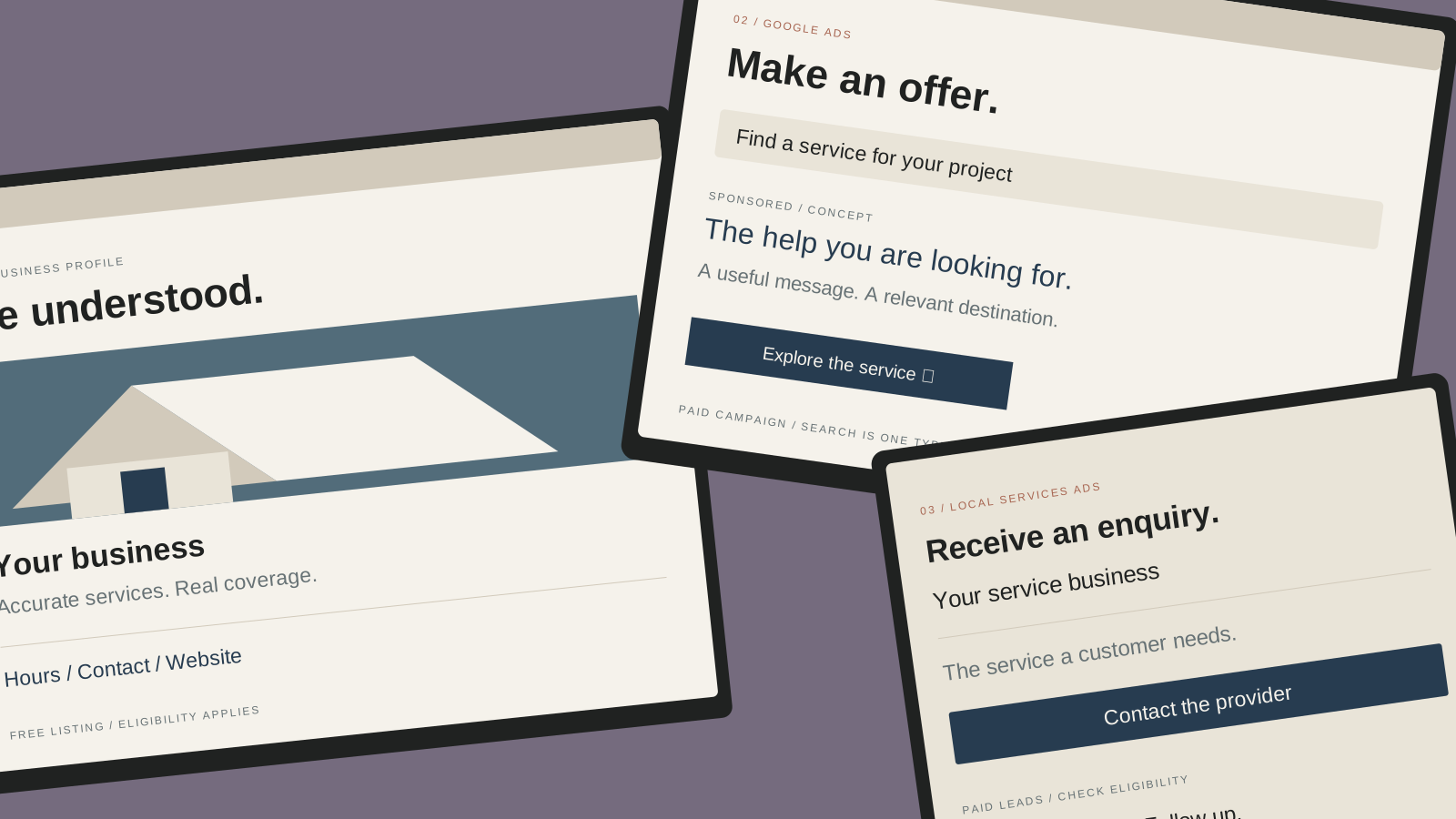
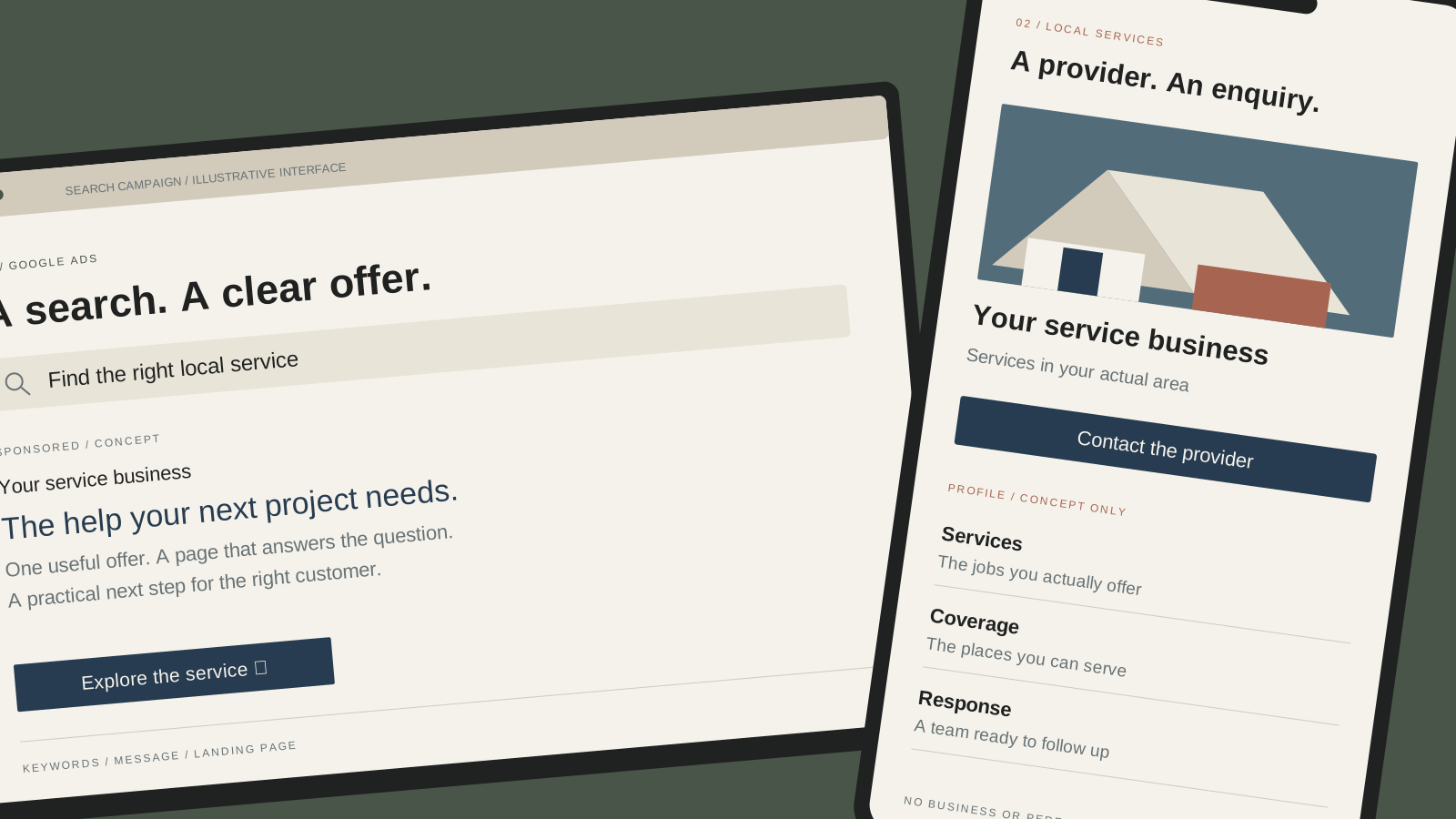
A Google Search campaign can place an advertisement near relevant search results. You develop the campaign around the searches you want to reach, the offer, and a destination that helps visitors take the next step. Google's Search Network guide explains where Search ads can appear.
Local Services Ads connect people with providers through a service profile. Potential customers can contact the business through the ad experience. The product is designed around eligible local service categories and the areas those businesses serve. Google's US Local Services Ads overview explains the format.
| Question | Google Ads Search campaigns | Local Services Ads |
|---|---|---|
| What does the customer encounter? | An ad message connected to a search and a chosen destination. | A local provider profile with ways to contact the business. |
| What shapes the campaign? | Keywords, ads, location settings, bidding, and landing pages. | Eligible category, offered job types, service area, profile, and lead handling. |
| What should you compare? | Campaign spend against qualified enquiries and acquired customers. | Lead charges against qualified enquiries and acquired customers. |
| What comes first? | A clear offer, usable destination, and working measurement. | An eligibility check and the required verification and profile setup. |
Do not compare the products using their dashboard totals alone. A click, a charged lead, a qualified enquiry, and a booked job are different events. Decide which event matters to your business before looking at the numbers.
Can a San Francisco Bay Area business use Local Services Ads?
Being based in the San Francisco Bay Area does not, by itself, make a business eligible. Availability depends on the category and location. Use the eligibility checker linked from Google's Local Services Ads setup guide with your actual business details. Do not assume every retail shop, agency, or professional service can use it.
Check the service, not just the industry name
Write down the specific jobs you want to advertise and compare them with the available options during setup. If the work you sell is not a fit, consider a Search campaign instead of trying to force the business into an inaccurate category.
Prepare for verification
Google's provider qualification guidance describes screening that varies by category and region and can include license, insurance, or background checks. Confirm the requirements shown for your account. Do not promise an immediate launch before those steps are complete.
Keep ownership with the business: know who controls the advertising account, who can provide documents, and who will answer any verification requests. An agency can coordinate the work, but it should not leave you dependent on an account you cannot access.
Do you need a Google Business Profile for Local Services Ads?
For a business advertising directly through Local Services Ads, Google's Business Affiliation guidance requires a public, verified Google Business Profile matched with the advertising business. That guidance notes an exception for certain partner affiliate networks. Follow the requirements for your own account rather than assuming a paid campaign replaces profile verification.
Google Business Profile is a separate, free business listing for eligible businesses on Search and Maps. Local Services Ads is paid lead generation. Google’s Business Profile introduction explains the listing itself.
Keep the business details consistent
Review the name, contact details, service information, and people who manage the profile. Resolve access or verification problems before treating the account as ready. Our San Francisco Google Business Profile checklist covers the information customers need to find and understand.
Separate the profile from organic local SEO
A Business Profile, organic local SEO, a Search campaign, and a Local Services campaign are connected parts of a marketing plan, but they are not the same product. Buying advertising does not replace useful service pages, accurate business details, or a website that customers can use. Keep those foundations current whichever paid option you choose.
When should you start with Google Search ads instead?
A Search campaign is worth considering when you need to explain a particular offer and guide someone through a tailored page. It can also be the option to investigate when your business does not qualify for Local Services Ads. Campaign access remains subject to Google's policies and any applicable verification requirements.
Use a page that answers the actual search
Someone researching a substantial project may need to understand the service, see relevant work, check the process, and decide whether to request a consultation. A page should support that decision instead of sending every visitor to a broad homepage. Compare a website and a focused landing page before commissioning another destination.
Choose your Bay Area coverage deliberately
Define the areas you can genuinely serve, the jobs you want, and the circumstances in which travel makes sense. A San Francisco business, a Walnut Creek service team, and a San Jose provider may need different coverage. Start with the places you can realistically reach rather than automatically buying exposure across the whole Bay Area. Likewise, a business with broader coverage should not describe itself as having an office in every city.
Build the campaign around customer language and a real offer. Google's Keyword Planner guidance explains how to refine keyword ideas by relevance and location. Research can inform a test; it does not prove that a phrase will produce profitable work.
Are Local Services Ads cheaper than Google Ads?
There is no reliable universal answer. With LSA, Google charges for valid leads, and prices vary with factors such as location, job type, lead type, and bidding. Its lead billing guidance also explains budget handling and lead assessment. A valid charged lead still needs to become a suitable customer.
Compare cost per acquired customer
For either option, include campaign spend, management, creative or page work, and the time spent handling enquiries. Then compare those costs with the customers actually acquired. Keep lead quality visible: the right location, requested service, project fit, and ability to deliver all matter.
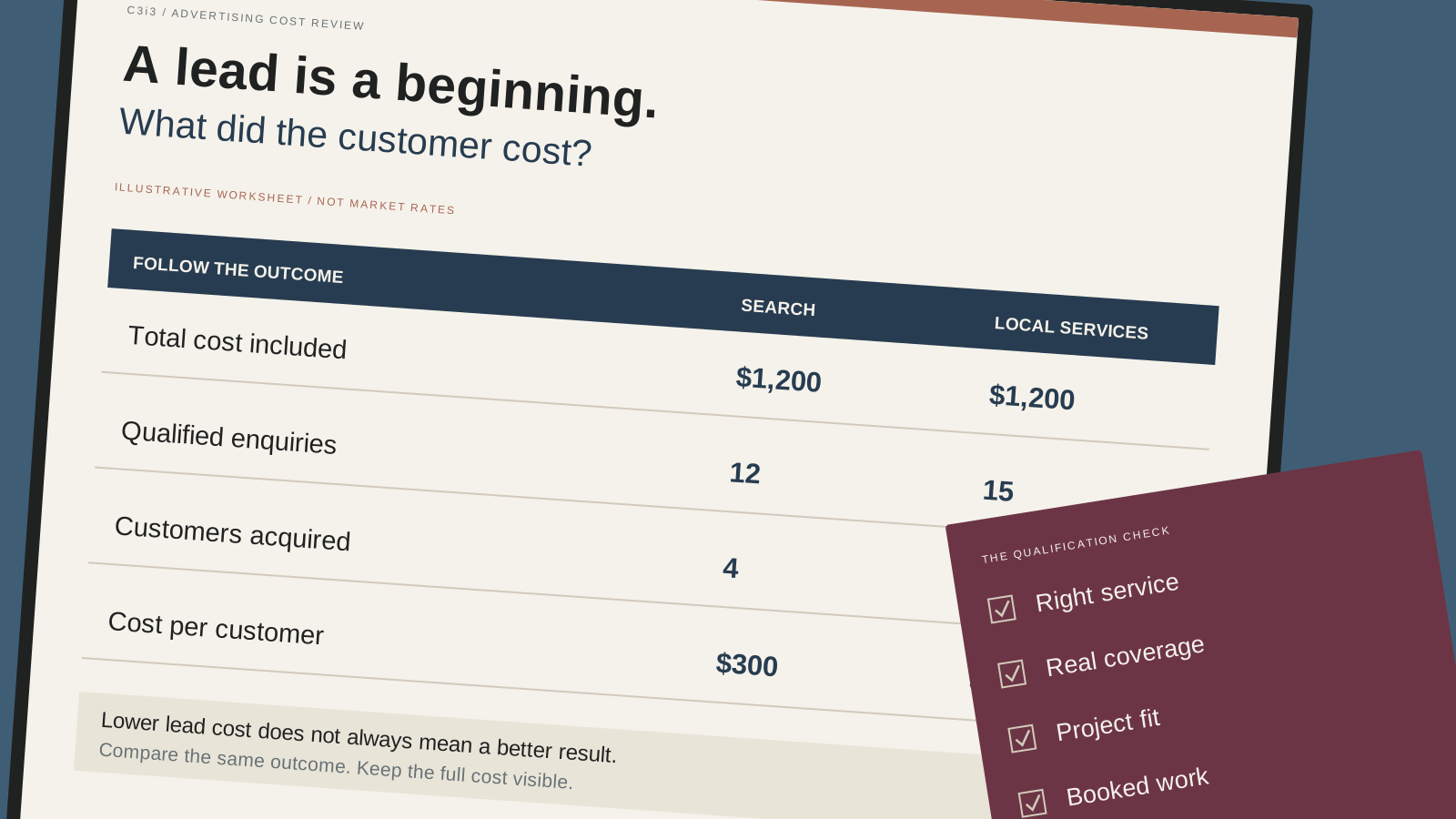
A simple planning calculation is total acquisition cost divided by the number of new customers attributed to that activity. Use it alongside revenue quality, delivery costs, and the limits of your tracking. Do not interpret a lower cost per enquiry as a better result if those enquiries rarely become appropriate jobs.
Use our East Bay lead-cost comparison worksheet to distinguish qualified enquiries from acquired customers before deciding which channel is cheaper for your business.
Set a test you can afford to learn from
Agree on a spending limit, who can change it, and what would make you pause. Avoid choosing a budget from an unrelated company's example. An appropriate test depends on your offer, local demand, competition, and the business's capacity to follow up.
Should you run Google Ads and Local Services Ads together?
You can consider both if the business qualifies and can manage the workload. Start with a defined question rather than a desire to appear everywhere. For example: which option produces suitable enquiries for one service in the part of the Bay Area you can serve well?
Keep the comparison useful
Track which enquiries came from which activity, how quickly you responded, whether the customer fit, and what happened next. Have the same person or team apply the qualification rules. A missed call and a booked appointment should not count as equal outcomes.
Choose the next step from the evidence
If enquiries are unsuitable, review the offer and targeting. If suitable people do not book, examine the response and sales process. If the team cannot answer the leads it already receives, expansion may make the problem worse. More exposure is only useful when the business can handle the resulting opportunity.
Record the decision in your small business marketing plan. Keep advertising separate from the longer-term work described in our AI search optimization guide; paid campaign results do not establish organic or AI search visibility.
What should you check before launching either campaign?
Use this list to agree on the scope and responsibilities.
More questions about Google advertising for local businesses.
Is Local Services Ads the same as Google Business Profile?
No. LSA is a paid advertising product. A Business Profile represents the business on Google and is part of the affiliation requirements for direct LSA advertisers. Maintain accurate information rather than treating either account as a substitute for the other.
Can a business outside San Francisco advertise services there?
Check product availability, service-area settings, and the requirements that apply to your business. Advertise places you genuinely serve. Do not invent a San Francisco office to make a campaign or profile appear more local.
Will paying for ads improve organic SEO or guarantee AI mentions?
Do not buy advertising on that assumption. Evaluate it as a paid customer-acquisition activity. Maintain your useful content, business information, and technical search foundations as separate work with separate measurements.
Which campaign fits your business?
We can review your offer, eligibility, website, and follow-up process before recommending a paid search test.