In this article
Google Ads, Local Services Ads, and Google Business Profile are three names a small business owner can encounter while trying to get more customers. They are related, but they do different jobs. One represents your business, one offers a broad advertising platform, and one provides a paid local-service lead experience for eligible providers.
Understanding those differences helps you ask better questions before buying marketing help. A proposal to “manage your Google presence” is too vague unless it identifies the product, the work, the account owner, the costs, and the customer action it is meant to support. This guide explains the options without assuming that every business needs all three.
What is the difference between Google Ads, Local Services Ads, and Google Business Profile?
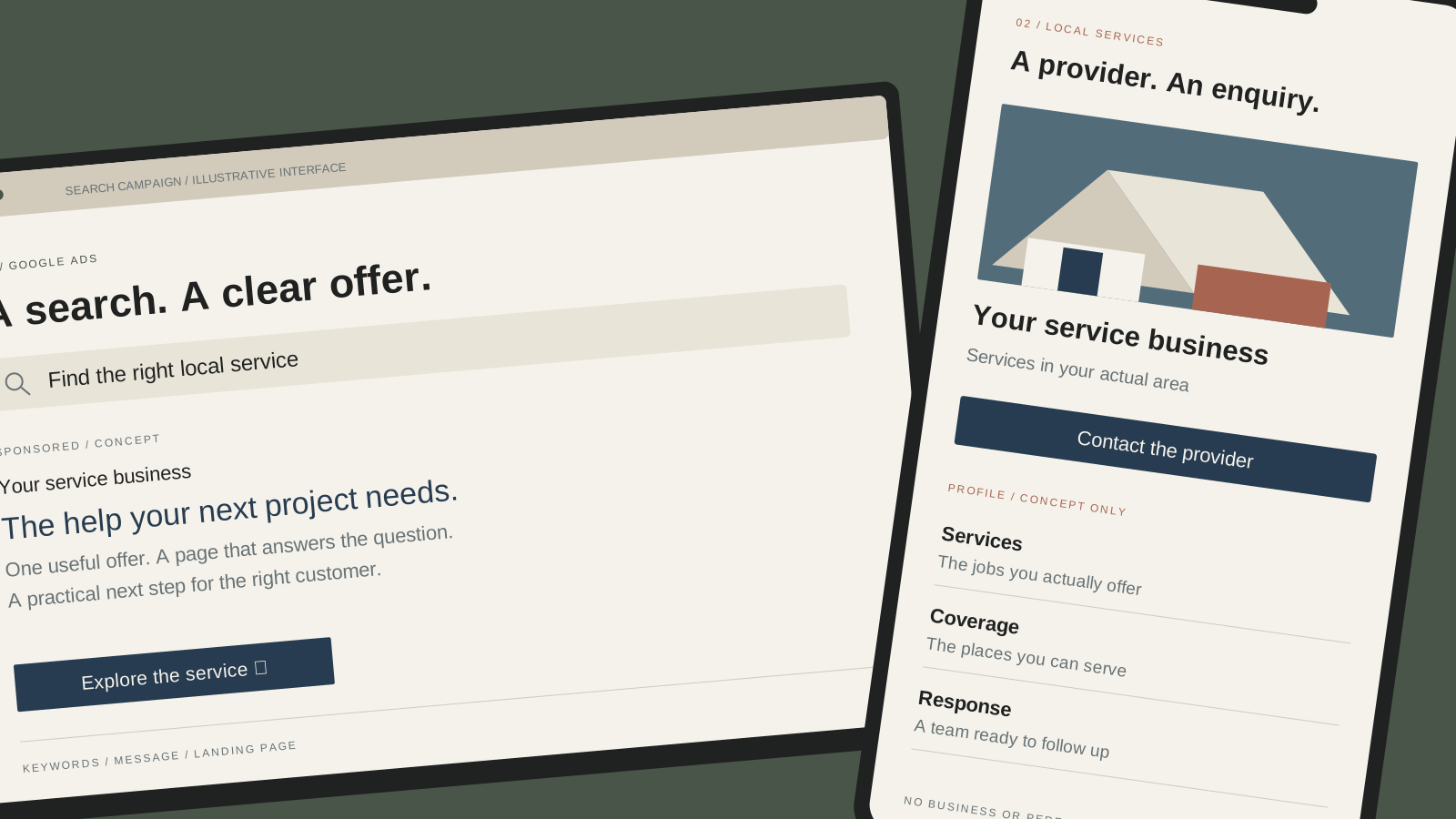
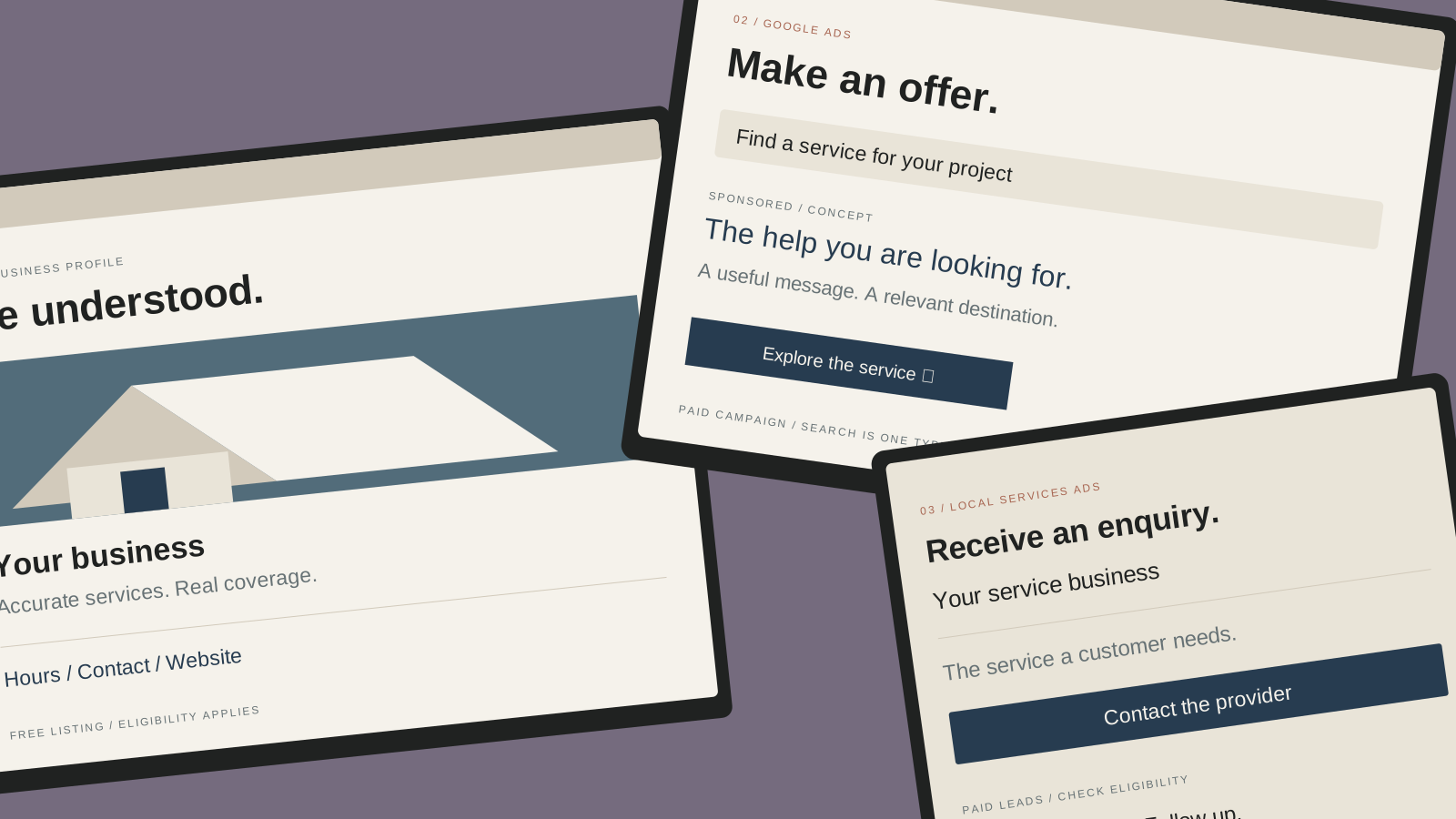
Think about the customer's experience. A Business Profile helps someone check who you are and whether your business fits their needs. A Search ad can introduce an offer when someone searches for a related service. A Local Services ad can put a provider profile in front of someone looking for eligible local services and give them ways to get in touch.
| Option | Main role | What to check first |
|---|---|---|
| Google Business Profile | Represent an eligible business on Search and Maps. | Eligibility, ownership, accurate details, and verification. |
| Google Ads | Run paid campaigns; Search is one available campaign type. | The offer, campaign fit, destination, policies, and measurement. |
| Local Services Ads | Connect eligible local providers with service enquiries. | Category and location availability, profile affiliation, and screening. |
These are not three interchangeable subscriptions. A maintained profile does not mean an advertising campaign is running. Paying for a campaign does not mean your business information is accurate. And qualifying for one Google product does not automatically establish eligibility for another.
Ask a provider to name the work
If an agency offers a “Google package,” ask which accounts it will manage and what it will change. Separating profile maintenance, Search campaign management, and Local Services lead handling makes the scope easier to compare and the results easier to understand.
What does Google Business Profile do, and is it free?
Google's Business Profile introduction says eligible businesses can manage how they appear on Search and Maps at no charge. Useful details can include services, hours, contact information, and a website link, depending on the business and available features.
The profile is not the same as your website. It is one place where customers may decide whether to contact you, ask for directions, or investigate further. Keep it consistent with the business they will actually encounter.
Check eligibility before creating a listing
Business Profile is generally for businesses that meet customers in person, either at a customer-facing location or by visiting them. An online-only operation is not automatically eligible. Read Google's requirements for your business rather than inventing a public location to obtain a listing.
Free access does not mean maintenance takes no work
Someone still needs to own the account, respond to legitimate questions and reviews, keep information current, and resolve access issues. A provider may charge for that work. The fee should be described as a management service rather than presented as a charge Google requires for the basic profile.
Keep account access with the business. A good working arrangement should make it clear which person is the owner, who may edit information, and how access will be handled if the provider changes.
What is Google Ads, and when does a Search campaign make sense?
Google Ads is the advertising platform; a Search campaign is one campaign type within it. Google's Search Network documentation describes how ads can appear around searches related to campaign keywords. Other campaign types serve other purposes and should not be treated as identical to Search.
Match the campaign to the buying decision
A Search campaign can be worth investigating when people look for an offer you provide and you have a useful destination for them. A substantial professional service may need a page with examples, scope, process, and a consultation path. A simpler offer may need a shorter journey.
Start with the customer action, not the dashboard. Decide whether you want a relevant enquiry, appointment, purchase, or another meaningful outcome. Then make the advertisement, destination, and follow-up support that action.
Understand the billing method you choose
Cost-per-click bidding is one Google Ads model. Google's CPC guidance explains payment for clicks under that model. Do not assume every campaign type and bidding arrangement works identically, and do not confuse a paid click with a customer who has agreed to buy.
If the destination is unclear or the form does not work, more exposure can send more people into the same problem. Review the website, app, or landing-page decision before buying a new page solely because a campaign is being launched.
What are Local Services Ads, and which businesses can use them?
Local Services Ads connect potential customers with providers through a local-service advertising experience. Google's US getting-started guide describes enquiries through the ad and provides an eligibility checker. Availability depends on the business category and area.
Eligibility comes before the sales pitch
Check the exact service and location during setup. A city being a large market does not prove your category is available there. A business should not describe a different service simply to fit an available category.
Allow for screening and account requirements
Google's qualification guide describes checks that vary by category and region and may include licensing, insurance, or background information. Verify the requirements shown in your own setup process before promising a launch date or badge.
Prepare to handle the enquiries
Lead generation includes the work after the first contact. Name the person who will respond, define which jobs the team can accept, and decide how enquiry outcomes will be recorded. A paid opportunity has little value if it sits unanswered or concerns work you cannot deliver.
Do Local Services Ads require a Google Business Profile?
For direct advertisers, Google's Business Affiliation requirements describe a public, verified Business Profile matched with the business advertising through Local Services Ads. The guidance notes an exception for certain partner affiliate networks. Check which requirements apply to your arrangement.
That connection does not make the two products the same. The profile is the business listing; Local Services Ads is the paid activity. You may encounter linked information and account checks, but the responsibilities and costs should still be understood separately.
Resolve ownership before opening duplicate accounts
If an existing profile belongs to the business but a previous employee or provider manages it, investigate the access problem first. Starting again can make ownership and information harder to untangle. Keep a record of authorized managers and a reliable business contact.
Make the handoff understandable
A useful setup record identifies the profile, advertising accounts, responsible people, services, coverage, and status of required checks. The owner should be able to understand what is ready, what is pending, and what the provider is doing next without needing a specialist vocabulary.
How should you compare the costs of the three options?
Separate the fee for a platform interaction from the cost of producing a business result. A Business Profile has no basic listing charge, but maintenance takes effort. Advertising has media or lead costs as well as setup and management work. All three can depend on clear information and reliable follow-up.
For Local Services Ads, Google's billing guidance describes payment for valid leads. A lead is not a guaranteed booking or sale. For a Search campaign, a click or reported conversion also needs to be interpreted against the real customer journey.
Choose consistent business measures
Define a qualified enquiry, record the outcome, and include the costs relevant to the decision. Keep one-time setup separate from recurring spending. If you compare acquired-customer cost, apply the same calculation to each activity.
Avoid universal price promises
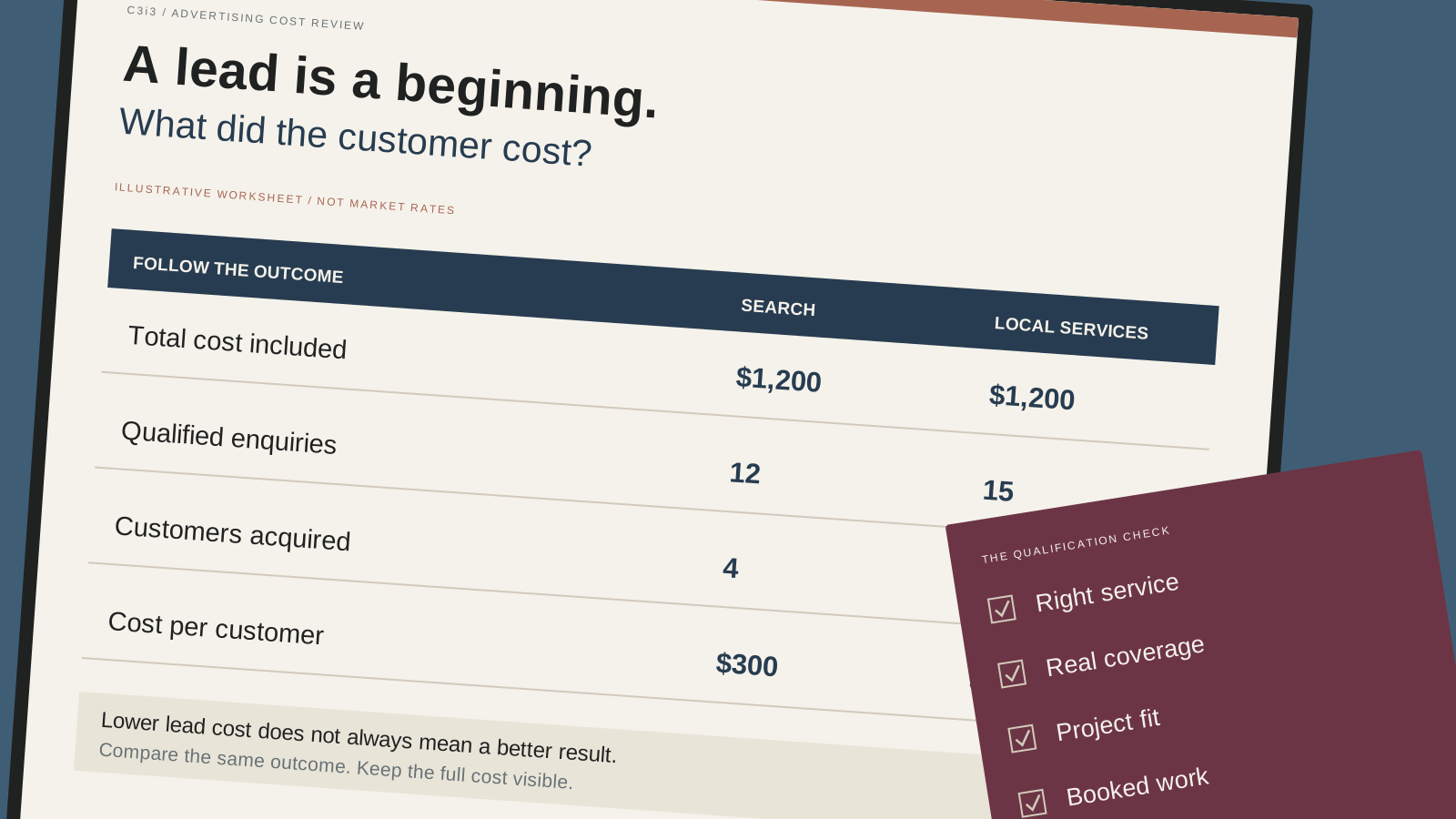
A claim that one product is always cheaper skips over the business category, competition, service fit, geography, and booking process. Start with the evidence available for your own business. Our lead-cost comparison worksheet shows how to distinguish enquiry cost from acquired-customer cost using clearly illustrative arithmetic.
Do Google Ads or Local Services Ads replace local SEO and AI search optimization?
No single paid campaign replaces the work of explaining your business accurately and making useful content accessible. Treat advertising as paid customer acquisition, and evaluate local SEO and AI search visibility as separate work with appropriate measures.
Google's local ranking guidance describes relevance, distance, and prominence and says you cannot request or pay for a better local ranking. Buying advertising should not be presented as a shortcut to organic placement.
Keep a useful foundation
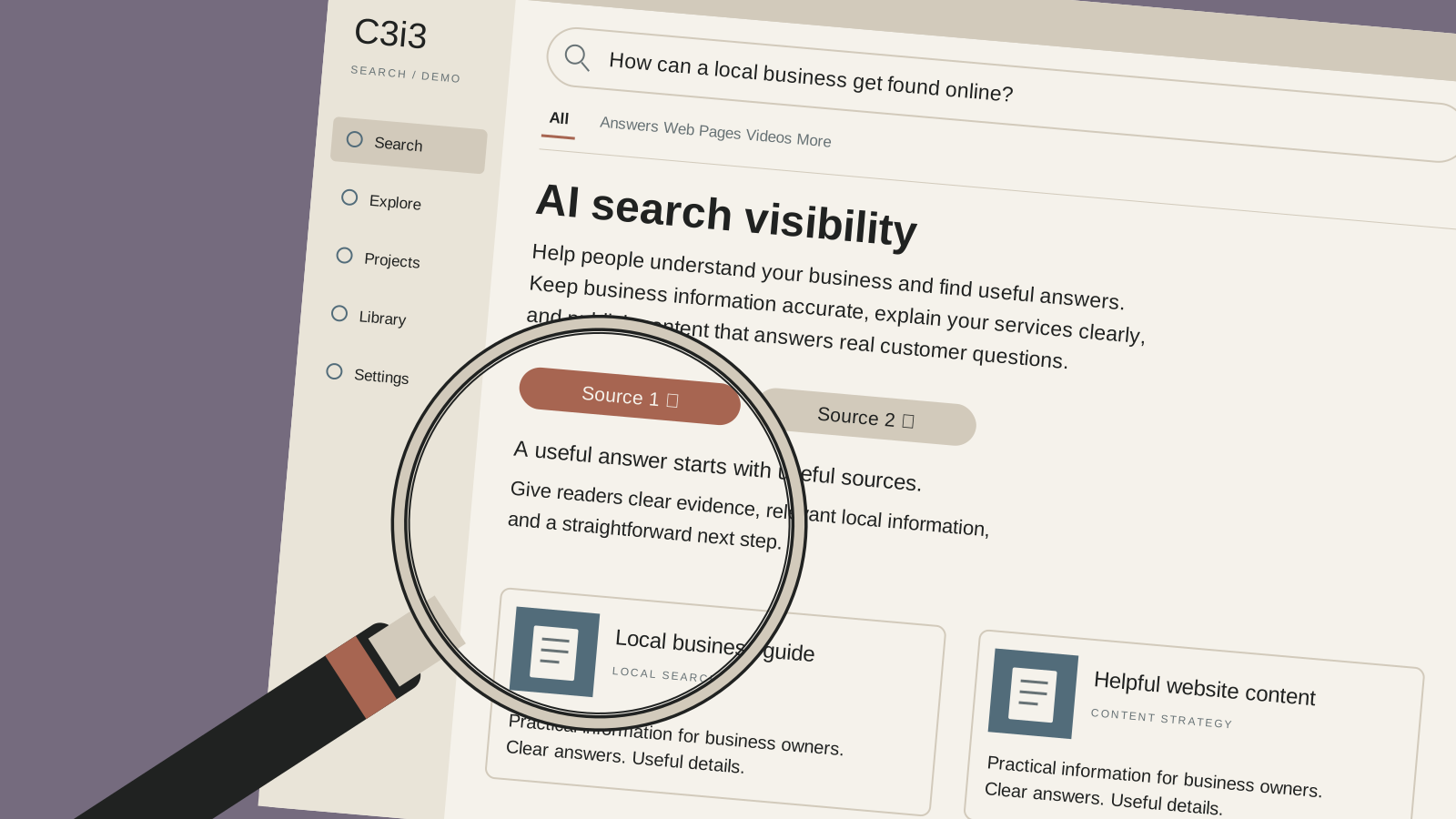
Maintain service explanations, accurate contact information, relevant evidence, usable pages, and sensible internal links. These help a real customer understand the business regardless of the channel that brought them there. Our AI search optimization pillar explains the broader search work.
Do not create extra pages solely to target more places
A location article should answer a useful question for that audience. Give it a specific purpose, truthful coverage, and relevant examples. Renaming the city in an otherwise identical article is not a useful content plan. A national explanation and a local implementation guide can coexist when each helps the reader make a different decision.
Which Google option should a small business start with?
Begin with what is missing. If an eligible business has inaccurate public details or no control of its profile, address that foundation. If it wants paid enquiries, compare campaign fit, eligibility, destination quality, and the capacity to handle the response.
Use a decision sequence
- Define the offer. Name the service or product, customer, coverage, and useful next action.
- Check eligibility and access. Confirm the accounts and requirements before paying for setup.
- Prepare the customer journey. Test the page, phone number, form, and follow-up.
- Agree on a bounded test. Set the scope, spending responsibility, and evaluation method.
- Review the business outcome. Use suitable enquiries and acquired customers to decide what to do next.
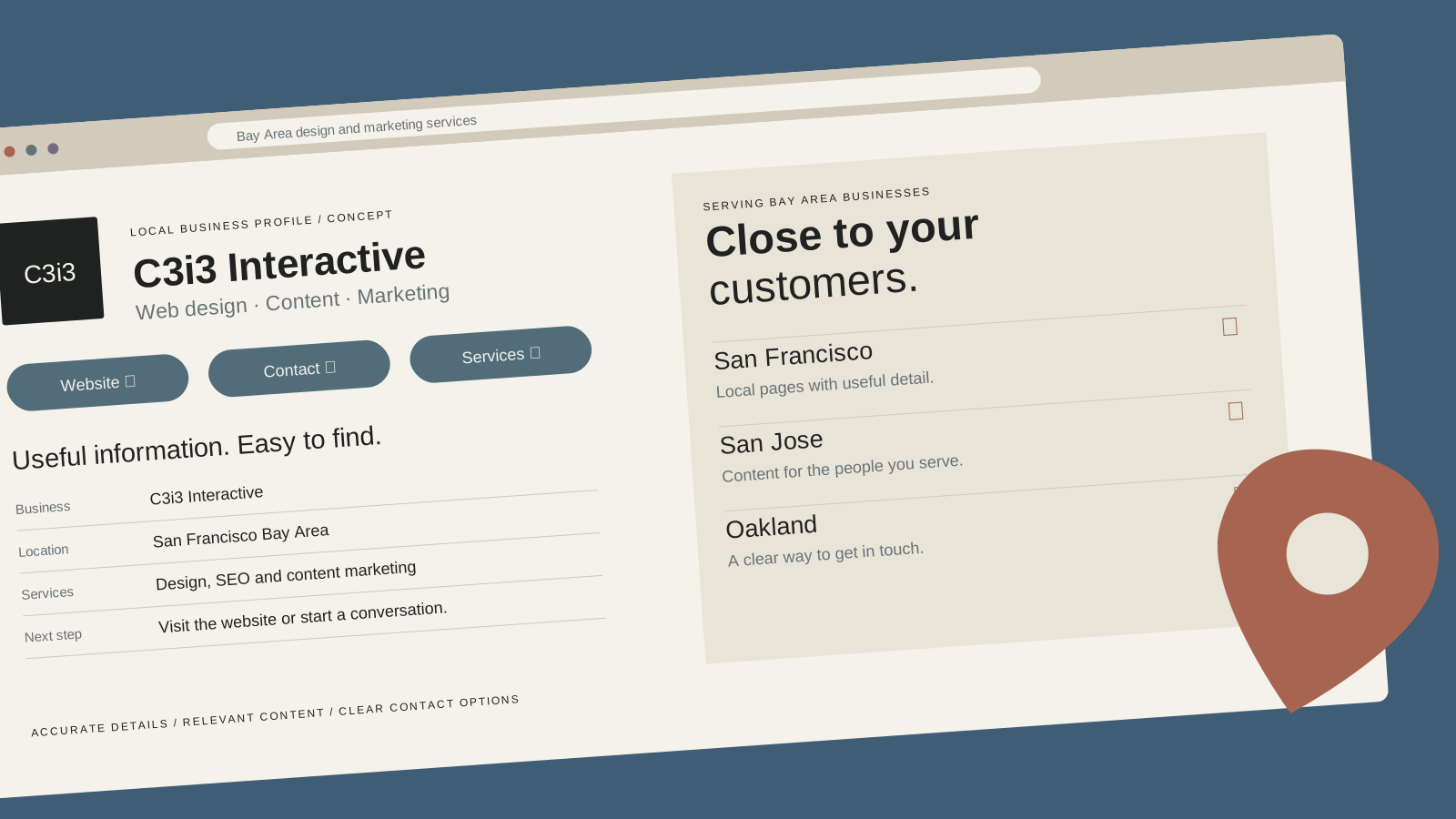
For a regional example, see which paid option a San Francisco Bay Area business should consider first. That guide applies the decision to real coverage and service constraints without inventing local prices or implying offices in every city.
Keep the work connected in a small business marketing plan. A profile, page, and campaign should support the same offer rather than send conflicting messages about the business.
What should the scope make clear?
More about your Google marketing options.
Is Google Business Profile another name for Local Services Ads?
No. Business Profile is the business listing on Search and Maps. Local Services Ads is paid lead generation for eligible service categories and areas. Direct LSA advertisers generally need an affiliated, verified profile.
Does every business need all three?
No. Eligibility, the offer, the customer journey, and available resources should determine the scope. An online-only business may not qualify for Business Profile, and many businesses will not qualify for Local Services Ads.
Can an agency guarantee a top position or a fixed number of customers?
Treat guarantees carefully. A provider can commit to a scope of work and explain its decisions, but campaign delivery, enquiry quality, customer choices, and organic rankings involve factors it does not fully control.
Should profile management and advertising be in one package?
They can be coordinated by one team, but each responsibility should remain clear. Ask what is included, what costs extra, who owns the accounts, and how the results will be reviewed.
What does your business need next?
We can help connect your business information, website, and paid advertising around an offer customers understand.