



































In this article
Two termite proposals use different methods and different promises. One price is lower, one warranty sounds longer, and neither document makes it obvious whether they address the same areas or findings.
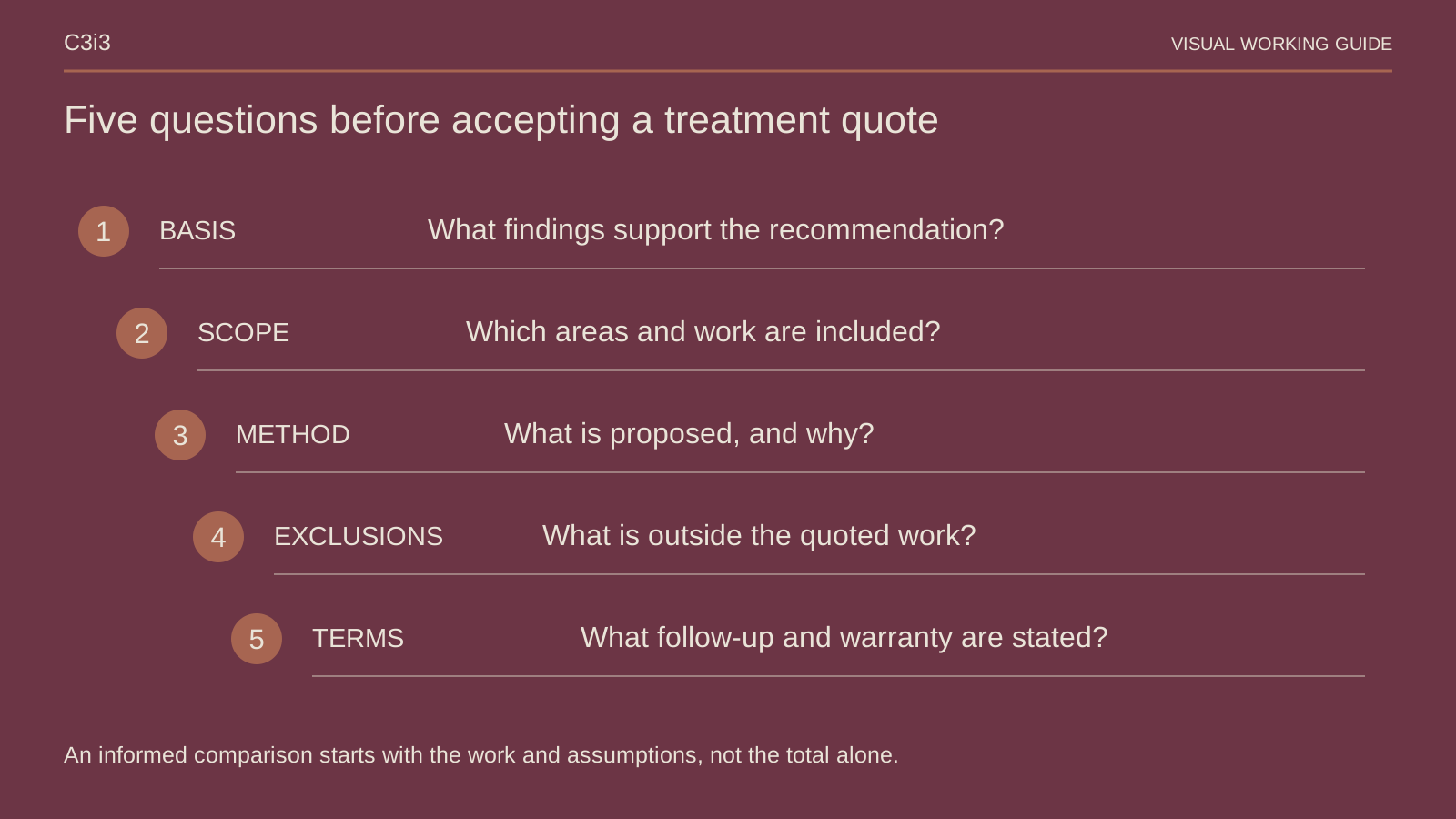
Before comparing totals, ask five questions about the proposed work. These are buyer questions, not instructions for selecting or performing a treatment yourself. The examples use California consumer resources; the applicable requirements and qualified provider's assessment still depend on the actual property and work.
1. Which inspection findings does this proposal address?
Ask for the actual report or documented assessment behind the recommendation. Identify the findings the proposed work is intended to address and any parts of the property that were not inspected. A short sales summary should not be the only basis for understanding the scope.
When a wood-destroying-organism report applies, review its type, diagram and detailed notes. The SPCB report form shows why a checked box alone does not explain the condition or recommendation. Ask the provider to connect the written proposal to the relevant findings.
If the proposals rely on different inspections or assumptions, record that difference. Do not silently compare them as if both cover the same evidence. An inaccessible area or limited inspection is an uncertainty to discuss, not proof that no problem exists there.
2. Which areas and responsibilities are included in the treatment?
Request a plain-language scope that identifies what the provider will do and where. Ask whether the approach addresses localized findings or a broader defined area, and what remains outside it. The treatment label by itself does not establish complete coverage.
The SPCB termite brochure provides background on scope distinctions, but it is not a substitute for current project instructions or professional assessment. Ask the qualified company why the proposed method fits the documented situation.
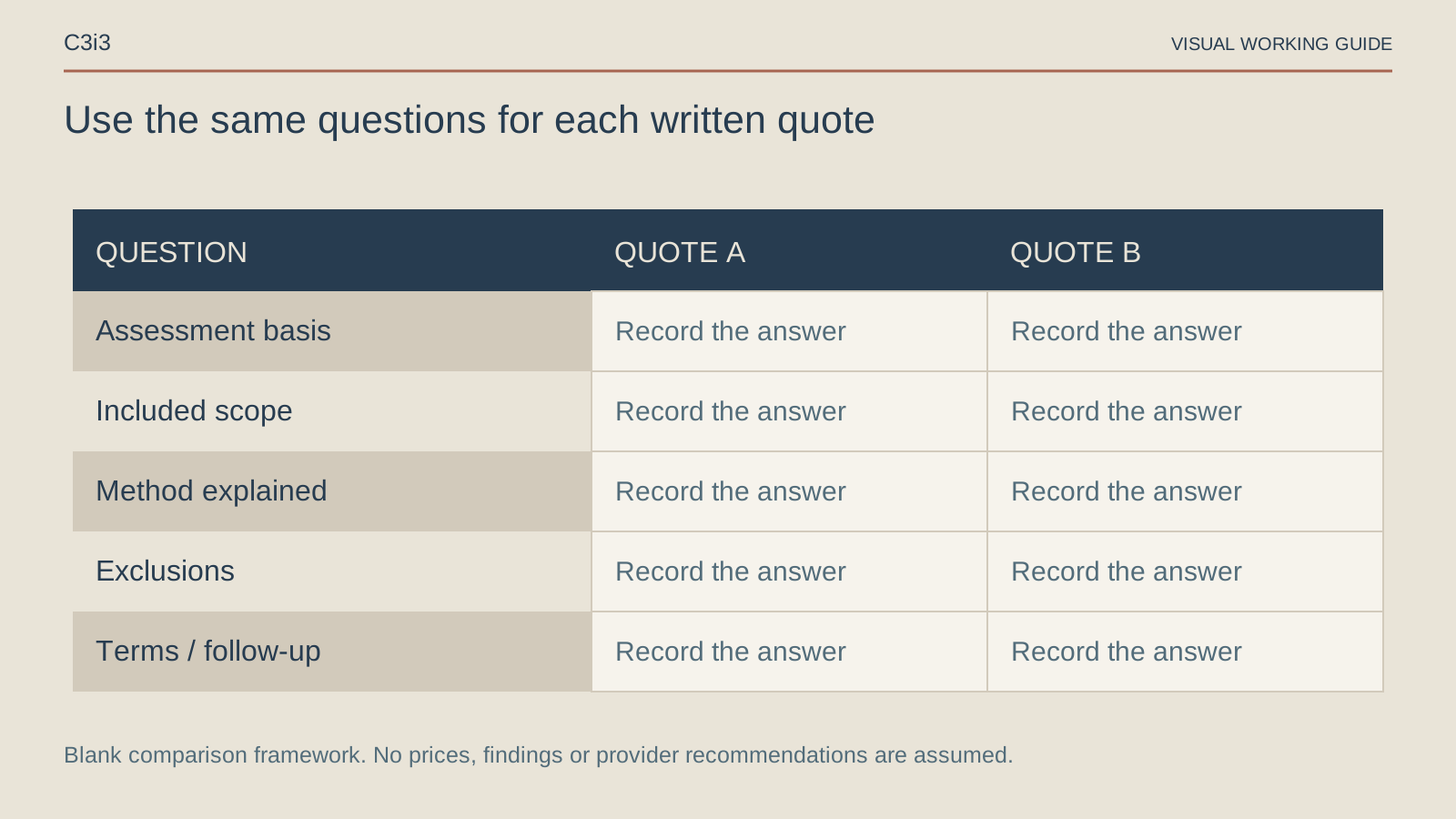
Clarify whether repairs, additional inspections or work by another provider are included. If the company is coordinating part of the process rather than performing it, identify who is responsible. Keep these distinctions visible in the comparison sheet.
3. What preparation, access and scheduling does this proposal require?
Obtain the current instructions for the actual method from the provider. Ask how access is arranged, who coordinates affected parties and what happens if the scheduled work cannot proceed. Do not use a general online checklist to decide treatment or re-entry requirements.
Explain relevant property circumstances to the company through its appropriate process. Shared access, occupants and responsibilities can affect planning. Keep private access information out of a broad comparison document that may be forwarded unnecessarily.
Ask who handles questions before and during the work. A clear preparation process should identify the responsible contact and the instructions you need to follow. This article intentionally provides no chemical, fumigation or do-it-yourself treatment directions.
4. What is included in the price, and what could change it?
Separate stated work, optional work, allowances and exclusions. Ask what happens if additional findings change the recommended scope. Request the process for documenting a revision and obtaining your agreement before treating it as part of the job.
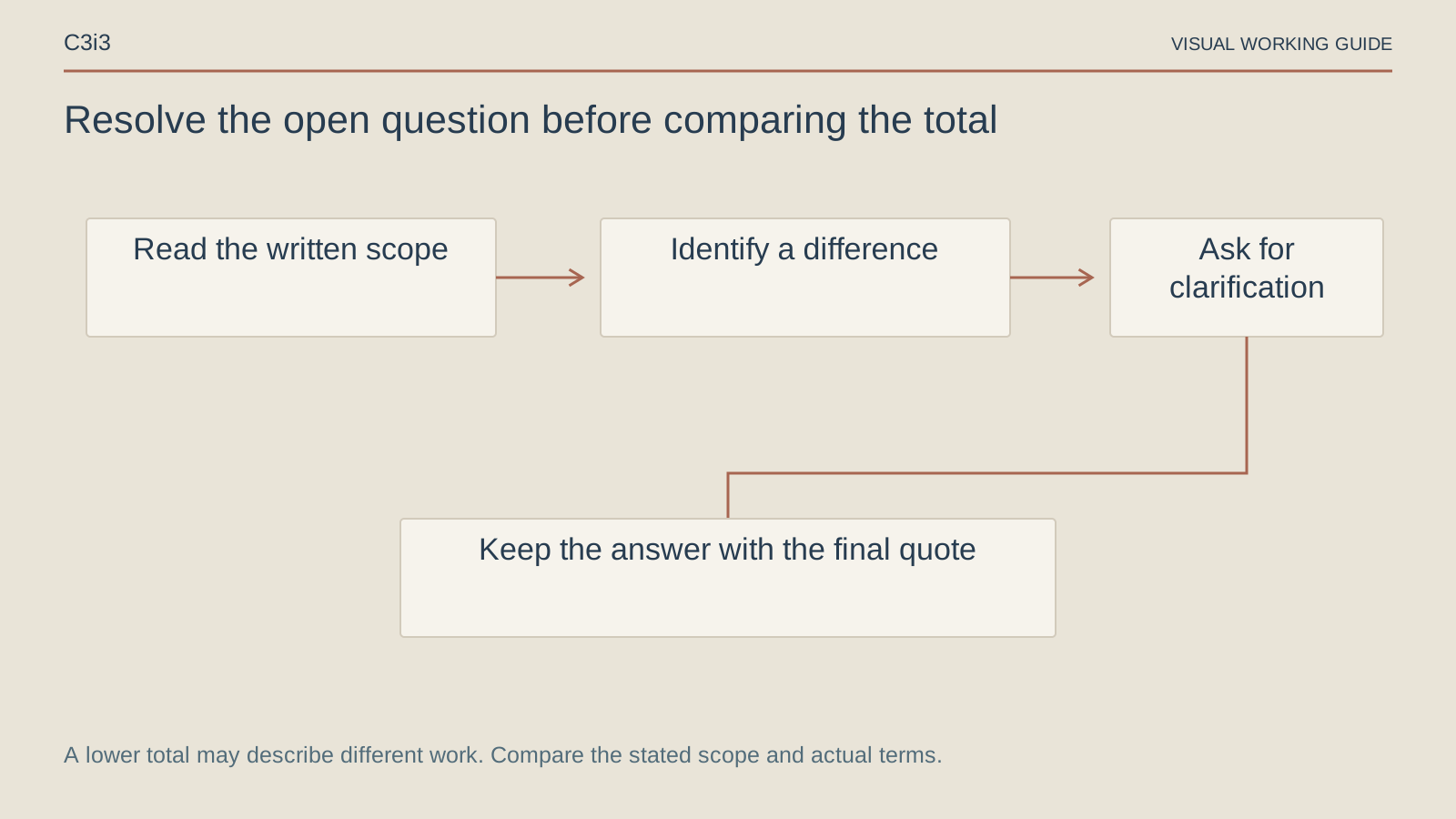
Compare inspection charges, treatment work and any later visits on the same basis. A lower initial total may reflect a narrower scope, but do not assume that without asking. Write “not stated” where the proposal lacks an answer and request clarification.
Keep identity checks separate from the price discussion. Use the SPCB verification resources to review the company and relevant license information. A cheaper proposal and an attractive review profile do not replace that verification.
5. What do the follow-up and warranty terms actually promise?
Ask what follow-up is included, how a concern is reported and which areas or conditions the written terms cover. Identify exclusions and requirements rather than relying only on the advertised duration. Make sure you understand who responds if the business relationship changes.
Ask which records you receive at completion and how they relate to the original scope. A treatment record does not automatically mean the whole structure has been inspected or that every possible condition is covered by a warranty.
Once the five answers are clear, compare the proposals again. Use our termite-provider hiring checklist for the broader business checks. If an important difference remains unexplained, ask the provider or an appropriate adviser before choosing.
Keep this checklist beside you
Questions before the next step
Does a longer warranty always mean a better proposal?
No. Compare the actual coverage, exclusions, reporting process and responsibilities. Duration alone does not explain what is promised.
Can I choose a treatment method from this article?
No. Use a qualified provider’s assessment and current instructions for the actual property. This guide helps you compare explanations and scope.

How C3i3 Can Help
Property owners can take these questions to qualified providers. C3i3 does not inspect properties or recommend termite treatment methods.
For pest-control companies, clearer proposals often begin with clearer website explanations. C3i3 can help organize service content, improve the inquiry experience and connect accurate expertise with local search discovery. We help business owners make the offer understandable without inventing credentials, guarantees or customer results. Paid advertising, if added in the future, would be identified separately.