



































In this article
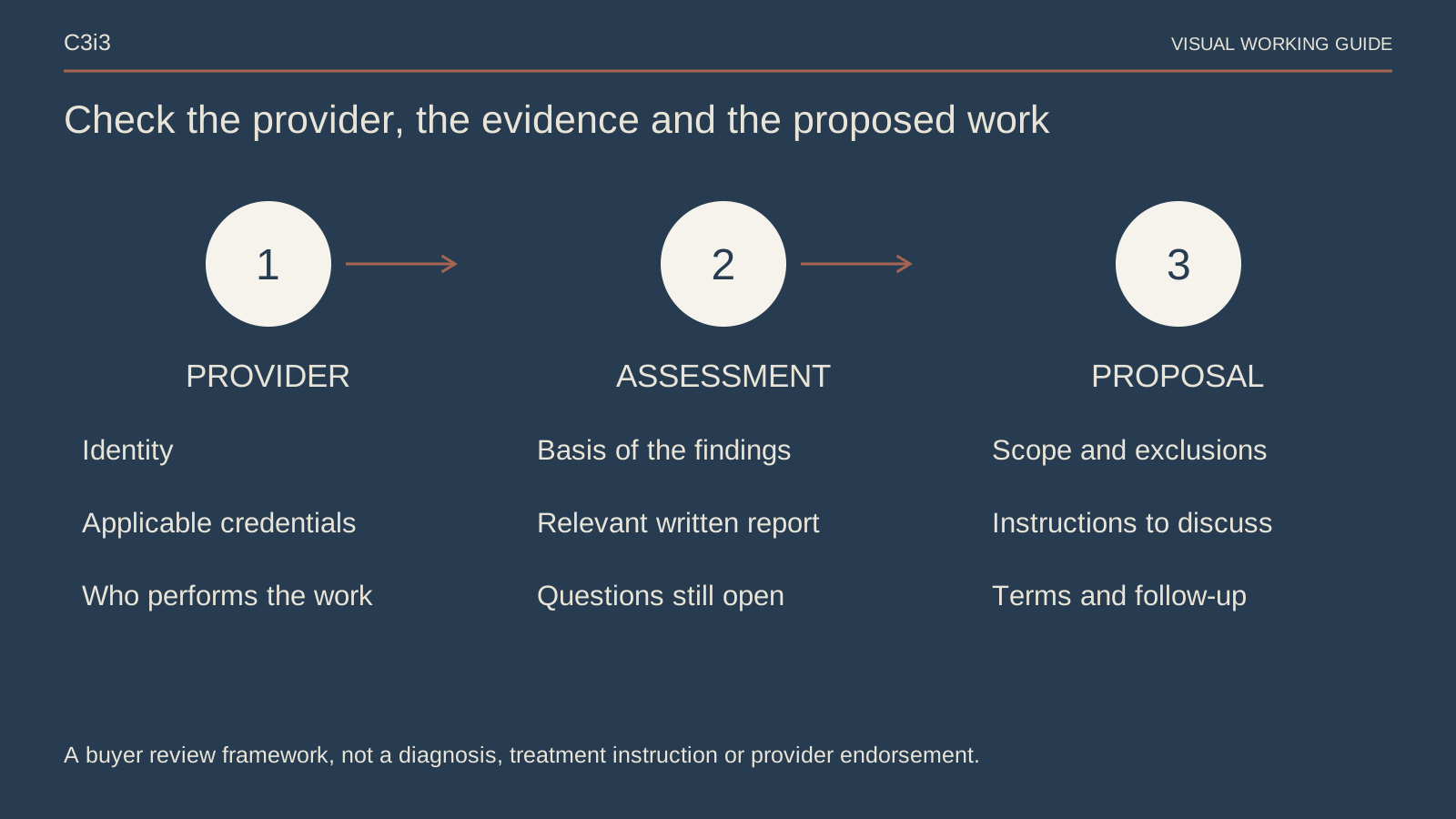
You have been told there may be termites, and the first proposal is already on the table. Before choosing a provider, you need to understand who is doing the work, what was actually inspected and which parts of the property the proposal covers.
This is a hiring checklist for San Francisco property owners, not a ranking of pest-control companies. Use the same questions with each provider and keep the written answers together. The goal is an informed conversation with the appropriately qualified business.
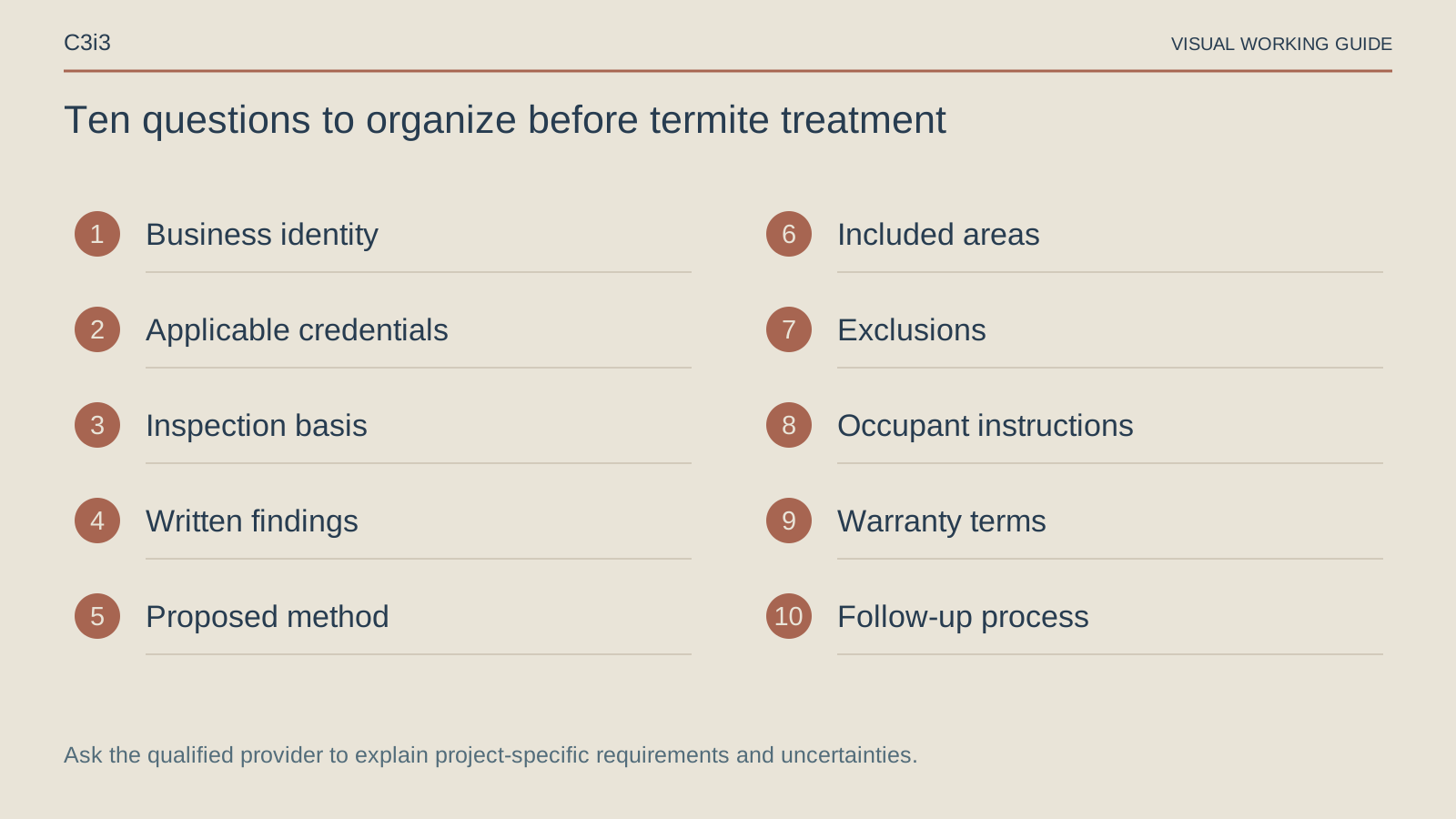
1. Verify the company you would actually hire
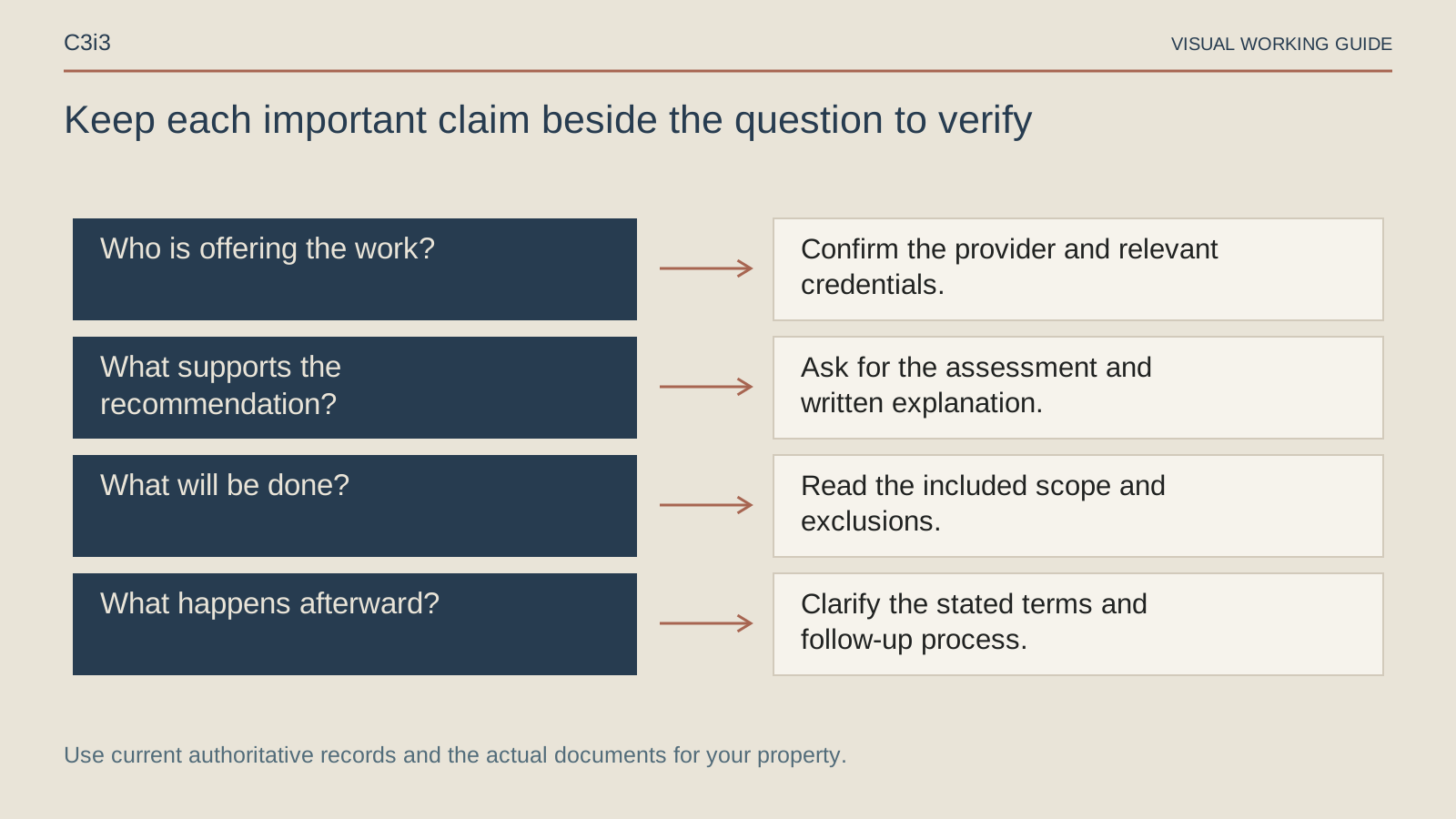
Match the proposal's business identity to the company you are considering. Use the California Structural Pest Control Board's verification resources rather than relying only on a logo or number displayed on a website.
Company registration and an individual's license are different records. Ask which information is appropriate to verify for the people and work involved. A registry result is a credential check, not a government recommendation or a guarantee of the proposed outcome.
2. Confirm the credentials fit the proposed work
Ask the provider to explain the role and authorization relevant to its proposed method. Do not assume that a general pest-control description means every termite-related activity is covered by the same credential.
The SPCB's branch descriptions help distinguish categories of structural pest-control work. Use them to prepare questions, then verify the actual company and personnel involved. Avoid choosing a provider solely because its advertisement uses the broadest list of services.
3. Ask what the inspection actually found
Request an explanation of the evidence behind the recommendation. Which findings were observed, where were they documented and what does the provider recommend next? Ask for photographs or an understandable explanation where available.
Do not try to identify an infestation from a marketing image or an online checklist. A professional assessment should explain the property-specific findings. If two providers disagree, ask each to describe the basis and limits of its conclusion rather than deciding from a headline price.
4. Read the actual report and diagram
When an inspection report is part of the process, obtain and read it. Ask what type of report it is and how the diagram relates to the areas discussed. A verbal summary or database entry is not the same as the full document.
The SPCB report form illustrates why detailed findings and diagrams matter. Keep the report with the proposal so you can compare the recommended work against the evidence it is intended to address.
5. Identify inaccessible and excluded areas
Ask which parts of the property were not inspected and how that limits the recommendation. Concealed conditions and inaccessible areas should not silently become a claim that the entire structure was checked.
For a San Francisco property with shared access or multiple responsible parties, ask what coordination is needed to understand the scope. Do not assume one unit's appointment establishes findings for an entire building. Record unresolved access questions before accepting a proposal that appears comprehensive.
6. Understand why the treatment scope was proposed
Ask the provider to explain the proposed approach and the areas it addresses. A localized scope should not be mistaken for coverage of every possible undetected condition elsewhere. Treatment choices require the qualified provider's assessment, not a buyer's online diagnosis.
Request a plain-language explanation of the alternatives discussed and why the proposed work fits the documented findings. Do not let a generic “complete protection” phrase substitute for a description of what the company will actually do and what remains outside that work.
7. Get the included work and exclusions in writing
Review what the price includes, what is conditional and what another trade or provider may need to handle. Inspection, treatment, repair and later reinspection can be distinct tasks. Ask the company to identify its role in each relevant part.
If the proposal changes, keep the revised scope and the reason for the change. Do not rely on a verbal promise that every related issue is included when the written description is narrower. Mark unknown items for clarification before comparing totals.
8. Obtain current preparation and access instructions
Ask the licensed provider for the current instructions that apply to its actual proposed method and your property. Clarify access arrangements, scheduling and the responsible contact. Do not substitute general internet advice for the provider's project-specific directions.
Keep household, tenant or building coordination questions visible in the planning conversation. This checklist does not provide chemical-use, treatment or re-entry instructions. If a direction is unclear, ask the provider to explain it before the work is scheduled.
9. Read follow-up and warranty terms carefully
Ask whether follow-up is included, how it is arranged and what the written warranty covers. Identify exclusions, reporting requirements and the contact route if a concern arises later. Do not treat the largest advertised year count as the most complete explanation.
Keep product or service claims tied to the actual written terms. An inspection report, treatment completion record and warranty can answer different questions. Ask which documents you will receive and what each one establishes.
10. Agree on communication and completion records
Identify the person who handles questions, schedule changes and any later service request. Ask how the provider documents completed work and unresolved items. Keep the approved scope, instructions and final records somewhere you can find them.
If reasonable questions remain unanswered, pause before committing. A provider's ability to explain the work is part of the comparison. Use our termite proposal questions when you are ready to compare the written offers in more detail.
Keep this checklist beside you
Questions before the next step
Is this a list of the top San Francisco pest companies?
No. It is a checklist for evaluating providers. No company is ranked, endorsed or placed here through payment.
Does an inspection report guarantee no hidden infestation?
No. Read the actual findings and limitations, including inaccessible or uninspected areas, and ask the qualified provider what the report establishes.

How C3i3 Can Help
Property owners can use these checks with the providers they are considering. C3i3 is a website and marketing agency; the qualified pest-control business is responsible for inspection and treatment recommendations.
For pest-control business owners, this checklist shows the information prospective customers need to understand. C3i3 can help with website design, clear service content and local SEO. We can make your actual credentials, scope and inquiry process easier to evaluate. Any future advertising would be labeled separately from editorial guidance.