



































In this article
The customer hears scratching in the attic, sees something that might be termites or needs help interpreting an inspection report. They are already uncomfortable. A website that answers with a wall of pest names and a “call now” button makes the next decision harder.
Your pest-control website can be calmer and more useful. Start by separating the problems people describe, the inspections you offer and the work you are qualified to perform. Then help the office understand the inquiry without turning the first form into a technical exam.
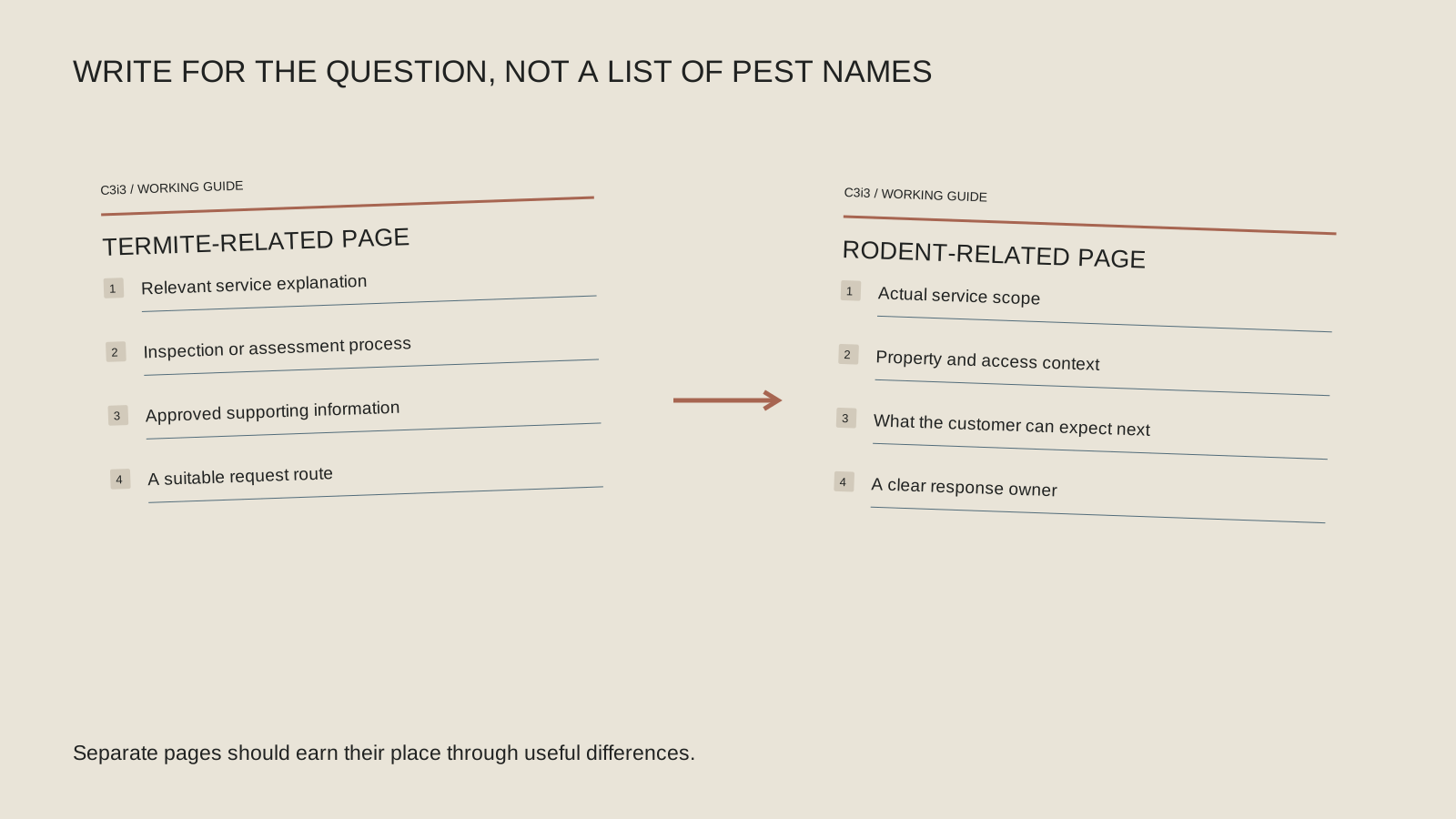
Why should termite and rodent services have different explanations?
A termite inquiry may involve inspection findings, treatment options or a property transaction. A rodent inquiry may involve identifying entry points, trapping, exclusion or follow-up. Not every company provides every part of either service. Your page should explain your actual scope.
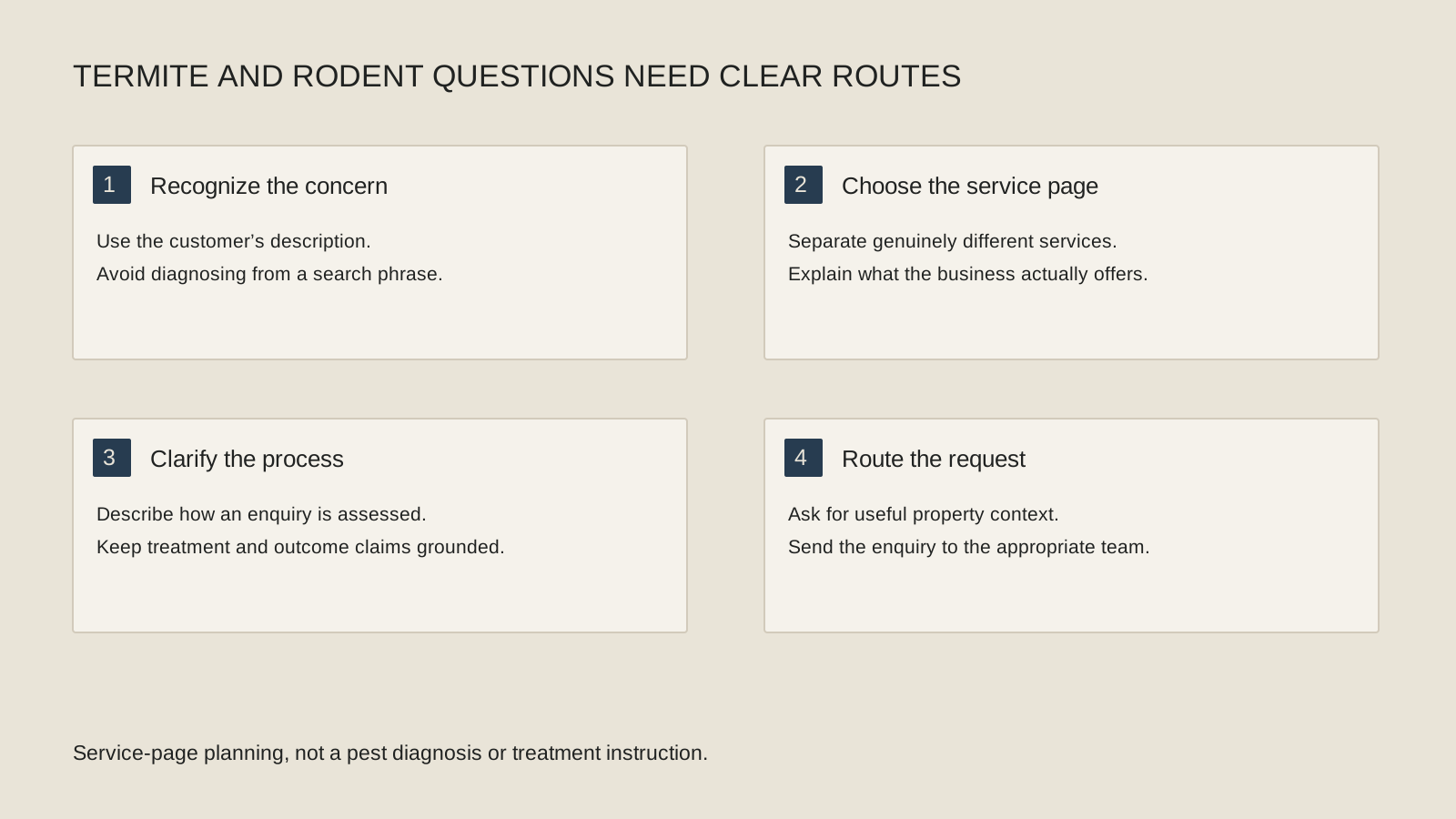
Give customers language they recognize. “I found droppings in the garage” may be a more natural starting question than a technical service label. Answer what your team does next and what the customer should prepare for the appointment, while avoiding a remote diagnosis.
Where termite inspection and treatment are separate steps, say so. Where rodent exclusion or cleanup is handled by another provider, make that clear. Accurate boundaries reduce disappointing calls and help appropriate customers recognize that they have reached the right business.
What should a termite service page include?
Explain who the service is for and how an inspection informs the work. Describe the kinds of documentation customers can expect and the next step for understanding any proposed treatment. Avoid presenting one treatment method as appropriate for every building or infestation.
Use your own credentials and verify claims against the California Structural Pest Control Board where applicable. Make the business identity easy to confirm. Do not imply that a general website badge establishes authorization for every service or jurisdiction.
Add a practical question such as “What should I send before an appointment?” The answer might include the property location, a description of what prompted the call and any existing inspection report the customer is comfortable sharing securely. Do not ask them to disturb damaged material or expose themselves to a pest to collect marketing content.
How can rodent-control content attract a better-fit inquiry?
Describe your process in terms of assessment and scope. Does the team inspect for entry points? Are exclusion repairs part of the service? How are follow-up visits arranged? These details help a customer compare providers without needing an unverified promise of permanent eradication.
Use photos and diagrams to explain the workflow, not to invite do-it-yourself handling of contaminated material. A simple “inspection → proposed scope → agreed work → follow-up” diagram can clarify what the customer is buying while leaving technical decisions to qualified personnel.
Explain exclusions, access needs and any coordination with other trades. If your company does not provide attic restoration or building repairs, an honest sentence can prevent a mismatch that otherwise consumes both the customer's time and the office's time.
Turn an anxious inquiry into an understandable next step
Give each service its own scope and handoff.
Reported concern
Let customers describe the problem in everyday words.
Inspection route
Explain who assesses it and how to book.
Agreed scope
Clarify what the service includes and excludes.
Follow-up
Explain the contact and scheduling process.
Where should location and availability appear?
Make the coverage area visible near the service and contact information. Do not imply that you have a staffed local office in every city you serve. Keep profile details consistent with your real business and follow Google's service-area guidance.
Explain how appointment requests are handled and what happens outside office hours. Only advertise emergency or same-day availability when the business can fulfill that promise. A prominently displayed phone number cannot compensate for calls that reach a full mailbox.
Regional examples should come from your operation. A property manager coordinating building access has different questions from a homeowner arranging an inspection. Address those real differences before creating separate city pages, and do not substitute a list of cities for a useful explanation of service.
What should the first form ask?
Use a small number of fields that help the office respond: contact information, property location, the reported problem and a preferred contact method. Offer understandable choices such as termite concern, rodent concern or not sure. Allow an uncertain customer to ask for guidance.
Keep transaction documents, personal details and photographs in an appropriate secure process. A marketing form should not demand unnecessary sensitive information. Explain any next step that involves sending a report, arranging access or confirming the appointment.
Measure whether the form helps, rather than assuming more fields mean better qualification. If people abandon it, review the questions with the staff who answer calls. If completed forms lack the location needed for routing, add that specific field instead of redesigning everything.
Which results tell you the content is working?
Review termite and rodent inquiries separately. Record whether the customer was in coverage, needed a service you provide and booked an assessment. A rise in unrelated wildlife requests is not a success if your company cannot accept them.
Use search reporting to identify which pages receive relevant impressions and clicks. Then compare the inquiries with office outcomes. Our contractor SEO pillar explains this measurement chain; the same discipline applies when an AI answer becomes part of the discovery path.
Improve one weak page using actual questions from recent calls. Clear scope, accurate expectations and a reliable contact route are useful to both readers and search systems. They also give your team a better basis for deciding whether paid promotion should send more people to that page.
Keep this checklist beside you
Questions before the next step
Should I promise a pest-free home in the SEO headline?
Use only claims the business can substantiate and fulfill. Explain the actual treatment scope, follow-up and any written terms rather than using an absolute promise.
Can one page cover every pest?
A general overview can help navigation. Distinct services need enough detail for customers to understand the process, suitability and next step.

How C3i3 Can Help
Bring the treatment information your qualified team can approve. C3i3 can help make service boundaries and the inspection or inquiry step clearer.