



































In this article
A homeowner says they called last week, but your office has no record. They read the number from an old directory page, and nobody knows who can update it. Another employee suggests changing every listing again, just in case.
Treat this as an information-reconciliation job. Establish the correct public contact route, find the places showing the old one and verify each correction. A systematic record helps you avoid replacing one confusing version with another.
Which phone number should be the source of truth?
Confirm the number the business wants customers to use and who answers it. If call-tracking numbers are involved, understand how they are implemented before replacing them. A number that differs from the office's main line is not automatically an error.
Document the intended public number and any approved tracking arrangement with the person responsible for marketing and call handling. Do not disconnect a working route merely to make an audit report uniform. The first concern is whether a customer reaches the correct business.
Record the old number as a search clue. Keep the ledger limited to relevant public business information. You do not need to gather private employee numbers to reconcile the roofing company's listings.
What should you correct on your own website?
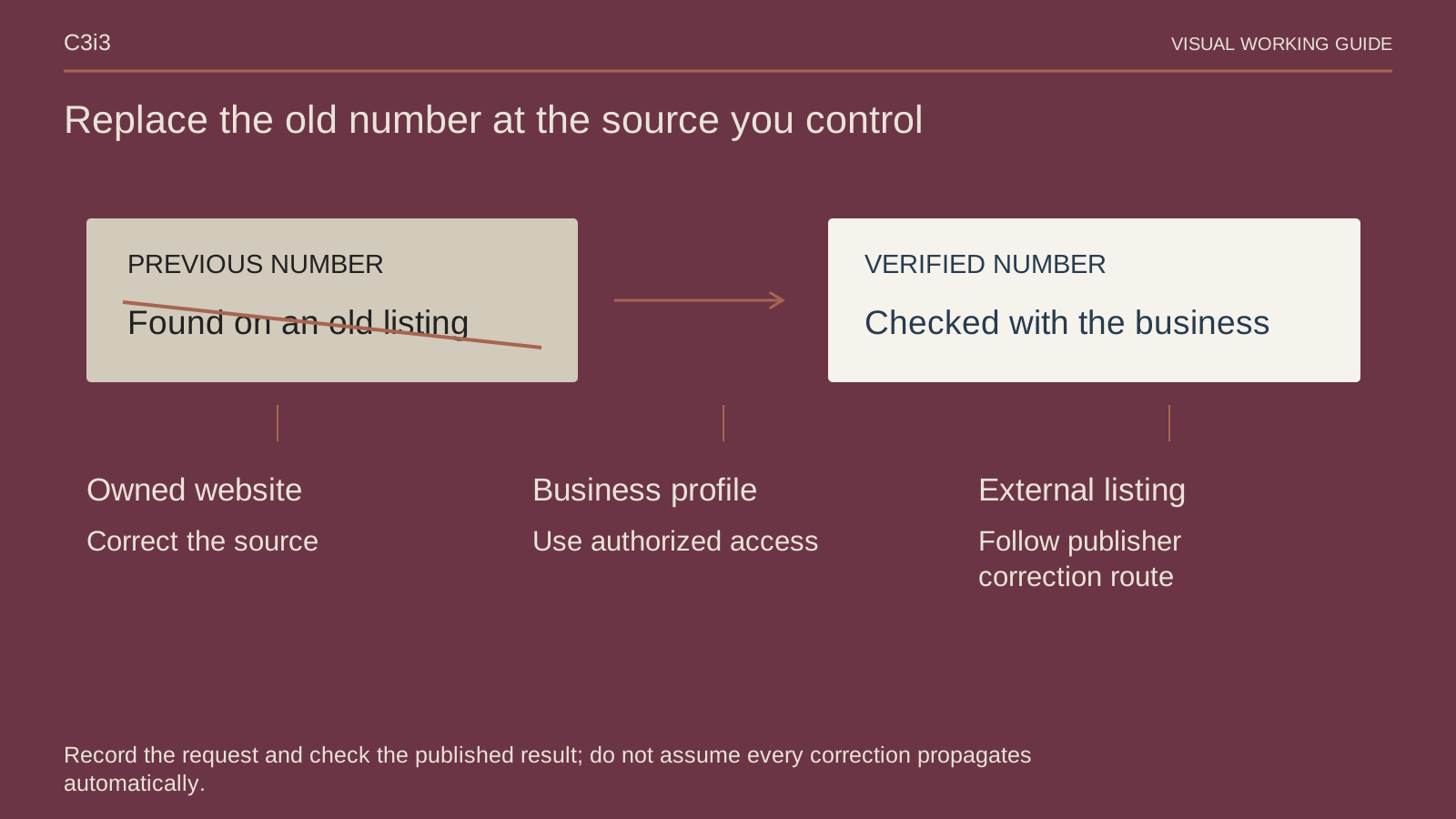
Review visible contact details, phone links, footer information and the pages customers commonly use. Test the number from a phone and confirm the call reaches the intended route. A correctly printed number with an incorrect clickable link still creates a problem.
Ask the person managing the website to inspect structured data and any embedded contact components. These should describe the same intended business information. Do not edit live code blindly because one search result appears stale.
Keep a before-and-after record of the specific change. If the website contains multiple locations or departments, confirm which number belongs to which service. A broad find-and-replace can erase a legitimate distinction.
How should you handle the Business Profile?
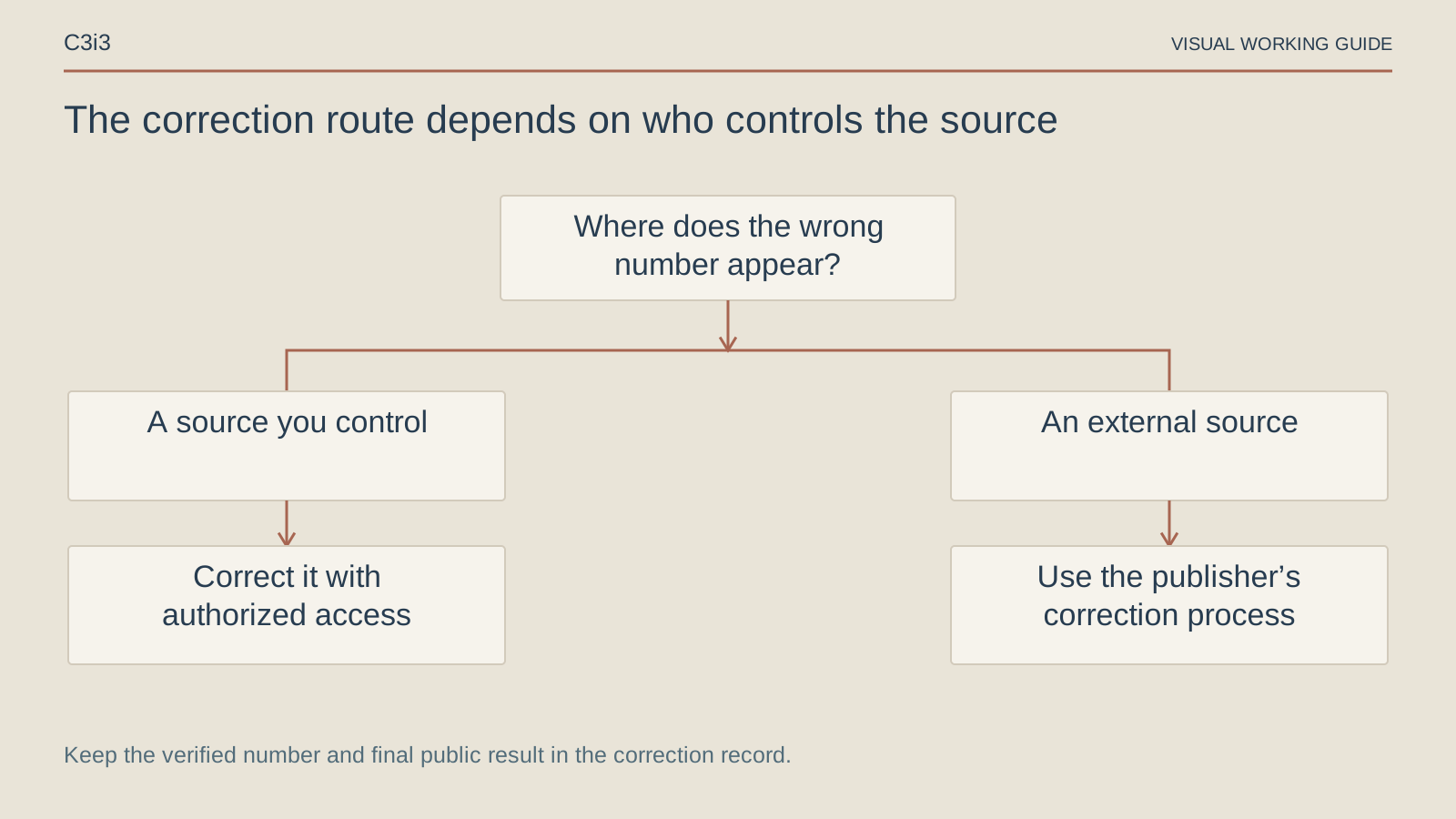
Use the authorized account to review the profile's contact information and follow the platform's current editing process. Confirm that you are editing the correct business. Do not create a new profile solely because the existing phone number is wrong.
Google's business-information editing guidance explains the available process. Updates can involve review, and a submitted edit is not proof that the public result has changed.
Check the profile again after the update is processed. Record the observed result and the date of that observation in your internal ledger. Keep maintenance under business control so a future staff change does not restart the access problem.
Which external listings should come next?
Prioritize listings that are prominent, generate relevant referrals or present a clear customer-contact risk. Search for the old number with the business identity and review the actual page. Do not assume a search snippet reflects the page's current content.
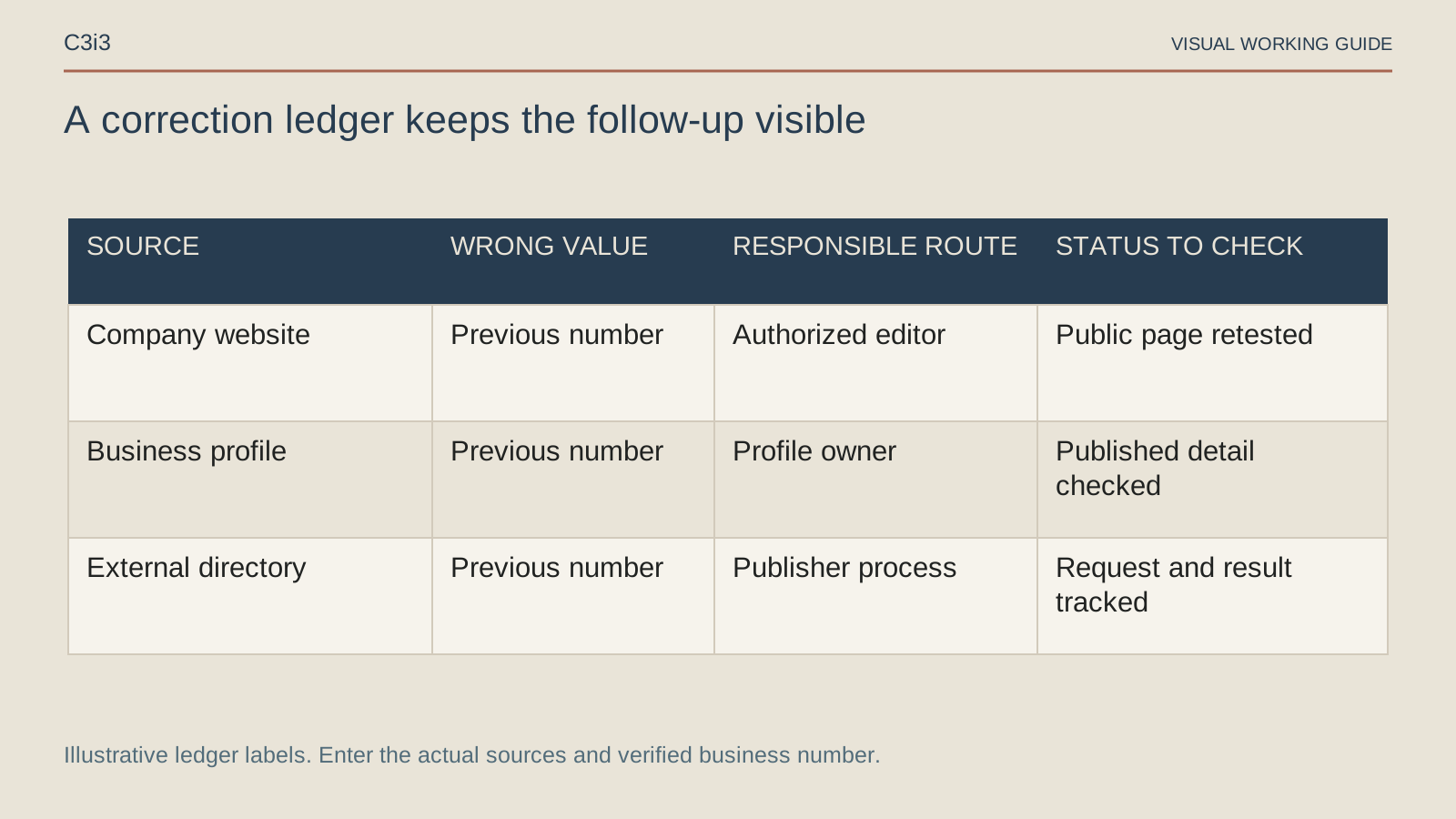
For each important error, record the platform, URL, wrong value, requested correction and account or support route. Use the platform's official process. Avoid submitting conflicting edits through several vendors without coordination.
Some sites may not respond promptly or offer an update route you control. Record that limitation. A correction service should distinguish requested changes from verified ones rather than filling a report with “completed” entries the business cannot inspect.
What if the wrong number keeps reappearing?
Investigate whether an authoritative source, data partner or old business record is still supplying it. The cause depends on the platform; do not assume every recurrence comes from the same directory network. Keep the evidence tied to the specific record.
Check whether another team member or vendor is working from outdated information. One shared approved record can prevent repeated inconsistent submissions. If a tracking arrangement intentionally changes displayed numbers, document that behavior so it is not treated as a recurring error.
Our listing-prioritization guide explains why ongoing ownership matters. A one-time cleanup is less dependable when no one is responsible for the next business change.
How should you measure a successful cleanup?
First verify that the important public pages show the intended contact route and that calls reach the business. Then review whether reports of missed or misdirected calls decline. Keep that operational result separate from any search-ranking movement.
Other factors affect local results, so a phone correction does not support a promise of a certain position. Google's local ranking explanation describes several influences. Avoid attributing every later traffic change to this one repair.
Retain the ledger and a maintenance owner. When the business next changes a number, hours or website destination, you have a controlled list of records to inspect. This is a practical way to make local SEO work accountable.
Keep this checklist beside you
Questions before the next step
Will fixing citations immediately improve rankings?
There is no reliable promise of that. Correct contact information helps customers reach the business, while search placement depends on other factors as well.
Should I replace every call-tracking number?
First understand the approved tracking setup and routing. An intentional tracking number can be legitimate; an audit should distinguish it from stale or incorrect information.

How C3i3 Can Help
C3i3 can help your roofing company reconcile local SEO business information across the website and important listings. We can organize the evidence, identify controlled sources and help plan a focused correction sequence.
Bring the old number, the intended number and the pages where the mismatch appears. We can distinguish a stale listing from a website or call-routing issue and document what has actually been confirmed. That gives your office a more dependable contact path and a maintenance record it can continue using.