



































In this article
A directory salesperson says your garage door company is missing from hundreds of sites. The offer sounds urgent, but you do not know which listings customers use, which details are wrong or who would maintain them after the first month.
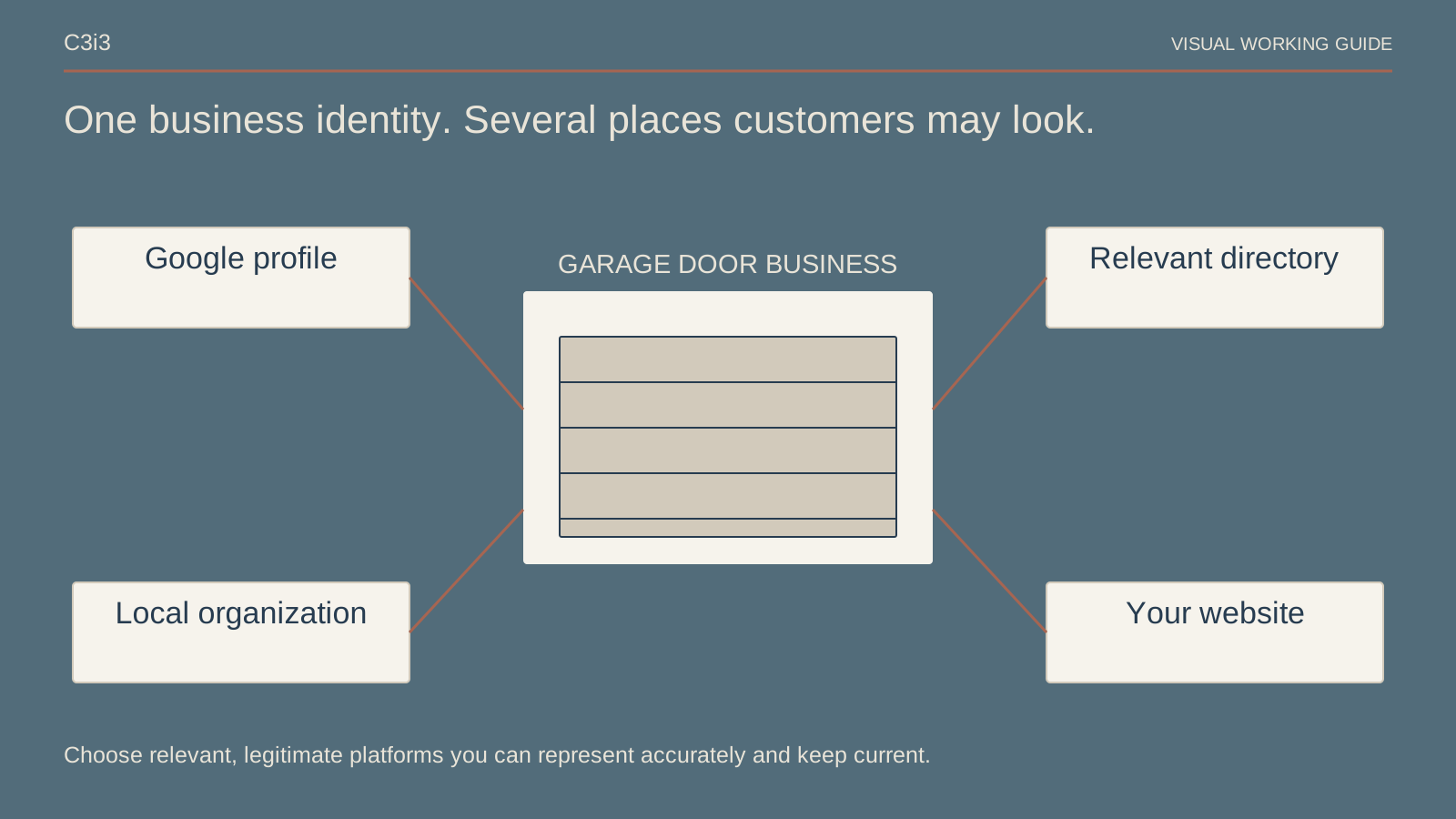
Begin with a smaller question: where does your business need accurate, usable information? A manageable group of relevant listings is easier to evaluate than a report that treats every directory mention as equally valuable.
Which listings should you inspect first?
Start with your website and the major platforms where a customer may look for your business. Check the business identity, phone number, website and coverage before deciding whether to add another listing. A wrong number on a prominent profile deserves attention before a new obscure directory entry.
Consider customer behavior and local relevance. Ask the office where recent prospects found you, while recognizing that self-reported attribution is incomplete. Look at available referral data without assuming every direct visit or untagged call has no source.
Use a simple priority record: platform, observed problem, customer relevance, access owner and next action. This turns “we need citations” into a task list the business can review. It also makes it easier to challenge a vendor's promise of hundreds of submissions.
How should you evaluate a directory before joining?
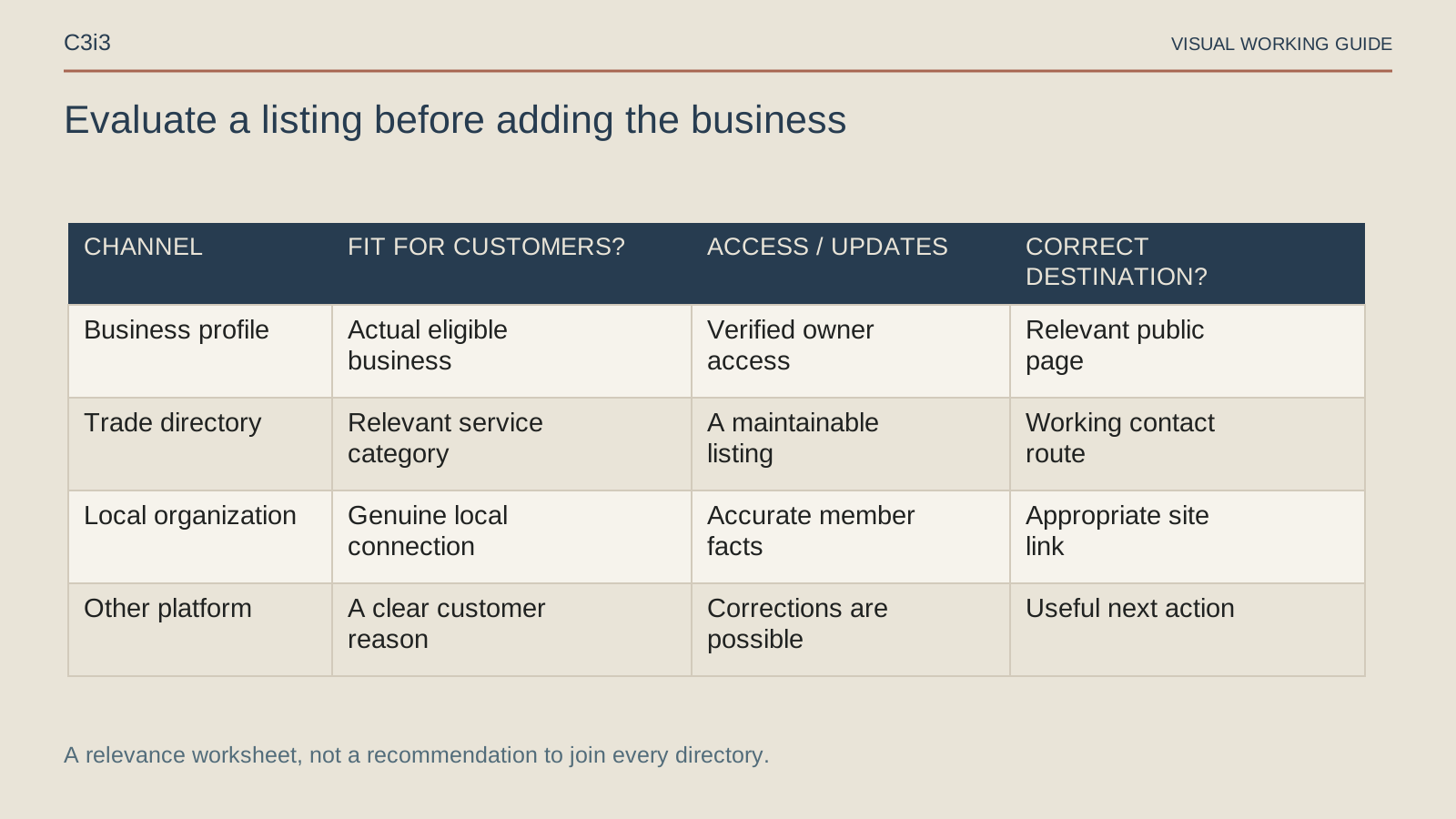
Inspect whether it has a genuine purpose for the audience, a clear business identity process and an understandable way to update information. Read any fee and renewal terms. Do not assume a listing is free because the initial invitation is free.
Consider whether the directory helps someone evaluate a garage door repair provider. Does it show the right service, current contact details and useful coverage? Avoid paying solely for a claimed ranking benefit that the seller cannot substantiate.
Do not create misleading descriptions to fit an unrelated category. A company that repairs residential garage doors should not imply it handles every industrial access system. Relevant inquiries begin with an accurate explanation of the work.
What information should remain consistent?
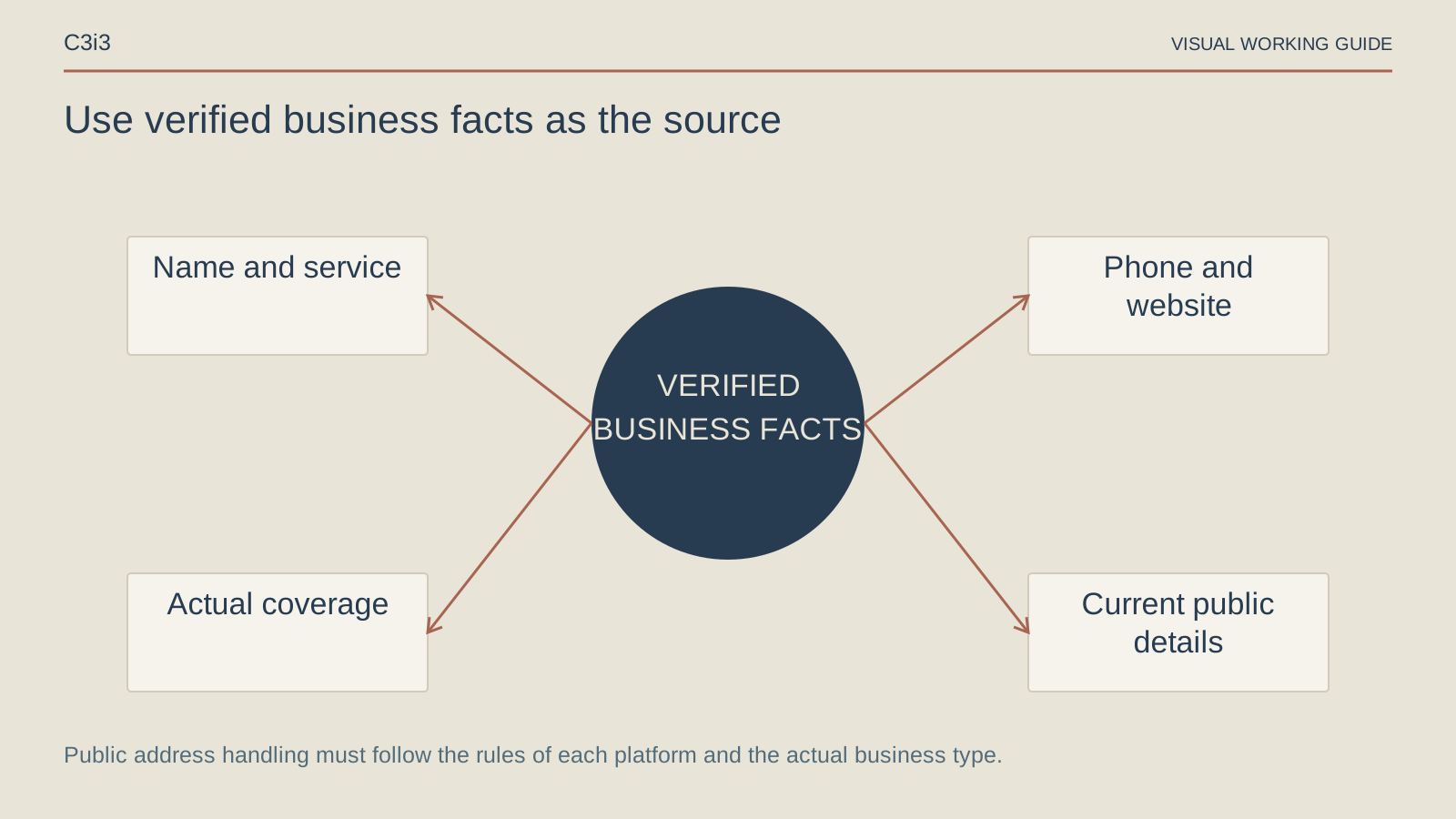
Maintain an approved record of the public business name, primary contact number, website destination and actual location model. Review service descriptions for accuracy as well. Consistency should preserve truth, not force a home-based business to publish a private address everywhere.
For a service-area profile, follow the platform's rules about addresses. Google's representation guidance and service-area instructions are useful starting points for its own listing system. Other platforms can have different requirements.
Keep old phone numbers and business-name variants in your correction ledger so you can recognize stale records. Do not rewrite the business name with keywords merely to make every listing longer. Customers need to know they are contacting the same company.
How do you avoid duplicate or incorrect records?
Search for an existing record before submitting a new one. Match the actual business, not just a similar company name. If another record is wrong, use the platform's correction or ownership process and document what you requested.
Do not mark a legitimate location closed merely to make a duplicate disappear, and do not claim a competitor's listing. If a merger, move or ownership change makes the history complicated, use the official process for that platform rather than improvising identity changes.
Our phone-number correction guide shows how to separate observed errors, requested changes and confirmed public results. The same recordkeeping works for a garage door company with stale information across several sites.
What should the linked website page explain?
Give a customer a clear route to garage door repair information. Explain the appointment process, actual service area and the types of work the company performs. Avoid giving do-it-yourself instructions for hazardous components as a way to attract visits.
If the listing says you offer urgent service, the website and office need to support that claim. State actual availability and describe how it is confirmed. A form submission should not imply that a technician has been dispatched.
Use relevant project evidence with permission and a short inquiry path. The listing helps someone find the business; the website helps them understand whether to contact it. Both should agree on the work and next step.
How do you judge whether listings are worth maintaining?
Review actual referral activity, appropriate inquiries and the cost of keeping information current. Where reporting is unavailable, label that limitation instead of inventing a return. A claimed listing without an update owner can become tomorrow's incorrect information.
Keep a renewal and access record for paid directories. Ask vendors which accounts belong to the business, what can be exported and what happens if the service ends. Avoid a maintenance arrangement nobody in the company can explain.
Connect this work to your broader profile setup plan. The objective is a reliable public footprint that supports suitable inquiries, not the largest possible spreadsheet of directory URLs.
Keep this checklist beside you
Questions before the next step
Does every directory help SEO?
No. A listing should have a credible audience or information purpose. A large submission count is not proof of rankings, traffic or qualified inquiries.
Should all platforms display my home address?
Use truthful information and follow each platform’s rules. Do not expose a private address simply to make every listing look identical.

How C3i3 Can Help
C3i3 can help your garage door company prioritize local business listing work around accurate identity and useful customer routes. We can review prominent profiles, organize a correction ledger and connect the information to relevant website pages.
Bring any directory proposal you are considering and the accounts your business already controls. We can help distinguish worthwhile corrections from activity that only increases a submission count. Supporting service-page content and a reliable response path remain part of the same practical acquisition plan.