



































In this article
The plumbing repair is complete, the customer thanks your technician and the office wants to ask for feedback. Someone suggests “Please give us five stars,” while another proposes sending the public review link only to people who pass a satisfaction survey.
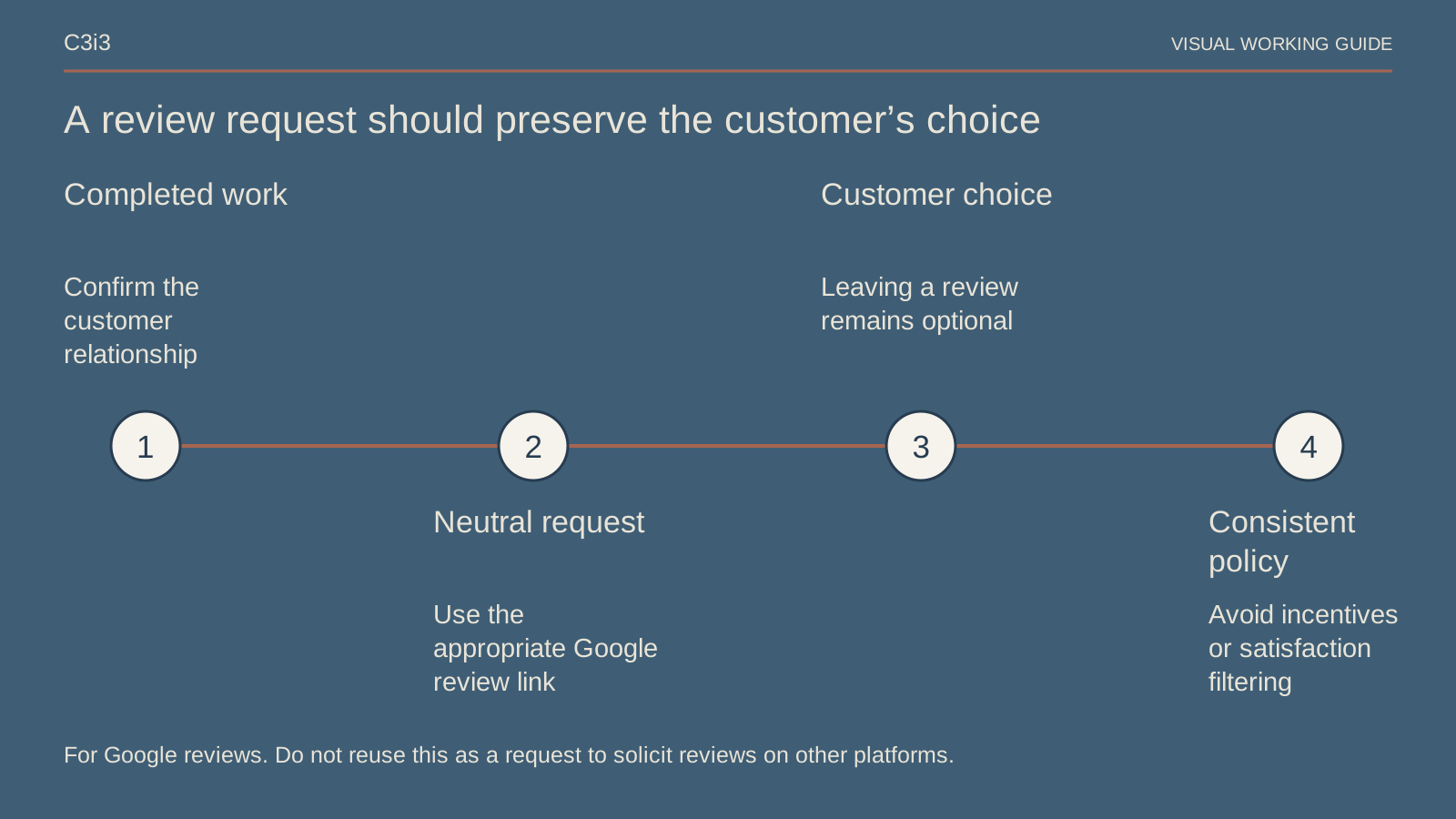
A better process is simpler and fairer. Make feedback optional, ask neutrally and keep the customer's choice separate from any discount or service response. The request should sound like a professional invitation, not a condition of receiving help.
Where should you get the Google review link?
Use the authorized Business Profile process to obtain the link or QR code for the correct business. Google's review guidance explains this option. Do not copy a link from a similarly named company or rely on an unverified shortcut someone created years ago.
Test the destination before adding it to a template. Confirm the business identity and explain to staff which link is approved. If the profile changes, review the saved materials as part of normal maintenance.
Do not ask customers for their account credentials or offer to write the review for them. They decide whether to participate and what to say. A functioning link should make that choice easier, not turn it into an office-controlled submission.
What does a neutral request sound like?
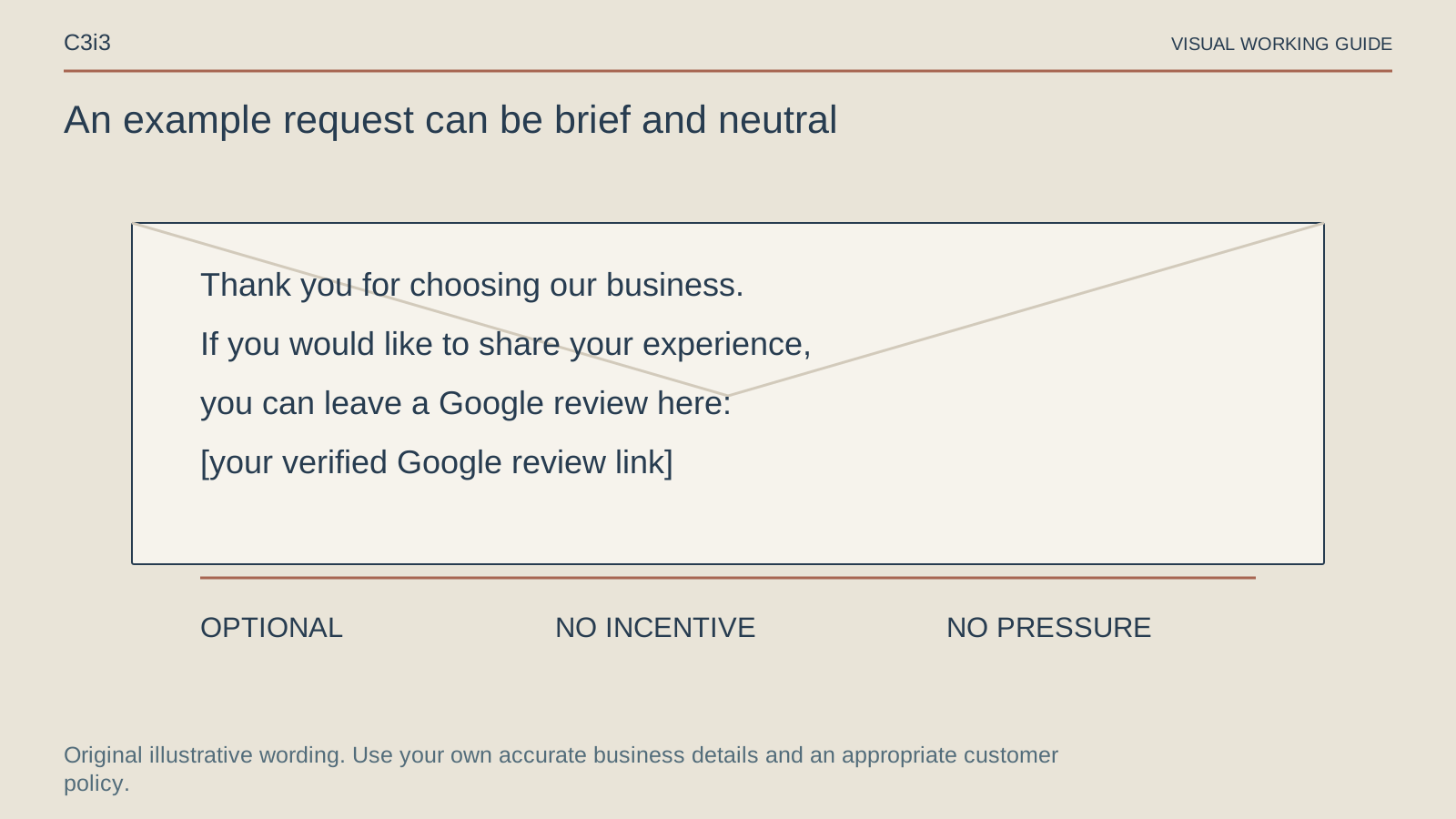
A straightforward example is: “Thank you for choosing us for your plumbing repair. If you would like to share your experience, you can leave an honest Google review here. Your feedback is optional and appreciated.” Replace the placeholder with the verified business link.
Keep the message specific enough to feel relevant without exposing unnecessary project details. Avoid instructions to mention a city, service keyword or technician name for ranking purposes. Do not ask for a particular star rating.
Use a contact channel appropriate to the existing customer relationship and your communication permissions. This article provides wording and workflow guidance; it does not send any requests. Staff should know who owns the template and how customer communication preferences are respected.
Why should you avoid incentives and review gating?
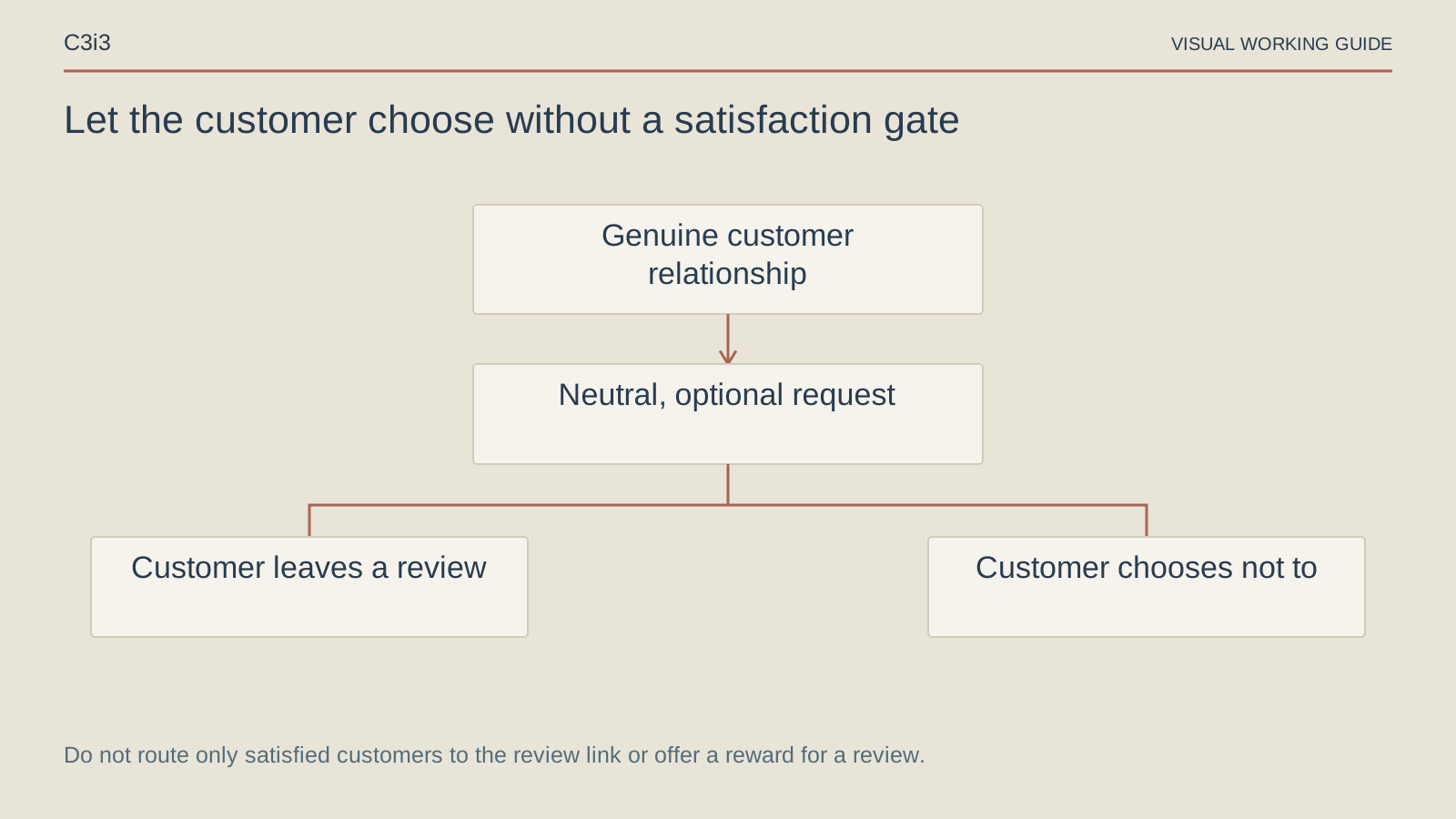
Google's contribution policy prohibits manipulative review practices. Do not exchange discounts, gifts or other benefits for posting, changing or removing a review. Do not route only satisfied customers toward a public review request.
Keep any private service-feedback process separate from selective public solicitation. If you use a survey, it should not become a gate that decides which customers may receive the Google link. Ask for genuine experiences without directing their content.
This also makes the office process easier to explain. The technician completes the work, the customer can request support, and an optional feedback invitation follows the approved policy. Nobody needs to judge whether a customer's likely rating is valuable enough to publish.
When should the office send the invitation?
Choose an operational point that reflects a completed customer interaction and your communication process. Do not demand a review while a customer is still waiting for a problem to be resolved. Keep the request low pressure and avoid repeated reminders that make an optional invitation feel compulsory.
Assign the task to a responsible role rather than relying on every technician to improvise. Use a maintained template and a basic record that a request was sent, if your process requires it. Do not store unnecessary personal commentary about the customer's likely reaction.
If the customer contacts you with a concern, handle the service issue on its own merits. Support should not depend on a review being removed, revised or withheld. That separation protects trust as well as the integrity of the feedback process.
How should you respond to a public review?
Thank the reviewer appropriately and address concerns professionally. Avoid publishing a customer's address, invoice details, access arrangements or other private job information in your reply. A public response does not need to reproduce the entire service record.
Where a concern needs investigation, offer an appropriate direct contact route. Do not argue about facts you have not checked. Staff responsible for responses should know when to involve the business owner rather than continuing a public exchange.
Do not reuse the same workflow on every platform. Yelp, for example, has a different policy on asking for reviews. Our Yelp profile guide explains why a Google-specific request template should not automatically become a universal review campaign.
What should you measure without gaming the process?
Review whether the link works, templates remain neutral and requests follow the approved workflow. Keep feedback patterns separate from claims of guaranteed ranking improvement. A larger review count does not prove how many new plumbing jobs resulted.
Use recurring questions to improve service information and office communication, while preserving customer privacy. If people repeatedly misunderstand the appointment scope, the website may need a clearer explanation before the next inquiry.
Connect the work to the contractor profile plan. Helpful feedback, accurate public details and a reliable contact route support the business together. The purpose is an honest reputation and better customer understanding, not a manufactured score.
Keep this checklist beside you
Questions before the next step
Can I ask a customer to mention “drain cleaning” in the review?
Let customers describe their own genuine experience. Do not prescribe keywords or a particular rating as part of a ranking strategy.
Can I send the same request for Yelp?
No. Platform policies differ. Yelp says businesses should not ask for reviews, so keep its workflow separate from Google’s.

How C3i3 Can Help
C3i3 can help your plumbing business develop a clearer profile and reputation workflow, including accurate links, useful website information and responsible post-job communication. We can review templates and handoffs alongside the customer journey.
Bring your existing request wording and the process your office follows after a repair. We can identify confusing or inappropriate steps and connect customer questions to better service-page content. Reviews remain customers' own choices; our role is to support an honest, understandable system.