



































In this article
An SEO audit says your electrical website needs schema. A plugin offers dozens of fields, and someone suggests adding ratings, every nearby city and a storefront address so the checker turns green.
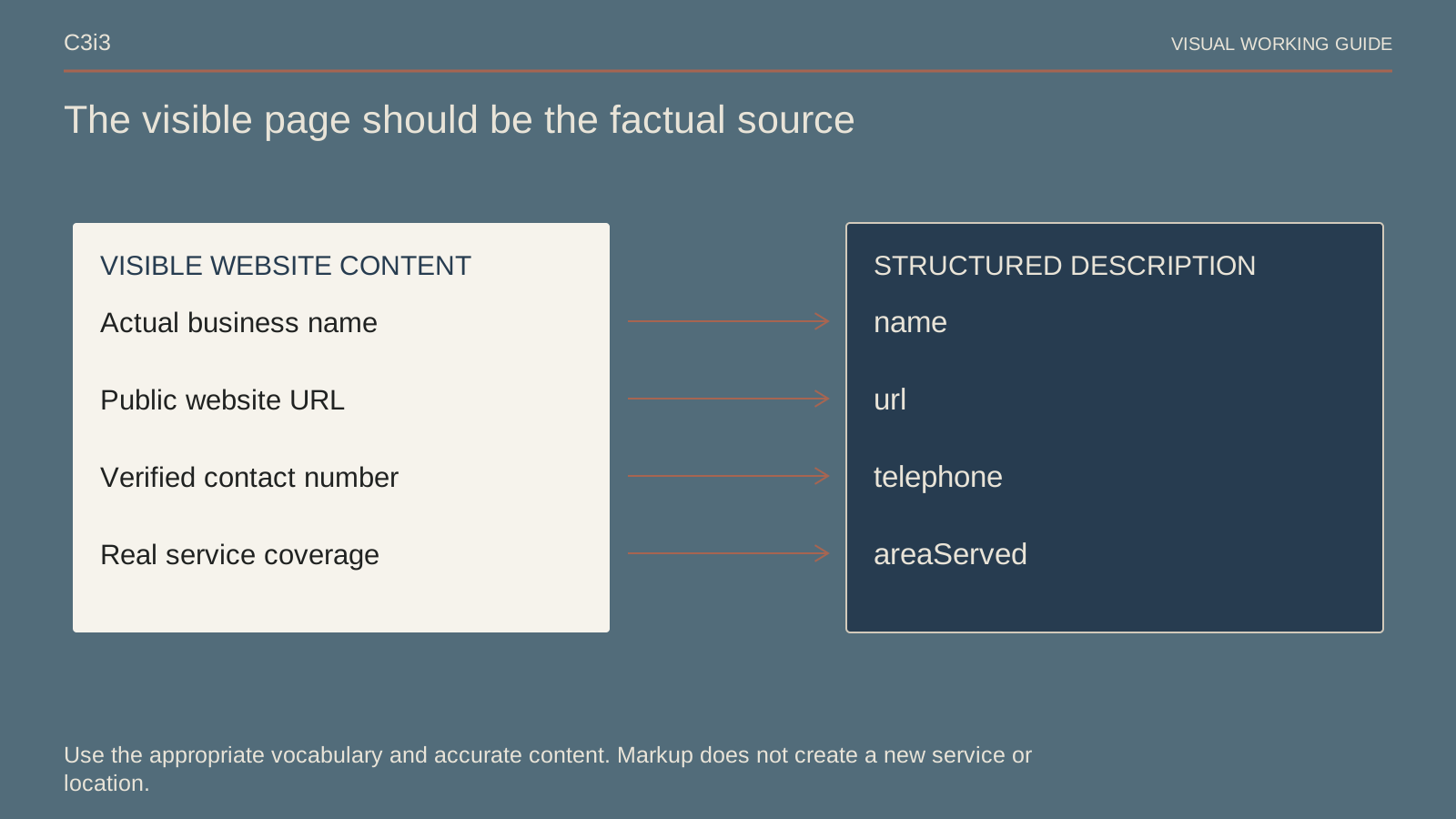
Stop before filling in facts that are not true. Structured data describes information; it should not manufacture a business identity or a level of service. For an EV charger installation page, begin with the visible offer and the company actually responsible for it.
What should the visible service page establish first?
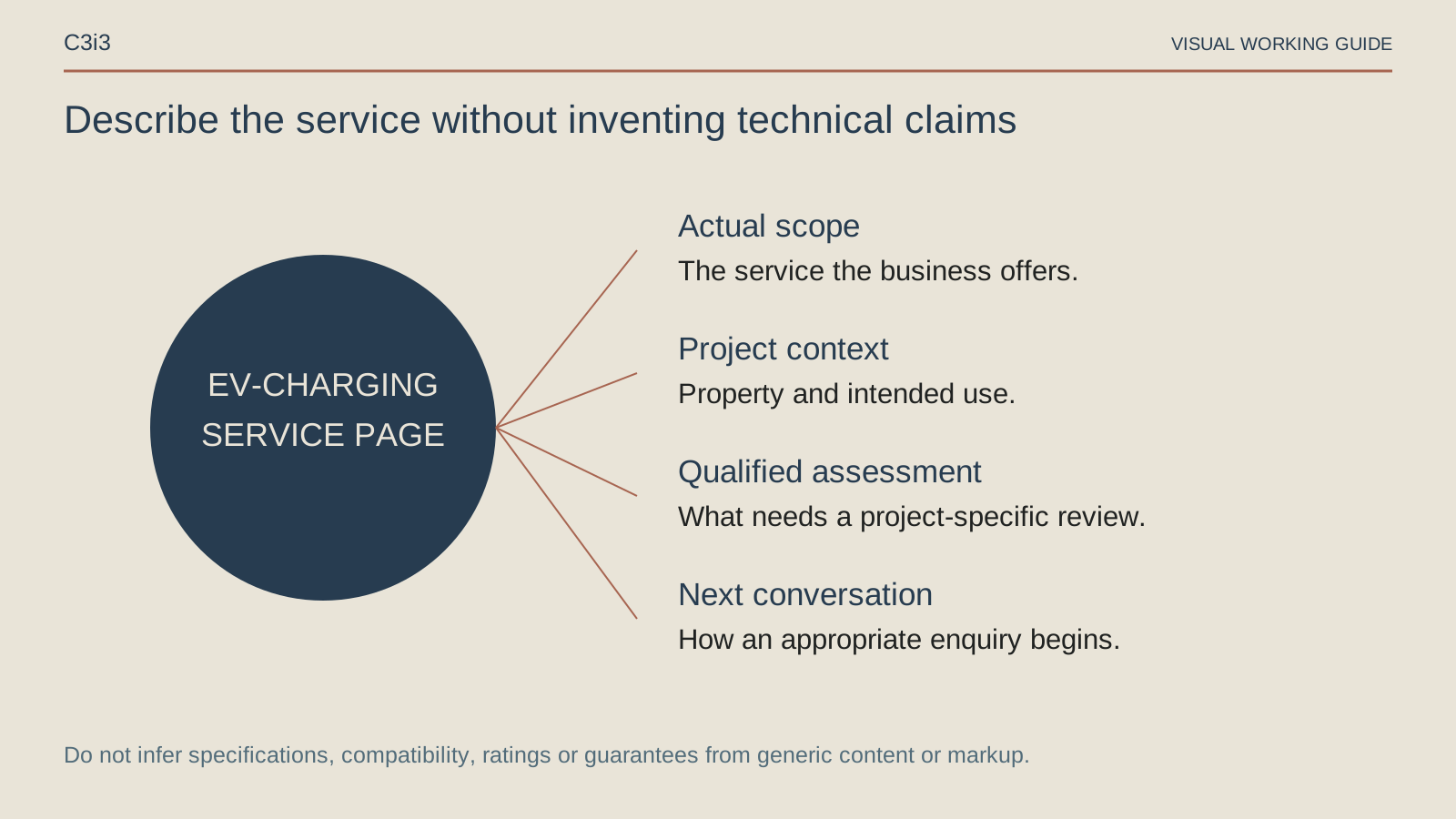
Explain that the company offers EV charger installation, where it considers projects and how professional assessment establishes scope. Make the business identity and contact route clear. Do not let a structured-data task distract from missing information a customer needs.
Avoid promises that every property supports the same equipment or that a particular upgrade is always required. The website describes the service and assessment process; qualified personnel make project-specific technical recommendations.
Use the electrical marketing guide for the broader customer journey. In this article, the focus is the EV installation page and the relationship between its visible facts and machine-readable description.
How are the business and the service different?
The business is the organization providing the work. The installation service is an offer delivered by that organization. Schema.org's Service vocabulary can describe a service and refer to its provider, rather than treating every service page as a separate physical business.
Use stable identifiers and accurate URLs when your developer implements the relationship. Avoid creating several contradictory versions of the company across plugins, templates and individual pages. A consistent implementation is easier to maintain than a pile of unrelated markup snippets.
An illustrative service description might identify the offer as “EV charger installation” and point to the real provider's business entity. The actual code should use verified business details and be reviewed in the context of the whole site.
Does a service-area electrician need to publish a home address?
Do not expose a private address or invent a customer-facing location merely to satisfy a tool. Google's LocalBusiness feature documentation has specific requirements, including an address. That eligibility question is different from the need to represent the business truthfully.
Discuss the appropriate implementation with the person responsible for the site. If a particular search feature requires information the business should not publish, do not fabricate it to obtain a green status. Use an accurate site description with honest limitations.
Keep the public website and Business Profile aligned with the real operation. An address used for private verification is not automatically information that belongs in public markup or on a customer-facing page.
What should you leave out of the markup?
Do not add invented customer reviews, aggregate ratings, prices, opening hours or locations. A plugin field is not evidence that the business has the information or qualifies for the associated search display. Verify both the facts and the relevant feature rules.
Keep availability and service coverage accurate. “Available everywhere, anytime” is not a harmless technical default when customers may rely on it. If an offered service changes, the visible page and machine-readable description need review together.
Follow Google's structured-data policies. Do not add special-sounding AEO markup on the assumption that it purchases a place in an AI answer. Useful, accessible content still needs to stand on its own.
How should a developer validate the implementation?
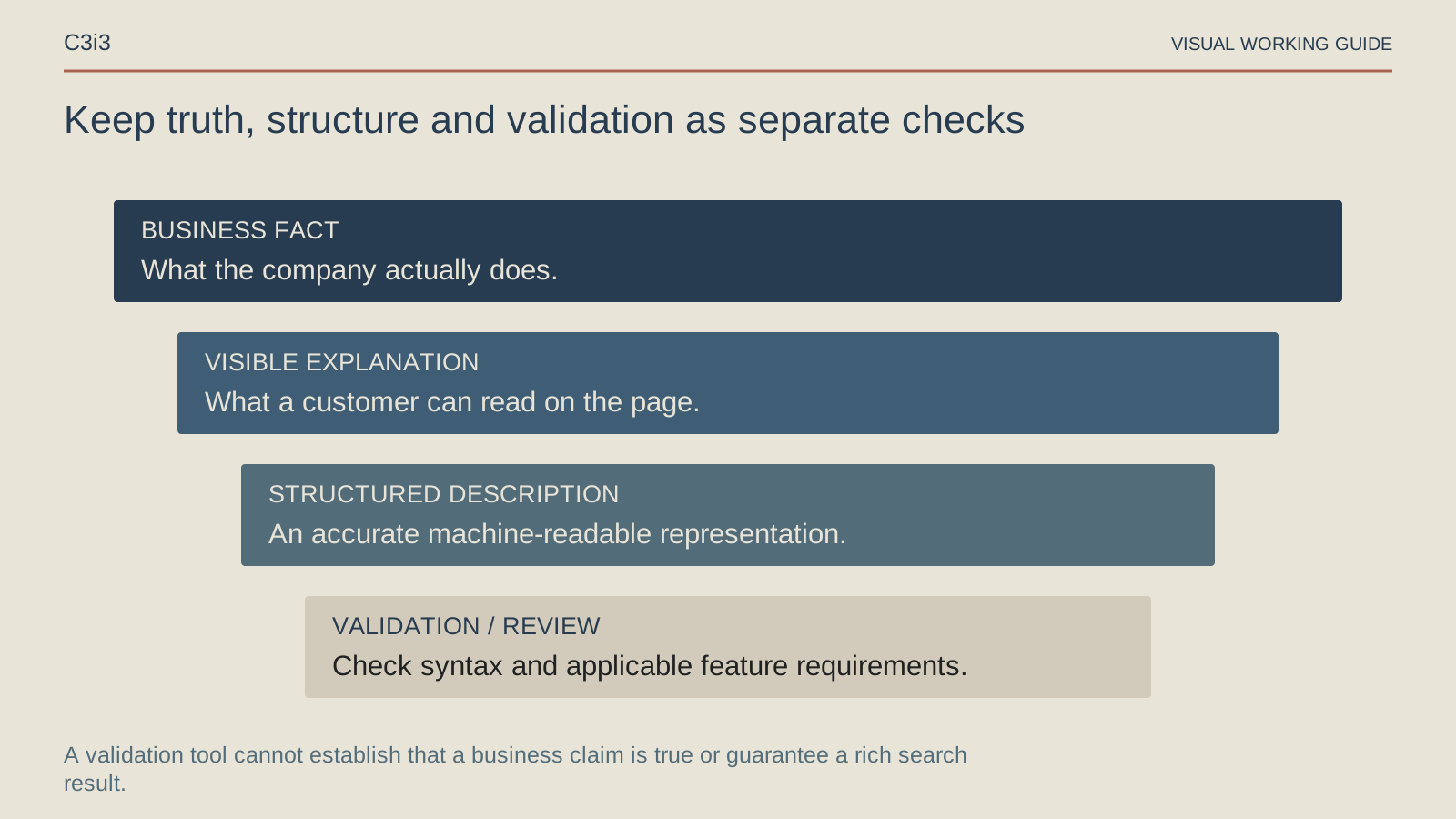
Review the rendered page and the generated structured data, including output from all relevant plugins. Check that entities, URLs and descriptions are consistent. A tool can identify syntax or feature issues, but a human still needs to verify the underlying business claims.
Use the test appropriate to the question. Schema vocabulary validation and Google's rich-result testing do not establish the same thing. A valid Service entity does not imply that Google offers a generic Service rich result for that page.
Record what was tested and what remains outside the review. Include representative service pages in maintenance checks so a template or plugin update does not silently reintroduce duplicate, stale or inaccurate details.
What should the owner expect after the change?
Expect a documented implementation and clearer information consistency, not a guaranteed ranking jump or AI recommendation. Actual search display remains outside the developer's control. Ask for the before-and-after facts and test results rather than a screenshot of an unexplained score.
Continue reviewing the EV service page's customer path. Can a visitor understand the work, coverage and next appointment? Does the office receive an appropriate inquiry? Those questions remain important even when the markup is technically sound.
Connect this task to the profile information plan. Accurate public identity, useful service content and maintainable technical descriptions support one business story. None should contradict the others.
Keep this checklist beside you
Questions before the next step
Will Service markup make Google recommend my EV installation company?
No. It can describe the service, but it does not guarantee a rich result, ranking or AI recommendation.
Can I add review ratings just because a plugin supports them?
Only use truthful information under the applicable policies and feature requirements. A field’s availability does not establish eligibility or permission.

How C3i3 Can Help
C3i3 can help review the connection between your electrical service content, business identity and technical local SEO. We can clarify the customer-facing page and scope structured-data work around information the business can substantiate.
Bring the page, the audit finding and the tools or plugins involved. We can help separate missing content, implementation issues and search-feature eligibility, then define appropriate checks. Our AI search work builds on accurate, useful information rather than special-markup guarantees.