



































In this article
A Korean supplier has a power, cooling, electrical or infrastructure product that may fit a U.S. data-center project. Yet the website speaks in broad industry language, and a technical buyer cannot determine the product’s role, interfaces or documentation.
SEO and answer-focused content should make the evaluation easier. That means clear application explanations, approved technical evidence and a practical route to the responsible sales or engineering team. It does not mean treating every data-center product as interchangeable or making performance claims the company has not verified.
Why might U.S. data-center buyers struggle to evaluate your product?
They may understand the general product category but lack the information needed to assess your specific offer. A broad claim about supporting digital infrastructure does not identify the application, operating conditions or scope of supply.
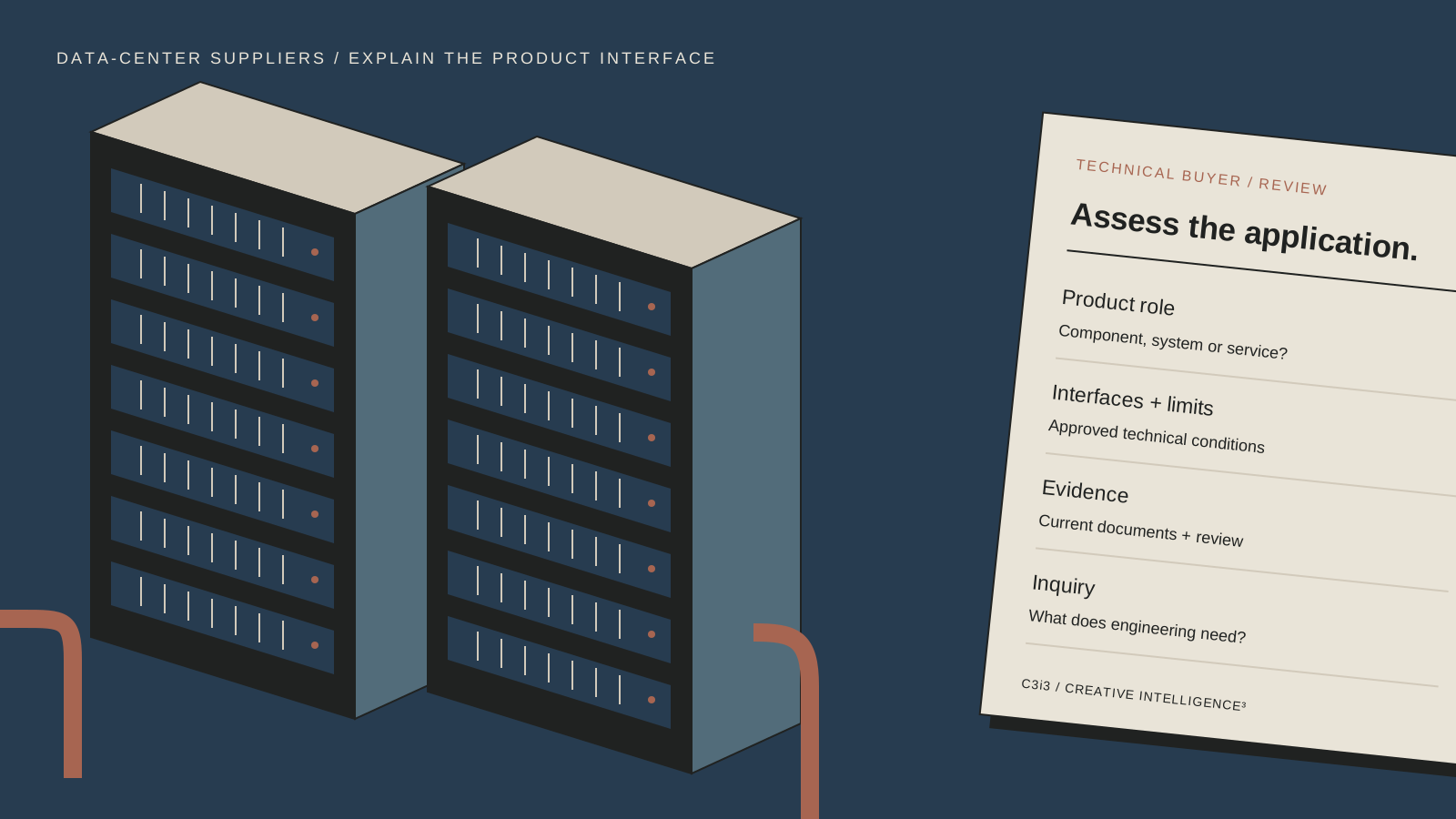
Different buying roles need different evidence. Engineers may need technical interfaces and limitations. Procurement may need documentation, availability confirmation and the information required for an RFQ. Project teams may need to understand who handles integration, commissioning or ongoing support where those activities apply.
The website should state your actual role. Supplying a component is different from supplying a complete system or providing an installation service. Describe the boundaries clearly and avoid implying responsibility for work performed by others.
Practical tip: Select one product family and ask the technical team to list the five questions most often raised before an application review. Use those as the first content brief, supported by approved sources.
The Korean SEO and AIO agency guide explains how to choose marketing support that respects this technical review process.
What should power, cooling and infrastructure application pages explain?
Explain the product’s purpose, the intended application, relevant interfaces and the conditions that require further review. The page should help a buyer identify the next technical question, not replace engineering assessment.
For an illustrative cooling component, the useful explanation may concern where it sits within a wider system and what data is needed to evaluate suitability. For an electrical product, relevant information may include approved ratings, connections or configuration options. Publish the specific details your company can verify rather than generic category claims.
Separate the product family overview from a deeper application guide when the buyer needs substantial context. Link to current documentation and identify the version where it matters. A reader should be able to distinguish the overview from the formal technical evidence.
Try this: Add a short “What we need to review your application” section. Have the technical team approve the inputs and explain which questions cannot be answered from the public page alone.
C3i3’s technical writing services can help organize the explanation while your engineering team retains factual approval.
How should you present certifications, performance and compatibility claims?
Use the exact approved scope and evidence. A claim may depend on a product model, configuration, test condition or document version. Do not broaden it to an entire catalog without verification.
Distinguish a design objective from a tested result and a test result from a third-party certification. If a buyer needs formal documentation, provide the approved route to it. A marketing page should not imply that a logo or phrase settles every project requirement.
Compatibility also needs context. Identify the interfaces or conditions your team has approved for public description and state where an application review is required. Avoid a universal “works with all systems” claim unless the business can substantiate that exact statement.
Google’s people-first content guidance offers an editorial reference for clear, supportable information. For document access, its indexable file-type guidance confirms that formats such as PDF can be discoverable; that does not verify the document’s technical claims.
Practical tip: Assign a source, reviewer and review date to important claims. When a product changes, use that record to update the page and associated application guides consistently.
Which questions should data-center supplier content answer directly?
Answer the questions that help a buyer judge fit and prepare the next discussion. A direct answer can begin with a concise explanation, followed by conditions, supporting evidence and a relevant link.
Useful questions may include what the product supplies, which applications it is intended for, what information is needed for evaluation and how documentation can be requested. Validate the wording with actual sales questions rather than assuming every buyer searches the same way.
For example, “What information do you need to assess our application?” can lead to a practical list approved by engineering. “Are you the best data-center supplier?” invites a broad claim that offers little help without evidence. Keep the answer focused on the product and decision.
Google says its established SEO practices apply to AI features without additional requirements or special AI markup. See Google’s AI-feature guidance. An AEO label should describe useful answer-focused work rather than a promise of a citation.
Use the SEO, AEO and AIO comparison to define that scope, and connect the answers to the product family, documents and inquiry route through ordinary internal links.
What should Korean suppliers clarify about U.S. sales and support?
Explain the actual commercial and support arrangements a buyer can rely on. State whether the inquiry goes to Korea, a U.S. team or an authorized partner, using information the business has approved for publication.
Do not imply U.S. inventory, an office, local service staff or a delivery commitment that has not been established. If availability and timing require confirmation, make that part of the inquiry process. The page should prepare a useful discussion rather than make an operational promise on its own.
Review the English terminology and documents with both technical and language reviewers. A natural phrase must still preserve the product’s actual meaning. If the site supports Korean and English versions, use a coherent language structure and contact journey. Google’s multilingual guidance provides a technical reference.
Practical tip: Test a complete English-language inquiry internally, clearly labeling the test. Confirm the message, notification and staff routing without sending confidential application details through an unapproved channel. The process should work before promotion expands.
How do you measure SEO and AEO for a data-center supplier?
Measure the stages that reflect your buying process. Relevant page discovery, document access, application questions, RFQs and qualified opportunities are different observations and should remain separate.
A technical download may show interest but does not establish a project opportunity. A qualified inquiry should meet the criteria your sales and engineering teams define, such as a relevant application and enough information to begin evaluation. Review those criteria before reporting a lead total.
For AI monitoring, document the prompt sample, platform, mode and date. Separate the brand mention, cited page and identifiable referral. A third-party tool’s sample is not the complete record of every buyer or platform, and it cannot establish the full cause of a sale.
Use buyer feedback to improve the content. Repeated questions about the same interface may indicate a weak application explanation. Requests for a document that already exists may indicate a navigation problem. Review the manufacturing SEO guide for a related product-family approach.
Practical tip: Begin with one priority product family and a defined review cycle. Expand the content model after the team has tested the evidence, terminology and inquiry handoff.
What else should Korean data-center suppliers explain to U.S. buyers?
Should we target broad data-center keywords first?
Choose questions that match the product and buyer. A broad industry term may attract many readers who are not evaluating your offer. Application-specific information can be more useful even when reported keyword volume is limited.
Can AEO replace technical documentation?
No. Concise answers can explain the topic and route a buyer to the right evidence. They should preserve the limits and scope of the approved technical material.
Should we publish a separate page for every application?
Create a page when it answers a distinct, supportable question. Avoid expanding into applications the company has not approved or cannot explain accurately.
How can C3i3 help Korean data-center suppliers reach U.S. buyers?
Bring a priority product family, the intended application and the documentation your team has approved. We can help organize the English explanation, supporting answers and route to a useful technical discussion.
Explore B2B content marketing, AEO support or contact C3i3 to discuss the scope.