



































In this article
A U.S. developer or general contractor reaches your website and sees impressive project images. Yet the company’s role remains unclear. Did it design the project, fabricate a component, manage construction or install a specific system? That uncertainty can stop a useful conversation before it begins.
For Korean construction-related businesses pursuing U.S. opportunities, search content should make the scope and evidence understandable. This applies differently to contractors, engineering firms, prefabrication companies, equipment suppliers and specialist service providers.
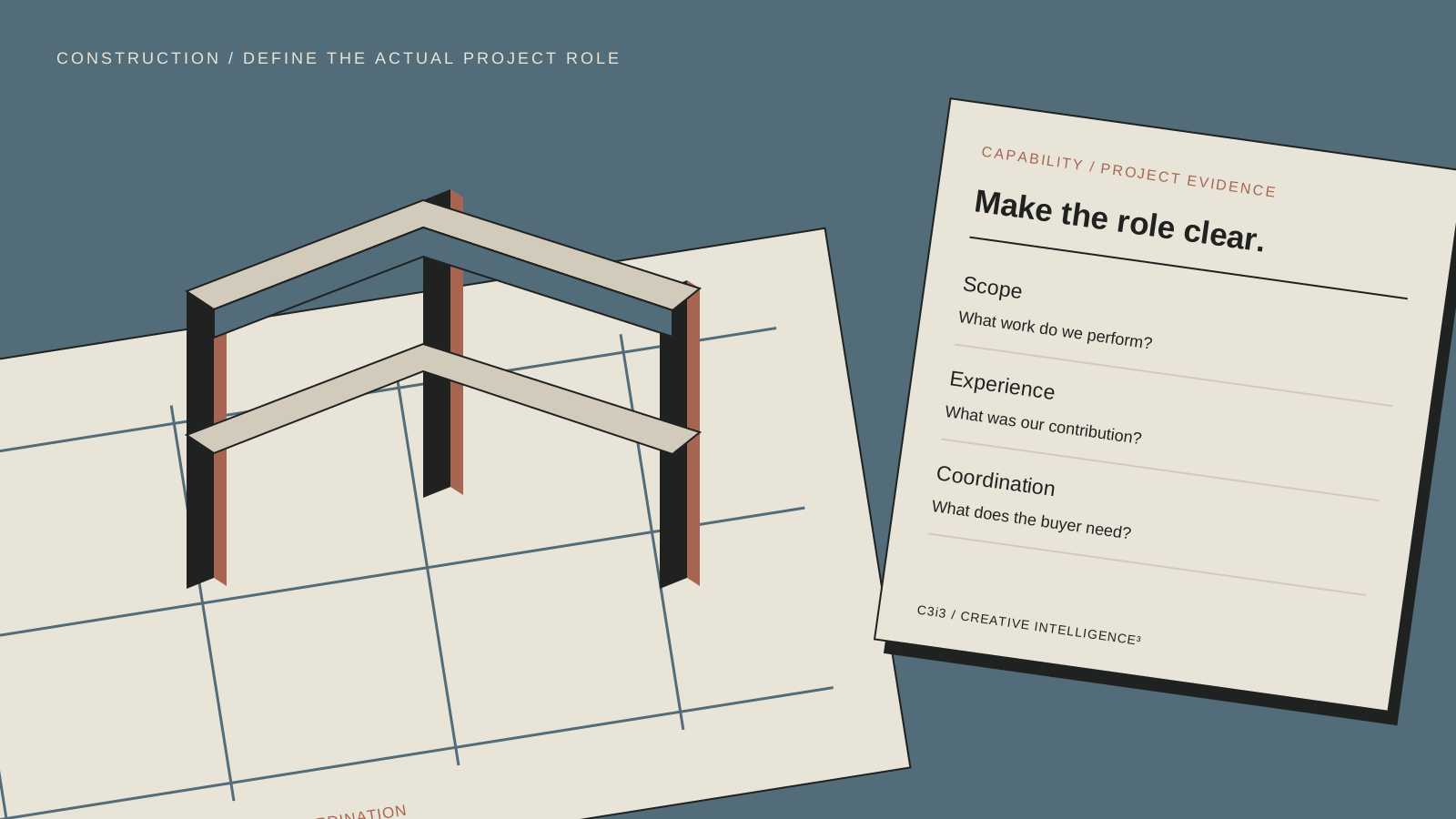
Why must a Korean construction company explain its exact project role?
Because a buyer evaluating a project partner needs to understand what the company is equipped and authorized to provide. A broad “construction solutions” statement can leave design, supply, fabrication, installation and management responsibilities ambiguous.
Start with the role your company actually performs. A prefabricated-component supplier should explain its product and coordination scope. An engineering firm should explain its services and deliverables. A contractor should describe its work without implying permissions or coverage that have not been verified for the relevant project.
Use public information approved by the business. Marketing copy should not determine whether a company meets a procurement or legal requirement. Those questions need review by the people responsible for the project and the actual requirement.
Practical tip: Put a one-sentence scope explanation near the top of the capability page. Then list the major inclusions, exclusions and the information required for an initial discussion. A reader should be able to route the inquiry to the right team.
The Korean SEO and AIO agency guide explains how to choose support for that wider U.S. market-entry brief.
Which questions do U.S. developers and general contractors need answered?
Organize the page around project fit and the next procurement conversation. The exact questions depend on your role, the project and the buyer’s process, so validate them with your commercial and technical teams.
Useful topics can include the type of work, relevant project experience, coordination requirements, deliverables, documentation and the information needed to assess a scope. Explain which capabilities are in-house and which depend on other organizations when that distinction matters to the offer.
For an illustrative fabrication supplier, a buyer may need to understand design inputs, production coordination and the interface with installation. For a specialist service, the questions may concern site requirements, staffing and the boundaries of the engagement. Do not use one generic checklist as proof that every project requirement is satisfied.
Try this: Review a recent prequalification or initial inquiry, remove confidential details and identify the questions that could be answered publicly. Build those answers into the capability page and link to supporting examples.
C3i3’s B2B writing services can help structure that explanation while your project team remains responsible for factual approval.
How should construction project pages present experience accurately?
State the project, context and your company’s actual contribution, using information you are authorized to publish. A project photograph can attract attention, but the explanation should establish what the image demonstrates about your work.
Include the relevant scope, constraints, responsibilities and evidence of the outcome. If another organization led the project or performed part of the work, make your role clear. Do not imply ownership of a whole project when you supplied one component or service.
Use approved client names, images and project details. If a client has not authorized public identification, a carefully described anonymized example may be appropriate, subject to the business’s review. Label illustrative scenarios separately from completed projects.
Avoid publishing unsupported safety, schedule or cost claims. A percentage improvement needs a clear baseline and method. A qualitative account should remain qualitative when that is what the evidence supports.
Google’s people-first content guidance offers a useful editorial reference: help a reader understand the source and substance of the information rather than relying on grand claims.
How should the website connect services, sectors and project evidence?
Give the main capability page a clear purpose, then connect it to relevant project and technical information. A buyer should be able to move from “what you do” to “where you have done relevant work” and “what we need to discuss.”
A sector page can be useful when it explains requirements or experience that differ meaningfully by sector. It should not simply repeat the service page with a different industry heading. A supporting guide can answer a substantial evaluation question, such as what information is needed for an initial fabrication discussion.
Use descriptive internal links. Google’s link guidance explains the value of ordinary crawlable links for connecting pages. The same structure helps a human buyer find the next piece of evidence.
Preserve useful existing URLs when expanding content. A new AI-search label does not require a second version of every capability page. Make the main page authoritative, then add supporting depth where a distinct question needs it.
Practical tip: Map the first three pages a developer or general contractor should visit. If they cannot identify your role and next step within that route, improve the structure before expanding the article library.
What should Korean-English construction content clarify for U.S. opportunities?
It should preserve technical meaning and accurately explain commercial and delivery arrangements. Terms used in Korean project documents may need context for an English-speaking procurement audience.
Agree on terminology with the staff responsible for design, construction or supply. Distinguish a general capability from a project-specific commitment. Do not imply a U.S. office, workforce, qualification or local authorization simply because the company is seeking U.S. business.
If the website has Korean and English versions, review the language structure and links. Google’s multilingual site guidance provides a technical reference. The English page, documents and contact form should form a coherent journey rather than sending a buyer unexpectedly to an untranslated next step.
For AI-assisted discovery, use direct answers supported by visible evidence. There is no universal certificate that makes a construction company “AI compliant.” Platform-specific guidance and ordinary editorial accuracy are more useful than that claim.
Practical tip: Have both a technical reviewer and an English-language reviewer inspect the first capability page. Their responsibilities differ, and both matter before the model is applied to more pages.
How can the website generate more useful project inquiries?
Explain the information needed to assess an initial fit, then provide a clear route to the team responsible. A first inquiry may include the project type, location, requested scope and timing, depending on your offer.
Keep detailed procurement, contract and confidential-document exchanges within the appropriate process. The public form should not ask every early visitor to upload sensitive project material. Explain how the next discussion will be arranged and what documents may be requested later.
Review request quality with the commercial team. Does the buyer understand your role? Is the scope relevant? Are the location and timing compatible with actual arrangements? Separate general messages, partnership inquiries and project opportunities in reporting.
Where analytics or referral data identifies a source, preserve that observation without overstating attribution. A developer may use several sources and consult several people before contacting a supplier or contractor. A single AI citation does not explain the full procurement journey.
Practical tip: Use recurring inquiry questions to improve the public capability page. If buyers repeatedly assume installation is included when it is not, clarify that boundary before increasing promotion.
What else should Korean construction companies clarify for U.S. buyers?
Should we publish U.S. licensing or qualification claims?
Publish only claims the responsible team has verified for their actual scope and context. Marketing content does not establish that a company meets a project’s legal or procurement requirements.
Can one project page target every construction sector?
It may demonstrate relevant experience, but sector-specific claims need their own evidence. Explain the actual project role and avoid implying experience the company does not have.
Where does AI search fit in this strategy?
It can support discovery and evaluation of clear public information. Read the SEO, AEO and AIO comparison and keep AI observations separate from qualified project opportunities.
How can C3i3 help Korean construction businesses explain their U.S. offer?
Bring your defined project role, priority sectors and the experience your team is authorized to publish. We can help organize the capability pages, project evidence and inquiry path around U.S. buyer questions.
Explore B2B content marketing, Korean business marketing support or contact C3i3 to discuss the scope.