



































In this article
Plan healthcare marketing around real services, patient access, referrals and careful information handling. A guide for growing Bay Area medical practices.
What should a medical practice decide before adding more marketing?
Start with the services the practice provides, the people those services are intended to help and the capacity to respond. A campaign that generates requests the practice cannot serve can create confusion and extra work. Marketing strategy should be connected to access and operational readiness rather than a general goal of maximizing leads.
Identify the question behind the growth plan. Is the practice introducing a service, clarifying its public information, strengthening referral relationships or improving the appointment-request journey? Each needs a different emphasis. Keep clinical decisions and treatment advice with the qualified professionals responsible for them.
The Bay Area growth-strategy guide provides the broader planning framework. This article is a nonclinical marketing guide. Its purpose is to organize communication and access questions, not determine medical suitability or certify a practice’s compliance.
How should services, capacity and the intended audience shape the plan?
Describe the actual service and the information a prospective patient or referring professional needs before contacting the practice. Use language that is clear enough for a general reader while preserving the meaning the clinician approves. Avoid presenting a service as appropriate for everyone who encounters the page.
| Area | Decision to confirm |
|---|---|
| Service information | What is offered and how should it be explained? |
| Access | What locations and contact methods are available? |
| Capacity | Can the practice respond to the demand it invites? |
| Referral path | What do referring professionals need to know? |
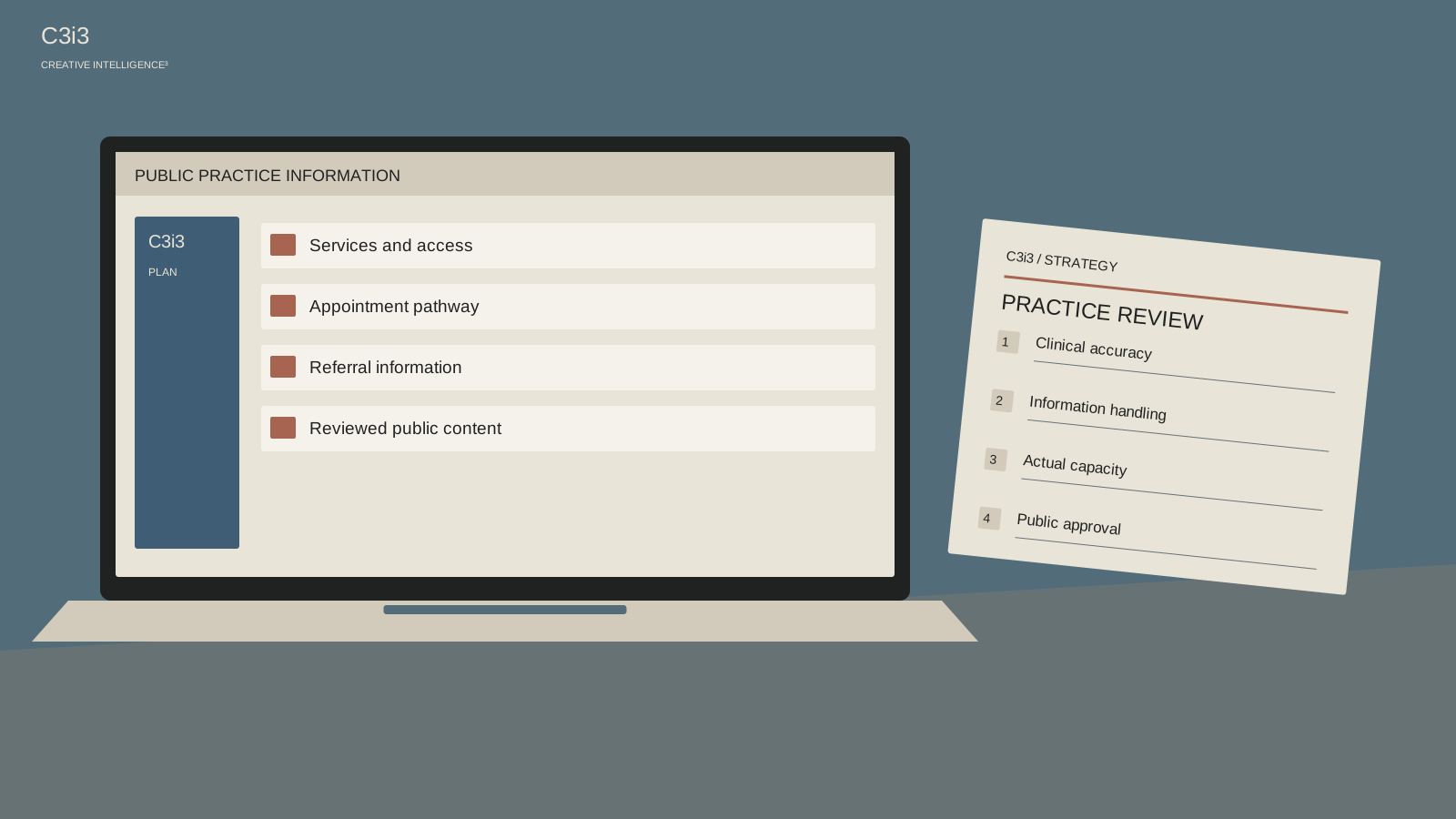
| Content review | Who confirms clinical accuracy and public claims? |
| Information handling | Which approved systems and reviewers are involved? |
This worksheet is a planning aid, not a medical or compliance assessment. Use it to identify who must participate before a campaign begins. A marketing team should not invent capacity, participation arrangements, credentials or clinical claims to make the offer appear more complete.
What local information helps Bay Area patients and referrers?
Make actual locations, contact options and access instructions easy to find. If the practice operates at more than one location, distinguish the services and arrangements accurately where they differ. Do not create the impression of a staffed office or service availability in a city where that is not true.
Explain the practical appointment pathway in language the practice can maintain. If a request is reviewed before scheduling, say so. If the public site provides general information while an approved patient system handles personal details, make that route understandable. Do not let a generic marketing form imply that it is the right place for every kind of health information.
Use local substance rather than repeated city copy. A Bay Area practice may need one clear regional service explanation and accurate location pages, not a near-identical article for San Francisco, San Jose and each East Bay city. The right structure follows real patient access and the information that changes between locations.
How should a practice develop public content and referral resources?
Collect the questions that the practice is authorized and prepared to answer publicly. A service overview, an explanation of the first appointment process and a concise referral resource can have different roles. Define the reader and purpose of each asset so the site does not repeat the same general paragraph in several places.
Have clinicians or other appropriate specialists review medical meaning and claims. A marketing editor can improve structure and readability, but should not make clinical judgments or turn a qualified explanation into a guarantee. Keep a record of the source and the approved version, especially when a statement could affect a reader’s interpretation of a service.
For complex educational material, use the approach in our technical writing guide: define the audience, preserve accurate terminology and assign expert review. Adapt the process to healthcare rather than copying a product-documentation template or relying on an AI-generated medical explanation.
What should you consider about patient information and marketing?
Keep public marketing sources separate from patient records and personal appointment information. The practice’s qualified privacy and compliance reviewers should determine how its actual workflows, vendors and data uses must be handled. Do not upload patient material into a marketing tool simply because it could help personalize a message.
HHS’s marketing guidance explains that uses and disclosures of protected health information for marketing generally require authorization, with defined exceptions. Its covered-entity and business-associate guidance helps identify the scope of the HIPAA rules. These resources require application to the actual organization and activity; they do not support a blanket claim that one website feature makes a practice compliant.
For the marketing plan, name the responsible reviewer and the approved information path. A clear boundary helps staff know which questions can be answered from public material and which must move to the practice’s appropriate patient or clinical process.
How should website forms and tracking be reviewed?
Map what each form requests, where the information goes and which systems or vendors can receive it. Review the actual behavior rather than relying only on a privacy-policy statement or the name of a software product. A marketing provider should work within the practice’s approved requirements and involve the appropriate specialists.
HHS’s online tracking guidance addresses regulated entities and protected health information, and includes a notice that a portion of the guidance was vacated by a court. Do not reduce this subject to a claim that every public-page visit is automatically PHI or that a standard banner resolves every issue. Obtain a current, fact-specific review of the proposed implementation.
Keep the marketing objective clear: help someone find accurate public information and reach the right next step. The website inquiry copy guide provides general communication principles, but a practice’s data collection and patient communications require healthcare-specific review before those patterns are implemented.
Where can AI help a medical practice’s public marketing work?
AI can assist with organizing approved public material, suggesting an outline or preparing a draft that a qualified reviewer checks. Choose a bounded task that does not require patient information or clinical judgment. For example, an editor might use an approved service brief to organize questions for a public page, then have the practice verify the result.
Do not generate patient testimonials, fabricate outcomes or present synthetic content as a real patient experience. A natural-sounding explanation can still be inaccurate or overstate a benefit. Keep the evidence and review responsibilities visible, and do not assume that an AI tool’s general capability makes it appropriate for a particular healthcare workflow.
The AI consulting for small business guide offers a goal-first pilot method. Apply that planning discipline within the practice’s actual professional and information-handling requirements. The first question is whether the task is suitable, not how quickly the system can generate more pages.
How should the practice evaluate a healthcare marketing strategy?
Review whether public information is accurate, prospective patients can understand the contact path and referral partners have the resources they need. Consider whether the practice can manage the requests the campaign invites. Use approved, appropriate measurement rather than collecting more personal information simply because a marketing platform makes it possible.
Ask the team which questions remain confusing and where people reach the wrong process. Those observations may point to a clearer page, better access instructions or a revised referral resource. Avoid attributing changes in appointments or business results solely to one article or campaign without the supporting basis.
C3i3’s marketing strategy, audience research and content planning services can help organize the nonclinical communication work. Keep clinical accuracy, privacy review and operational readiness with the appropriate practice owners, then maintain the public material as services and access arrangements change.
What should you check before the next step?
More questions about healthcare marketing strategy.
Should a practice publish an article for every nearby city?
Only when the page offers distinct, accurate information that helps the reader. Real locations, service differences and access arrangements can justify separate pages. Repeating a general service description with new city names does not establish local medical expertise.
Can AI write patient-facing service information?
It may assist with a draft based on approved public sources, but the practice should have qualified reviewers confirm medical meaning, claims and suitability. Do not use an unreviewed generated explanation as medical advice or a substitute for clinician approval.
Does a healthcare marketing strategy include a HIPAA compliance certification?
No. Marketing planning and a qualified review of legal, privacy and technical requirements are different responsibilities. Define the scope and involve the appropriate reviewers for the actual practice and implementation.
What decision does your business need to make next?
Bring us the audience, the business question and the material you already have. We can help define a useful scope and connect the content to the right next action.