



































In this article
Use AI to organize approved construction project experience into useful marketing and business-development content. An East Bay contractor’s planning guide.
Where can AI help a construction company’s business development?
Construction businesses often hold useful experience across project files, interviews, photographs and staff knowledge. The communication problem is turning that material into an accurate account for the next appropriate buyer. AI can assist with organization and drafting when the inputs are authorized and the team can verify the result.
Choose one business-development task: preparing a project-profile brief, organizing qualification evidence for a sector or drafting a follow-up from approved notes. Do not begin by asking a system to create a complete history of the company from a few filenames. A plausible account is not the same as a documented project record.
Start with the AI consulting planning framework. This guide focuses on marketing and business-development information. It does not recommend using a marketing assistant to make technical construction decisions or to supply facts that should come from the project team.
What approved project information should you collect first?
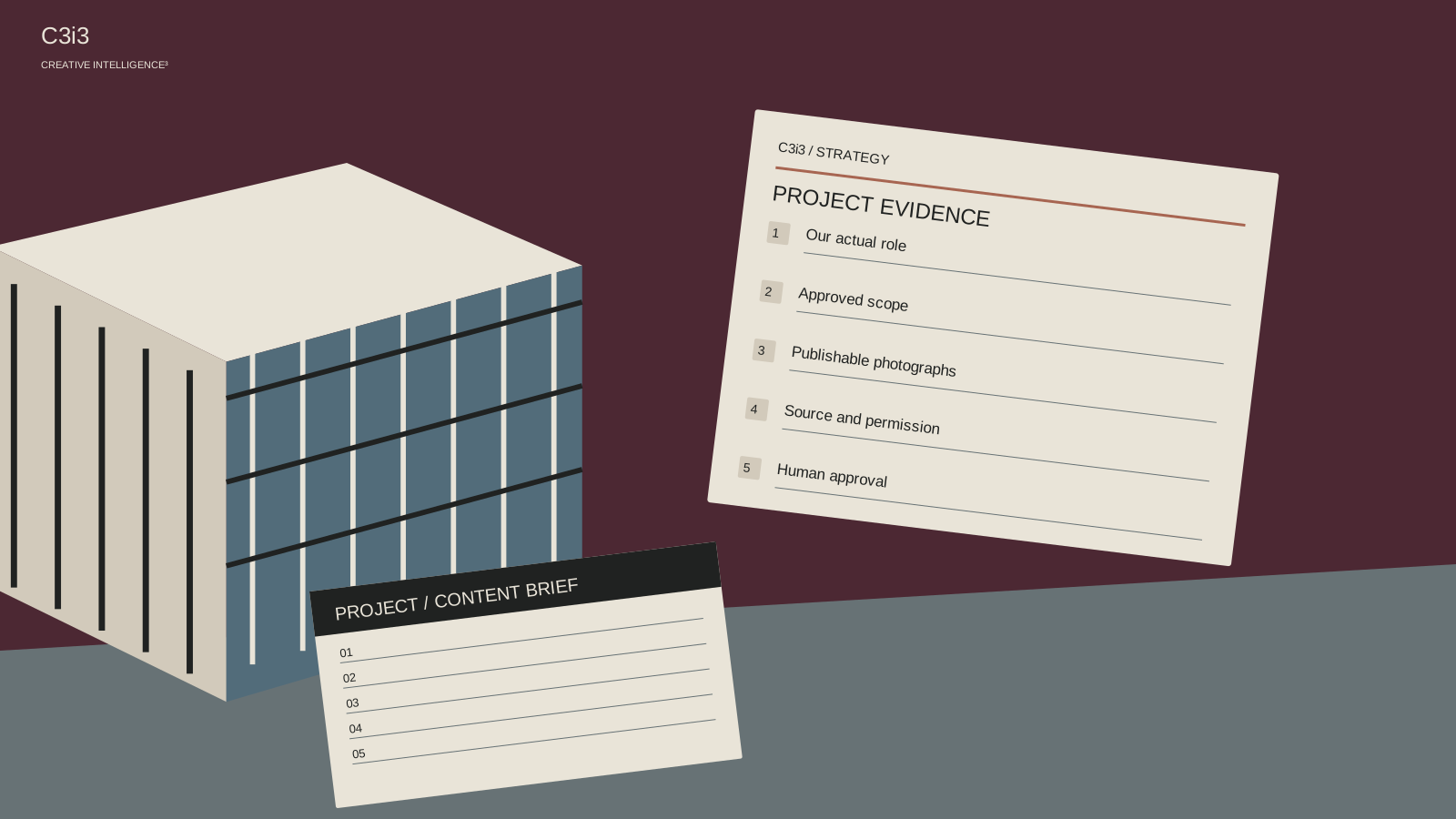
Create a simple project evidence sheet. Identify the project type, the company’s actual role, the work performed, the sources and what may be published. Separate internal records from approved public material. A photograph or document available to a team member is not automatically cleared for marketing use.
| Field | Record before AI drafting |
|---|---|
| Project context | Approved project type and general setting |
| Actual role | What the company performed or supplied |
| Relevant work | Specific activities supported by records |
| Evidence source | Document or person who can verify the statement |
| Publication permission | What names, images and details may be used |
| Reviewer | Who approves the resulting public description |
Resolve gaps before generating a polished narrative. If a company contributed one part of a larger project, preserve that role rather than implying responsibility for the whole development. When a result cannot be supported, describe the completed work accurately instead of inventing an outcome to make the profile more persuasive.
How do you turn project evidence into a useful content brief?
Ask what a prospective buyer needs to learn from the project. An owner may need to understand the type of work the contractor can undertake; a general contractor may need a clearer account of relevant scope and coordination. The same evidence can support different explanations, but it should not become a different set of facts.
An AI-assisted brief can organize the audience, buyer question, approved project details, missing evidence and a proposed structure. Keep source references beside the suggested claims so a reviewer can check them. The assistant’s useful contribution is making the material easier to assess, not inventing a dramatic challenge or a glowing customer quotation.
Use the brief to choose the right asset: a website project profile, a qualification sheet, an expert article or a sales follow-up. Our B2B case-study guide explains how to describe value when client names or results cannot be published. That distinction is particularly useful when confidentiality limits what the marketing team can share.
How should an East Bay contractor distinguish its target buyers?
Do not treat homeowner requests, commercial owner relationships and public-sector opportunities as the same market. They can involve different evidence, contacts and next steps. Define which project types the company wants before using AI to develop content for them. A large amount of generic construction copy will not resolve an unclear project-fit decision.
For an illustrative East Bay specialty contractor, the team might choose a particular commercial application and organize authorized experience relevant to that work. The resulting content should explain scope, coordination and the questions a buyer should ask. It should not imply that the contractor serves every project type throughout Alameda and Contra Costa counties.
The companion East Bay construction marketing strategy guide covers market and channel priorities. This article supplies the AI-assisted evidence workflow that can support that plan. Keep those roles separate so the two resources add detail rather than repeat the same advice.
Can AI help with qualifications and government-facing material?
AI can help organize a draft from verified business information, but the company must confirm every qualification and claim. A current license, certification or identifier should be checked against the appropriate record before it appears in public material. Do not ask the model to infer eligibility from the company’s location or size.
When Alameda County opportunities are relevant, use the County’s official bidding resource and the instructions for the actual opportunity. Those materials address a particular jurisdiction. Do not copy a requirement from one agency into every government-facing document or assume that a marketing sheet replaces vendor registration.
Our AI-assisted capability-statement guide explains a reviewed writing process. Keep the capability statement, project evidence and any formal response to a solicitation distinct. A concise marketing document can introduce the business without establishing that it meets every condition of a bid.
What should a construction team check in an AI-generated draft?
Review the actual role, sequence of work, terminology and implied results. A sentence can sound professional while changing subcontracted work into a prime-contractor claim or turning routine coordination into an invented achievement. Ask the project lead to check the meaning, not just the spelling of names.
Inspect visual material separately. Generated or reconstructed project scenes should not be presented as photographs of completed company work. If an illustration helps explain a concept, identify it as illustrative. Keep authorized project photography connected to the permission and context that support its use.
Use a claim ledger for the draft: statement, source, reviewer and publication decision. Mark unsupported material for removal or further verification. The workflow should make uncertainty visible. It should not pressure a reviewer to approve a polished paragraph simply because the design or campaign schedule is already complete.
How should larger construction and engineering teams organize approvals?
An established contractor or engineering organization may need project leadership, business development and technical specialists to review different parts of an asset. Name who confirms the work performed, who approves publication and who maintains the company description. A firm involved in a project should not be described as responsible for every discipline or outcome.
Keep sector and project distinctions clear across offices and teams. A commercial project profile, a technical capability page and a recruiting story can reuse authorized material while answering different questions. Maintain a shared source record so changing the format does not gradually change the claim.
This approach supports larger project-led organizations as well as smaller local firms. It does not assume that every engineering business is a construction contractor or that every contractor follows the same buyer journey. Use the organization’s actual scope and approval structure to define the marketing work.
What could a small contractor pilot look like?
Choose one approved project and one target buyer group. Build the evidence sheet, develop a content brief and produce a reviewed draft of one asset. Compare that process with the team’s existing method, including the time required to collect sources and correct errors. Generation time alone does not describe the work needed to publish.
Include a second example with incomplete or restricted information. Check whether the workflow identifies the gap and avoids filling it with an invented story. A useful pilot should demonstrate how the team handles missing permission as well as how it handles an ideal public project.
Record the final approved asset and the source pack used to create it. Decide who updates the material if the project description, permission or company scope changes. A repeatable source-and-review process is more useful than a folder of drafts that nobody knows how to verify.
How should AI content connect to the contractor’s website and sales process?
Place the finished asset where it answers a real buyer question. A project profile should connect to the relevant service or sector page. A qualification sheet should support an appropriate introduction. A follow-up should point to information relevant to the conversation, not a broad collection of unrelated links.
Test the inquiry handoff and keep the language consistent. If the marketing content describes a focused scope, the form and response should help establish whether the request fits that scope. Use the site to clarify actual coverage and capabilities instead of implying a local office or completed project in every city named.
C3i3’s content strategy and AI marketing consulting services can help plan the information workflow. Keep the growth strategy, source evidence and human review connected so AI supports a credible account of the business’s real work.
What should you check before the next step?
More questions about ai for construction companies.
Can AI turn confidential project documents into public marketing copy?
Only through a process authorized by the information owner and suitable for the tools involved. Removing names alone may not resolve confidentiality or identification concerns. Begin with material cleared for the intended use and obtain the relevant publication approval.
Should we use AI-generated project photographs?
They can be used as clearly identified illustrations where appropriate, but should not be represented as evidence of actual completed work. Use authorized real project material when the buyer needs proof of the company’s experience.
Does AI replace a construction business-development manager?
It can support bounded tasks such as organizing source material or preparing drafts. Buyer relationships, project-fit decisions and factual approval still need accountable people who understand the work and the company’s commitments.
What decision does your business need to make next?
Bring us the audience, the business question and the material you already have. We can help define a useful scope and connect the content to the right next action.