








































In this article
Finding the best SEO company for your Bay Area business starts with a practical question: which team can understand your customers, improve the right pages and explain the work in terms you can evaluate? A polished proposal is useful only when it leads to clear responsibilities and useful changes.
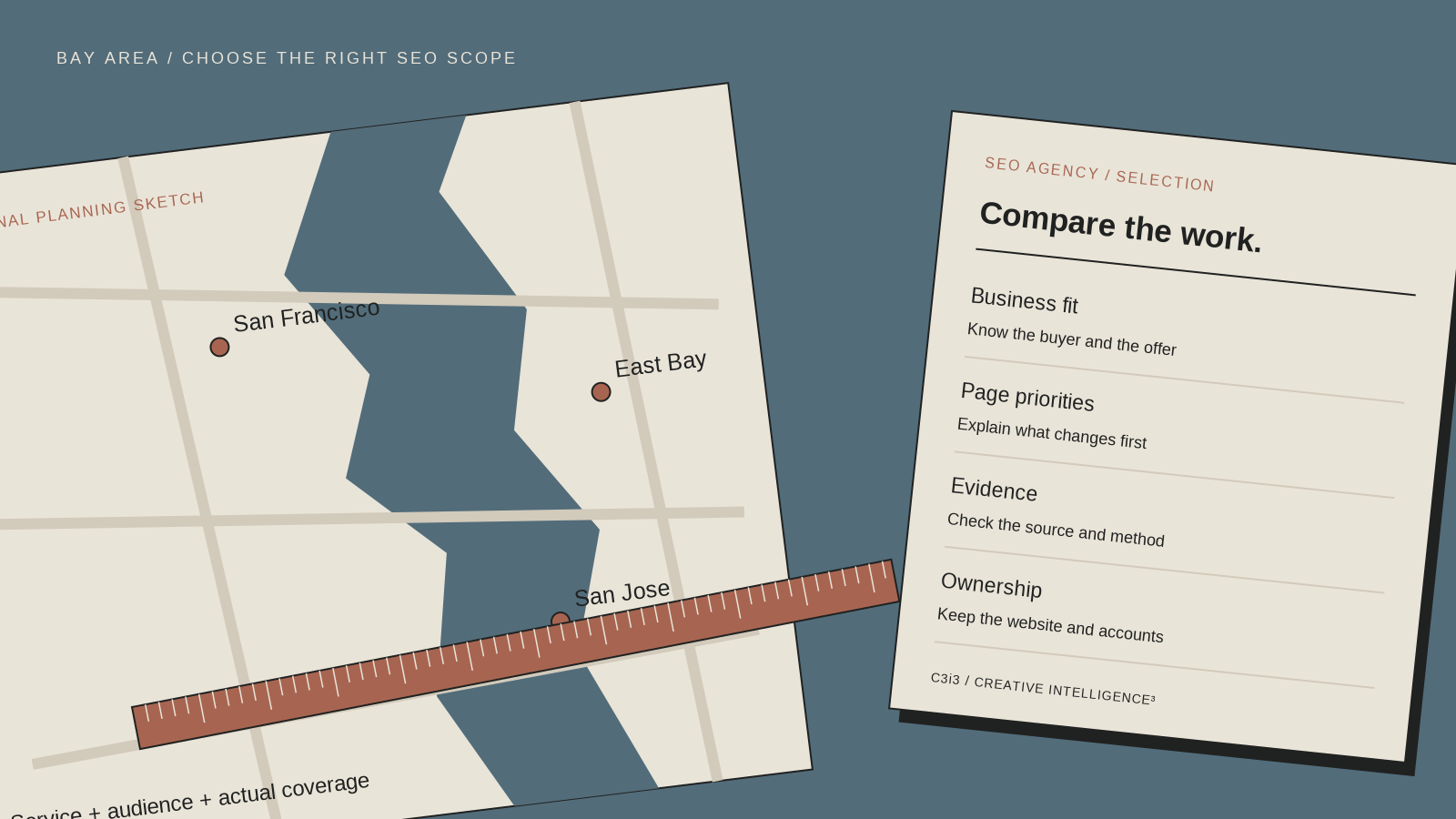
A San Francisco service firm, a San Jose B2B company and an East Bay contractor may all need SEO. Their audiences, buying questions and sales processes can require very different scopes. Use those differences to compare agencies before you compare a list of keywords or a monthly fee.
How can an SEO company help your business generate qualified leads?
SEO can help suitable customers discover relevant information and reach a page that supports their decision. The useful goal is a better path from the question a buyer asks to the service your business can provide.
That path has several parts. Search engines must be able to discover and understand the page. The page must address the right intent. Visitors need enough information to assess fit, and the next step must work. An agency should explain which part currently limits the result and what it will improve first.
How do you choose an SEO agency for San Francisco, San Jose or the East Bay?
Choose a team that understands how location affects your offer and buying process. A local address can make collaboration easier, but the provider still needs to demonstrate business and audience understanding.
What should an SEO company check before recommending more content?
It should review the condition of the website and the performance information available. Ask for an explanation of important access, indexing, navigation and usability issues, tied to the URLs they affect.
What should a useful SEO content plan include?
A useful plan connects service pages, buyer questions, supporting evidence and internal links. It should explain which existing pages deserve improvement before proposing a large number of new articles.
Ask how the team researches questions. Customer inquiries, staff knowledge and available search data can each contribute. The agency should distinguish measured keyword estimates from editorial ideas and specialized questions that may not have meaningful volume data.
What should an SEO company include in its proposal?
The proposal should state the starting point, priorities, deliverables, responsibilities, review process and fees. You should be able to identify what will change during the first phase and what your team must supply.
Look for specific pages or a clear method for selecting them. A broad phrase such as “monthly optimization” needs a definition. Does it include research, writing, development, internal links, metadata, artwork, reporting and revisions? Which tasks are recommendations for your team rather than implementation by the agency?
How should you compare SEO agency fees and budgets?
Compare the defined work and the total responsibilities, then decide whether the fee fits your business. A monthly price without a scope cannot tell you how much useful work is included.
Separate initial discovery, technical corrections and recurring content or reporting. Ask whether development is included, whether you must purchase software separately and what happens when the website needs work outside the agreed scope. Identify any media spend separately from the SEO fee.
How do you measure SEO results and qualified inquiries?
Review search visibility, website behavior and inquiry quality together, while keeping their definitions separate. Each can explain a different stage of the customer journey.
Should your SEO company also handle AEO and AI search optimization?
It can, when the team has the skills and the scope makes the relationship clear. Much of the foundation overlaps: accessible pages, useful explanations, verified evidence and internal links.
Google says established SEO practices apply to its AI features, without additional requirements or special AI markup. That does not mean every platform is identical. An agency should distinguish Google guidance from platform-specific access checks and sampled AI-answer monitoring. See Google’s official guidance.
What evidence should an SEO agency show before you hire it?
Ask for examples that help you assess the quality of its work and the context behind its claims. A case study should identify the starting situation, work performed, timeframe and measurement method.
Check business references and ask for the official rationale behind unfamiliar tactics. Google does not endorse third-party SEO tools or give them internal ranking data. Treat “Google-approved tool” claims and promises that advertising buys organic ranking as reasons to investigate.
What should you agree about ownership, access and communication?
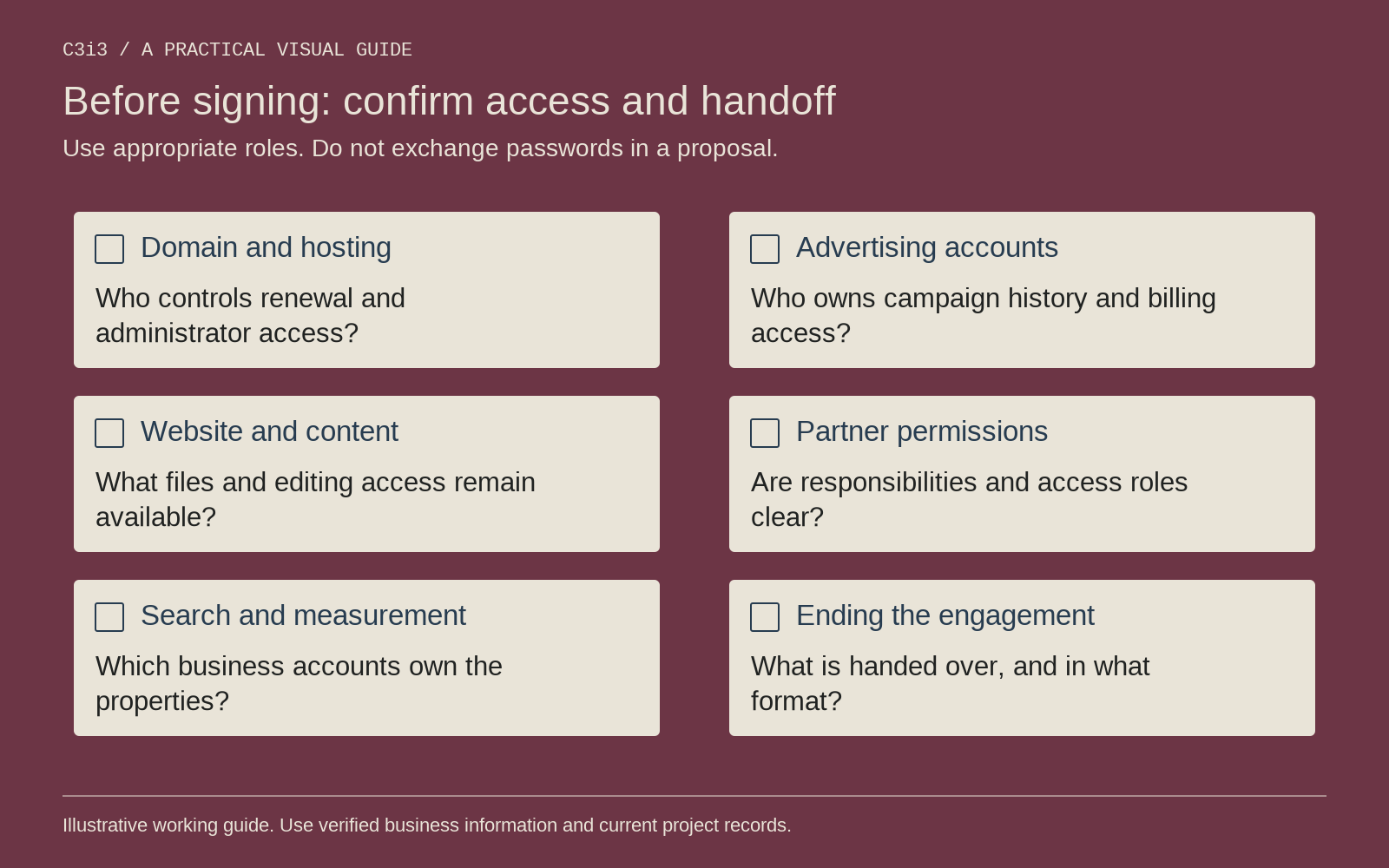
Your business should understand who owns the website, content, accounts, reporting history and source files. Set those terms before the engagement starts, along with a practical handover process if it ends.
Use access that matches the work. An audit may require viewing reports, while implementation can require additional permissions. The agency should explain what it needs and why. Keep account ownership and administrative continuity clear within your business.
For an initial audit, Google recommends read-only Search Console access. Later implementation permissions are a separate decision. Keep business-owned accounts and agree how access is removed or transferred at handover.
How can you shortlist the best SEO companies for your business?
Use the same brief and questions for each provider, then compare the quality and specificity of its answers. “Best” should describe fit with your business rather than an unsupported universal ranking.
Ask your preferred provider to walk through one real page with you. A useful discussion connects a customer question, a current weakness, a recommended change and the evidence needed to evaluate it.
Compare two SEO proposals with the same evidence sheet
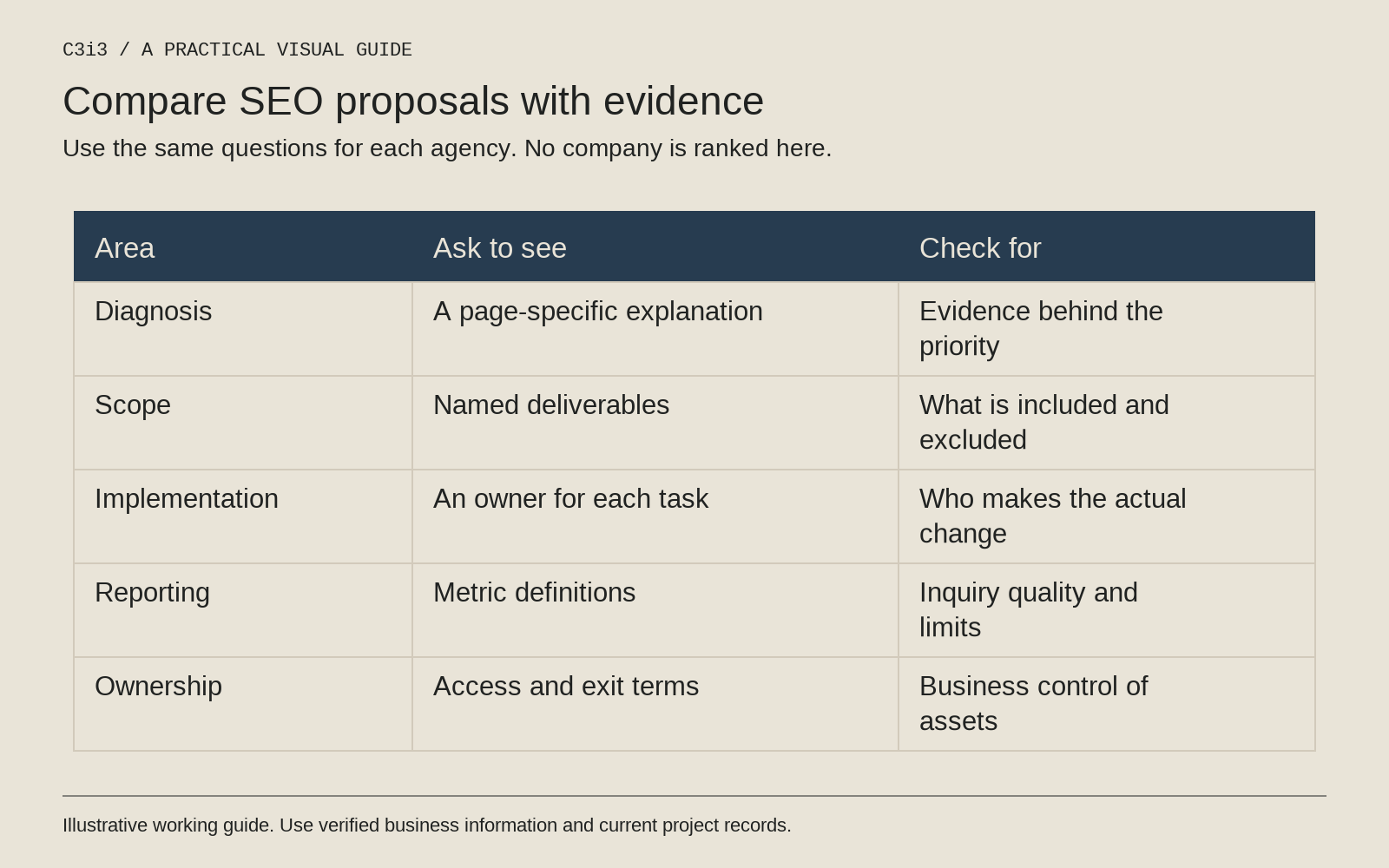
Copy this table into your notes and add a column for each provider. Record what you have actually seen. Leave an item “not supplied” when it is missing; a confident presentation is not evidence that implementation is included.
| Question | Evidence to request |
|---|---|
| What would change first? | A priority URL, the verified problem and the proposed correction. |
| Who implements it? | A named role, review steps and an implementation responsibility. |
| Where does expertise come from? | An expert interview or source plan and a sample section. |
| What does the fee cover? | Defined deliverables, dependencies, revisions and exclusions. |
| How will we evaluate it? | A change log, relevant performance sources and inquiry definitions. |
| What remains ours? | An account/access inventory and a content, code and handover agreement. |
For example, “four optimized pages” could mean recommendations only, or researched copy, design, publication and testing. Ask the provider to mark which stages are included before comparing fees. A lower price may suit your team if you can do the remaining work; the comparison should make that responsibility visible.
Keep the essentials in view
What else should you ask before choosing a Bay Area SEO company?
Is a local SEO company always the best choice?
Local knowledge and convenient collaboration can help, but assess the team’s understanding of your industry, buyers and implementation needs. A nearby address does not demonstrate the quality of its work.
How quickly should SEO produce results?
Ask for a work schedule and a separate outcome-review plan. The website’s condition, search demand, competition and buying cycle affect what becomes observable. No provider can guarantee a specific ranking by a fixed date.

How C3i3 Can Help
C3i3 can help connect your priority services with page improvements, technical work and a usable inquiry path. Bring your website and the questions you want a proposal to answer. We can discuss a defined first phase, its responsibilities and how the completed work would be reviewed.