



































In this article
Plan a San Jose B2B service launch around buyer roles, positioning, evidence, website content and sales handoff. Includes a launch-readiness checklist.
What is a B2B go-to-market strategy for a new service?
A go-to-market strategy explains how a defined offer will reach and serve an intended market. For a B2B service launch, it connects the buyer’s problem with the service scope, message, supporting evidence and sales process. It is more specific than a general plan to increase awareness of the company.
An established firm may already have customers and a recognized core service. A new offer still needs its own fit assessment. Existing clients may not understand the addition, while new buyers may need a different explanation of the company’s role. Do not assume that adding a page to the navigation completes the launch.
Use the growth marketing strategy guide to connect the launch with the wider business direction. This article focuses on a new B2B service, with San Jose as a local business context rather than an assumption that every customer must be located in the city.
Which buyer and use case should you prioritize?
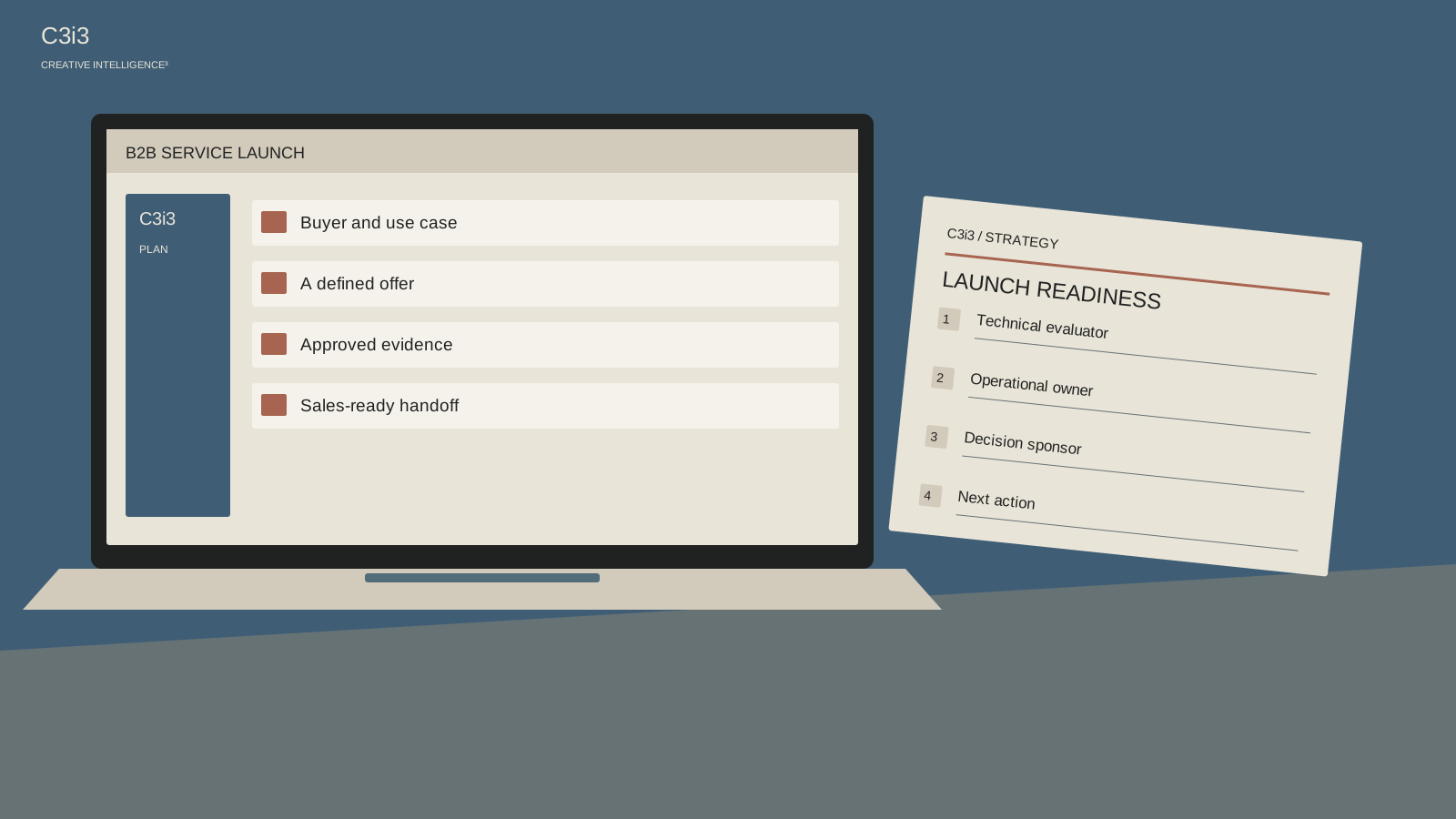
Choose a problem the service can address and identify the people involved in evaluating it. A technical lead, operational owner and procurement contact may ask different questions. Define the initial use case closely enough that the team can explain what is included and what requires another discussion.
| Buyer role | Question to answer | Supporting material |
|---|---|---|
| Operational owner | What task or problem does this address? | A clear workflow or use-case explanation |
| Technical evaluator | What must fit or be connected? | Approved requirements and limitations |
| Decision sponsor | Why consider this approach now? | A grounded account of the need and scope |
| Procurement participant | What information supports evaluation? | Current qualifications and a defined contact path |
This matrix is illustrative; the real roles depend on the offer. Ask the sales and delivery teams which questions arise in actual conversations. Keep those questions visible through content development so the launch does not default to a slogan that explains little to any participant.
How do you define a service offer without overpromising?
Write what the service does, who it serves, what it requires from the customer and where its boundaries lie. Explain the difference between standard work and an additional or customized scope. The launch message should help a suitable buyer recognize fit without suggesting that every request can be accepted immediately.
For a hypothetical San Jose technical-service company, a new assessment offering might have a defined discovery stage and a written set of findings. It should not be described as a complete implementation if that is a separate engagement. Keep the public wording aligned with how the delivery team actually works.
Use the value proposition to explain relevance, not to invent a guaranteed business result. C3i3’s value-proposition development service addresses that communication task. A specific account of the offer gives the website, sales material and follow-up a stronger common starting point.
What evidence should be ready before the launch?
Collect approved service information, current technical references and relevant experience the business may discuss publicly. Distinguish experience with the underlying work from a documented result for the newly packaged offer. Do not imply that a new service already has a portfolio of customer outcomes if that is not true.
A useful launch can rely on a clear process, reviewed expertise and an honest demonstration of what the buyer will receive. If a case study is available, confirm the actual role, permission and context. If it is not, use an explicitly illustrative scenario to explain the service rather than inventing a client story.
Organize the evidence by buyer question. The operational owner may need a workflow explanation, while the technical reviewer may need requirements or documentation. Our technical writing guide explains the difference between promotional content and task-focused documentation that supports detailed evaluation.
Which website and sales assets should a B2B launch include?
Begin with a clear service page and the resources needed to support the first conversation. Those may include an explainer, an approved evidence asset, a concise sales overview and a discovery worksheet. Choose the assets because they answer different questions, not because a standard launch template lists them.
The page should identify the offer, intended customer, useful evidence and next action. A short video may help explain a workflow, while a written guide gives buyers detail they can share internally. See the SaaS explainer guide for one example of preparing a buyer before a demo; the same purpose-driven reasoning can inform other service launches.
Keep the materials understandable without the original presenter. A buyer may forward a resource to a colleague who has not heard the sales conversation. Use consistent terminology and preserve important conditions. The B2B writing guide helps connect these assets without making them duplicate one another.
How should channels and local context shape the launch?
Choose channels according to the buyer’s investigation and the relationships the business already has. An existing-customer introduction, a partner conversation and a public educational article can serve different roles. Explain the purpose of each rather than treating every available platform as a launch requirement.
San Jose companies can serve local, regional or wider markets. State the actual delivery model and service area. When public-sector opportunities are relevant, the City’s business opportunities resource is a starting point for the applicable process. A government-facing launch needs to follow that buyer’s requirements rather than treating procurement as an ordinary inquiry campaign.
Avoid adding city names where they do not change the offer or explanation. The local value of this guide is a practical decision framework for a company operating in the San Jose business environment. The real launch brief should still identify its particular buyers, partners and delivery constraints.
Where can AI support a B2B launch strategy?
AI can help organize approved research, compare draft messages or summarize inquiry context for a reviewer. It should not choose the market from unreliable assumptions or invent evidence to make the offer sound established. Keep the buyer-message matrix and source material available to the people reviewing the output.
A bounded lead-handling pilot may be useful once the offer and qualification criteria are clear. The San Jose AI lead-generation guide explains how to preserve submitted facts and prepare a human-reviewed follow-up. That workflow supports a launch; it does not replace the launch strategy.
Do not expand the production of content faster than the team can approve the facts and manage the response. A small set of accurate assets with a working sales handoff can provide a better starting point than a large collection of AI-generated variations with no clear role or owner.
What should a launch-readiness review check?
Review the offer, evidence, content and response process together. Ask a representative reader to explain what the service does and what happens after an inquiry. Have the delivery owner check whether the message matches the work. Resolve important gaps before distributing the campaign more widely.
Test the actual contact path and prepare the people who will respond. Record which questions should be answered through public content and which require a specialist conversation. The first inquiries can provide useful feedback, but do not use a small or unusual sample to declare that the whole market has validated the offer.
C3i3’s go-to-market planning service can help organize the buyer, message, assets and launch sequence. Keep a review log that connects observations with the next decision so the strategy remains useful after the first publication date.
What should you check before the next step?
More questions about b2b go to market strategy.
Is a go-to-market plan only for startups?
No. An established company may need one when it introduces a new service, enters a different buyer segment or changes how an offer is delivered. The plan should address the specific launch decision rather than restart every aspect of the business strategy.
Do we need all launch assets before speaking to prospects?
Not necessarily. A bounded discovery or pilot phase can help clarify the offer. Be honest about what is available and what remains under development, and avoid promoting an unsupported capability as a finished service.
Should the new service have a separate website?
Choose based on the audience, relationship to the existing brand and maintenance needs. A clear page within the current site may be sufficient. Do not create another site merely to repeat the same offer or target a keyword variation.
What decision does your business need to make next?
Bring us the audience, the business question and the material you already have. We can help define a useful scope and connect the content to the right next action.