



































In this article
Plan video ad production across YouTube, Instagram and LinkedIn. Define placements, hooks, framing, captions, CTAs and a practical delivery matrix.
Why does one master commercial need more than automatic crops?
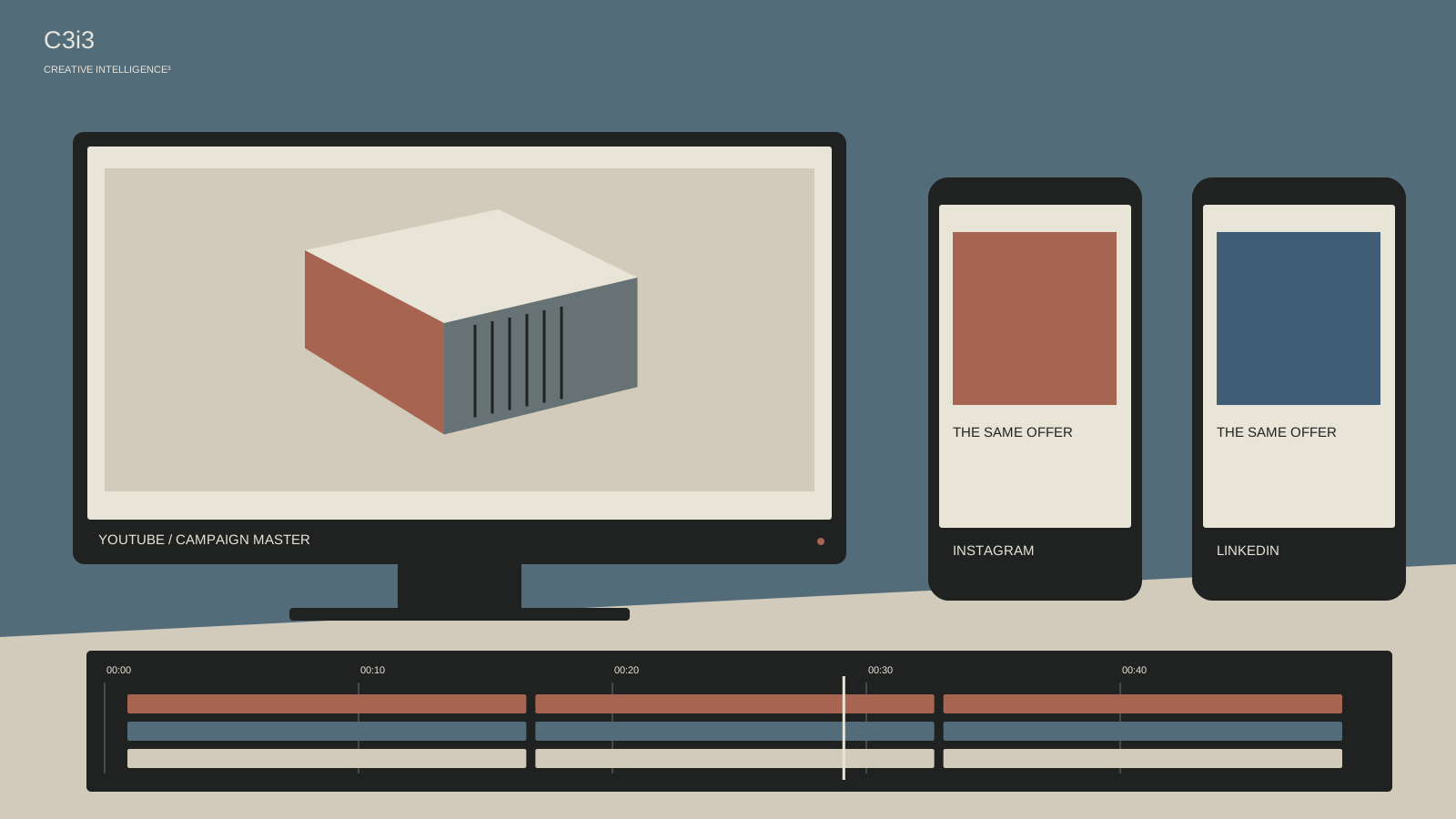
Platforms and placements present video differently. A viewer may encounter an ad before another video, while scrolling a feed or in a vertical full-screen experience. The same opening does not necessarily establish relevance in each situation. A crop changes the frame; it does not automatically change the story or the viewer’s context.
Start with a shared message and identify what must vary. The product, offer and factual claims should remain consistent. The hook, pacing, visual emphasis and ending may need a different treatment. Capture enough coverage to support those choices instead of trying to force every version from one tightly framed shot.
The commercial video production pillar covers the overall campaign. This guide focuses on the delivery decisions that should be made before production so the final assets work in their intended digital placements.
What should a cross-platform video delivery matrix contain?
List the platform, specific placement, audience, purpose, creative version, format and destination. Add the owner who will confirm requirements in the actual campaign setup. A platform name alone is too broad: different placements can have different presentation and eligibility conditions.
| Placement context | Creative planning question | Delivery check |
|---|---|---|
| YouTube video placement | How quickly does the offer become clear? | Confirm the selected campaign format’s requirements |
| Instagram feed or vertical placement | What remains readable in this frame and interface? | Preview the actual placement and text areas |
| LinkedIn feed | Why does this matter to the business viewer? | Check the selected ad’s file and CTA requirements |
| Website landing page | What information surrounds the video? | Test player, captions and the next action |
This matrix is a planning example, not a universal platform specification. Enter the actual requirements from current official guidance and the campaign tool. Keep those decisions with the brief so the editor does not have to infer the intended use from a filename.
How should you plan the opening for a YouTube video ad?
Establish relevance early and make the central idea understandable without a long introduction. Show the product or customer situation when it helps the viewer identify the offer. A slow brand reveal can be a deliberate creative choice, but the team should understand what information is being delayed and why.
Google’s ABCD creative guidance organizes advice around attention, branding, connection and direction. Use it as a creative review resource rather than a formula that guarantees results. Test whether the opening earns attention through the message, not only through a distracting visual unrelated to the offer.
Confirm the selected ad format before finalizing length and delivery. Google’s video ad specifications provide a current reference. Do not assume every YouTube placement uses the same duration or that a file accepted in one campaign is appropriate for another.
How should an Instagram version change the framing and text?
Compose for the actual Instagram placement rather than assuming the landscape version can simply be centered in a vertical frame. Keep the relevant product or person visible, leave room for interface elements and check that essential text remains readable. A shot with two people far apart may need different coverage rather than a severe crop.
Make the main message understandable when someone watches without sound, while still giving sound a useful role for viewers who hear it. Captions, short labels and the picture should have distinct jobs. Too much simultaneous text can compete with the action. Review the final version inside the placement preview, where controls and surrounding copy affect what is visible.
Use the Meta Ads Guide and the campaign setup to confirm current requirements for the selected placement. This article does not prescribe a single safe-zone measurement for all Instagram formats. The practical task is to inspect the exact version where it will run.
What should a LinkedIn video ad emphasize for a B2B audience?
Make the business relevance clear. A viewer should be able to recognize the role, problem or decision the ad addresses. An operational example, product task or specific buyer question can provide that context more effectively than a broad statement about innovation. Keep the language aligned with the page or resource the viewer will reach.
Choose the next step according to the audience’s likely readiness. A technical resource, event registration or product demonstration asks for different levels of commitment. The video should explain enough to make the request meaningful. Avoid presenting a general company film with a demo button added only at the end.
Review LinkedIn’s video ad specifications for current file, format and CTA requirements. The platform supports multiple ratios; select the one that serves the chosen placement and creative idea. An allowed format is not automatically the best presentation for a particular message.
How do you adapt captions, sound and the CTA across versions?
Keep the factual message consistent while checking each presentation. Captions should match the approved spoken content and use correct product names. Important labels should remain visible after reframing. The ending needs enough time and visual clarity for the viewer to understand the action, without relying on a tiny URL as the only instruction.
Match the video CTA, platform button and destination page. If the video says to download a guide, a generic contact form creates a different experience. If it invites a demo, the page should explain the demo process. Review the destination on mobile as well as desktop, including the confirmation after submission.
Sound design should support the message rather than carry essential meaning alone. Plan accessible explanation of important visual information and accurate text alternatives. Check the complete asset in realistic conditions. A clean desktop export can still become confusing when captions, platform controls and the creative’s own text compete on a smaller screen.
What should you test before launching video ads?
Review each version against the delivery matrix. Check the opening, crop, readability, caption timing, sound, ending and destination. Confirm that claims remain qualified appropriately after shortening the edit. A shorter version can accidentally remove the condition that made the original statement accurate.
Test the full customer path. Open the actual destination link, inspect the page, submit only an appropriate test inquiry through the agreed QA process and confirm routing. Distinguish creative QA from campaign QA: the media owner should verify the selected audience, placement and measurement setup. A production team should not silently assume responsibility for campaign settings outside its scope.
Use an approval record that identifies the exact final file for each placement. Our commercial production services guide explains how to organize revisions and handoff. Avoid last-minute filename ambiguity that makes it unclear which version was actually approved.
How should you compare performance without drawing false conclusions?
Compare results in context. Platforms can define views, engagement and attribution differently, so do not treat all reported numbers as interchangeable. Record the audience, placement, campaign objective, version and destination beside the observed actions. A high completion rate from one context may not answer the same business question as qualified inquiries from another.
Use creative tests to investigate a clear question, such as whether a product-first opening helps the intended audience understand the offer. Keep other meaningful conditions as consistent as practical and allow the media team to interpret the limitations. Do not declare a universal winning style from a small or mismatched comparison.
Feed the lessons into the next production brief. If viewers misunderstand the offer, the solution may be a clearer demonstration rather than another color treatment. If the ad creates interest but the page loses it, review the handoff. C3i3’s web commercial services connect those creative and destination decisions.
What should you check before the next step?
More questions about video ad production.
Should every platform receive the same video length?
No. Choose the length for the specific placement and message, then confirm the current platform requirements. A concise edit should still give the viewer enough time to understand the offer and next action.
Can we run the same visual concept across all three platforms?
Yes, when the concept remains relevant and can be adapted to the different contexts. Plan alternate framing, openings and endings where needed. Keep the product claims consistent across versions.
Do captions make a video suitable for silent viewing by themselves?
They help communicate speech, but the visual hierarchy still matters. Test whether the viewer can follow the product, read the text and understand the action without sound. Captions cannot repair a sequence that never explains the offer clearly.
What do your buyers need to understand?
Bring us the audience, the business question and the material you already have. We can help define a useful scope and connect the content to the right next action.