








































In this article
The new website is live. Three months later, an employee notices an old price, a customer says the form failed, and the hosting renewal arrives in somebody else's inbox. The designer considers the project finished. Your office manager can change text but does not know whether a warning in WordPress matters. Every loose end comes back to you.
Website management services should replace that uncertainty with an operating arrangement. Someone needs to notice problems, decide what happens next, carry out approved work and confirm that it worked. The important purchase is a clear responsibility for the site throughout ordinary business changes.
Separate hosting from responsibility for the website
Hosting provides the environment in which a website runs. The agreement may include some platform care, but you should check what it covers. Updating a service description, investigating a broken booking journey and coordinating an outside software supplier may belong to someone else.
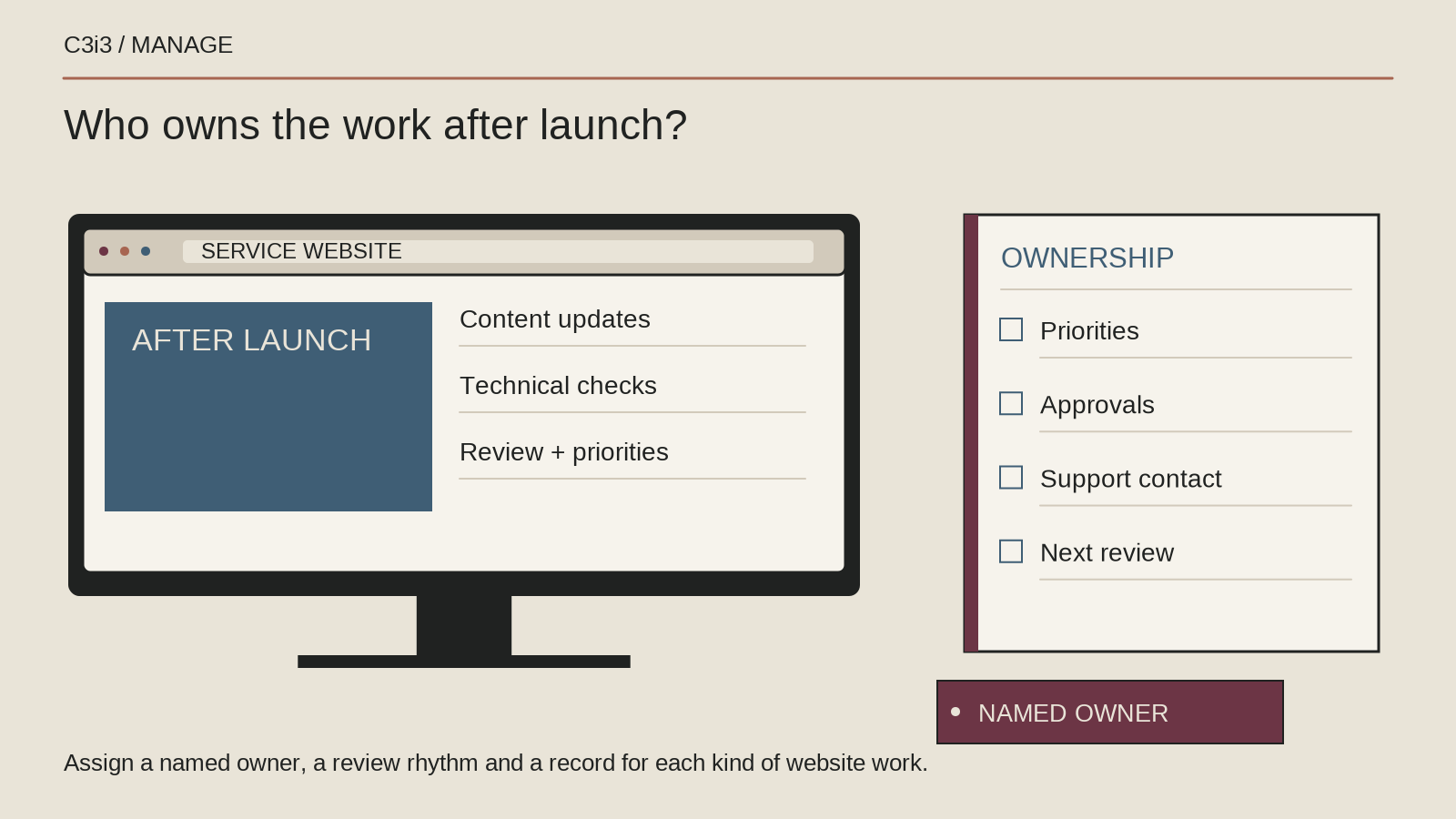
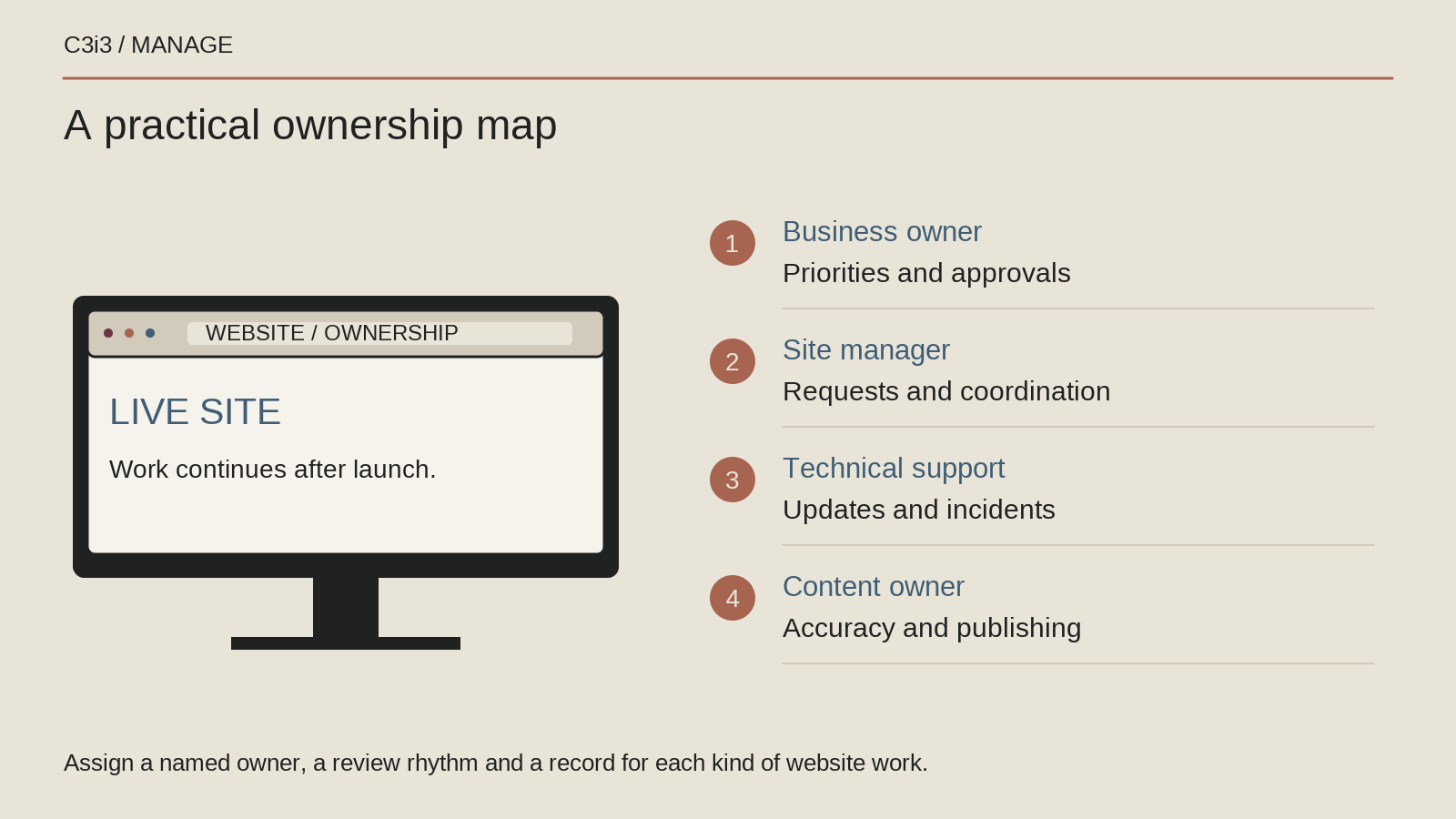
Make a list of the work your business expects after launch. Include technical maintenance, content publishing, inquiry delivery, account administration and improvement requests. Put a named person or provider beside each item. If two providers share a task, identify who opens the issue and who confirms resolution. Supplier names alone leave you coordinating everything.
Map the customer tasks that cannot quietly fail
Start with what a visitor needs to accomplish: understand your service, contact the right location, submit an inquiry, book an appointment or complete an order. Write the main steps as a short route through real pages. The homepage is only one part of that route.
Choose a few tasks for regular checks and record their expected results. For an inquiry, that includes the confirmation seen by the customer and the message received by your team. Avoid testing only whether a page opens. A working page with a disconnected form can create a business problem that a simple availability alert will miss.
Keep ownership of the accounts that control the site
Record the domain registrar, hosting, website administration, business email and connected services in an account register. Note the business account holder, renewal contact, billing owner and recovery route. Keep passwords in an appropriate password manager rather than the register or an email thread.
Give providers individual access suited to their work. WordPress explains how user roles control available actions. Someone publishing articles may need different access from someone maintaining software. Also name a second authorized business contact. Ownership should remain usable when an employee takes leave or a supplier relationship ends.
Write a support scope around recurring decisions
A useful scope distinguishes planned maintenance, small content requests, investigations and larger changes. Specify how requests enter the queue, what information is needed and which work needs a separate estimate. Agree how priorities change when a customer-facing function fails.
For example, replacing an approved staff photograph may fit routine content support. Adding a new appointment system may require discovery and a separate project. Neither classification should be a surprise after the request arrives. Ask who coordinates the host or booking provider when a problem crosses supplier boundaries, and how you will receive progress updates while the cause remains uncertain.
Ask how recovery would work before approving changes
A backup is useful only when its contents and recovery process fit the business. Ask what is included, where copies are stored, how long they are retained and who can access them. Record the most recent restore test and its outcome separately from successful backup notifications.
The WordPress backup guidance is a useful starting point for discussing copies and recovery. Your operational decision is how much recent activity could be lost and how the team would reconcile it. A brochure site and a busy ordering site can need different arrangements, even when they look equally simple.
Choose between an employee, a team and a mixed arrangement
One employee can own the internal queue, gather accurate information and approve priorities. That does not mean the employee should also know hosting administration, security investigation, design and every integration. Separate business ownership from specialist execution when comparing your options.
An outside team can provide recurring execution, while a designated employee supplies context and approvals. Alternatively, an experienced internal operator may use specialists for narrower work. Compare the available skills, documented coverage and handover arrangements against your task list. Do not judge the arrangement only by the number of people involved. A larger supplier list can still leave nobody responsible for finishing the work.
Use a short monthly review to keep the arrangement useful
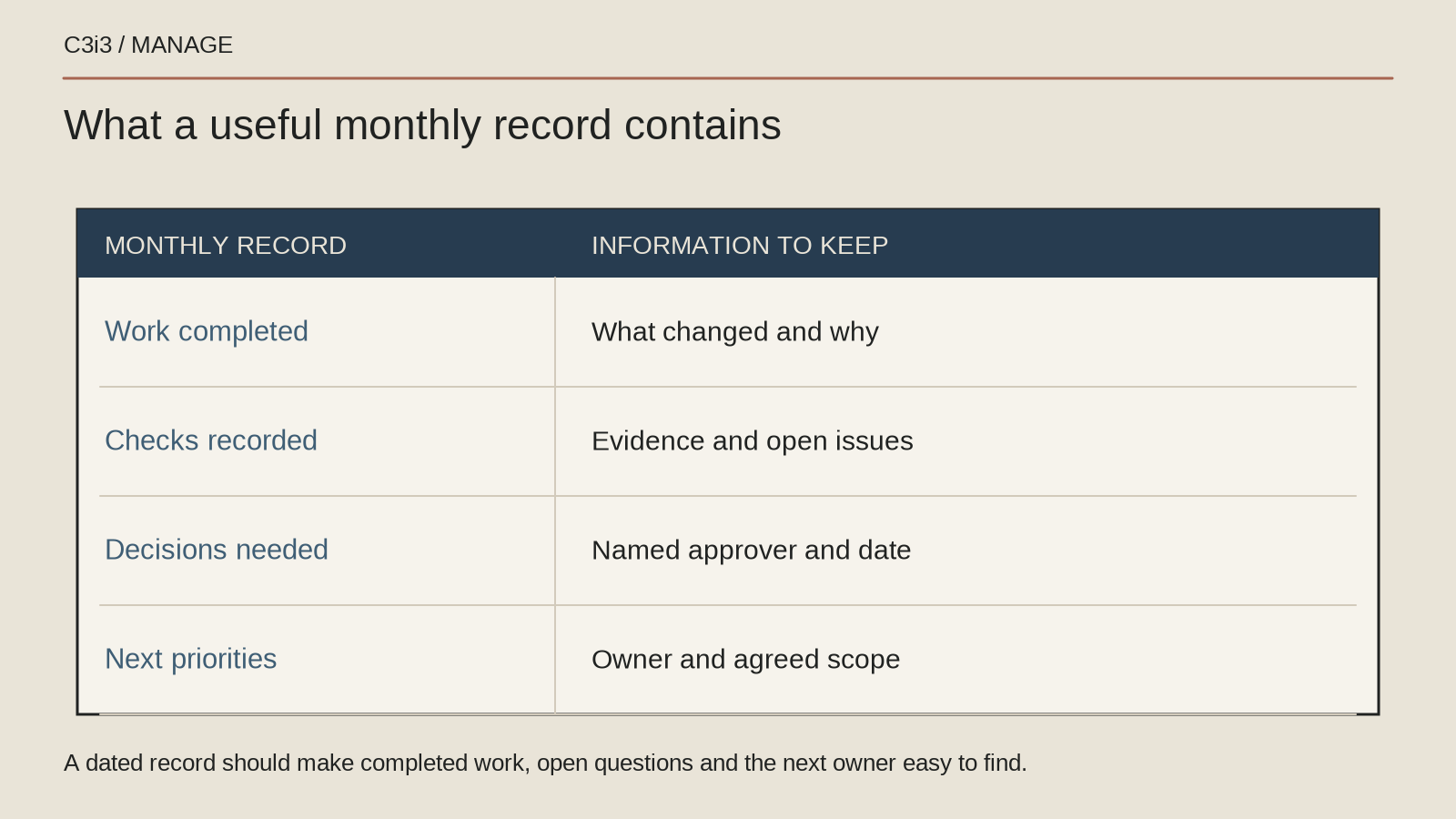
Ask for a summary of work completed, customer journeys checked, unresolved issues, approaching renewals and decisions needed from your business. The report should help you choose the next action. A long automated list of technical events is less useful if nobody explains the remaining risk or required approval.
Keep a small decision log with the request, business reason, responsible person and outcome. Review recurring delays. If every update waits for your approval, delegate clear limits to an employee. If suppliers repeatedly redirect the same problem, change the coordination responsibility. Website management should develop with the operation rather than remain frozen at launch.
Keep this checklist beside you
Questions before the next step
Do website management services include marketing?
Sometimes, but the scope must say so. Maintaining software and publishing supplied text differ from planning campaigns, writing new content or evaluating inquiries. Ask which activities are included, who provides inputs and how additional work is approved.
Can my office manager look after the website?
An office manager can own requests and business information with suitable training and access. Technical work can sit with a specialist. The arrangement works better when the employee knows what to handle, what to escalate and who will respond.

How C3i3 Can Help
C3i3 can help organize ongoing website management around the customer tasks, content requests and supplier responsibilities your business actually has. We can review the current arrangement and agree a practical scope for recurring support.
Bring the website, the people currently involved and examples of work that keeps returning to you. Together we can establish a request process, an approval contact and a useful review rhythm, so your team knows where to take the next website decision.