








































In this article
The agency completed the technical audit, rewrote page titles and connected Search Console. Now another monthly report arrives with charts, but you cannot tell what anyone actually did. The initial setup is finished. What should happen next?
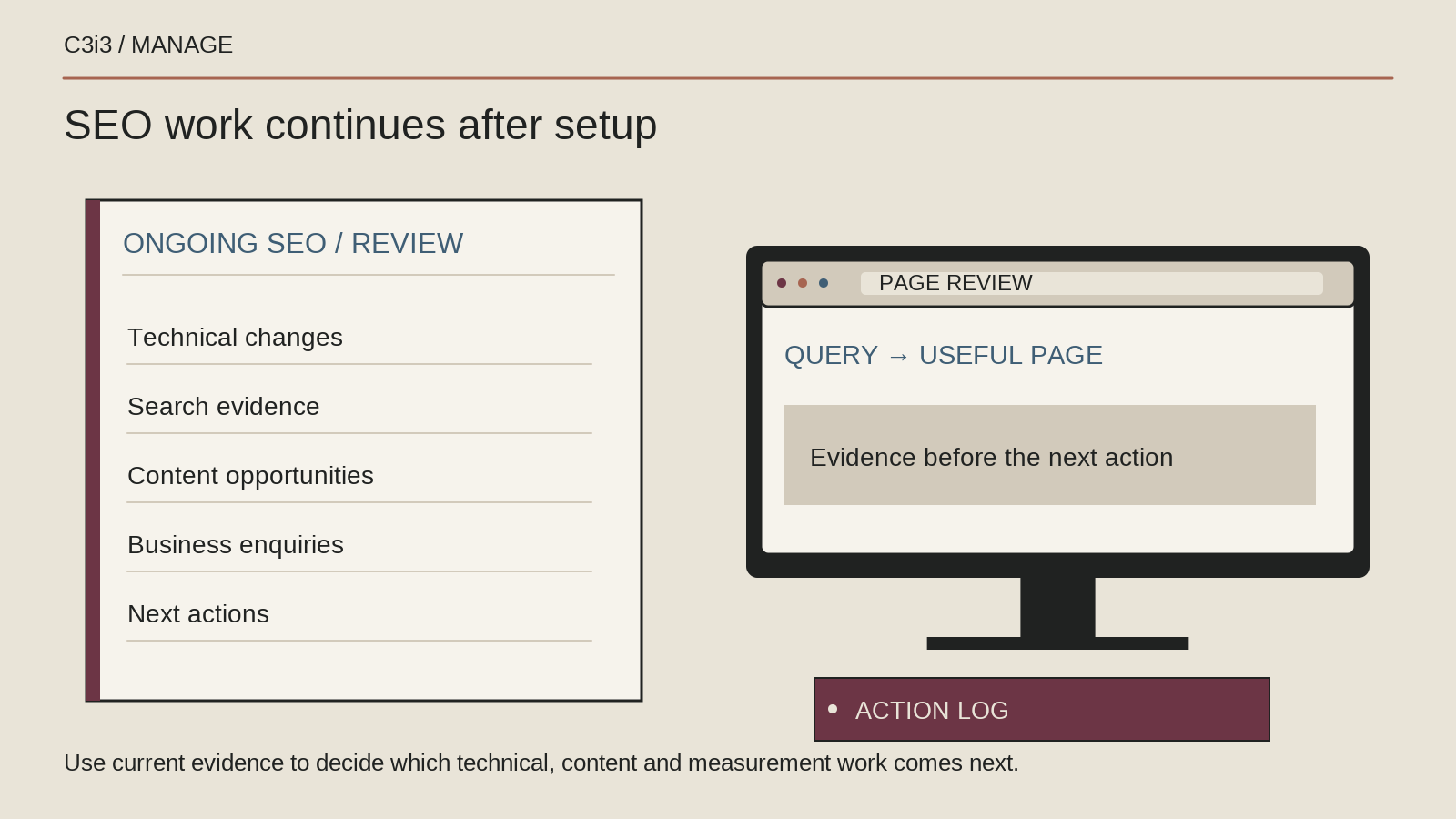
Ongoing SEO management should connect observed problems and opportunities with prioritized work. Your website changes, your services change and customers ask new questions. That creates work beyond the launch checklist, but it does not justify an unexplained list of repetitive tasks. Ask for the evidence, the action and the reason the action matters.
Separate the setup baseline from recurring work
Ask for a record of the original condition, completed fixes and remaining limitations. It should identify the important service pages, measurement setup and business objectives. Without a baseline, a later report can make an old issue look like a new discovery or claim an unrelated improvement as its own.
Initial setup may establish basic indexing, titles, internal navigation and reporting access. Ongoing work asks whether those foundations remain useful as pages and business conditions change. A site with frequent service changes needs different attention from a small stable site.
Google's SEO Starter Guide is a useful foundation for understanding the basics. It does not turn every possible task into a monthly requirement.
Monitor important signals and investigate changes
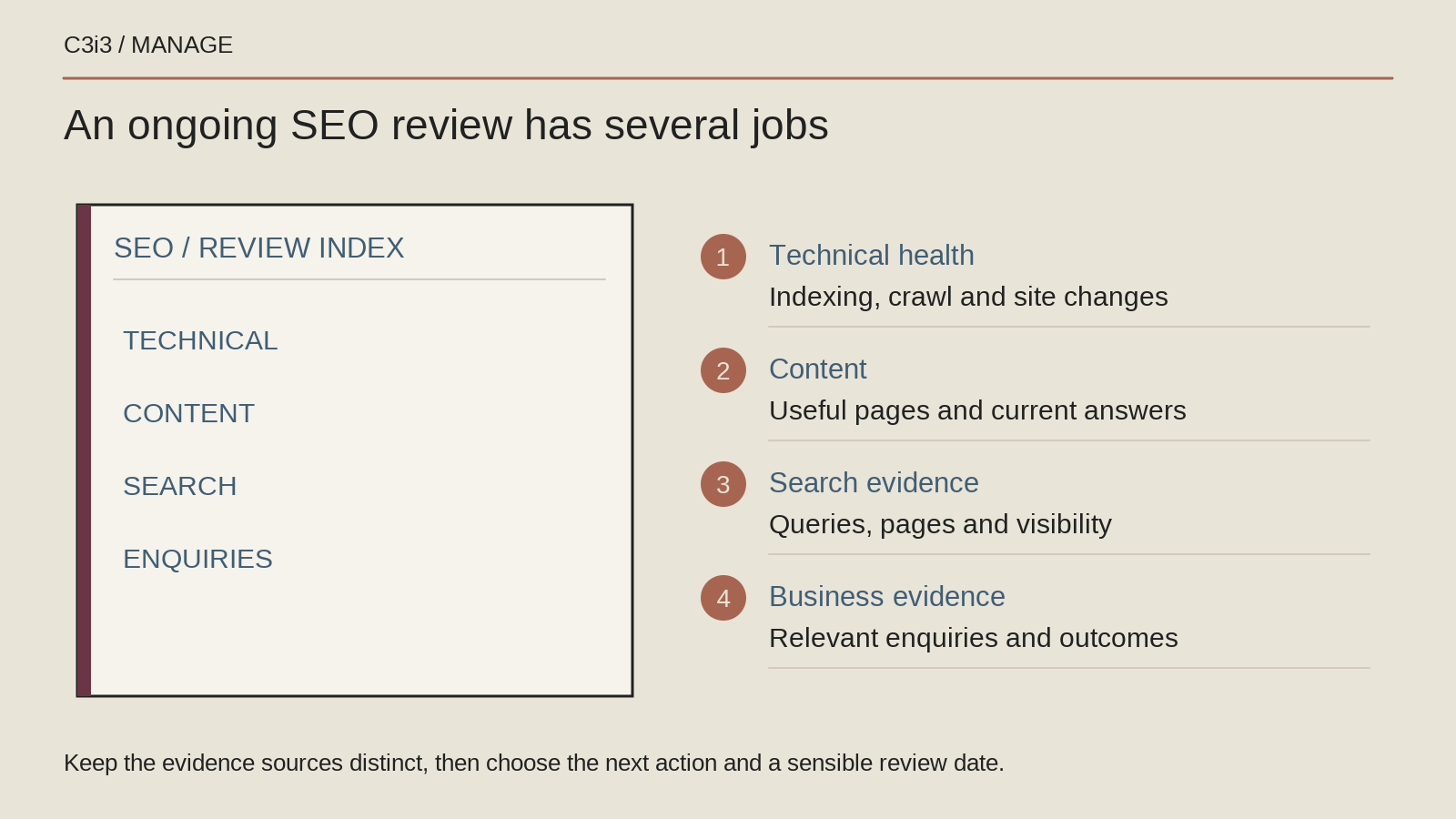
The team should monitor the pages and search activity relevant to your actual services. A meaningful change might involve a valuable service page losing visibility, a new page failing to appear or visitors reaching an outdated offer. Start with the business consequence, then investigate.
Compare periods carefully. Seasonal demand, a changed service area and a campaign can influence the figures. A single quiet week or a movement in one tracked position rarely explains the whole customer journey. Ask what evidence supports the proposed diagnosis.
Google's Search Console documentation describes its role in understanding crawling, indexing and search performance. The agency should turn those observations into decisions rather than merely exporting charts.
Maintain the pages that represent your business
Review important pages when the offer changes or evidence reveals a gap. An old appointment process, unavailable service or broken destination can undermine a search visit even when the page still receives traffic. Coordinate corrections with whoever manages your website.
Use real customer questions and service knowledge to improve clarity. For example, a company may receive inquiries for work it no longer provides because an older page remains prominent. Correcting that page and its internal links is more useful than publishing an unrelated article to meet a quota.
Avoid cosmetic edits simply to create activity. Each proposed change should have a reader need, an observed problem or a clear reason grounded in the current business.
Turn findings into a limited, prioritized work plan
An audit can produce more recommendations than the available capacity can support. Ask the agency to rank them by business relevance, expected effort, dependencies and confidence. A useful plan explains why one problem deserves attention before another.
Confirm who implements the work. An SEO adviser may identify changes while a separate developer or writer carries them out. If nobody coordinates that handoff, the owner becomes the project manager again. Include the implementation and review responsibilities in the agreement.
Keep room for an unexpected problem, but make the tradeoff visible. If a technical investigation consumes the agreed capacity, the team should explain which planned improvement moves and when it will be reconsidered.
Request reporting that links work with useful outcomes
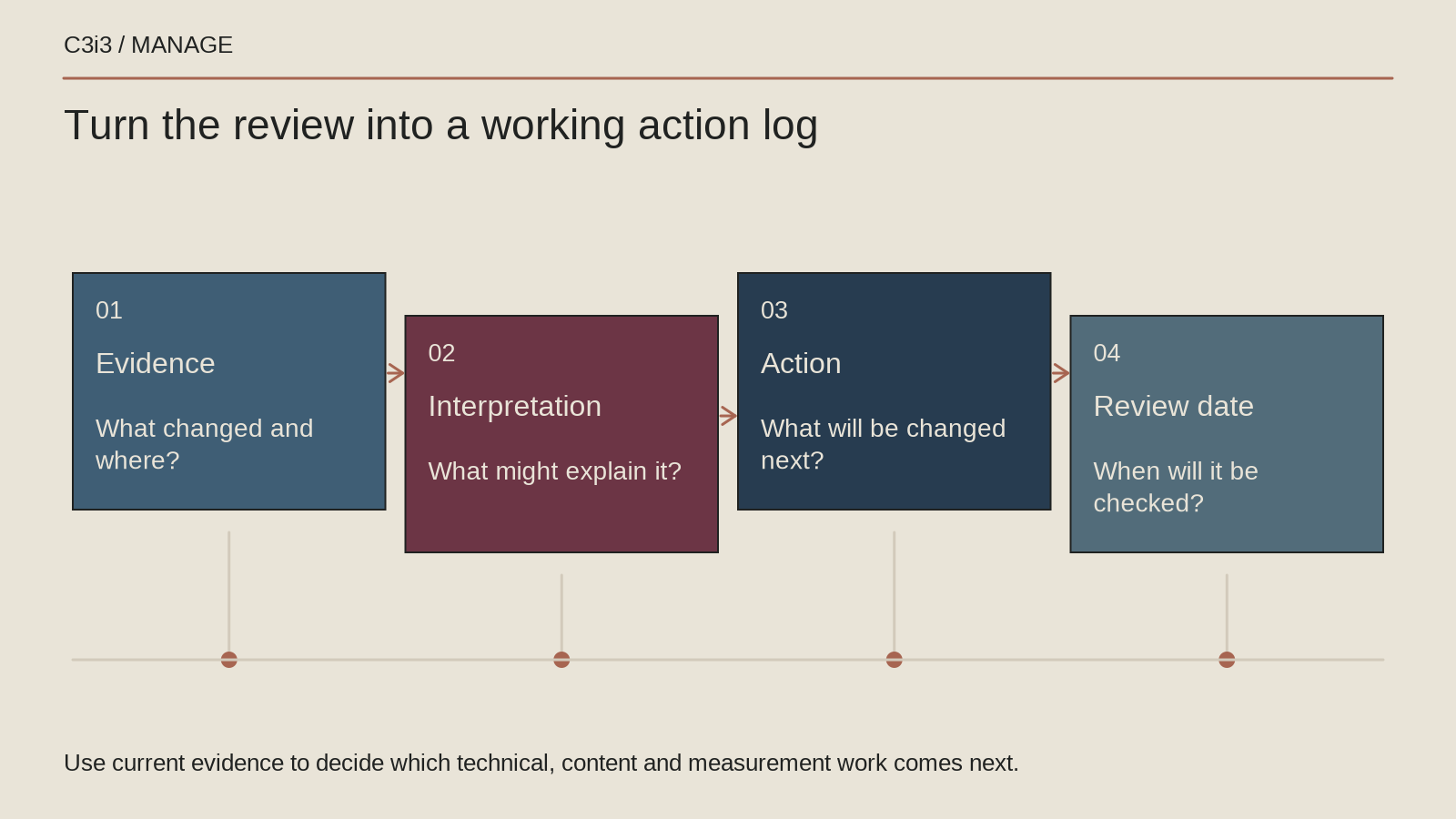
A practical report states what changed, where it changed and what the team observed afterward. Include the relevant period and limitations. A rising traffic line alone does not establish that the business received more suitable inquiries or that one particular edit caused the improvement.
Connect search observations with the information your office can provide: inquiry quality, service requested and whether the opportunity progressed. Keep search clicks, inquiries and customers separate. Attribution may be incomplete, especially when people return later or contact you through another route.
Ask for the next recommended action and the decision it needs. You should be able to understand the management choice without learning every technical term in the reporting platform.
Keep supervision and continuity in the arrangement
Your business must still confirm service facts, priorities and publication approvals. The agency cannot know that a profitable service is temporarily unavailable unless someone tells it. Arrange a regular review with a person who can make those decisions.
Keep business-controlled access to the website, analytics and search accounts. Record completed changes and outstanding recommendations so work can continue if an employee or account contact changes. Several specialists do not provide dependable coverage unless knowledge and responsibilities are shared.
Review whether the engagement still fits the workload. A limited ongoing agreement may suit maintenance and focused improvements; major expansion can require a separate project. Honest scope is more useful than an unlimited promise attached to a monthly report.
Keep this checklist beside you
Questions before the next step
Should my agency publish new articles every month?
Only when useful articles address a clear need and fit the agreed plan. Updating an important service page or resolving a technical problem may deserve priority. A fixed publishing quota is not proof of useful SEO management.
Can an agency guarantee that ongoing work improves rankings?
No. Search outcomes depend on factors outside its control. It can commit to defined work, careful investigation and clear reporting. Ask how it will evaluate progress and adjust decisions when the evidence changes.

How C3i3 Can Help
C3i3 can help review your current SEO activity and define dedicated support for the work your business needs next. Bring the initial audit, recent reports and the service pages that matter most.
We can discuss priorities, implementation responsibilities and a review process that makes ongoing activity understandable. Your business provides direction and approvals while the agreed team manages a defined body of work and explains the results in context.