








































In this article
The writer says the draft is ready. The designer says the images never arrived. The website person is waiting for approval, but the version in your inbox is different from the one in the shared folder. Everyone is working, and you are still spending Friday afternoon finding out what happened.
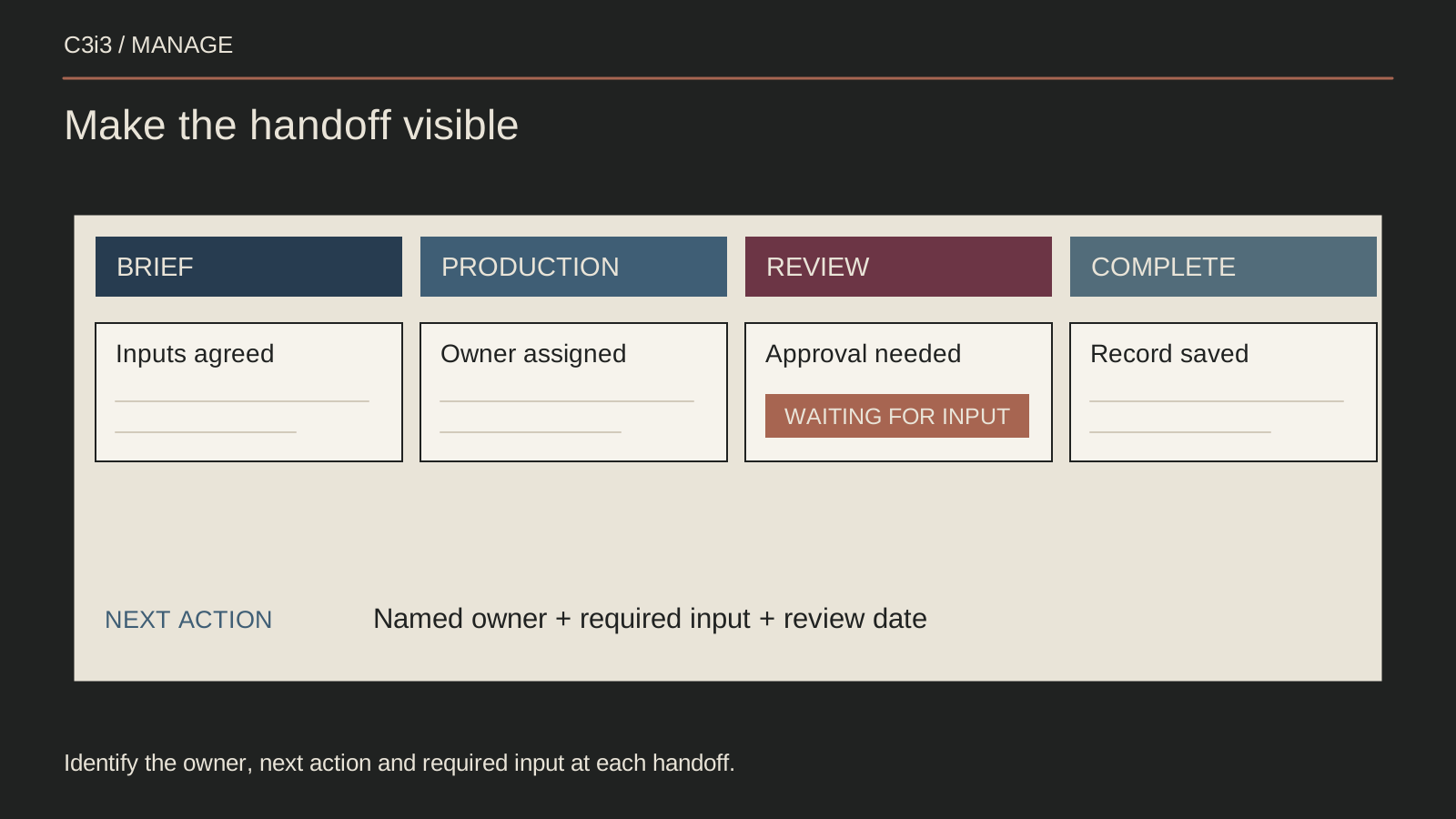
Marketing operations is the practical system that moves work from a request to a checked, published result. More people will not fix unclear ownership or missing decisions. Start by identifying where the work stops and who is expected to move it forward.
Find the handoff that keeps failing
Trace a recent delayed task from the first request to its current state. Record when it changed hands, what information was missing and who was waiting. A simple service-page update may reveal that three contributors each assumed someone else was collecting the facts.
Look for repeated patterns across several tasks. Late writing and late publication may share the same cause: nobody approved the offer. Do not solve each visible delay by adding another reminder when the required decision has never been assigned.
The SBA's marketing guidance treats the plan as a connection between strategy and action. Your process makes that connection usable in everyday work.
Replace scattered requests with one brief
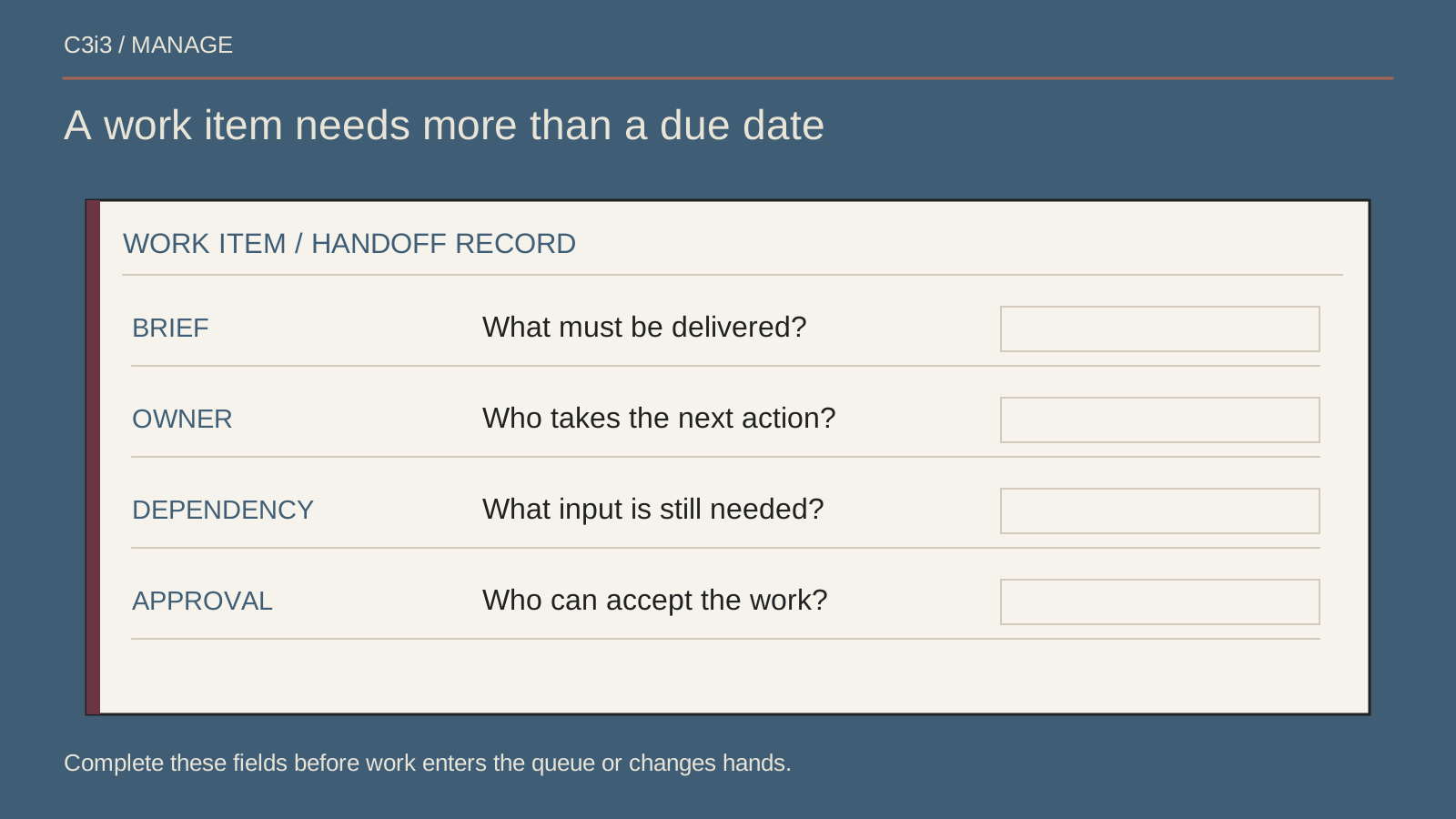
Choose a dependable intake route and collect the essentials: objective, audience, requested output, business facts, source material and required date. Explain why the date matters. A genuine launch commitment needs different handling from a preference to publish something soon.
Assign one coordinator to turn the request into a realistic plan. That person should identify missing information, clarify dependencies and confirm the priority. They need authority to ask whether a new request replaces existing work rather than silently adding it to an impossible schedule.
Keep conversation attached to the task where possible. A decision buried in a private message is difficult for the next contributor to find, especially during an absence.
Make approval a specific responsibility
Separate factual review, presentation review and permission to publish. Your subject expert may verify service details while a manager makes the final business decision. Name each responsibility so a draft does not circle indefinitely among people offering opinions without approval authority.
Give reviewers a clear question and one current version. Ask whether the scope is accurate or whether a particular claim has evidence. That is easier to answer than asking everyone for general thoughts on an unfinished document. Consolidate feedback before returning it to production.
Agree on a realistic review window and what happens when it is missed. Silence should not become permission to publish an unverified service claim. Reschedule the task visibly instead.
Define completion beyond sending a file
A completed draft is an intermediate result if the business needs a live page. Define the final checks: approved copy in the correct template, functioning links, appropriate images, a tested inquiry route and confirmation that the page displays correctly on a phone.
Different work needs different completion rules. An email needs checked recipients and a working destination. A service update needs accurate availability and removal of conflicting wording. Keep the checklist short enough to use while covering the mistakes that would affect the customer.
Record the published location and date. The next person should be able to verify the result without asking you which of several similar files finally went live.
Reduce dependence on a single employee or freelancer
Document recurring tasks while the person doing them is available. Record the source files, account owner, approval route and common exceptions. This creates practical coverage if someone is away or leaves, without requiring another person to imitate every detail of their habits.
Keep current files accessible to the approved team. Google's activity and file-version guidance explains tools for checking changes in Drive. Similar controls in your chosen system can help distinguish an approved source from a later edit.
Test the instructions with a routine task. If a backup person cannot tell what comes next, improve the notes before an urgent handover makes the gap expensive in time.
Hold a short review focused on decisions
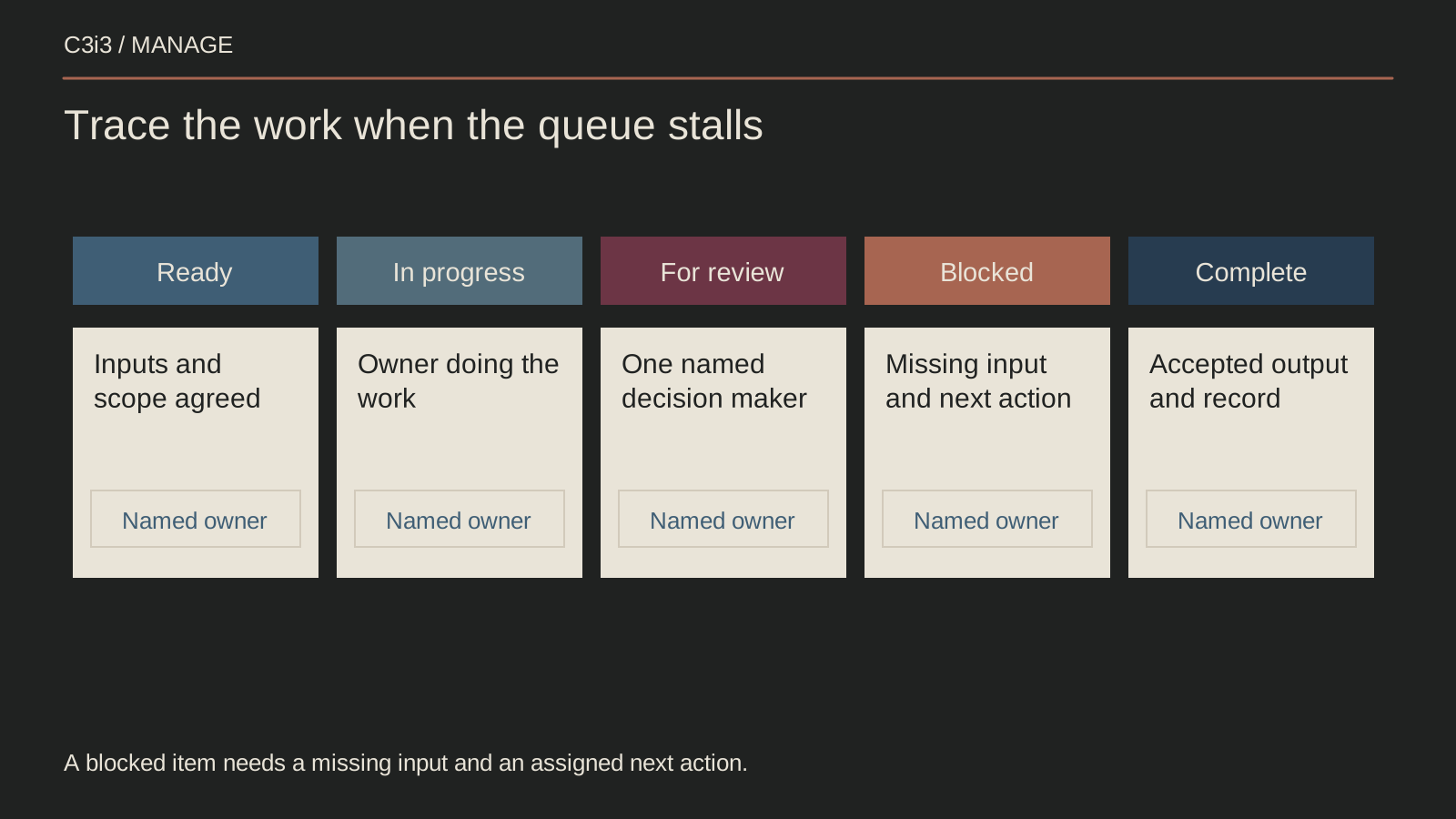
Review what is ready, what is blocked and what needs a decision. Avoid reading every task aloud. The coordinator should explain the small number of issues that threaten agreed priorities and recommend a next step for each.
Track how much chasing remains with the owner. An agency can supply specialists yet leave coordination with you unless management is included. An internal employee can also be overloaded when every department sends requests without a priority decision. Match the process to available capacity.
End the review with clear commitments and update the shared record. If every week produces the same unresolved issue, change ownership, scope or timing instead of scheduling another conversation with the same missing input.
Keep this checklist beside you
Questions before the next step
Will project management software fix the chasing?
Only if people use it with clear responsibilities. A board can show that work is blocked, but someone must still supply the information or make the decision. Start with ownership and a simple process before adding more tools.
Should the owner stop reviewing marketing entirely?
No. Keep the business decisions and a proportionate quality review. Delegate the task coordination that does not require your judgment. The aim is fewer avoidable handoffs through your inbox, with clear supervision of the team.

How C3i3 Can Help
C3i3 can provide dedicated support to organize agreed marketing work across writing, design, website changes and review. Bring a recent delayed task and the people currently involved.
We can identify where coordination is missing, define a workable request process and explain what ongoing support would cover. Your business still supplies essential facts and approvals, while a clear working arrangement makes delivery easier to follow and manage.